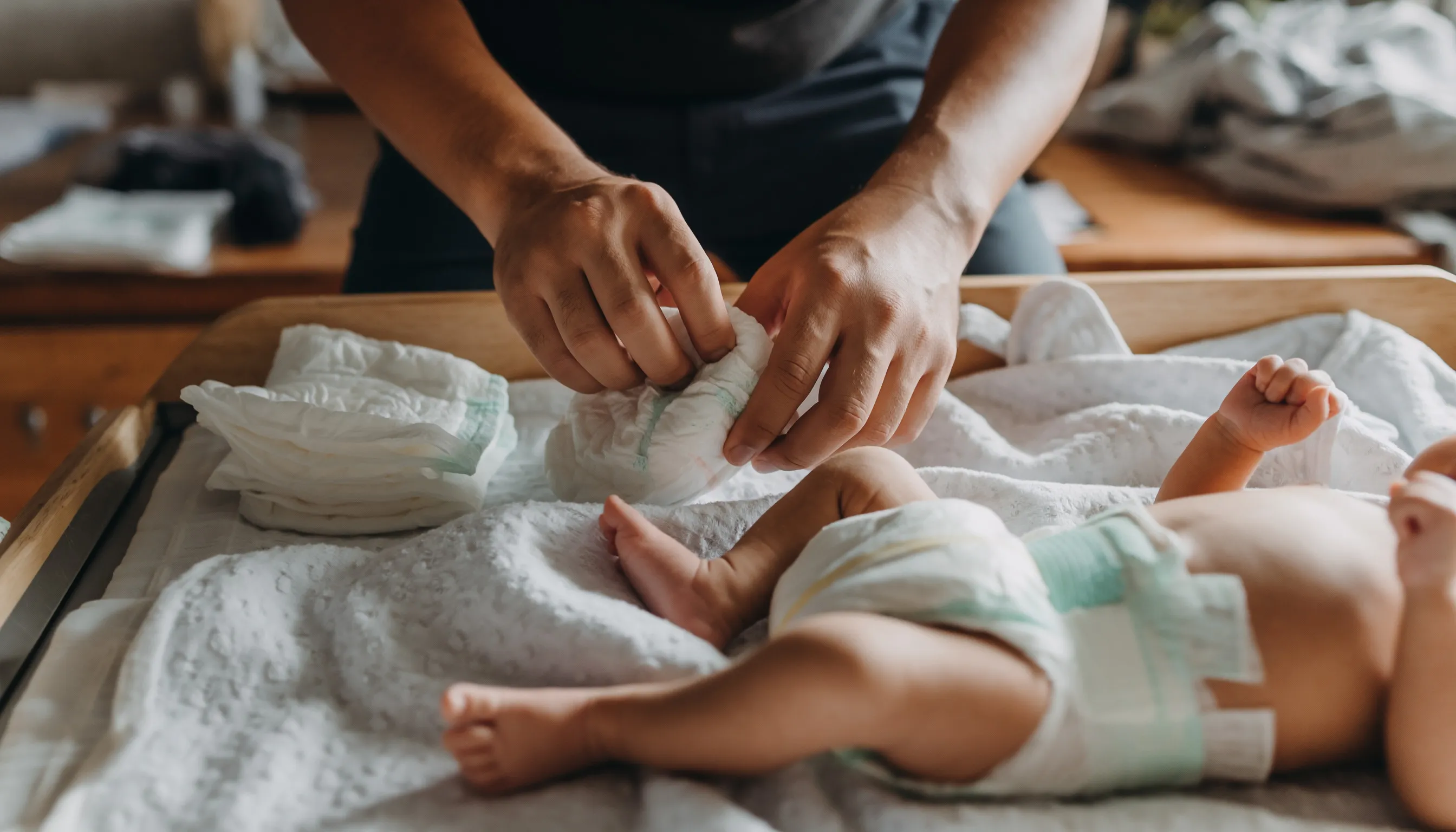
Learn whether newborns can use diapers from birth, how to choose the right size, how often to change them and how to protect delicate skin.
Dr.Mayank
Bringing your newborn home means making many small decisions about everyday care. Choosing and using diapers is one of them. You can use diapers from birth as long as they fit your baby well and you change them regularly.
Newborns pass urine and stool frequently, so good diaper care helps keep their skin clean, dry and comfortable. This guide explains how to choose a newborn diaper, when to change it, how to reduce skin irritation and when to seek medical advice.
Should You Use Diapers for a Newborn?
Yes. You can use diapers for your newborn from birth. You can use both disposable and cloth diapers as long as they fit properly and you follow good hygiene practices.
Your newborn may pass urine and meconium, the first dark, sticky stool, during the first days after birth. Check the diaper regularly and change it when it is wet or soiled. Change a soiled diaper as soon as possible to reduce prolonged contact between stool and your baby's skin.
Choose a diaper that fits comfortably around your baby's waist and thighs without pressing into the skin. Check the diaper regularly rather than relying on a fixed number of hours between changes.
How Do You Choose the Right Diaper for a Newborn?
Choosing the right diaper starts with size and fit. Newborn-sized diapers often cover babies in the lower weight ranges, but the exact range varies between brands.
Check the weight range printed on the pack and choose a size that fits your baby's current weight. The diaper should sit comfortably around the waist and thighs without deep marks, gaps or frequent leakage.
If your baby's umbilical cord stump is still attached, keep the diaper edge below the stump when possible. This helps prevent the diaper from rubbing against the area and keeps the stump exposed.
For guidance on keeping the area clean during diaper changes, read about caring for a newborn's belly button around diaper lines.
Cloth vs Disposable Diapers for Newborns
Both cloth and disposable diapers work for newborns. Your choice may depend on convenience, washing facilities, cost and your baby's skin.
The table below compares some practical differences between cloth and disposable diapers for newborn care.
Factor
Disposable diapers
Cloth diapers
Convenience
Ready to use and do not require washing
Need regular washing and drying
Absorbency
Usually designed to absorb and retain urine effectively
Varies according to the fabric and absorbent insert
Reuse
Single-use
Can be washed and reused
Ongoing cost
Requires regular purchases
Requires an initial supply and ongoing washing
Waste
Creates more disposable waste
Creates less disposable waste but requires water and energy for washing
Skin considerations
Some babies may react to particular materials, fragrances or other product ingredients
Fabric, detergent and washing practices may affect sensitive skin
You don't need to choose one type solely because your baby is a newborn. Choose the option that lets you change your baby's diaper regularly and keep the diaper area clean and dry.
<Explore the diapering and baby care essentials range on Apollo Pharmacy>
How Often Should You Change a Newborn's Diaper?
Check your newborn's diaper regularly. Change it when it is wet or soiled, and change a soiled diaper as soon as possible.
Newborns may need frequent diaper changes because they feed often and can pass urine and stool several times a day. Your baby's individual needs can vary, so use the diaper and your baby's skin as your main guides.
Signs that your baby's diaper needs changing include:
You know your baby has passed stool.
The diaper feels noticeably wet or heavy.
The diaper is leaking.
The diaper is rubbing against the skin.
Your baby's skin looks damp, red or irritated.
Your baby appears uncomfortable and settles after you change the diaper.
At night, you usually don't need to wake a comfortable sleeping baby solely because the diaper is wet. Change the diaper if it contains stool, leaks or causes discomfort.
If your healthcare professional has advised more frequent changes, follow that advice.
How Can You Prevent Diaper Rash and Skin Irritation?
Gentle cleaning and regular diaper changes can help protect your newborn's skin. Newborn skin can be sensitive, so avoid unnecessary rubbing and strongly fragranced products.
You can help protect the diaper area by:
Changing wet or soiled diapers regularly.
Changing a soiled diaper as soon as possible.
Gently cleaning the skin with water or fragrance-free, alcohol-free baby wipes.
Wiping from front to back when cleaning a baby girl.
Patting the skin dry rather than rubbing it.
Making sure the diaper fits comfortably.
Giving your baby short periods without a diaper when practical.
Using a barrier cream if your baby's skin is prone to irritation or your healthcare professional recommends one.
Avoiding talcum powder.
Avoiding medicated creams unless a healthcare professional recommends them.
If your baby's skin is healthy, you do not need to apply a thick layer of cream at every change. If redness or irritation develops, a suitable barrier product may help protect the skin.
Who Needs Extra Care With Newborn Diapers?
Some newborns may need individualised diaper and skin care.
Take extra care if your baby:
Was born prematurely.
Has very delicate or fragile skin.
Has eczema or another skin condition.
Develops repeated or persistent diaper rash.
Has broken or infected skin in the diaper area.
If your baby was born prematurely, follow the diapering and skin-care advice provided by your neonatal or paediatric care team.
If your baby develops persistent redness or another skin reaction after using a particular diaper, stop using the suspected product and speak to your healthcare professional.
When Should You Seek Medical Advice?
Mild skin irritation may improve with regular diaper changes and gentle skin care. Seek medical advice if the rash does not improve, becomes worse or keeps returning.
Consult your paediatrician if:
The rash spreads beyond the diaper area.
Your baby's skin is blistered, bleeding or has open sores.
You notice swelling or pus.
Your baby has a fever.
Your baby appears unusually uncomfortable or unwell.
You are concerned about your baby's urine output or feeding.
Do not try to diagnose a fungal or bacterial infection from the appearance of a rash alone. Your paediatrician can examine your baby's skin and recommend treatment if necessary.
Most newborns can use diapers without problems, but a good fit and gentle skin care remain important.
Keep these precautions in mind:
Check the weight range and fitting instructions on the diaper pack.
Avoid diapers that leave deep marks around the waist or thighs.
If a particular product repeatedly causes irritation, stop using it and discuss alternatives with your healthcare professional.
Do not use leftover prescription creams from another child or family member.
Do not use steroid, antifungal or antibiotic creams unless a healthcare professional recommends them.
If your baby's skin is broken or infected, seek medical advice before applying medicated products.
If the umbilical stump becomes red, swollen, painful or develops discharge, consult your healthcare professional.
If your baby develops a suspected reaction to a diaper or skincare product, stop using the suspected product and contact your healthcare professional. You can also contact the manufacturer about a product complaint when appropriate.
Conclusion
You can use diapers for newborns from birth. Both cloth and disposable options can work well when you choose the right size, maintain good hygiene and change the diaper regularly.
Check your newborn's diaper frequently and change it when it is wet or soiled. Keep the diaper area clean and dry, avoid unnecessary rubbing, and watch for changes in your baby's skin. If your baby develops a persistent or worsening rash, fever, open sores or other concerning symptoms, seek medical advice.
FAQS
Can newborns wear diapers from day one?
Yes. Newborns can use diapers from birth. Choose a size that fits comfortably, keep the diaper edge away from the umbilical stump and change the diaper when it is wet or soiled.
How many diapers does a newborn need per day?
A newborn may need around 10 to 12 diaper changes a day, although actual use varies. Check the diaper regularly and change it when it is wet or soiled rather than following a rigid schedule.
What type of diaper is best for sensitive newborn skin?
No single diaper type suits every baby with sensitive skin. Choose a well-fitting product and consider fragrance-free options if your baby develops irritation. If a particular diaper repeatedly causes a reaction, stop using it and speak to your healthcare professional.
Do diapers affect a baby's hip development?
A correctly fitted diaper should allow your baby's legs to move freely. Avoid wrapping or fastening the diaper so tightly that it restricts movement. If you're concerned about your baby's hip position or development, discuss it with your paediatrician.
How do I know if a diaper does not fit properly?
Look for deep red marks, frequent leakage, gaps around the legs or waist, or a diaper that feels tight. Check the weight range on the pack, and consider trying another size if it still feels uncomfortable or leaks continue.