logo
0

Early Pregnancy Signs: Symptoms, Timing & When to Test

Learn the early signs of pregnancy, when symptoms start, implantation bleeding vs periods, when to take a test, and when to see a doctor.

article image

Dr. Mayank

Recognising the signs of pregnancy early can feel both exciting and confusing, especially when many symptoms overlap with a regular menstrual cycle. Understanding what your body might be telling you, and knowing when to act on it, helps you make informed decisions about testing and care.

What Are the Early Signs of Pregnancy?

The earliest physical signs of pregnancy often appear within the first few weeks after conception. Not every person experiences all of them, and the intensity varies widely.

Common first signs of pregnancy include:

  • Missed period: A missed period is usually the clearest prompt to test, though irregular cycles can make this harder to read.
  • Breast tenderness or swelling: Breast tenderness or swelling, often described as heavier or more sensitive than usual, can appear within a week or two of conception.
  • Fatigue: Fatigue that feels disproportionate to your activity level is very common in early pregnancy, driven by rising progesterone.
  • Nausea: Nausea, with or without vomiting, typically begins around four to six weeks after the last menstrual period, though some people notice it earlier.
  • Mild pelvic cramping: Mild pelvic cramping, separate from a period, can occur as the uterus begins to change.
  • Light spotting: Light spotting around the time of implantation (see below for how this differs from a period).

These early pregnancy symptoms are caused largely by the hormone human chorionic gonadotropin (hCG), which the body starts producing after a fertilised egg implants in the uterine lining.

When Do Pregnancy Symptoms Start?

Timing varies from person to person. After fertilisation, the egg travels to the uterus and implants, usually six to twelve days after ovulation. The body begins producing hCG only after implantation, so symptoms tied to that hormone cannot appear before then.

For most people, noticeable symptoms begin somewhere between week four and week six of pregnancy, counted from the first day of the last menstrual period. That is roughly two to four weeks after conception.

Pregnancy symptoms week by week, in brief:

  • Weeks 1 to 3: Few or no symptoms. Fertilisation and implantation occur. Some people notice very subtle fatigue or light spotting.
  • Week 4: hCG rises; a missed period is expected. Breast tenderness and mild bloating may start.
  • Weeks 5 to 6: Nausea, fatigue, and frequent urination become more noticeable for many people.
  • Weeks 7 to 8: Symptoms often peak. Nausea may be strongest; mood changes and food aversions are common.
  • Weeks 9 to 12: Many symptoms begin to ease as the body adjusts, though fatigue can persist into the second trimester.

A few people notice subtle changes, such as breast tenderness or fatigue, as early as one to two weeks post-conception. The absence of symptoms in early pregnancy is also common and does not indicate a problem.

Implantation Bleeding vs Period: How to Tell the Difference

One of the more confusing missed period pregnancy signs is light bleeding that occurs around the time a period is expected. Knowing whether it is implantation bleeding or a period can help you decide when to test.Duration
FeatureImplantation Bleeding  Period
ColourPink or light brownBright to dark red
FlowVery light spotting, no clots    Moderate to heavy, may have clots
DurationA few hours to 1 to 2 daysTypically 3 to 7 days
CrampingMild or noneModerate to strong
Timing6 to 12 days after ovulationAt expected cycle date

Implantation bleeding does not require a pad change and often appears only when wiping. If bleeding is heavier, lasts longer, or is accompanied by significant pain, consult a doctor to rule out other causes.

When Should You Take a Pregnancy Test?

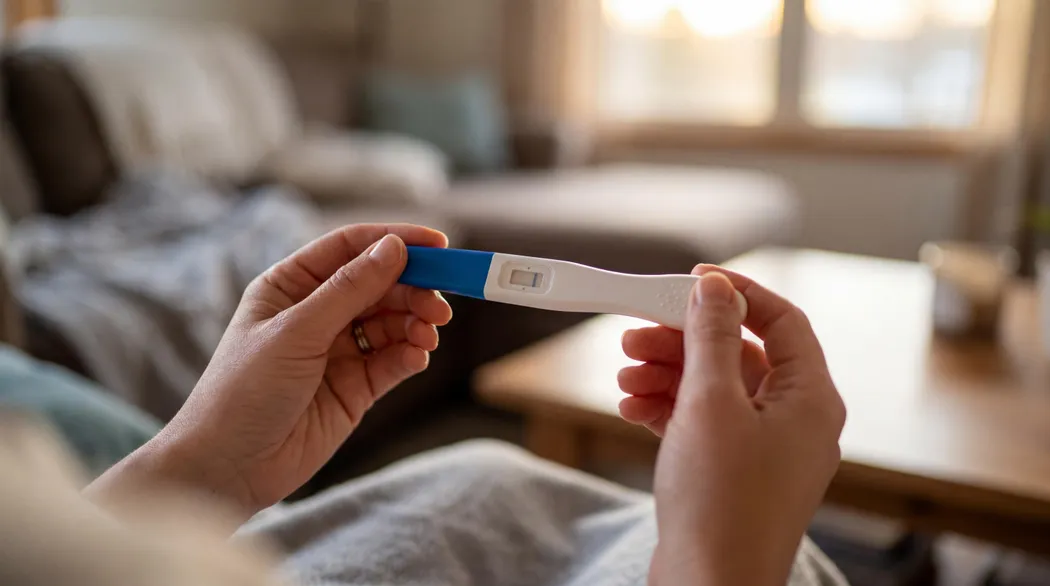
Home pregnancy tests detect hCG in urine. When to take a pregnancy test matters for accuracy: the most reliable time is the first day of a missed period or after. Testing too early means hCG levels may not yet be high enough to register, which can lead to a false negative.

If your cycle is irregular or you are unsure of your expected period date, testing at least three weeks after unprotected sex is a reasonable guide. For the most accurate result:

  • Use the first urine of the morning, when hCG is most concentrated.
  • Follow the test instructions carefully and read the result within the stated time window.
  • If the result is negative but your period still does not arrive, retest in two to three days.

A faint positive line still means hCG is present and is considered a positive result. A blood test at a clinic can detect hCG earlier and more precisely than a urine test, which is worth considering if you need clarity sooner.

Lesser-Known or Less Common Symptoms

Beyond the well-known signs, some people notice subtler changes in the first weeks. These are worth knowing, though none is exclusive to pregnancy.

  • Bloating and fullness: Bloating and a feeling of fullness, similar to pre-period bloating, can appear early due to hormonal shifts.
  • Mood changes: Mood changes, including heightened emotional sensitivity or irritability, are linked to rising oestrogen and progesterone.
  • Frequent urination: Frequent urination may begin sooner than expected, even before the uterus grows large enough to press on the bladder, because hCG and increased blood flow affect kidney function.
  • Food aversions and cravings: Food aversions or unusual cravings, and in some cases a heightened sense of smell, are early pregnancy symptoms reported by many people.
  • Metallic taste: A metallic taste in the mouth is less commonly discussed but is a recognised early complaint.

None of these alone confirms pregnancy. They are better understood as a cluster of signs that, taken together with a missed period, support testing.

When to See a Doctor

A positive home test should be followed by a confirmed appointment with a healthcare provider, ideally within the first eight weeks of pregnancy. Early prenatal care helps identify any risk factors and sets the foundation for a healthy pregnancy.

See a doctor promptly if you experience:

  • Heavy bleeding or severe cramping after a positive test
  • Symptoms of an ectopic pregnancy, such as sharp one-sided pain, shoulder pain, or dizziness
  • Persistent vomiting that prevents you from keeping food or water down
    Any uncertainty about your result or your health history

Your doctor will confirm the pregnancy with a blood test and possibly an early ultrasound, advise on prenatal vitamins (particularly folic acid), and answer questions specific to your circumstances. As pregnancy progresses toward delivery, there is much to prepare for, including practical topics like newborn care once your baby arrives.

Contraindications and Precautions

Certain situations require doctor consultation before self-testing or taking any medicine while pregnancy is suspected.

  • History of ectopic pregnancy, ovarian cysts, or fertility treatment: If you have a history of ectopic pregnancy, ovarian cysts, or fertility treatment, do not rely on a home test alone. Seek medical evaluation promptly.
  • Prescription medicines: Some medications can affect hCG levels or interact with early pregnancy. Do not start, stop, or adjust any prescription medicine based on a home test result without speaking to your doctor first.
  • Heavy bleeding, severe pain, or dizziness: If you experience heavy bleeding, severe pain, or dizziness alongside a positive test, go to an emergency facility rather than waiting for a routine appointment.
  • Report adverse events: Report adverse events related to any diagnostic product or medication to your healthcare provider or the relevant regulatory authority (in India, the Central Drugs Standard Control Organisation, CDSCO).

Conclusion

Early pregnancy symptoms can vary widely, and many, including fatigue, breast tenderness, bloating, cramping, and mood changes, can also occur with PMS. A missed period followed by a positive pregnancy test is a more reliable indication of pregnancy than symptoms alone. Testing on or after the first day of a missed period generally improves accuracy, while a blood hCG test may provide earlier confirmation. Seek prompt medical care for heavy bleeding, severe or one-sided abdominal pain, dizziness, or persistent vomiting, particularly after a positive test.

FAQS

How early can you feel pregnancy symptoms?

Some people notice very subtle signs, such as light fatigue or breast tenderness, as early as one to two weeks after conception. Most recognisable symptoms, however, tend to appear around week four to six of pregnancy.

Can you have pregnancy symptoms before a missed period?

Yes, in some cases. Implantation occurs six to twelve days after ovulation, which can be before a period is due, and early symptoms like mild cramping or spotting may appear then. That said, hCG levels at that stage are often too low to produce clear symptoms or a reliable test result.

What is the most accurate early sign of pregnancy?

A missed period combined with a positive pregnancy test is the most reliable indicator. Individual symptoms such as nausea or fatigue overlap with many other conditions and are not accurate on their own.

Can stress cause pregnancy-like symptoms?

Yes. Stress can delay a period, cause fatigue, affect appetite, and trigger mood changes, all of which mimic early pregnancy symptoms. If you are unsure, a pregnancy test is the most straightforward way to distinguish the two.

Do pregnancy symptoms differ from PMS symptoms?

Many overlap, including breast tenderness, bloating, mood shifts, and fatigue. Pregnancy symptoms tend to persist and intensify past when a period would normally start, and nausea is more characteristic of early pregnancy than of PMS.

Apollo 247 Floating Action Button