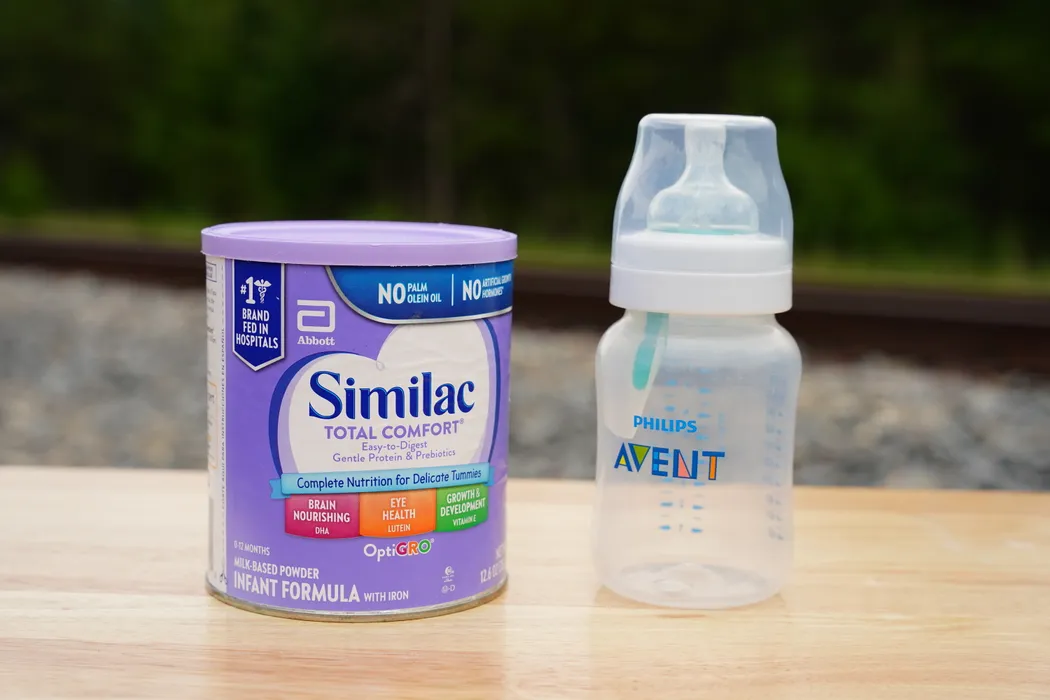
Similac Baby Formula: Types, Nutrition & Age Guide
Learn about Similac baby formula, its stages, nutritional features, specialised formula considerations, and safe preparation and storage for infants.
Dr.Kamran
Choosing an infant formula can feel overwhelming, particularly when several stages and specialised products are available. Similac is a widely recognised infant formula brand, but the most suitable formula depends on your baby's age, nutritional needs, feeding pattern and health.
This guide explains the different Similac stages, nutrients commonly found in standard formulas, when a specialised formula may be needed, and how to prepare and store infant formula safely.
What Is Similac Infant Formula?
Infant formula is a manufactured food designed to provide the nutrients babies need when breast milk is unavailable, insufficient, or when parents choose to use formula. Standard infant formulas provide nutrients such as protein, fat, carbohydrates, vitamins and minerals in amounts designed for infant nutrition.
Similac is a brand of infant formula manufactured by Abbott Nutrition. Standard Similac formulas are generally based on cow's milk proteins and may contain nutrients such as lactose, fats, iron, calcium, DHA and ARA. Some products also contain prebiotics or other added ingredients.
The exact formulation varies between products, stages and markets. Always check the current label of the specific Similac product for its ingredients, nutritional information, age suitability and preparation instructions.
Breast milk remains an important source of nutrition for infants when breastfeeding is possible and appropriate. Infant formula is a regulated alternative when breast milk is unavailable or when families choose or need to supplement breastfeeding.
Similac Variants and Age-Wise Stages
Similac products are available in different stages and formulations to meet the changing nutritional needs of babies and toddlers. The table below summarises their general age ranges and nutritional focus.
Infant nutrition, including protein, fat, carbohydrates, iron, DHA and other essential nutrients
Similac Stage 2
Around 6 to 12 months
Formula nutrition alongside complementary foods, with nutrients such as iron and protein
Similac Stage 3 or toddler formula
Generally after 12 months, depending on the product
Nutrition for toddlers alongside a varied diet
Similac specialised variants
Depends on the specific product and medical need
Modified ingredients or nutrient composition for particular feeding or medical requirements
Age ranges and formulations can vary between products and markets, so check the current product label for exact details.
Stage 1 products are generally intended for young infants from birth, while follow-on products are designed for older babies. From around 12 months, many children can have pasteurised whole cow's milk as a main milk drink as part of a balanced diet. A toddler formula may be used in some circumstances, but it is not automatically necessary for every child.
Do not choose a formula stage solely because of its marketing. Check the exact product instructions and seek paediatric advice if your baby has specific nutritional or medical needs.
The nutritional composition differs between individual Similac products. Standard infant formulas commonly provide protein, fats, carbohydrates, vitamins and minerals, including iron.
The main components parents may see on a Similac label include the following.
Protein
Standard Similac formulas generally contain cow's milk proteins, including whey and casein. The relative proportions can differ between formulations.
It is not accurate to assume that a particular whey-to-casein ratio makes one formula universally easier to digest. Babies respond differently to formula, and digestive symptoms can have several causes.
DHA and ARA
Some Similac formulas contain DHA, an omega-3 fatty acid, and ARA, an omega-6 fatty acid. These fatty acids are naturally present in human milk and are included in many infant formulas.
Their presence in formula does not mean that formula reproduces all of the biological functions of breast milk.
Iron
Iron is an important nutrient during infancy because it supports normal growth and neurological development. Standard infant formulas are generally fortified with iron, although the amount varies by product.
After around 6 months, babies also need iron-rich complementary foods alongside breast milk or formula.
Prebiotics
Some Similac products contain prebiotic ingredients intended to support the growth of beneficial bacteria in the gut. However, the ingredients and amounts are not identical across all Similac products.
Check the ingredient list of the specific product rather than assuming that every Similac formula contains the same prebiotic blend.
Carbohydrates
Lactose is the primary carbohydrate in many standard cow's milk-based infant formulas. Specialised products may contain different carbohydrate sources depending on their formulation.
A baby's tolerance of a formula depends on the complete formulation, not on a single ingredient alone.
Comparing Nutritional Features Across Stages
The nutritional profile of Similac can differ across stages and individual products. The table below highlights the key nutritional features commonly considered when comparing these stages.
Nutritional feature
Stage 1
Stage 2
Stage 3 or toddler formula
Intended age
Birth to around 6 months
Around 6 to 12 months
Generally after 12 months, depending on product
Protein
Provides protein for infant growth
Provides protein alongside complementary foods
Provides protein alongside a varied toddler diet
Iron
Fortified with iron in standard formulations
Provides iron alongside complementary foods
Depends on the specific product
DHA/ARA
May be included
May be included
Depends on the specific product
Prebiotics
Depends on product
Depends on product
Depends on product
Carbohydrate source
Depends on formulation
Depends on formulation
Depends on formulation Depends on formulation
Exact nutrient amounts and ingredients vary by product and market. Refer to the current pack label for the most accurate nutritional information.
Who May Need to Avoid Standard Similac Formula?
Standard cow's milk-based infant formula is not appropriate for every baby. Some infants require a specialised formula or individual medical assessment.
The following situations require particular care:
Babies with galactosaemia need a medically appropriate formula that avoids lactose and galactose.
Babies with confirmed cow's milk protein allergy may need an extensively hydrolysed or amino acid-based formula rather than a standard cow's milk-based formula.
True lactose intolerance is uncommon in young infants. Temporary lactose intolerance can occur after some gastrointestinal infections, but symptoms should be assessed rather than assumed to be caused by lactose.
Premature or medically vulnerable infants may have nutritional requirements that differ from those of healthy full-term babies and may need a specialised feeding plan.
A rash, repeated vomiting, diarrhoea, blood in the stool, poor feeding, persistent feeding distress or poor weight gain should not automatically be attributed to formula intolerance. These symptoms can have different causes and may require medical assessment.
How to Prepare and Store Similac Formula Safely?
Safe preparation is essential because powdered infant formula is not sterile. Careful hand hygiene, clean feeding equipment and accurate preparation help reduce the risk of contamination.
Preparing a Feed
Follow the preparation instructions printed on the current Similac pack. General safe practices include:
Wash your hands thoroughly before preparing a feed.
Make sure the bottle, teat and other feeding equipment have been appropriately cleaned and sterilised according to local guidance and the manufacturer's instructions.
Use safe drinking water suitable for preparing infant formula.
Measure the required amount of water first, then add the exact amount of powder specified on the product label.
Use only the scoop supplied with that product and level each scoop as instructed.
Never add extra powder to make a feed stronger. Incorrectly concentrated formula can cause serious health problems.
Mix thoroughly and check the temperature before feeding.
Feed the baby promptly and discard any formula left in the bottle after a feed.
Powdered infant formula is not sterile. For babies younger than 2 months, babies born prematurely, or babies with a weakened immune system, additional precautions may be recommended because infections caused by organisms such as Cronobacter can be particularly serious. Your paediatrician can advise on the safest preparation method for your baby.
Storing Prepared Formula
Prepared formula should be handled carefully and used according to the manufacturer's storage instructions and local food-safety guidance.
Prepare feeds as close to feeding time as practical.
Prepared formula should generally be used within 2 hours of preparation if it has been kept at room temperature.
If prepared formula is not going to be used within 2 hours, refrigerate it promptly and use it within 24 hours.
Once feeding has started, use the prepared formula within 1 hour and discard any remaining formula.
Do not refrigerate leftover formula from a feed that has already started.
Store unopened formula containers in a cool, dry place away from excessive heat and moisture.
After opening a powdered formula container, keep it tightly closed and follow the manufacturer's stated period for use after opening.
Never use formula after the use-by date on the container.
Choosing the Right Formula: When to Consult a Paediatrician
Choosing an infant formula should not depend on brand reputation alone. The most appropriate product is the one that meets the baby's nutritional and medical needs and can be prepared safely.
A paediatrician should be consulted when a baby has a medical condition, was born prematurely, is not gaining weight as expected, or has persistent feeding problems. Medical advice is particularly important before choosing a specialised formula for suspected allergy, malabsorption or another health condition.
Seek medical advice if your baby develops:
Persistent or repeated vomiting
Ongoing diarrhoea
Blood in the stool
Hives, facial swelling or other signs of an allergic reaction
Wheezing or breathing difficulty
Persistent feeding difficulty or refusal
Poor weight gain
Significant or ongoing feeding-related distress
If a baby develops severe breathing difficulty or swelling of the face, lips, tongue or throat after feeding, seek emergency medical care.
Formula changes should also be discussed with a healthcare professional when the baby has a diagnosed allergy, gastrointestinal disorder, growth concern or other medical condition. For healthy babies, switching between products may sometimes be appropriate, but repeated unnecessary changes can make it harder to determine whether symptoms are related to the formula or another cause.
Conclusion
Similac offers different infant and follow-on formulas, but the appropriate choice depends on the baby's age, nutritional requirements and health rather than the brand name alone. Standard formulas provide essential nutrients such as protein, fats, carbohydrates, iron and other vitamins and minerals, while specialised formulations may be needed for certain medical conditions.
Always use the current product label for preparation and storage instructions, and seek paediatric advice if your baby has persistent feeding difficulties, allergic symptoms, digestive problems or poor growth. Safe preparation and appropriate feeding practices are just as important as choosing a suitable formula.
FAQS
Which Similac stage is best for a newborn?
A Stage 1 infant formula is generally intended for babies from birth, but the exact product should be checked for its stated age range and formulation. Babies with prematurity, allergies or other medical needs may require a different formula recommended by a paediatrician.
Can Similac formula cause constipation?
Some babies may have firmer stools after changing from breast milk to formula, but constipation is not always caused by the formula itself. Very hard stools, painful bowel movements, blood in the stool or persistent symptoms should be discussed with a paediatrician.
How much Similac should a baby drink per day?
There is no single daily amount that is appropriate for every baby. Feeding needs vary according to age, weight, growth, feeding pattern and whether the baby is also breastfeeding or eating complementary foods. Follow the product's feeding guidance and your paediatrician's advice rather than forcing a fixed volume.
Is Similac formula close to breast milk?
Infant formula is designed to provide the nutrients needed for infant growth and development, but it does not reproduce breast milk completely. Breast milk contains a complex range of antibodies, living cells and other bioactive components that are not replicated by standard infant formula.
What is the difference between Similac and other formula brands?
Different formula brands and products can vary in their protein sources, carbohydrate and fat composition, added nutrients and specialised formulations. The most important consideration is whether the specific formula is appropriate for your baby's age and individual nutritional or medical needs.