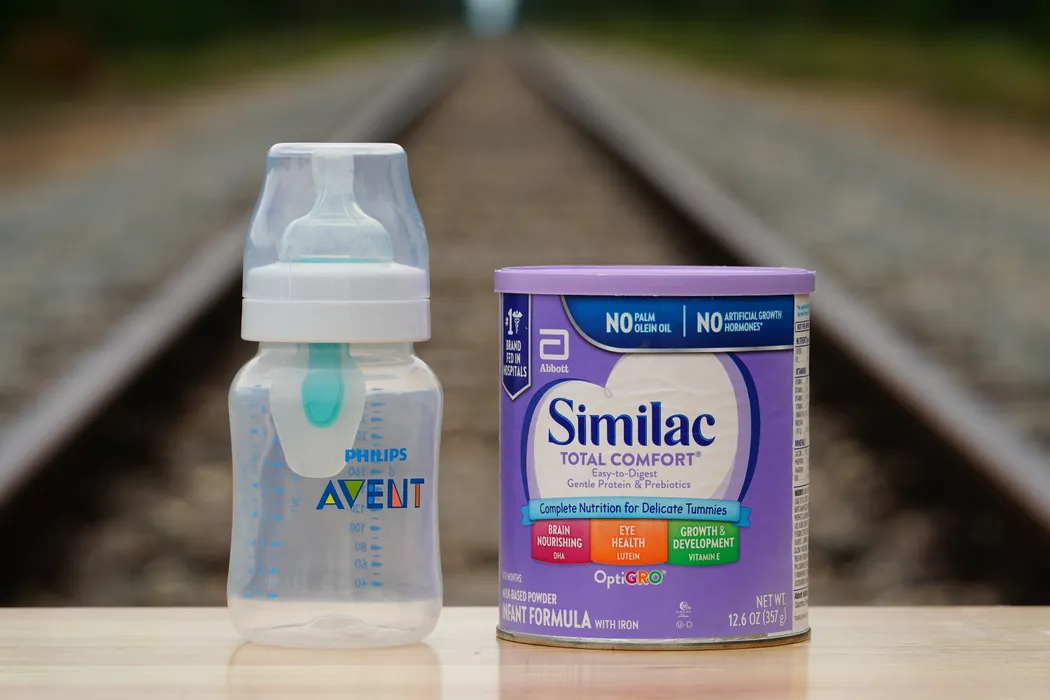
Explore Similac Stage 1 infant formula in India. Discover nutritional values, DHA content, feeding guidelines, pricing, and essential preparation safety.
Choosing the right infant milk formula for newborns is one of the first major decisions new parents face, and it often comes with a lot of uncertainty. If your baby is under six months old and you cannot exclusively breastfeed, Similac Stage 1 is one of the formulas a paediatrician may recommend. This guide covers what the product contains, how it compares with other stages in the range, what it costs in India, and what you must know before using it safely.
Similac Stage 1 is a cow's milk-based infant formula designed for babies from birth up to six months of age. It falls into the category of starting formula or infant formula, regulated in India as a food for special dietary use under FSSAI guidelines.
The formula is intended as a substitute or supplement when breast milk is unavailable, insufficient, or medically contraindicated. It is not a complementary food and should not be used alongside solids or weaning foods at this stage.
Key points about intended use:
Age indication: Suitable from birth through approximately 6 months of age.
Feeding role: Formulated to serve as a complete milk substitute or alongside partial breastfeeding under direct medical guidance.
Physical form: Available as a dry powder that requires precise reconstitution with boiled, cooled water before feeding; it is not a ready-to-feed liquid.
Clinical precedence: Breastfeeding is the recommended first choice for all infants. Similac Stage 1 should only be introduced after consultation with a qualified paediatrician.
Nutritional Composition of Similac Stage 1
The table below reflects typical label declarations. Always read the specific pack you purchase because formulations can be updated between production runs.
Key nutrients per 100 g of powder (approximate)
Nutrient
Approximate Value per 100 g
Clinical Significance
Energy
508 kcal
Calibrated energy density to support somatic growth
Protein
10.8 g
Whey-dominant blend to prevent renal solute overload
Fat (total)
27.0 g
Essential fatty acid blend for energy and cellular integrity
Carbohydrate
55.4 g
Primarily lactose to aid calcium absorption and gut flora
DHA (docosahexaenoic acid)
52 mg
Supports central nervous system myelination and retinal development
ARA (arachidonic acid)
104 mg
Complements DHA in neural arborisation and tissue growth
Nucleotides (total)
22 mg
Supports mucosal immune response and cellular repair
Calcium
410 mg
Promotes bone mineralisation and skeletal elongation
Iron
6.0 mg
Bioavailable iron to support haematopoiesis and brain growth
Typical ingredient categories include:
Primary proteins: Skimmed milk and demineralised whey protein concentrate, engineered to deliver an adjusted whey-to-casein ratio closer to breast milk than whole bovine milk (which contains \~80% casein).
Healthy fats: A tailored vegetable oil blend (palm olein, soy, coconut, and high-oleic sunflower oil) providing essential fatty acids without harmful trans fats.
Carbohydrates: Lactose as the predominant carbohydrate source to mirror natural breast milk composition.
Functional lipids: DHA and ARA, long-chain polyunsaturated fatty acids added to support visual acuity and cognitive neurodevelopment.
Immune building blocks: Added nucleotides to mirror human milk's protective gastrointestinal and immune-modulating actions.
Essential micronutrients: Complete vitamin spectrum (Vitamins A, C, D, E, K, and B-complex vitamins).
Vital minerals: Balanced electrolytes and trace minerals, including calcium, phosphorus, iron, zinc, and selenium.
Similac Product Range: Stages and Speciality Formulas Compared
Understanding the staged progression of infant formula ensures your baby receives nutrient concentrations aligned with their organ maturity and metabolic capacity.
Product
Age range
Primary use
Similac Stage 1
0 to 6 months
Starting infant formula; lower protein density and renal solute load tailored to immature neonatal kidneys.
Similac Stage 2
6 to 12 months
Follow-on formula; higher protein and iron concentration to support complementary feeding and accelerating motor growth.
Similac Stage 3
12 to 24 months
Growing-up toddler milk; enriched with micronutrients to complement family table foods.
Similac Soy
Under medical guidance
100% soy protein isolate; lactose-free formula for babies with confirmed galactosaemia or secondary lactose intolerance.
Similac Lactose-Free
Under medical guidance
Specialised cow's milk protein formula without lactose; prescribed for transient or primary lactase deficiency.
Stage 1 has a lower protein density than Stage 2, which is intentional. A newborn's kidneys are immature and cannot handle a high renal solute load safely. The energy density in Stage 1 is calibrated to approximate mature breast milk.
Speciality formulas, including soy and lactose-free variants, should only be introduced on a paediatrician's advice. Do not switch to them based on a general perception of fussiness or gas without a proper clinical assessment.
Similac Stage 1 Price in India
Pricing varies slightly across regional pharmaceutical distributors, hospital pharmacies, and verified e-commerce platforms.
Pack size
Box
Approximate price range (INR)
200 g
Refill / Bag-in-Box (BIB)
₹250 – ₹290
400 g
Refill / Tin
₹480 – ₹550
900 g
Tin / Value Box
₹1,150 – ₹1,270
Larger packs generally offer a better cost per gram, but only buy a size you can finish within the period stated after opening, usually three to four weeks once the tin is unsealed. Purchasing from a licensed pharmacy or verified online retailer ensures you receive a product with correct cold-chain handling and a valid expiry date.
How to Prepare and Feed Similac Stage 1 Safely
Pathogens such as Cronobacter sakazakii can proliferate in improperly reconstituted powdered formula. Strict adherence to preparation hygiene prevents gastrointestinal illness.
Water preparation
Boiling and cooling threshold: Boil fresh, clean drinking water vigorously for 5 minutes and allow it to cool down to approximately 40°C to 50°C before mixing.
Water purity: Avoid using mineral water with high sodium or fluoride content for routine infant formula reconstitution.
Microwave hazard: Never heat water or made-up formula bottles in a microwave, as uneven thermal dispersion creates localised hot spots that cause oral scalding.
Mixing the formula
Equipment sterilisation: Wash hands thoroughly and sterilise all bottles, teats, retaining rings, and measuring utensils in boiling water for 5 minutes or using a steam steriliser before every feed.
Liquid-first order: Pour the measured volume of cooled boiled water into the sterilised bottle first before adding powder.
Precise scoop measurement: Use only the scoop provided inside the tin. Measure one level,** unpacked scoop (approximately 4.4 g) of powder for every 30 ml (1 fl oz) of water. Level each scoop with a clean, dry knife; never pack down or heap the powder.
Gentle reconstitution: Cap the bottle and swirl gently until the powder is fully dissolved. Avoid violent vertical shaking, which whips excess air into the feed and increases infantile aerophagia (gas and colic).
Feeding and storage
Immediate consumption: Check the temperature on your inner wrist and feed immediately upon preparation.
Leftover disposal: Discard any formula remaining in the bottle after a feeding session within 1 hour. Salivary enzymes and bacteria from the infant's mouth contaminate the milk, making reuse unsafe.
Room-temperature limit: Never leave reconstituted formula standing at room temperature for longer than two hours.
Tin storage limits: Store the sealed or opened tin in a cool, dry place (not in a refrigerator). Keep the lid tightly sealed and consume the contents within three to four weeks of opening.
Who Should Not Use Similac Stage 1
Certain infants have genetic or immunological conditions that make standard cow's milk-based formula unsafe.
Absolute contraindications:
Galactosaemia: An inborn error of metabolism where the infant lacks the enzyme required to metabolise galactose (a breakdown product of lactose). Similac Stage 1 contains lactose and is strictly contraindicated.
Cow's milk protein allergy (CMPA): An immune-mediated hypersensitivity to bovine whey or casein proteins. Standard formula can provoke cutaneous reactions, gastrointestinal bleeding, or severe anaphylaxis. Extensively hydrolysed or amino acid-based medical formulas are required.
If your baby develops blood in their stools, chronic persistent vomiting, severe facial rashes, or wheezing after feeding, discontinue the formula immediately and seek emergency paediatric evaluation.
Important Safety Information
Exclusive breastfeeding priority: Exclusive breastfeeding is recommended as the optimal nutritional foundation for infants during the first six months of life.
Clinical indication: Similac Stage 1 is an infant milk substitute designed strictly for instances where breast milk is insufficient, unavailable, or clinically contraindicated, and must be initiated under professional medical supervision.
Adverse event reporting: Report adverse events to your healthcare provider or the relevant regulatory authority.
Conclusion
Selecting an appropriate infant formula requires a careful balance between your baby's physiological maturity and their individual nutritional demands. Similac Stage 1 provides a clinically balanced, whey-predominant nutrient profile designed to approximate mature human milk while shielding immature neonatal kidneys from excessive renal solute loads. Optimal infant health depends not just on the formula itself, but on meticulous preparation hygiene, precise water-to-powder measurement, and strict avoidance of unsafe storage practices. While infant formulas serve as essential alternatives when breastfeeding is not medically possible or sufficient, any decision to initiate, alter, or switch formula brands must be undertaken under the direct clinical guidance of your paediatrician.
FAQS
Is Similac Stage 1 good for newborns?
Similac Stage 1 is formulated specifically for infants from birth to six months, so it is considered appropriate for newborns when breastfeeding is not possible. Always confirm with your paediatrician before starting any infant formula.
How long should a baby be on Similac Stage 1?
It is generally used from birth until around six months of age, after which a follow-on formula such as Stage 2 may be introduced alongside solid foods, on paediatrician advice.
Can I mix Similac Stage 1 with breast milk?
Combining formula with expressed breast milk in the same bottle is generally not recommended, as any leftover must be discarded after the feed, wasting the breast milk. Feed them separately if both are being given; discuss timing with your paediatrician.
What is the difference between Similac Stage 1 and Stage 2?
Stage 1 has a lower protein and iron level suited to immature newborn kidneys, while Stage 2 has a higher protein and iron content designed for babies over six months who are starting solids and growing faster.
Does Similac Stage 1 cause constipation?
Some formula-fed infants pass stools less frequently than breastfed babies, which can be normal. If your baby seems uncomfortable, strains excessively, or passes very hard stools, speak to your paediatrician rather than switching formulas without guidance.