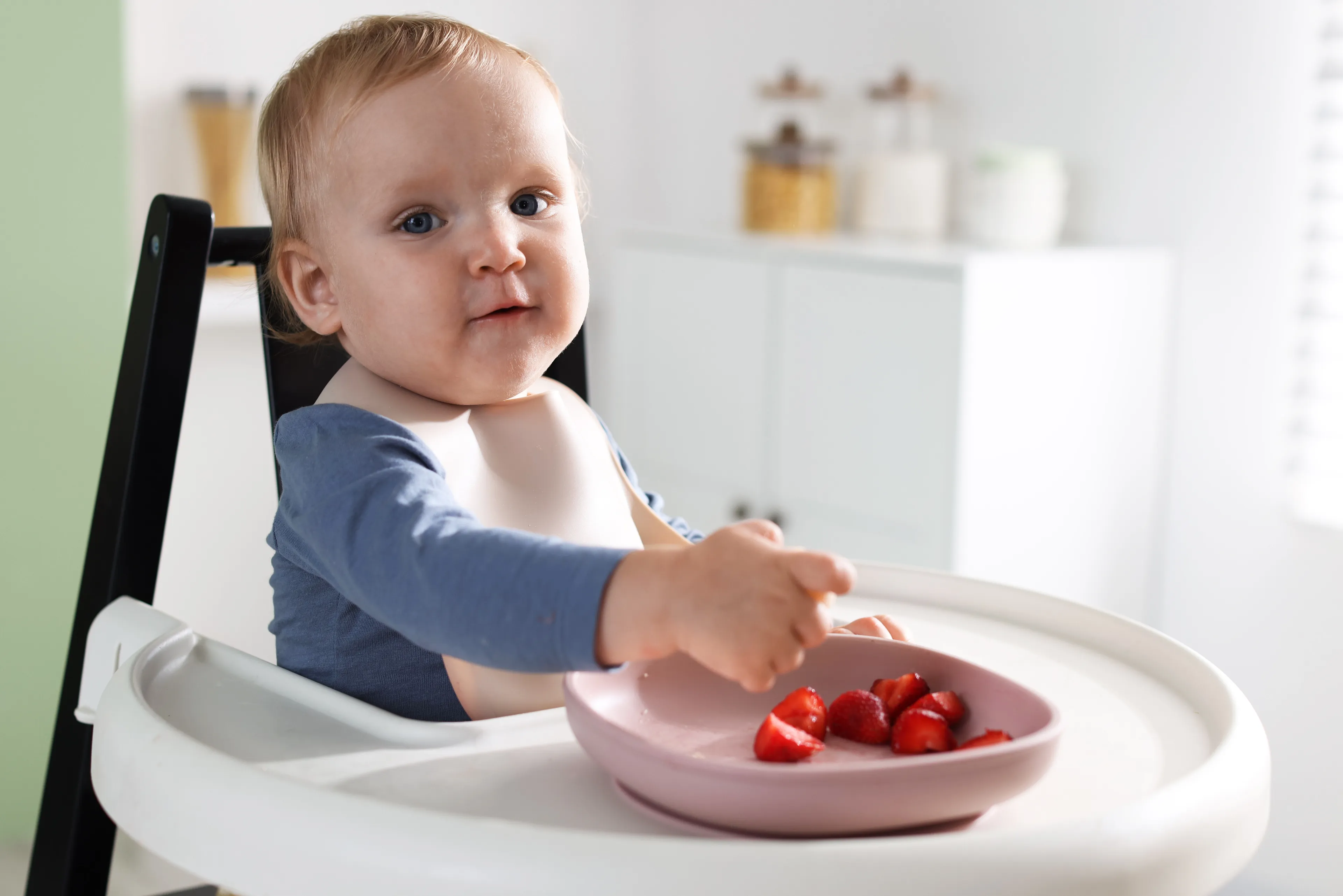
Safety and Allergy Concerns: Are Strawberries Safe for Babies?
Safety is the top priority for any parent introducing new foods. A common question that arises is, Are strawberries safe for babies? While strawberries are highly nutritious, they do carry a couple of risks that parents should keep in mind: choking hazards and allergic reactions.
1. Minimising Choking Risks
Strawberries are naturally round, firm, and slippery, which means whole strawberries are a significant choking hazard for infants. To make them safe:
At 6 months: Always serve them as a smooth puree, a very soft mash, or cut into long, thin, flat spears that your baby can easily hold and gnaw on.
At 9 to 12 months: Once your baby develops their "pincer grasp" (the ability to pick up food with their thumb and forefinger), you can serve strawberries cut into very small, bite-sized pieces (about the size of a chickpea).
2. Allergic Reactions vs. Acid Rashes
Strawberries are not considered one of the "top 9" common food allergens (like milk, eggs, peanuts, or soy). However, any food can theoretically cause an allergic reaction.
Additionally, strawberries are acidic. It is very common for babies to develop a mild, red rash around their mouth or diaper area after eating them. This is usually not a true allergic reaction. Instead, it is a localised skin irritation caused by the natural fruit acids coming into contact with sensitive baby skin. You can help prevent this by applying a thin layer of petroleum jelly or a safe skin barrier cream around your baby's mouth before they eat.
Symptoms of a True Allergic Reaction:
If your baby is genuinely allergic to strawberries, you will likely notice symptoms within minutes to a couple of hours after ingestion. Watch for:
- Hives or itchy red welts on the body
- Swelling of the lips, tongue, or face
- Vomiting or diarrhoea
- Difficulty breathing, wheezing, or coughing
Note: If you notice any signs of a severe allergic reaction (anaphylaxis), seek emergency medical attention immediately.