logo
0

Teethers for Infants: Teething Relief and Safety Guide

Choosing a safe teether for infants? Learn teething signs, teether types, soothing techniques, and when to consult a pediatrician.

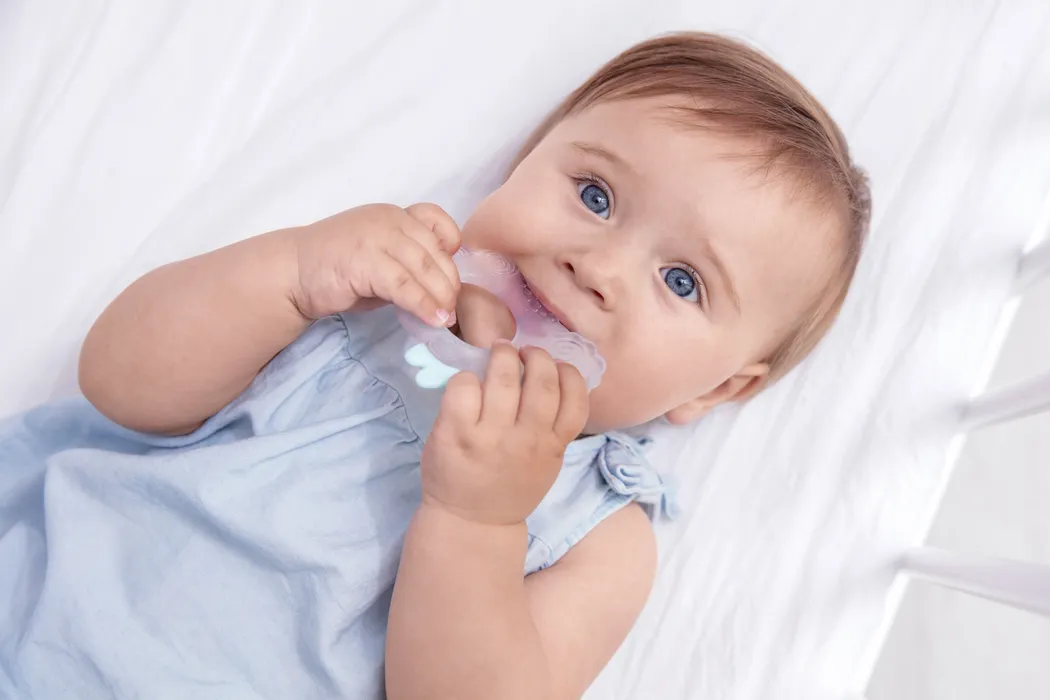
article image

Dr.Nallapu Siri

Every new parent knows the feeling: your once peaceful baby is suddenly drooling, fussing, and gnawing on anything within reach. Choosing the right teether for infants can make this phase easier for both of you, but with so many options on the market, it helps to know what is safe, what works, and what to avoid. This guide covers teething basics, teether types, soothing strategies, and the warning signs that deserve a doctor's attention.

What Is Infant Teething and When Does It Start?

Most babies cut their first tooth somewhere between 4 and 7 months, though some start as early as 3 months and others not until after 12 months. Both ends of that range are completely normal.

The typical order of eruption:

  • Lower front teeth (central incisors) usually appear first
  • Upper front teeth follow within a few months
  • Lateral incisors, first molars, canines, and second molars come
  • through gradually up to around age 2 to 3

A full set of 20 primary teeth is usually in place by the time a child turns 3. When do babies start teething exactly? There is no single answer. Family history, nutrition, and individual development all play a role, so try not to compare your baby's timeline to a neighbour's.

Common Signs and Symptoms of Teething

Baby teething symptoms can be subtle at first. Watch for:

  • Increased drooling, sometimes enough to cause a chin rash
  • Swollen, tender-looking gums along the ridge
  • A strong urge to chew on fingers, toys, or your shoulder
  • Mild fussiness, especially in the evenings
  • Slightly disturbed sleep

What teething does not typically cause, a temperature above 38 degrees Celsius, diarrhoea, or a runny nose. If your baby has any of these alongside gum swelling, the cause is more likely a virus than a tooth. See your doctor to rule out illness before attributing symptoms to teething.

Types of Teethers for Infants

Not all teethers are built the same. Here is a quick comparison:
 

Type    MaterialKey BenefitWatch Out For
SiliconeFood-grade silicone    Soft, easy to clean, BPA-free    Check for firm construction; avoid thin tubes that can burst
Natural rubberLatex-derived rubberGentle on gums, flexibleNot suitable if baby has a latex sensitivity
Wooden    Untreated hardwood    Durable, chemical-free when unvarnishedConfirm no dyes, varnish, or small detachable parts
Water-filledPlastic or silicone shellCan be chilled for extra soothingNever freeze solid; shells can crack and leak
TexturedSilicone or rubber with ridgesVaried surface stimulates gum reliefEnsure ridges are firmly attached

A silicone teether for babies is among the most popular choices because food-grade silicone is easy to sterilise, free of BPA and phthalates, and gentle enough for the softest gums. Whatever type you choose, look for an age label on the packaging and verify the product meets safety standards.

How to Choose a Safe Teether

The best teether for infants is one that fits your baby's size and age and can be kept consistently clean. A few practical checks before you buy:

  • Teether size: The teether should be large enough that it cannot be swallowed or lodge in the throat. Anything small enough to fit entirely in a baby's mouth is a choking hazard.
  • Check for loose parts: Squeeze and pull the teether before first use. If any part detaches, set it aside.
  • Safe materials: Look for "BPA-free" and "food-grade" labelling. Avoid products with no clear information about their materials.
  • Chilling safely: Water-filled teethers can be chilled in the refrigerator for 15 to 20 minutes. Never place them in the freezer, as a rock-hard teether can bruise tender gums.
  • Clean after use: Clean the teether after every use. Most silicone and rubber teethers can be washed with warm soapy water or briefly sterilised in boiling water. Always follow the manufacturer's instructions.
  • Inspect regularly: Check the teether for cracks, tears or discolouration, and replace it at the first sign of damage.

For families building their overall routine, it is worth reading up on newborn care basics parents should know to develop safe infant care habits from day one.

Soothing Techniques Beyond Teethers

Knowing how to soothe a teething baby does not always require a product. Many simple, drug-free approaches work well:

  • Chilled washcloth: A clean, damp washcloth chilled in the refrigerator (not the freezer) gives babies something firm to gnaw on and provides gentle cold relief.
  • Gum massage: Gently rub your baby's gum ridge with a clean finger for a minute or two to help ease pressure temporarily.
  • Chilled soft foods: For babies who have started solids, usually around 6 months as advised by your paediatrician, chilled soft foods such as yoghurt or cold purée may provide brief comfort. Always supervise closely.
  • Cuddles and distraction: Extra cuddles and gentle distraction can help reduce distress. A change of scene or a favourite toy may also help break the fussiness cycle.

Teething remedies for babies work best when layered, a chilled teether, gum massage, and a calm environment together tend to give more relief than any single method alone.

When to Consult a Doctor and Medication Cautions?

Most teething discomfort can be managed without medication. If your baby seems in significant pain or you are unsure what is causing the distress, speak to your paediatrician before reaching for any product.

Topical gels containing benzocaine should not be used in infants and young children. Regulatory authorities have advised against benzocaine-based gels for this age group because of the risk of a rare but serious condition that reduces the blood's ability to carry oxygen.

If non-drug measures are not enough, your doctor can advise whether an age-appropriate pain reliever is suitable for your child's weight and situation. Never adjust a dose or choose a product without paediatric guidance.

Report adverse events related to any product to your healthcare provider or the relevant regulatory authority.

Contraindications and Safety Warnings

Some teething products carry real risks for infants and should be avoided entirely:

  • Benzocaine-containing gels: These products are associated with serious blood oxygen problems in young children and are not recommended for infants.
  • Homeopathic teething tablets containing belladonna: These have been flagged by regulatory agencies because of concerns about inconsistent dosing and potential toxicity in infants.
  • Amber teething necklaces: These pose choking and strangulation hazards and have no proven clinical benefit.
  • Teethers with detachable or unsafe parts: Avoid teethers with small detachable parts, thin water-filled membranes that may burst, or materials that cannot be verified as food-safe.
  • Frozen solid teethers: Avoid freezing teethers solid, as their extreme hardness can injure delicate gum tissue.

If your baby has a known latex allergy, natural rubber teethers are contraindicated. Always check the product label and consult your paediatrician if you are uncertain.

Conclusion

Teething is a normal part of your baby's development, but it can be uncomfortable for both babies and parents. A safe, age-appropriate teether, along with simple measures such as a chilled washcloth and gentle gum massage, can help provide relief. Always supervise your baby while using a teether, check it regularly for damage, and avoid products that may pose choking, strangulation or other health risks. If your baby has a fever, significant discomfort, or symptoms that seem unrelated to teething, consult your paediatrician for appropriate advice.

FAQS

How long does teething last in babies?

Each individual tooth typically causes noticeable discomfort for a few days before and just after it breaks through the gum. Because babies grow 20 primary teeth over roughly 2 to 3 years, teething comes in phases rather than as one continuous stretch of discomfort.

Can teething cause fever?

Teething may cause a very slight rise in gum-area temperature, but it does not cause a true fever above 38 degrees Celsius. A fever at that level almost always points to an infection, so consult your doctor rather than assuming teething is the cause.

Are frozen teethers safe for infants?

Chilled teethers (refrigerated for 15 to 20 minutes) are fine, but frozen solid teethers are not recommended. The extreme hardness can bruise or damage a baby's tender gum tissue, and water-filled shells can crack in the freezer.

What can I give my 6-month-old for teething pain?

Start with non-drug approaches such as a chilled teether, clean-finger gum massage, or a cold damp washcloth. If these are not enough, ask your paediatrician whether an age- and weight-appropriate oral pain reliever is suitable; do not choose or dose medication without their guidance.

How do I clean my baby's teether?

Wash it with warm soapy water after every use and rinse thoroughly. Most silicone and natural rubber teethers can also be briefly sterilised in boiling water; always check the manufacturer's instructions and replace the teether if you notice any cracks, tears, or discolouration.

Apollo 247 Floating Action Button