logo
0

Teething in Infants: A Complete Guide for Parents

Discover teething symptoms, remedies, timelines, and expert tips to soothe your baby's discomfort. Learn when to seek medical advice during teething.

article image

Dr. Vasantha Sree

Teething in infants is one of the most talked-about milestones in early parenting, and for good reason. Those first tiny teeth arriving can bring weeks of fussiness, disrupted sleep, and a lot of worried questions. Knowing what to expect, what actually helps, and what to skip entirely makes this phase much easier to manage.
 

What Is Teething and When Does It Start?

Teething is the process by which a baby's first set of teeth, called primary or milk teeth, push through the gum tissue and become visible in the mouth. Most babies begin teething somewhere between 4 and 7 months of age. Some start as early as 3 months; others don't show a first tooth until closer to 12 months. Both ends of that range are entirely normal.

If your baby has no teeth at all by 12 months, mention it to your paediatrician at the next visit, but it rarely signals a problem. Every baby follows their own timeline, and the order in which teeth appear matters more than the exact age.
 

Teething Stages: The Tooth Eruption Timeline

Babies eventually grow 20 primary teeth in total. They come in roughly symmetrical pairs, usually lower before upper, and follow a fairly predictable sequence through about 30 months of age.

Central Incisors

  • Lower jaw: 6 to 10 months
  • Upper jaw: 8 to 12 months

Lateral Incisors

  • Lower jaw: 10 to 16 months
  • Upper jaw: 9 to 13 months

First Molars

  • Lower jaw: 14 to 18 months
  • Upper jaw: 13 to 19 months

Canines (Cuspids)

  • Lower jaw: 17 to 23 months
  • Upper jaw: 16 to 22 months

Second Molars

  • Lower jaw: 23 to 31 months
  • Upper jaw: 25 to 33 months

The lower central incisors are typically first to arrive, followed closely by the upper central incisors. First molars tend to cause more discomfort than incisors because of their larger surface area pushing through. The full set of primary teeth is usually complete somewhere between 2.5 and 3 years of age.
 

Common Teething Symptoms in Infants

Recognising baby teething symptoms helps you respond calmly rather than scrambling to figure out what is wrong.

Signs that are genuinely linked to teething:

  • Increased drooling, sometimes enough to cause a mild chin rash
  • Swollen, red, or slightly bruised-looking gum tissue where a tooth is about to emerge
  • More chewing and gnawing on hands, toys, or anything within reach
  • Irritability and crying, particularly in the days just before a tooth breaks through
  • Mild sleep disruption, especially around molar eruption
  • Slightly reduced appetite because sucking may put pressure on sore gums


What teething does NOT cause:

Teething fever in babies is a persistent myth. Research consistently shows that teething may cause a tiny, transient temperature blip, a fraction of a degree above baseline, but it does not cause a true fever of 38°C or above. Similarly, diarrhoea is not a teething symptom. If your baby has a temperature of 38°C or higher, loose stools, a rash, or significant ear-pulling, something else is going on and deserves medical attention.

Runny noses are also commonly blamed on teething. There is no biological mechanism by which teething causes nasal congestion. If your baby has a cold alongside teething, that is coincidence, not causation. For guidance on managing cold-like symptoms in infants, see our separate resource.
 

Safe Teething Pain Relief Options

The goal is to reduce gum discomfort without introducing anything harmful. Start with non-pharmacological options; most babies need nothing more.

Non-Pharmacological Approaches

A chilled (not frozen) silicone or rubber teether pressed against the gums can reduce inflammation temporarily. Frozen teethers can be too hard and may bruise gum tissue.
Gently rubbing the baby's gums with a clean finger for one to two minutes provides short-term relief through counter-pressure.
A clean, damp washcloth chilled in the refrigerator works just as well as any commercial product for many babies.

Paracetamol for Teething Pain

When gum discomfort is clearly interfering with sleep or feeding, infant paracetamol (acetaminophen) is the first-line pharmacological option for teething pain relief for babies. Dosing is weight-based. A commonly used guide is 10 to 15 mg per kg of the baby's body weight per dose, but always confirm the exact dose with your paediatrician or follow the dosing chart printed on the specific product packaging, as concentrations vary between formulations. Never exceed the recommended dose, and do not give more than the stated number of doses in 24 hours.

Paracetamol should not be used continuously just because a tooth is coming. Reserve it for moments when discomfort is clearly affecting the baby's feeding or rest.
Ibuprofen is an option for babies over 6 months. Like paracetamol, it is dosed by weight; follow your paediatrician's guidance or the product-specific dosing chart for the correct amount and frequency. Do not give ibuprofen to babies under 6 months. Do not use aspirin in children of any age, as it carries a risk of a rare but serious condition called Reye's syndrome.

Important: Report adverse events to your healthcare provider or the relevant regulatory authority.
 

Choosing Safe Teether Products

With many safe teether toys available in India, a few clear criteria help you pick wisely.
What to look for:

  • BPA-free materials, reputable brands will state this clearly on the packaging
  • Solid silicone or rubber construction with no liquid or gel filling, because liquid-filled teethers can crack and leak
  • A size large enough that it cannot be swallowed or lodge in the throat, typically wider than the baby's mouth opening
  • Smooth surfaces with no small detachable parts
  • Easy to clean, either dishwasher-safe or washable with warm soapy water

Amber teething necklaces are sold widely but are not safe. The primary risks are strangulation and choking if the cord breaks and beads scatter. There is no credible clinical evidence that succinic acid from amber has any pain-relieving effect on gum tissue. Do not use them. Necklaces, bracelets, or anklets of any kind worn by infants for teething carry the same risks.
 

Home Remedies and What to Avoid

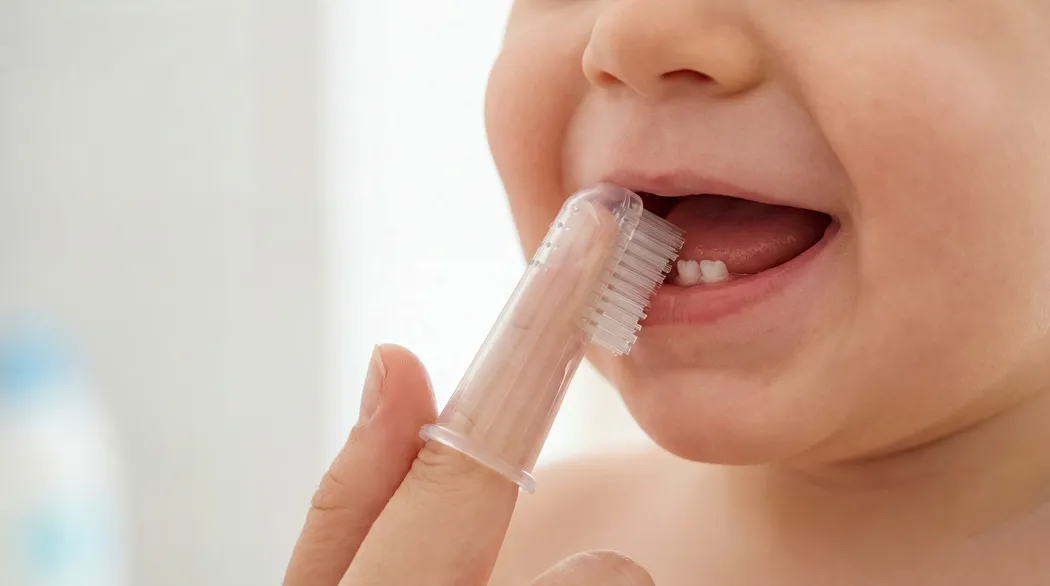
Several simple home measures are safe and genuinely helpful. A chilled (not frozen) damp cloth pressed to the gums is one of the most effective and costs nothing. Gently rubbing the gum where a tooth is pushing through with a clean fingertip can ease discomfort for a few minutes, which is often enough to help a baby settle.

What not to use:

  • Alcohol of any kind, including brandy on the gums, a traditional practice that is not safe for infants
  • Undiluted clove oil. Clove oil contains eugenol, which can irritate and even chemically burn delicate gum tissue at full concentration
  • Any remedy not intended for infants, or one that hasn't been discussed with a paediatrician

Stick to measures with a clear rationale. Cold reduces local inflammation; counter-pressure distracts pain signals. Beyond that, less is more with infant teething remedies.
 

Contraindications and Products to Never Use

This section covers products that carry real, documented safety risks for infants. These are not just cautions; they are products to avoid entirely.
 

  • Benzocaine gels: Benzocaine is a topical anaesthetic found in some over-the-counter teething gels. Regulatory authorities, including India's Central Drugs Standard Control
  • Organisation and the US FDA, have warned against using benzocaine in children under 2 years. It can cause methemoglobinaemia, a condition in which haemoglobin loses its ability to carry oxygen, which is potentially life-threatening.
  • Lidocaine gels: Topical lidocaine products formulated for adults should never be applied to a baby's gums. Absorption through the mucous membranes can lead to seizures, cardiac arrhythmia, and other serious effects.
  • Belladonna-containing homoeopathic tablets: Several homoeopathic teething tablets have been found on analysis to contain inconsistent levels of belladonna (deadly nightshade). Belladonna, even at low doses, can cause rapid heart rate, seizures, and breathing difficulties in infants. These products have been recalled in multiple markets.
     

Aspirin: Never give aspirin to a child. The link between aspirin use in children during a viral illness and Reye's syndrome (liver and brain damage) is well-established.
If you are unsure whether a product is safe for your baby, check with your paediatrician before using it.
 

When to Consult a Paediatrician?

Most teething passes without needing a doctor visit. But some symptoms are not teething and do require professional assessment.

Go to your paediatrician if your baby has:

  • A temperature of 38°C or above (this is a fever, not teething)
  • Diarrhoea or vomiting alongside the fussiness
  • A rash on the body (a mild chin rash from drooling is normal; a spreading rash is not)
  • No teeth at all by 18 months
  • Excessive, inconsolable crying that does not ease with comfort or typical teething measures
  • Significant ear-pulling combined with fever, which may suggest an ear infection

These symptoms point to something other than routine teething in infants and should not be dismissed or self-managed.
 

Infant Oral Care During and After Teething

Good oral hygiene starts before the first tooth even appears. Wiping your baby's gums with a clean, damp cloth after feeds removes milk residue and sets up a healthy habit.

Once the first tooth erupts, switch to a soft-bristled infant toothbrush with a very small amount of fluoride toothpaste (a smear, roughly the size of a grain of rice, is the amount generally recommended for children under 2 years; a pea-sized amount is typically suggested from age 2 onward, but confirm exact guidance with your paediatrician or dentist). Brush twice a day, morning and night.

Avoid putting your baby to sleep with a bottle of milk or juice. Prolonged contact between sugary liquids and newly erupted teeth is the leading cause of early childhood tooth decay.

The first dental visit is generally recommended around the time the first tooth appears, or by the first birthday at the latest. Many parents are surprised how early this is, but early assessment catches problems before they become significant. For broader newborn care basics for first-time parents, our newborn care guide covers other key milestones and care routines in the first year.
 

FAQS

Can teething cause a runny nose in babies?

No. Teething does not cause nasal congestion or a runny nose. If your baby has cold-like symptoms alongside teething, the two are coincidental. A persistent or worsening runny nose should be assessed by your paediatrician, not attributed to teething.

How long does each teething phase last?

Individual teeth typically cause noticeable discomfort for around 3 to 5 days before eruption and a day or two after. Molars can take slightly longer to fully emerge, sometimes a week or more of intermittent fussiness, because of their larger size.

Is it normal for babies to refuse food while teething?

Yes. Sucking and swallowing can press against sore gums, making feeding uncomfortable. Offer softer foods, chilled purees, or a clean teether before feeds. If refusal lasts more than two days or is accompanied by other symptoms, consult your paediatrician.

What is the order of tooth eruption in infants?

Lower central incisors come first, usually around 6 to 10 months, followed by upper central incisors, then lateral incisors, first molars, canines, and finally second molars, usually completing by around 2.5 to 3 years of age.

Can I use clove oil for infant teething pain?

No. Undiluted clove oil can irritate and chemically burn a baby's delicate gum tissue. It is not safe for infants. Stick to chilled teethers, gum massage with a clean finger, or paracetamol at the correct dose as advised by your paediatrician.

Apollo 247 Floating Action Button