logo
0

Teething in Infants: Age, Stages, Symptoms and Remedies

Learn about teething in infants, including first-tooth age, teething stages, common symptoms, safe remedies, and warning signs that need medical attention.

article image

Dr. Mayank

Few milestones keep new parents on edge quite like teething. Understanding teething infant age norms helps you tell apart normal fussiness from something that needs a doctor's attention, and helps you comfort your baby with remedies that are actually safe.

What Age Do Babies Start Teething?

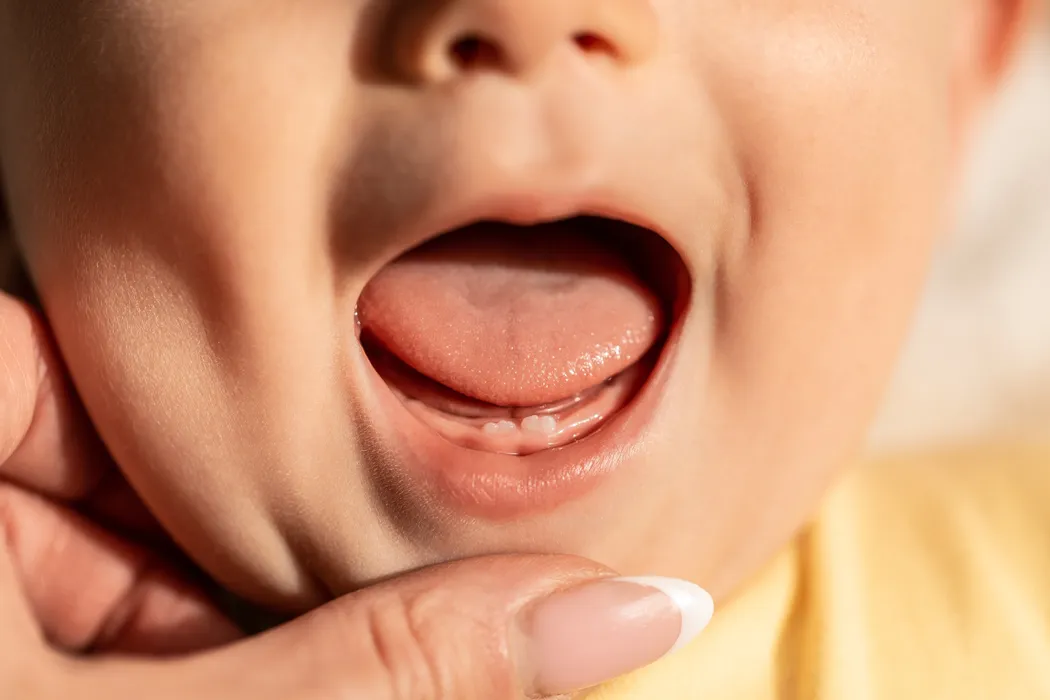
Most babies begin teething between about 4 and 7 months, although the timing varies considerably. Some babies may get their first tooth earlier or later, and variation in timing is usually normal.

Timing is largely genetic. If you or your partner teethed late, your baby likely will too. What matters more than the exact month is the sequence in which teeth appear and your child's overall growth milestones.

If your baby has not developed any teeth by around 12 months, mention it to your paediatrician or dentist. The timing of tooth eruption varies between children, and delayed eruption does not necessarily indicate a health problem.

Teething Stages and Timeline (Tooth-by-Tooth Chart)

Baby teeth arrive in a fairly predictable order.Children typically have all 20 primary teeth by about 3 years of age. Teething stages by age broadly follow a front-to-back, bottom-to-top pattern, with lower teeth usually preceding upper ones.

Tooth TypeLocationTypical Age Range
Central incisorsBottom front, then top front6 to 10 months
Lateral incisorsBeside the central ones9 to 13 months
First molarsBack of the mouth13 to 19 months
Canines (cuspids)Between incisors and molars16 to 22 months
Second molarsFurthest back23 to 33 months

Some babies may seem more uncomfortable when larger teeth such as molars erupt, but the amount of discomfort varies from child to child. Expect more fussiness during those stages than with the early incisors.

Common Teething Symptoms to Watch For

Knowing the signs of teething in infants helps you respond quickly and calmly. Baby teething symptoms can start a few weeks before a tooth actually appears.

What to expect:

  • Increased drooling
  • Red, swollen, or tender gums at the site of the emerging tooth
  • Increased chewing on fingers, toys, or anything within reach
  • Irritability and disrupted sleep
  • A slight rise in temperature may occur during teething, but teething should not be assumed to cause a true fever.

Symptoms not caused by teething:

  • Fever, particularly a temperature of 38°C or higher
  • Diarrhoea or significant loose stools
  • A widespread rash
  • Significant or persistent illness symptoms

Teething may cause mild discomfort, drooling and a desire to chew, but caregivers should not assume that fever or other significant symptoms are caused by teething. If your baby has a fever or seems unwell, contact your paediatrician for advice.

Safe Teething Remedies: Teethers, Biscuits and Home Care

There are several teething remedies for babies that are both effective and safe. The goal is to counter-pressure the gum and reduce inflammation without introducing any chemical or physical risk.

Chilled Teethers

The best teethers for babies are firm silicone or rubber rings chilled in the refrigerator, not the freezer. Freezing makes them too hard and can damage tender gums. The gentle cold reduces swelling, and the pressure of biting provides relief. Always check a teether for cracks before handing it over, and wash it after every use.

Avoid liquid-filled teethers. If the outer shell cracks, the gel inside can be a hazard.

Gum Massage

  • Clean your finger thoroughly and rub gently over the swollen gum for a minute or two. The counter-pressure often settles fussiness quickly, and it costs nothing.

Teething Biscuits for Babies

Teething biscuits for babies are designed to dissolve slowly in the mouth, letting a baby chew without the risk of a hard chunk breaking off. They can be soothing and help the baby practice biting.

A few things to keep in mind:

  • If you offer a teething biscuit, it should be appropriate for your baby's developmental stage and introduced only after complementary foods have begun. Always supervise your baby while eating and check that the product does not break into hard pieces that could pose a choking risk.
  • Check the ingredient list. Many commercial biscuits contain added sugar or salt; choose low-sugar options where possible.
  • Never leave a baby alone while eating a biscuit, even one marketed as safe.
  • Confirm the biscuit dissolves fully and does not leave hard pieces.

Chilled Foods

For babies already on solids, chilled purees or plain yoghurt can offer temporary comfort. A piece of chilled cucumber held firmly by you (never given as unsupervised finger food) can also help. Avoid any large pieces that carry a choking risk.

Settling a Baby at Night

Teething pain is often worse at night when there are fewer distractions. Extra cuddle time, a quiet bedtime routine, and a cooled teether kept nearby can help. Disruptions are temporary; try to avoid major changes to feeding patterns during this phase.

When to Consult a Doctor

Most teething passes without medical help, but contact your paediatrician if you notice:

  • Fever at or above 38 degrees C
  • Persistent refusal to feed across more than a few feeds
  • Crying you cannot console within an hour or two
  • A rash that spreads beyond the chin or appears on the body
  • Swelling more severe than mild gum puffiness
  • No teeth at all by 14 months

These are not typical teething symptoms and deserve proper evaluation.

Contraindications and Safety Precautions

Some products marketed for teething are not safe. Avoid the following.
  • Numbing gels containing benzocaine or lidocaine: Do not use these products to treat teething pain in infants. Benzocaine can cause methemoglobinaemia, a serious condition that reduces the blood's ability to carry oxygen. The FDA warns against using benzocaine products for teething in children under 2 years, and topical oral lidocaine can also cause serious harm.
  • Amber teething necklaces: Do not use teething necklaces or bracelets. They have not been shown to relieve teething pain and can pose choking and strangulation hazards. The AAP does not recommend jewellery for infants.
  • Aspirin: Do not give aspirin to children unless specifically directed by a healthcare professional. Aspirin use in children has been associated with Reye's syndrome, a rare but serious condition affecting the liver and brain.
  • Homeopathic teething tablets and gels: Some have been found to contain inconsistent amounts of active compounds. Consult your paediatrician before using any such product.

Report adverse events related to any teething product to your healthcare provider or the relevant regulatory authority.

Conclusion

Teething is a normal part of infant development, but the timing and symptoms can vary from baby to baby. Most babies begin getting their first teeth during the first year, and mild gum discomfort, drooling, chewing and fussiness are common. Parents can offer a chilled teether, gentle gum massage and other age-appropriate comfort measures while avoiding unsafe products such as numbing gels, amber teething necklaces and aspirin. Fever or other significant symptoms should not automatically be blamed on teething and may require medical evaluation. When in doubt, consult your paediatrician for guidance specific to your baby's symptoms and developmental stage.

FAQS

What is the normal teething infant age for the first tooth?

Most babies begin teething at around 4–7 months, although there is considerable individual variation. Some babies get their first tooth earlier or later, and the timing alone does not necessarily indicate a problem.

How long does each teething stage last?

The timing of individual teeth varies. Primary teeth generally erupt in stages from infancy through the toddler years, with the full set of 20 primary teeth usually present by about 3 years of age.

Can teething cause fever in babies?

Teething may be associated with a slight rise in temperature, but a true fever should not automatically be attributed to teething. If your baby has a temperature of 38°C or higher or appears unwell, contact your paediatrician.

Are teething biscuits safe for infants?

Teething biscuits may be offered to babies who are developmentally ready for complementary foods, but they should be chosen carefully and always given under close supervision. Avoid products that are hard or likely to break into pieces that could cause choking.

What home remedies help with teething pain?

A chilled, firm teether may help relieve teething discomfort. Avoid freezing teethers because they can become too hard and potentially injure the baby's gums.

Apollo 247 Floating Action Button