logo
0

Teething Toys for Newborns: A Safety and Development Guide

Choosing teething toys for your newborn? Learn age-appropriate options, safety certifications, and developmental benefits, reviewed by a pediatric expert.

article image

Dr.J.T.Hema Prathima

Choosing the right teething toys for your newborn can feel overwhelming when every shelf is packed with different shapes, materials, and safety claims. Understanding when teething actually starts, which toys suit each stage, and what safety labels to trust can make this decision much simpler and safer for your baby.

When Do Babies Actually Need Teething Toys?

Most newborns do not teethe. The first tooth usually breaks through somewhere between 4 and 7 months, though some babies begin as early as 3 months and others not until after their first birthday. Both ends of that range are completely normal.

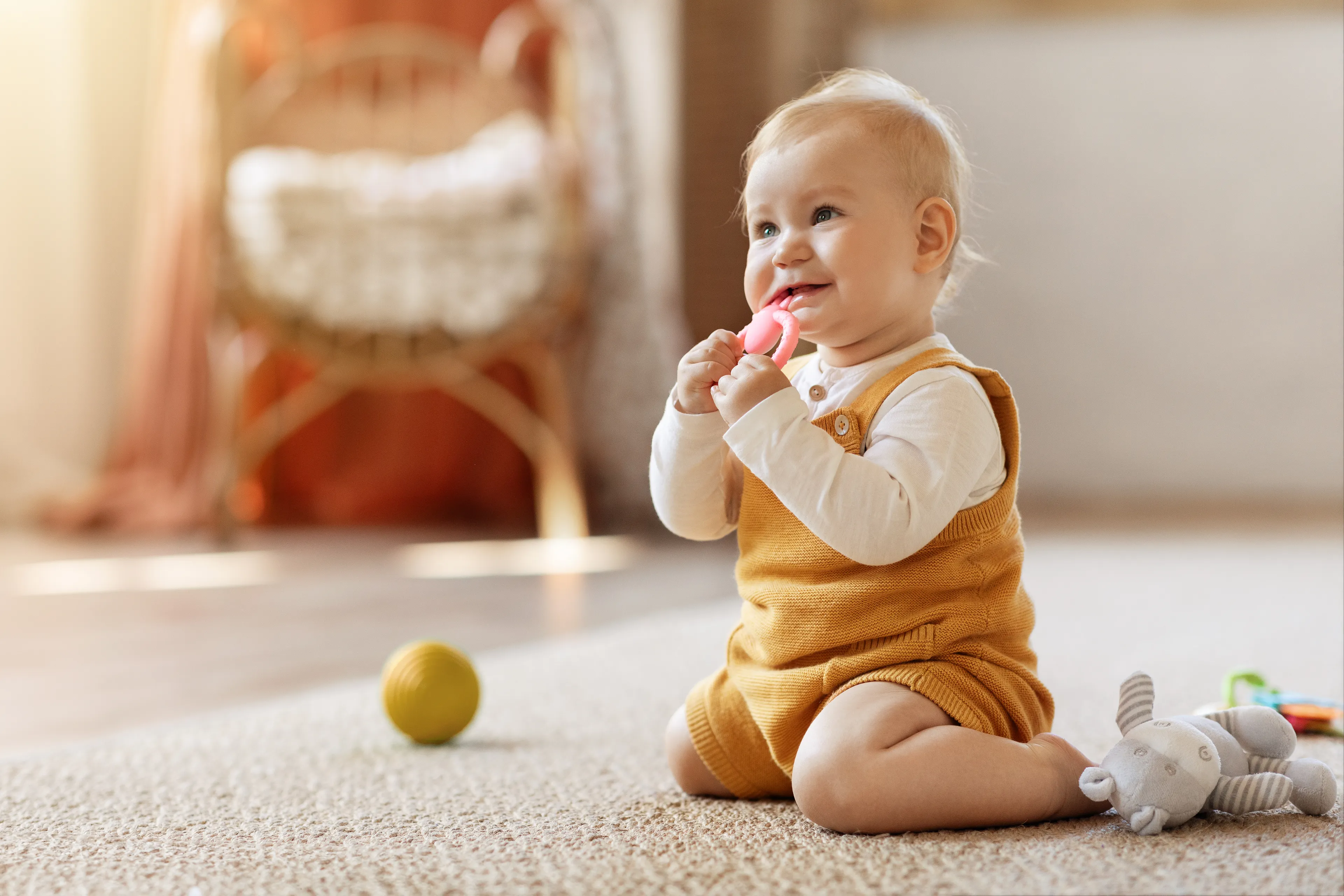
Before teeth arrive, babies still chew, gnaw, and mouth objects as part of normal oral exploration. A soft, age-appropriate chewing toy can support sensory development from around 3 to 4 months onward, when babies begin bringing objects to their mouths intentionally. So a teething toy newborn parents buy early is not wasted; it just serves a sensory purpose before gum discomfort kicks in.

If your baby is drooling heavily, chewing fists, or seems irritable, teething may be starting, but these signs alone do not confirm it. A quick check with your paediatrician can rule out other causes.

For broader guidance on caring for a young infant, see our newborn care basics guide.

Age-Appropriate Teething Toy Guide (0-6, 6-12, 12+ Months)

Matching a toy to your baby's developmental stage reduces both injury risk and frustration.

Age BandToy TypeTextureSize and Choke-Risk Notes
0 to 6 monthsSoft one-piece silicone ring or mittSmooth or lightly texturedMust not fit entirely in mouth; large enough to grip with whole hand
6 to 12 monthsSilicone or natural rubber teether, textured keys or ringsMulti-texture ridges    At least 3.5 cm in diameter; no detachable parts
12+ monthsHarder silicone or solid wood teetherFirm for back-molar reliefCheck regularly for splinters, cracks, or peeling finish

Teething mittens are especially useful in the 0 to 3 month window when hand coordination is still developing. They reduce the risk of a baby accidentally poking their own eye while mouthing.

Safety Standards to Check Before Buying

Labels matter more than marketing language. When buying safe teething toys for babies, look for:

  • BPA-free labelling on the packaging, confirming the toy is free of bisphenol A, a chemical found in some older plastics
  • EN 71 (European toy safety standard) or ASTM F963 (US standard) certification, both widely recognised indicators of rigorous testing
  • IS 9873, the Bureau of Indian Standards mark for toys sold in India
  • Single-piece, moulded construction with no glued parts, seams that could trap bacteria, or small detachable components
  • A size that fails the "toilet roll tube test": if a toy or any part of it fits inside a standard toilet roll tube, it is a choking hazard

Avoid toys with clips or cords that attach to a pram or clothing. These can wrap around a baby's neck.

Materials: Silicone, Rubber, Wood, or Frozen Gel?

Each material has trade-offs worth knowing.

Silicone is the most popular choice for good reason. It is odourless, easy to clean, durable, and resists bacterial growth. Food-grade silicone is soft enough not to damage gum tissue. BPA-free teething toys are most commonly made from this material.

Natural rubber (latex) is flexible and soothing, but check whether your baby or anyone in your household has a latex allergy before use. Natural rubber degrades faster than silicone and should be inspected often for cracking.

Solid wood (beech or maple with a food-safe finish) is a traditional choice that holds up well. It should be uncoated or finished with food-grade oil only. Avoid painted or varnished wood toys.

Gel-filled or liquid-filled teethers carry a real rupture risk. If the outer casing cracks, the gel can leak directly into your baby's mouth, and the contents are not always clearly disclosed by manufacturers. Many paediatric groups advise against them. If you do use one, inspect it carefully before every use and discard it at the first sign of damage.

When comparing silicone vs rubber teething toys, silicone generally wins on durability and allergy safety, while natural rubber offers a softer texture some babies prefer.

Developmental Benefits Beyond Gum Relief

Teething toys do more than ease sore gums. From around 3 months, mouthing objects is a primary way babies gather sensory information. Different textures, temperatures, and shapes stimulate nerve endings in the mouth and support oral motor development, which later contributes to chewing and speech.

Gripping and transferring a teether between hands builds fine motor skills. Textured surfaces engage tactile curiosity. The best teething toys by age offer layered sensory input alongside physical relief.

Keep claims in context, though. A teething toy is a comfort and sensory tool, not a medical device.

Contraindications and When to Avoid Certain Toys?

Some situations call for caution or a pause on teething toy use.

  • Do not use latex or natural rubber toys if your baby has a known or suspected latex allergy.
  • Discard any toy that is cracked, chipped, discoloured, or has a torn surface. Damaged toys harbour bacteria and present sharp edges or choking risks.
  • Never leave a teething toy with a baby during unsupervised sleep, including nap time in a cot or pram.
  • Do not freeze gel-filled teethers. Extreme cold can cause the casing to harden and crack. To cool a teether safely, chill it in the refrigerator (not the freezer) and check for damage before use.
  • Avoid amber teething necklaces entirely. These present a serious strangulation and choking risk and have no proven benefit.

Report adverse events to your healthcare provider or the relevant regulatory authority.

Cleaning, Storage, and Replacement Schedule

Clean teething toys after every use, especially once your baby is actively drooling and putting them down on surfaces.

For silicone and rubber toys, wash with warm water and mild soap, rinse thoroughly, and air dry. You can sterilise these with a cold-water sterilising solution or a steam steriliser. Avoid boiling some plastics repeatedly, as prolonged heat can degrade the material over time.

For wood toys, wipe down with a damp cloth only. Do not submerge wood in water or sterilise with steam, as this warps the surface and may crack the finish.

Replace any toy immediately if it shows cracks, bite marks deep enough to alter the shape, or a change in colour or smell. Keep toys in a clean, ventilated container rather than a sealed bag where moisture can collect.

When to Consult a Paediatrician?

Teething causes local gum discomfort, but it does not cause high fever, severe diarrhoea, or rash. If your baby develops a temperature above 38 degrees Celsius, refuses feeds persistently, develops a rash, or seems unwell beyond normal fussiness, see your doctor. These symptoms need medical evaluation and are not explained by teething alone.
Teething toy safety standards and material choices are important, but they are separate from medical concerns. A toy cannot treat illness, and over-attributing symptoms to teething can delay necessary care.

Conclusion

Teething toys play a dual role in early childhood, serving as developmental tools for sensory exploration starting around 3 to 4 months and providing physical gum relief when teeth begin breaking through. Choosing toys made from food-grade silicone or unpainted, solid wood certified under recognised safety standards (such as IS 9873, EN 71, or ASTM F963) ensures your baby stays safe from harmful chemicals and choking hazards. Avoid risky products like liquid-filled teethers, frozen items, or amber necklaces, and inspect all toys regularly for signs of wear. Remember that while teething causes localised gum tenderness, high fever, persistent diarrhoea, or severe irritability require immediate evaluation by apaediatriciann.

FAQS

What is the safest material for teething toys?

Food-grade silicone is widely considered the safest option because it is durable, non-toxic, easy to clean, and unlikely to cause an allergic reaction. It does not degrade quickly or harbour bacteria the way some other materials can.

Can newborns use teething toys before teeth appear?

Yes, from around 3 to 4 months onward, a soft silicone ring or teething mitt is appropriate for sensory mouthing, even before the first tooth appears. Newborns younger than 3 months generally do not yet have the hand control to use a teether effectively.

How do I sterilise teething toys?

Wash silicone and rubber toys with warm, soapy water after every use, and sterilise with a steam steriliser or cold-water sterilising solution. Wipe wood toys with a damp cloth only and allow them to air dry completely.

Are wooden teething toys safe?

Solid wood teethers made from food-grade finished beech or maple are safe when purchased from reputable manufacturers and checked regularly for splinters or cracking. Avoid painted or varnished wood, and never submerge a wood toy in water.

What age should teething toys be introduced?

Soft, large-grip teething toys can be introduced from around 3 to 4 months, when babies begin mouthing objects intentionally. Choose age-specific sizes and textures as your baby grows through 6 and 12 months to match their developing strength and motor skills.

Apollo 247 Floating Action Button