logo
0

Very Early Signs of Pregnancy: 1 Week Symptoms and Timing

Very early pregnancy symptoms can be difficult to distinguish from PMS. Learn when symptoms may begin, when to take a pregnancy test and when to seek medical care.

article image

Dr.Rohini priyanaka

Wondering whether subtle changes in your body could mean you are pregnant? Very early signs of pregnancy can be difficult to recognise because many of them overlap with normal premenstrual symptoms. Understanding when symptoms can realistically begin, when pregnancy tests become useful and which symptoms need medical attention can help you navigate the uncertainty with greater confidence.

Can You Have Pregnancy Symptoms in Week 1?

The answer depends on what you mean by week 1 of pregnancy. There is an important difference between how pregnancy is dated medically and how people often count from conception.

Healthcare professionals usually calculate pregnancy from the first day of your last menstrual period (LMP), rather than from the day of conception. Under this system, the first week of pregnancy occurs before ovulation and fertilisation in a typical cycle.

If you use “one week pregnant” to mean approximately one week after conception, you are at a much earlier biological stage than the clinical pregnancy week suggests. At this point, many people will not notice any definite pregnancy symptoms.

After fertilisation, the developing embryo travels towards the uterus and later attaches to the uterine lining. Pregnancy-related production of human chorionic gonadotropin (hCG), the hormone detected by pregnancy tests, begins after implantation starts. As a result, symptoms immediately after conception are unlikely to provide reliable evidence of pregnancy.

Some people notice changes before a missed period, while others have no symptoms at all until later. Both can occur in healthy pregnancies.

Early Pregnancy Symptoms You May Notice

Early pregnancy symptoms vary considerably. Some people notice changes before their expected period, while others experience no noticeable symptoms during the first few weeks.

Possible symptoms include:

  • Light vaginal spotting: Light bleeding can occur in early pregnancy, but bleeding has several possible causes and cannot reliably confirm implantation or pregnancy.
  • Mild lower abdominal cramping: Some people experience mild cramps or twinges during early pregnancy. Similar sensations are also common before a period.
  • Breast tenderness: Breasts may feel sore, fuller or more sensitive because of hormonal changes. However, breast tenderness is also common with PMS.
  • Fatigue: Feeling unusually tired can occur during early pregnancy, although fatigue is common and can have many other causes.
  • Nausea: Nausea can occur during pregnancy, but it usually becomes more noticeable later in the first trimester rather than immediately after conception.
  • Increased sensitivity to smells or food aversions: Some people experience these changes during pregnancy, although they are not specific to pregnancy.
  • Bloating: Hormonal changes can cause bloating or a feeling of abdominal fullness, but this can also happen before menstruation.
  • More frequent urination: Increased urination can occur during pregnancy, although it is not a reliable early sign on its own.

These symptoms should not be used to diagnose pregnancy. Progesterone rises after ovulation during every menstrual cycle, whether or not conception occurs. This is one reason early pregnancy symptoms and PMS can feel remarkably similar.

When Do Early Pregnancy Symptoms Begin?
 

Understanding the timing of implantation and hormonal changes can help you interpret symptoms more realistically.

When Does Implantation Occur?

After ovulation and fertilisation, the developing embryo moves through the fallopian tube towards the uterus. Implantation generally occurs about 6 to 12 days after ovulation, with most implantations occurring around 8 to 10 days after ovulation.

This timing means that symptoms experienced only a few days after conception are unlikely to be caused by pregnancy itself. Implantation and the subsequent hormonal changes have not necessarily occurred at that stage.

Some people report light bleeding or mild cramping around the time of implantation, but these symptoms are not specific enough to confirm that implantation has occurred. Bleeding can have other causes and should be assessed if it is heavy, persistent or accompanied by significant pain.

When Does hCG Become Detectable?

Following implantation, cells associated with the developing pregnancy begin producing hCG. The hormone rises during early pregnancy, although the rate of increase varies between individuals and at different stages of pregnancy.

Pregnancy tests detect hCG once its concentration reaches the sensitivity threshold of the particular test. Different tests have different detection limits, so there is no single hCG level or exact day at which every test will become positive.

This explains why a pregnancy test may be negative when taken very early and become positive several days later.

When Should You Take a Pregnancy Test?

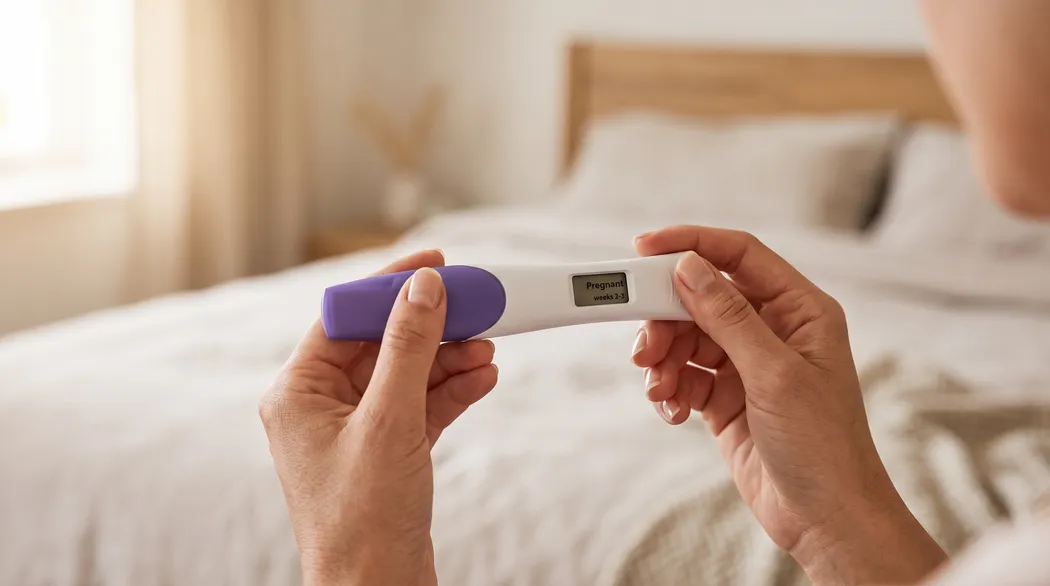
Taking a pregnancy test too early is a common reason for a false-negative result. Home pregnancy tests are generally more reliable from the first day of a missed period. Some sensitive tests can be used earlier, but an early negative result does not reliably exclude pregnancy.

If you test before your expected period and the result is negative, repeat the test around the time your period is due or a few days later if your period still has not started.

For the best chance of obtaining a reliable result:

  • Follow the instructions: Use the test exactly as directed by the manufacturer.
  • Consider the timing: The earlier you test, the greater the possibility that hCG has not reached the level the test can detect.
  • Use first-morning urine when testing early: More concentrated urine may make low levels of hCG easier to detect.
  • Read the result at the correct time: Follow the manufacturer's specified reading window. A result interpreted outside that period may not be reliable.
  • Repeat an uncertain negative result: If your period remains absent, repeat the test after a few days.

If your menstrual cycles are irregular and you do not know when your period is due, a healthcare professional can advise you about appropriate testing.

When Should You Seek Medical Care?

Most mild symptoms in very early pregnancy do not necessarily indicate a problem. However, certain symptoms require prompt medical assessment.

Seek urgent medical care if you have:

  • Severe or one-sided abdominal or pelvic pain
  • Heavy vaginal bleeding, particularly when accompanied by pain, weakness or dizziness
  • Fainting or significant dizziness
  • Shoulder-tip pain, especially when it occurs with abdominal pain or vaginal bleeding
  • Severe or worsening symptoms when pregnancy is possible

An ectopic pregnancy occurs when a pregnancy develops outside the uterus, most commonly in a fallopian tube. It can initially resemble an early normal pregnancy, but rupture can cause serious internal bleeding and is a medical emergency.

If you have a positive pregnancy test and develop significant pain or bleeding, seek medical assessment promptly. Depending on your symptoms and stage of pregnancy, your healthcare professional may recommend blood tests for hCG and an ultrasound scan.

Taking Medicines When You May Be Pregnant

If pregnancy is possible, do not start, stop or change prescription medicines without speaking with a doctor or pharmacist.

Tell your healthcare professional about all medicines you take, including prescription medicines, over-the-counter products, vitamins, supplements and herbal preparations. Some medicines may not be suitable during pregnancy, while others may be important to continue for an existing health condition.

Non-steroidal anti-inflammatory drugs (NSAIDs), such as ibuprofen and naproxen, have pregnancy-related safety considerations that vary according to the medicine and stage of pregnancy. If you think you may be pregnant, ask a healthcare professional before taking an NSAID.

Do not assume that herbal medicines or supplements are safe simply because they are described as natural. Many have limited safety information in pregnancy, and some can interact with medicines or have other effects.

If you take regular medication for a chronic condition and discover that you may be pregnant, contact your prescribing doctor rather than stopping treatment yourself.

Report suspected adverse reactions to medicines to your healthcare provider or the relevant regulatory authority.

Conclusion

Very early pregnancy symptoms can be difficult to interpret because they overlap with PMS and other normal changes during the menstrual cycle. In the first days after conception, most people will not have definite pregnancy symptoms, and having no symptoms does not mean that you are not pregnant.

Implantation generally occurs several days after ovulation, followed by the rise in hCG that pregnancy tests detect. For this reason, testing around the time your period is due is generally more reliable than relying on symptoms or testing immediately after conception.

If you develop severe or one-sided abdominal or pelvic pain, heavy bleeding, fainting, significant dizziness or shoulder-tip pain when pregnancy is possible, seek urgent medical attention.

FAQs

Can implantation bleeding happen at 1 week?

If you mean one week after conception, implantation may occur around this stage or later because implantation generally occurs about 6 to 12 days after ovulation. However, light bleeding is not a reliable sign of implantation and can have several other causes. Heavy, persistent or painful bleeding should be assessed by a healthcare professional.

Is fatigue an early sign of pregnancy?

Fatigue can occur during early pregnancy, but it is not specific to pregnancy. Hormonal changes may contribute to tiredness, while progesterone also rises after ovulation during a normal menstrual cycle. Poor sleep, stress, anaemia and other health conditions can also cause fatigue, so tiredness alone cannot confirm pregnancy.
Can a pregnancy test be positive at 1 week?

If you mean one week after conception, a home pregnancy test is unlikely to detect pregnancy that early because implantation and the subsequent rise in hCG may not yet have occurred. Some sensitive tests can detect pregnancy before an expected period, but testing around the time your period is due is generally more reliable.

What does early pregnancy cramping feel like?

Early pregnancy cramping may feel like mild pressure, aching or brief twinges in the lower abdomen, but there is no particular type of cramping that can confirm pregnancy. Similar sensations can occur before or during a period. Severe, persistent or one-sided pain, particularly with bleeding, dizziness or fainting, requires prompt medical assessment.

What is the earliest pregnancy symptom reported?

There is no single earliest symptom that reliably indicates pregnancy. Some people report light spotting, mild cramping, breast tenderness or fatigue around the time of implantation or shortly afterwards, while others have no symptoms at all. Because these symptoms can also occur with PMS and other conditions, a pregnancy test is a more reliable way to determine whether pregnancy has occurred.

Apollo 247 Floating Action Button