logo
0

Vicks VapoRub for Newborns: Safety & Risks

Learn whether Vicks VapoRub is safe for newborns, understand potential risks, and explore safer alternatives for managing nasal congestion.

article image

Dr. J.T.Hema Prathima

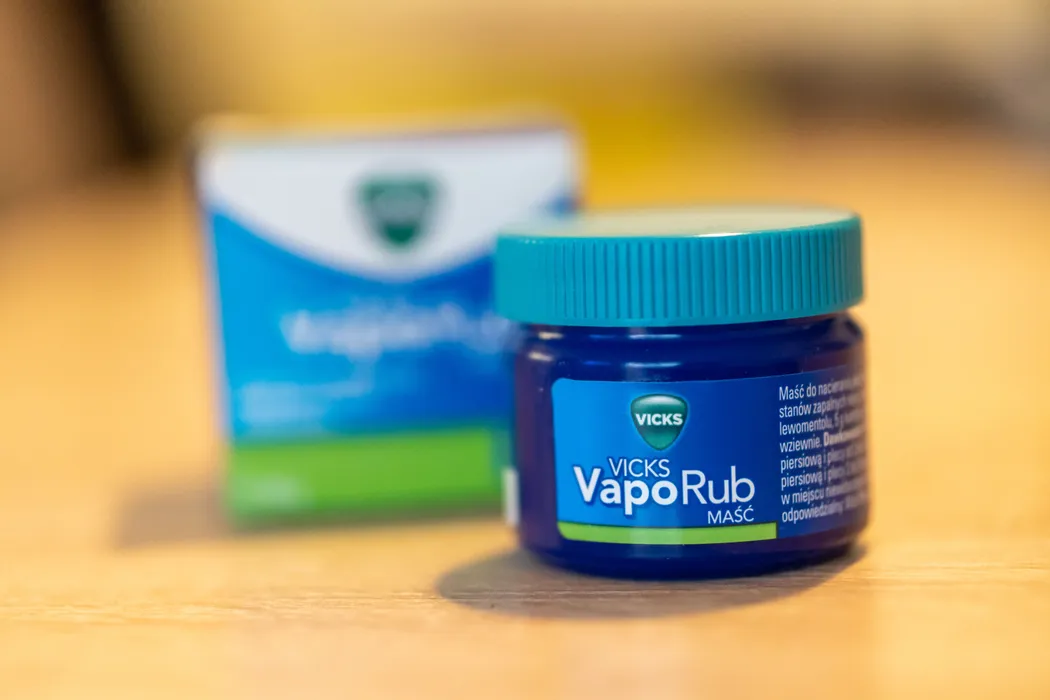
Few things feel more helpless than watching a congested newborn struggle to breathe through a blocked nose. It is natural to reach for something familiar, and Vicks VapoRub sits in most Indian households. But using vicks vaporub on a newborn can be genuinely dangerous, and understanding why matters before you open that blue jar.

Is Vicks VapoRub Safe for Newborns?

The short answer is no. The manufacturer's label clearly states that VapoRub should not be used on children under 2 years of age. This is not a cautious suggestion; it is a firm age restriction backed by safety data.

Newborns and young infants have airways that are proportionally narrower than those of older children. Any product that causes swelling or mucus changes in that tiny airway can quickly become a breathing problem. VapoRub's active ingredients, camphor, menthol, and eucalyptus oil, create a sensation of openness but do not actually reduce inflammation or clear mucus. In an infant, the irritation they cause can have the opposite effect.

If you are asking what age is Vicks VapoRub safe for, the answer is 2 years and above, and even then it should be used sparingly on the chest and throat only, never near the face.

Why Camphor and Menthol Are Risky for Infants?

These ingredients can pose different risks to newborns, particularly because their skin and airways are more sensitive:

  • Camphor toxicity: Even small amounts of camphor absorbed through the skin or accidentally ingested can cause seizures, breathing irregularities, and neurological effects in young children.
  • Menthol and breathing: Menthol stimulates cold receptors in the airway and, in infants, may trigger reflex responses that can narrow the airway and potentially reduce airflow.
  • Eucalyptus oil: Concentrated eucalyptus oil can cause central nervous system effects in young children when absorbed or inhaled.
  • Thinner infant skin: Infants have more delicate and permeable skin and mucous membranes, which may increase exposure to these substances.
  • Regulatory caution: Camphor-containing products require particular caution when used around young children.

Applying VapoRub anywhere near a baby's nose or mouth is particularly risky. Even placing it on a parent's clothing while holding the baby, or on a nearby surface, can expose the infant to concentrated vapours.

Contraindications and Warning Signs

Knowing when not to use a product is as important as knowing how to use it. VapoRub is contraindicated in the following situations:

  • Children under 2 years, regardless of symptom severity
  • Broken, irritated, or inflamed skin anywhere on the body
  • Application near or inside the nose, mouth, or eyes
  • Children with a history of asthma, reactive airway disease, or recurrent wheezing
  • Children with known sensitivity to camphor, menthol, eucalyptus, or related compounds

Never apply VapoRub to the nostrils directly. Parents sometimes assume that placing a small amount just inside the nostril will help a baby breathe; this concentrates camphor and menthol at the airway entrance and significantly raises the risk of toxicity and reflex bronchospasm. Report adverse events to your healthcare provider or the relevant regulatory authority if you notice any unusual reaction after a child is exposed to this product.

Safer Alternatives for Newborn Nasal Congestion

There are several nasal congestion in newborns remedies that are genuinely safe and work well when used correctly.

  • Saline nasal drops: Infant-specific saline drops can loosen dried mucus and help the baby clear nasal secretions naturally. Avoid using adult formulations unless advised by a healthcare professional.
  • Nasal aspirator: A soft bulb or parent-powered aspirator with a hygienic filter can gently remove mucus after saline drops. Limit use to two to three times daily to reduce irritation.
  • Cool-mist humidifier: Adding moisture to the room air can help prevent nasal secretions from becoming dry and thick. Clean the humidifier daily and use plain water.
  • Supervised upright positioning: During awake, supervised time, holding the baby slightly upright against your chest may help mucus drain naturally. Never incline or prop a sleeping baby's mattress because of positional safety risks.
  • Steamy bathroom: Sitting with the baby in a comfortably warm, steam-filled bathroom for a few minutes may temporarily ease congestion. Keep the baby well away from hot water and direct steam.

For those interested in traditional approaches, some ayurvedic remedies for cold relief have been used for generations, though always discuss any herbal preparation with your paediatrician before using it on a newborn. These vaporub alternatives for infants address the actual problem rather than masking it with a sensation. For broader guidance on caring for your baby, see this guide to newborn care essentials.

When to Consult a Doctor?

A mild cold in an older infant often resolves on its own. In a newborn, the threshold for seeking medical help must be much lower. Contact your paediatrician promptly if you notice:

  • Any fever in a baby under 3 months (38 degrees Celsius or above warrants immediate attention)
  • Rapid, laboured, or noisy breathing, or visible pulling in of the chest or neck muscles with each breath
  • Poor feeding, refusing the breast or bottle, or significant reduction in wet nappies
  • Bluish tint around the lips or fingertips
  • Lethargy, unusual limpness, or difficulty waking

Newborn cold and cough treatment at home is appropriate only for very mild symptoms in an otherwise well, feeding normally, and alert baby. Any doubt is a reason to call your doctor, not to wait and watch.

Conclusion

Vicks VapoRub is not suitable for newborns or children under 2 years because its ingredients, including camphor, menthol, and eucalyptus oil, can pose safety risks in young children. For newborn nasal congestion, safer measures such as infant-specific saline drops, gentle nasal suction, and a clean cool-mist humidifier can provide supportive relief. Never apply VapoRub or essential oils near a baby's nose, mouth, or airways, and avoid propping a sleeping baby's head or mattress. If your newborn has fever, breathing difficulty, poor feeding, fewer wet nappies, bluish skin, or unusual sleepiness, seek prompt medical attention.

FAQS

Can Vicks VapoRub be used on newborn feet?

No. The manufacturer's age restriction of 2 years applies to all areas of the body, including the feet. Camphor and menthol are absorbed through the skin and can affect a newborn's breathing and nervous system regardless of where they are applied.

Is Vicks safe for a 3-month-old baby?

No, it is not safe. A 3-month-old falls well below the minimum age of 2 years stated on the product label. Use saline drops and a nasal aspirator instead, and consult your paediatrician for further guidance.

What can I rub on my baby's chest for congestion?

Nothing medicated is recommended for infants under 2 years. Gentle skin-to-skin contact, a warm bath, and a cool-mist humidifier in the room are safer options. Ask your paediatrician before applying any topical product.

Can I use eucalyptus oil on my newborn?

No. Eucalyptus oil is one of VapoRub's active ingredients and carries the same risks when used alone. It can cause breathing difficulties and central nervous system effects in young infants and should be kept away from babies entirely.

How do I know if my newborn's cold is serious?

Seek immediate medical attention if your newborn has a fever, is breathing rapidly or with visible effort, is feeding poorly, has fewer wet nappies than usual, or appears unusually sleepy or limp. These signs suggest the illness may be more than a simple cold.

Apollo 247 Floating Action Button