logo
0

Is Vicks VapoRub Safe for Newborns? Safer Alternatives

Is Vicks VapoRub safe for newborns? Learn why it is not recommended under age 2, safer congestion relief options, and warning signs requiring medical care.

article image

Dr. Mayank

Every parent hates watching a newborn struggle with a blocked nose. When you're desperate for relief at 2 a.m., it's tempting to reach for something familiar like a mentholated rub. But using Vicks VapoRub on a newborn is not recommended and can cause serious harm. Understanding why, and what to do instead, is one of the most important safety decisions you'll make in those early weeks.

Can You Use Vicks VapoRub on a Newborn?

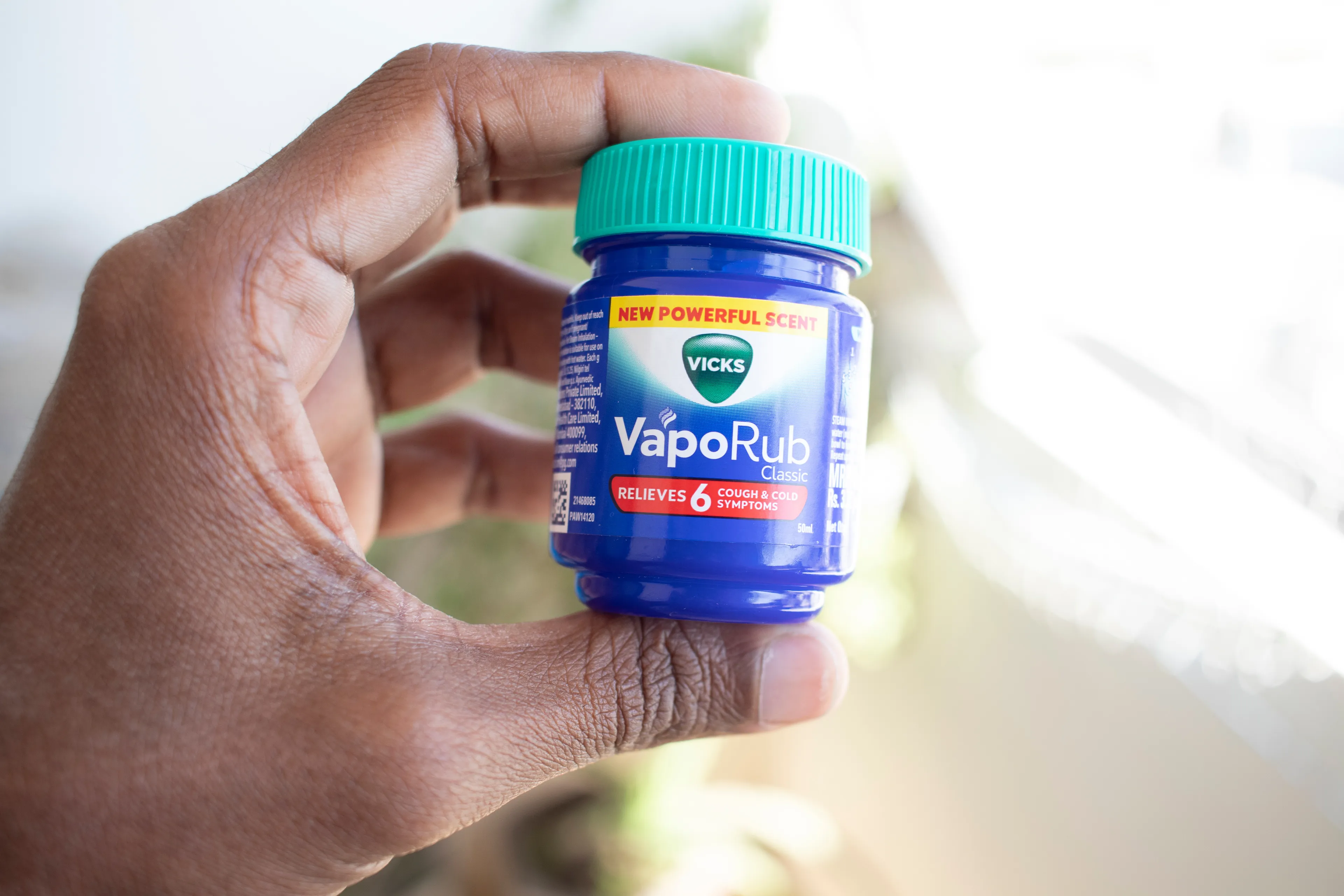
No. Vicks VapoRub is not safe for babies under 2 years of age. The product label states this directly, and paediatricians consistently advise against it.

The two main active ingredients, camphor and menthol, pose real respiratory risks to infants.

  • Camphor toxicity: Camphor can cause serious poisoning, including seizures and central nervous system effects, particularly after ingestion or significant exposure. Because VapoRub contains camphor, it should not be used in children younger than 2 years. Menthol, while it feels cooling to adults, can cause airway irritation in young babies whose airways are already narrow. Eucalyptus oil, another ingredient, is similarly unsafe for infants.
  • Vicks VapoRub age limit: The current Vicks VapoRub label states that the product is for adults and children aged 2 years and older and says not to use it in children under 2 years.Even for children just above that threshold, use should be cautious and follow label instructions exactly. When in doubt about vicks vaporub newborn safety, skip it entirely and speak with your child's doctor.

Why Mentholated Rubs Are Risky for Infants

The danger is not simply about dosage. It is about physiology.

  • Developing skin barrier: Newborn skin has a developing barrier and differs from adult skin in its structure and function. Because topical medicines and other substances can behave differently on immature skin, products containing pharmacologically active ingredients should not be used in newborns unless specifically recommended by a healthcare professional.
  • Camphor toxicity: Significant camphor exposure can cause serious neurological symptoms, including seizures, and requires urgent medical assessment.
  • Menthol activates cold receptors in the airway: In adults this creates a sensation of easier breathing without actually widening the airway. In an infant, the same stimulation can trigger increased mucus production or airway irritation rather than relief.
  • Avoid the nose and face: Vicks VapoRub should not be applied to or near a baby's nostrils or face. The product is already contraindicated in children under 2 years, so it should not be used as a nasal congestion treatment for newborns.

The risk multiplies when parents apply the product close to the baby's nose, believing it will ease breathing. The effect is often the opposite.

Menthol rub for infants under 2 is not a safe option, and camphor safety for babies is a genuine concern even with skin-only contact. Is Vicks safe for babies? No, not during the first two years of life.

Contraindications and Warning Signs

Do not use Vicks VapoRub or any camphor- or menthol-containing product in the following situations:

  • Any child under 2 years of age, including newborns and toddlers
  • Broken, irritated, or eczema-affected skin, where absorption increases significantly
  • Application on or near the face, nostrils, or mouth
  • Children with a history of asthma, reactive airway disease, or any chronic respiratory condition
  • Preterm infants or those with known skin conditions

The under-2 restriction is part of the product's official directions and safety information.

If a camphor-containing product has been applied to your infant's skin or accidentally ingested, treat it as a medical emergency. Contact a poison control helpline or go to the nearest emergency department immediately.

Report adverse events to your healthcare provider or the relevant regulatory authority.

Safer Alternatives for Newborn Cold Relief

There are several effective, paediatrician-approved ways to ease congestion in a newborn without any of the risks.

  • Saline nasal drops: Plain saline drops can help loosen mucus and relieve nasal congestion in newborns. The American Academy of Pediatrics recommends saline drops followed by gentle suction to help clear a baby's blocked nose. Follow the product instructions or your pediatrician's advice.
  • Cool-mist humidifier: Use a cool-mist humidifier to add moisture to dry air. Keep it away from the cot and clean it regularly according to the manufacturer's instructions.
  • Safe sleep position: Keep your newborn flat on their back on a firm, level sleep surface. Do not elevate the mattress or use pillows, rolled towels, or wedges to treat congestion.
  • Warm bath: A warm bath can help keep your baby comfortable. Avoid hot steam or exposing your baby to hot water because of burn and scald risks.
  • Breastfeeding: Continue regular breastfeeds to help maintain hydration. Breast milk also provides antibodies that support the baby's immune system.
  • Ayurvedic and traditional remedies: Some families use traditional remedies such as warm ajwain or turmeric poultices or gentle massage with coconut oil. However, these have not been established as safe or effective treatments for newborn congestion.

Always check with your paediatrician first, as even natural ingredients can cause skin reactions in newborns. For a broader picture of keeping your newborn safe and well, Apollo's guide to newborn care basics covers practical tips that new parents find reassuring.

Avoid mustard oil applied to the nostrils, strong spices placed near the baby's face, or any over-the-counter decongestant drops not specifically prescribed for your child's age.

When to Call a Pediatrician

Newborns can deteriorate quickly, and some symptoms go beyond a simple cold. Call your paediatrician promptly, or go to the emergency department, if you notice any of the following:

  • Fever in a young infant: A rectal temperature of 38°C (100.4°F) or higher in a baby younger than 3 months requires prompt medical evaluation, even if the baby otherwise appears well.
  • Breathing difficulty: Fast, noisy, or laboured breathing, or nostrils flaring with each breath.
  • Chest retractions: Skin pulling in around the throat or between the ribs during breathing.
  • Bluish or grayish colour: Blue or grayish colour around the lips or fingernails.
  • Feeding or hydration problems: Refusing feeds or having significantly fewer wet nappies than usual.
  • Extreme sleepiness: Unusual lethargy or difficulty waking.

A mild cold can usually be managed at home with saline and supportive care, but the signs above need a doctor's assessment the same day. Trust your instincts as a parent. If something feels wrong, call.

Conclusion

Vicks VapoRub should not be used on newborns or children under 2 years of age. For a baby's blocked nose, safer supportive measures include plain saline nasal drops, gentle suction when needed, and maintaining adequate feeds. Avoid applying mentholated or camphor-containing products to your baby's skin or near the nose unless specifically advised by a healthcare professional. If your newborn develops fever, breathing difficulty, poor feeding, or unusual sleepiness, seek prompt medical attention.

FAQs

Is Vicks VapoRub safe for a 1-month-old baby?

No. Vicks VapoRub is not safe for a 1-month-old. The product is contraindicated in all children under 2 years of age because camphor and menthol can cause serious respiratory and neurological reactions in infants.

Can I apply Vicks on my baby's chest and feet?

Not before the age of 2. While some parents apply it to the feet of older children, even this practice is not recommended for infants, as absorption through thin newborn skin poses a genuine toxicity risk.

What is the safe age to start using Vicks VapoRub?

The Vicks VapoRub age limit is 2 years. From that age onward it may be used cautiously on the chest and back only, never near the face, nostrils, or broken skin, and always following the product label instructions.

Can Vicks VapoRub cause breathing problems in babies?

Vicks VapoRub should not be used in children under 2 years. The product contains camphor, menthol and eucalyptus oil, and its label specifically states that it should not be used in this age group. If a baby develops breathing difficulty after accidental exposure, seek urgent medical care. This is why vicks vaporub newborn use is explicitly contraindicated and why paediatricians urge parents to avoid all mentholated rubs in this age group.
What natural remedies help a newborn's blocked nose?

Saline nasal drops followed by gentle suction are the most effective and safest option. A cool-mist humidifier, warm steam in the bathroom, and frequent breastfeeding all provide additional relief without any of the risks associated with camphor- or menthol-based products.

Apollo 247 Floating Action Button