logo
0

Week 16 of Pregnancy

Week 16 pregnancy guide: fetal size, ultrasound measurements, second trimester symptoms, and when to see your doctor. Doctor-reviewed by Apollo Pharmacy.

article image

Dr. Bhanu Prakash

Week 16 pregnancy marks one of the more reassuring stretches of the entire journey. You are comfortably into the second trimester, the early nausea has usually settled, and your baby is growing at a remarkable pace. This guide walks you through what is happening to your body, what your baby looks like right now, and what to expect at your next scan.

Your Body at Week 16: Second Trimester Progression

By 16 weeks pregnant, many mothers notice what is often called the "second trimester energy rebound." The relentless exhaustion and morning sickness of the first trimester ease for most women, and a sense of normalcy begins to return.

Common changes at this stage include:

  • A visible, rounded lower belly that may prompt questions from friends and family
  • Skin changes such as a darkening linea nigra (the vertical line down the abdomen) and, in some women, melasma on the face
  • Nasal congestion and occasional nosebleeds, caused by increased blood volume
  • Mild lower back ache as ligaments loosen to accommodate the growing uterus
  • Breast tenderness and possible early colostrum leaking, though this is more common later
  • Increased appetite as energy returns

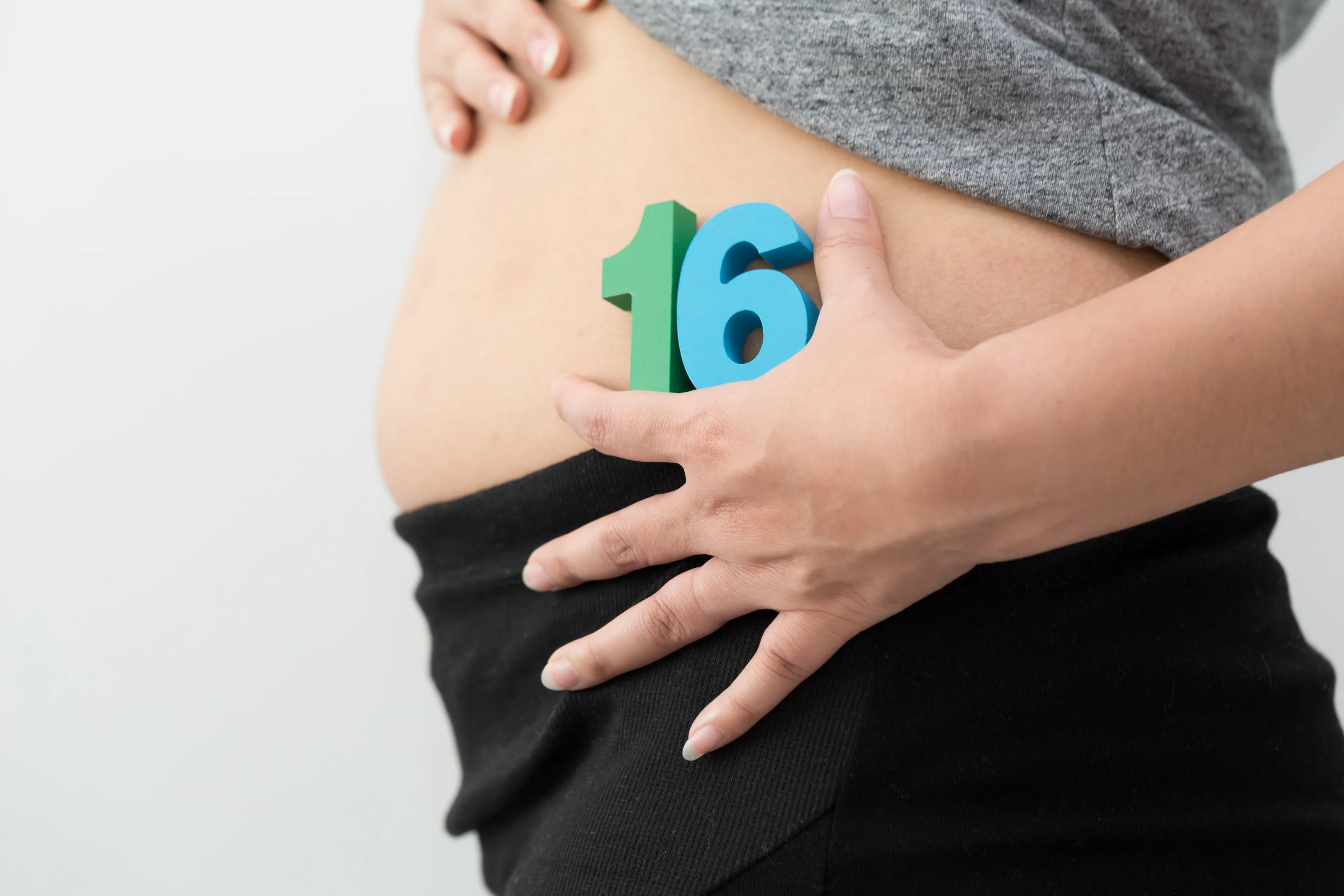
Your uterus is now roughly the size of a small melon and sits well above the pubic bone. This is why your 16 weeks pregnant belly is becoming noticeably rounder and firmer. Blood volume has increased by around 20 to 25 percent compared to pre-pregnancy levels, which supports your baby and placenta.

Baby's Growth and Development at 16 Weeks

Baby Size at 16 Weeks


Your baby is roughly the size of an avocado, measuring approximately 11 to 12 cm from crown to rump and weighing around 100 to 120 grams. Limbs are now well-proportioned, and the head is more upright rather than curled into the chest.

Key Developmental Milestones


This is a busy week for foetal growth:

  • The skeleton is rapidly hardening from soft cartilage to bone, a process called ossification
  • Facial muscles are developed enough for the baby to make expressions, including squinting and grimacing
  • The eyes can make slow side-to-side movements, even though the eyelids remain fused shut
  • Ears have moved to their final position on the sides of the head, and your baby may begin responding to sound
  • The circulatory and urinary systems are fully functioning; your baby swallows amniotic fluid and produces urine
  • Fingernails are growing, and fine hair called lanugo is beginning to cover the skin

These milestones follow a predictable pattern, though every baby develops at a slightly individual pace. Tracking a foetal growth chart week by week at each visit gives your doctor a clearer picture than any single measurement alone.

16-Week Ultrasound: What Measurements Mean

What Is Checked?

A scan around this time may be ordered for specific clinical reasons. The main structural assessment, called the anomaly scan, typically falls between weeks 18 and 20 in India. If you do have a 16 week ultrasound, the sonographer will usually record these measurements:

MeasurementFull NameWhat It Shows
BPDBiparietal DiameterWidth of the baby's head
HCHead CircumferenceOverall head size, tracks brain growth
ACAbdominal Circumferenceelly size, reflects nutrition and growth
FLFemur LengthThigh bone length, confirms gestational age

These four values are combined to estimate foetal weight and confirm that growth is on track. No single number is cause for alarm on its own; your doctor interprets the full picture together.

Can You See the Baby's Gender at 16 Weeks?

The external genitalia are developed enough that an experienced sonographer may sometimes visualise the baby's sex at a 16 week ultrasound. However, position, foetal movement, and image quality all affect accuracy. It is important to understand that ultrasound scanning during pregnancy is entirely legal and medically recommended. What is prohibited under India's Pre-Conception and Pre-Natal Diagnostic Techniques (PCPNDT) Act is the disclosure of the baby's sex by healthcare providers. The scan itself is safe and necessary; only communication of the sex determination is restricted by law.

Common Symptoms and When to Seek Medical Advice

Most 16 weeks pregnant symptoms are normal and manageable, but knowing the red flags matters.

Normal symptoms to expect at this stage:

  • Mild, fleeting round ligament pain, which feels like a sharp twinge on one or both sides of the lower abdomen when you move suddenly
  • Occasional mild cramping as the uterus expands
  • Bloating, constipation, and heartburn
  • Light headedness on standing up quickly

Symptoms that need prompt medical attention:

  • Vaginal bleeding of any amount
  • Severe or persistent abdominal cramping that does not ease within a few minutes
  • A sudden gush or steady trickle of fluid from the vagina
  • Fever above 38 degrees Celsius with chills
  • Pain or burning during urination, which may indicate a urinary tract infection
  • Severe headache, blurred vision, or sudden swelling of the face and hands

If you experience any of the above, contact your obstetrician or visit a hospital without delay. Report adverse events or unexpected symptoms to your healthcare provider or the relevant regulatory authority.

Contraindications and Precautions in Second Trimester

Certain exposures carry real risk to foetal development, and the second trimester is not a window of complete safety.

Do not take any of the following without your obstetrician's explicit approval:

  • Over-the-counter painkillers, antacids, antibiotics, or herbal supplements
  • Traditional or Ayurvedic preparations, as several contain compounds that are unsafe in pregnancy
  • High-dose vitamins beyond what your doctor has prescribed


Activities and exposures to avoid:

  • Contact sports or activities with a significant fall risk
  • Hot tubs, saunas, or steam rooms, as overheating raises foetal risk
  • Prolonged standing in heat
  • Exposure to pesticides, heavy metals, and certain cleaning chemicals
  • Alcohol and tobacco in any quantity; there is no established safe level during pregnancy
  • Raw or undercooked meat, fish, and unpasteurised dairy products

Always inform every healthcare provider, including dentists and pharmacists, that you are pregnant before accepting any treatment or medication.

Nutrition and Supplements for Week 16

Good nutrition at week 16 pregnancy directly supports bone hardening, brain development, and the rapid increase in blood volume your body is managing.

Key nutrients to focus on:

  • Iron: Iron supports the increased blood volume during pregnancy and helps reduce the risk of iron-deficiency anaemia. Your doctor may check your haemoglobin levels and recommend an iron supplement if needed.
  • Calcium: Calcium is important for your baby's developing bones and teeth. Dairy products, ragi, tofu, and green leafy vegetables can provide calcium as part of a balanced diet.
  • Folic acid: Folic acid continues to support cell division and healthy foetal development during the second trimester. Continue taking it as recommended by your healthcare provider.
  • Protein: Protein from dal, eggs, paneer, beans, dairy products, fish, or lean meats supports your baby's growth and the changes occurring in your body during pregnancy.
  • Vitamin D: Vitamin D helps your body absorb calcium and supports bone health. Ask your doctor whether you need a vitamin D supplement based on your diet, lifestyle, and test results.

Avoid self-prescribing supplements. Even nutrients that are beneficial in the right doses can cause harm in excess during pregnancy.

Conclusion

Week 16 of pregnancy is an important stage of the second trimester, when your baby continues to grow rapidly and many early pregnancy symptoms begin to improve. A growing belly, increased appetite, mild backache, and other physical changes can be normal at this stage. Maintaining a balanced diet with adequate protein, iron, calcium, folate, and vitamin D, along with regular antenatal care, supports healthy pregnancy progress. While a 16-week ultrasound may be performed when clinically indicated, the detailed anomaly scan is generally scheduled around 18–20 weeks. Seek prompt medical care for bleeding, severe abdominal pain, fluid leakage, fever, or other concerning symptoms.

FAQS

How many months is 16 weeks pregnant?

At 16 weeks, you are in your fourth month of pregnancy. The second trimester runs from week 13 to week 26, so you are well into its early phase and approaching the midpoint of your pregnancy.

What does a baby look like at 16 weeks?

Your baby now has clearly defined facial features, a more upright head, and limbs in proportion to the body. Fine lanugo hair covers the skin, the ears are in their final position, and tiny fingernails are forming. The baby is fully recognisable as human in shape.

Is it safe to travel at 16 weeks pregnant?

The second trimester is generally the most comfortable time to travel. Keep trips short where possible, stay hydrated, move around regularly on long journeys, and carry your maternity records. Always get your obstetrician's clearance before flying or travelling long distances.

Can you feel baby move at 16 weeks?

Some mothers, especially those who have been pregnant before, notice the first faint flutters around 16 weeks. First-time mothers may not feel clear movement until 18 to 20 weeks. Either is normal. If you were feeling movement and it suddenly stops, speak to your doctor.

What tests are done at 16 weeks pregnancy?

Your doctor may arrange a blood count to check for anaemia, a urine test for infection or protein, and a blood glucose screen if risk factors are present. A quad marker screen for chromosomal conditions may also be offered around this time. The detailed anomaly scan is usually scheduled between weeks 18 and 20.

Apollo 247 Floating Action Button