logo
0

When Can You Take a Pregnancy Test: Timing & HCG Guide

Learn when to take a pregnancy test, including the best testing time, hCG levels, urine and blood tests, accuracy, false negatives, and next steps.

article image

Dr.Kamran

Finding out whether you're pregnant is one of the most emotionally charged moments in a person's life, and getting the timing right matters more than most people realise. Whether you're actively trying to conceive or just noticed something feels different, using a pregnancy test online app or a home kit too early can give you a false negative and send you spiraling unnecessarily. This guide walks you through how tests work, when to use them, and how to trust your results.

How Pregnancy Tests Detect HCG?

Human chorionic gonadotropin, or HCG, is a hormone produced by the cells that eventually form the placenta. It appears in your blood and urine shortly after a fertilized egg implants in the uterine wall, which typically happens 6 to 12 days after ovulation.

Home urine tests work by detecting HCG using antibody strips. When HCG in your urine binds to these antibodies, a colored line or digital "pregnant" message appears. The key point: there has to be enough HCG present for the test to pick it up. Below the test's sensitivity threshold (usually 20 to 25 mIU/mL for most standard kits), the result reads negative even if you are pregnant.

When Is the Right Time to Take a Pregnancy Test?

The most reliable window is the first day of a missed period. At this point, most women who conceived will have HCG levels high enough to register a positive result on a standard home test.

If your cycles are regular (roughly 28 days), you can estimate ovulation around day 14. From there:

  • Implantation occurs around 6 to 12 days post-ovulation (DPO)
  • HCG becomes detectable in urine around 10 to 14 DPO
  • A missed period usually falls at day 28 to 30, or around 14 DPO

Some tests marketed as "early response" claim to detect pregnancy 5 or 6 days before a missed period. While technically possible, accuracy drops considerably that early. Testing at 10 to 12 DPO is a reasonable middle ground if you cannot wait.

First-morning urine is the best time to take a pregnancy test. Urine is most concentrated after a night of sleep, so HCG levels are at their highest relative concentration. Drinking a lot of water before testing can dilute urine and produce a false negative.

A simple timeline:

  • Days 1 to 5 post-ovulation: no HCG yet, testing is not useful
  • Days 6 to 9 DPO: implantation window, HCG just beginning to rise
  • Days 10 to 12 DPO: early testing possible but not reliable
  • Day 14 DPO (missed period): recommended test date for best accuracy

Pregnancy Test Accuracy at Different Stages

Accuracy depends on how far past ovulation you are when you test. Most "early" test packaging overstates sensitivity under real-world conditions.

Days Post-OvulationApproximate Accuracy
10 DPO33 to 50%
11 DPO50 to 60%
12 DPO60 to 75%
13 DPO80 to 90%
14 DPO (missed period)97 to 99%

These figures reflect clinical observations across populations; individual results vary based on when implantation occurred and urine concentration. Testing on the day of a missed period gives you the closest thing to a definitive home-test result.

False negatives are more common than false positives. A negative result before a missed period does not rule out pregnancy.

Why HCG Timing Matters for Reliable Results?

HCG roughly doubles every 48 to 72 hours in early pregnancy. This doubling rate is why waiting even two or three days longer can transform a negative into a positive.

If implantation happened late (say, day 12 post-ovulation instead of day 7), your HCG levels at the expected period date may still be below the test's detection limit. This is the most common reason for false negatives in women who later confirm pregnancy. Testing again 48 to 72 hours after a negative, if your period still hasn't arrived, is a practical approach.

Factors that can lower test reliability:

  • Dilute urine from excess fluid intake
  • Testing too early relative to your actual ovulation date
  • A kit that has passed its expiry date
  • Improper storage of the test strip exposed to heat or humidity

Using a Pregnancy Test Online App to Track Results

A pregnancy test online app does not detect HCG itself, but it serves a genuinely useful purpose: it helps you log cycle data, identify your likely ovulation window, and track the timing of any tests you take. Some apps let you photograph test strips and use the camera to interpret line darkness, though this is an aid, not a diagnostic tool.

Practically, using a pregnancy test online app means you can:

  • Record cycle length and period dates to predict your best testing day
  • Log symptoms such as implantation cramping, spotting, or breast tenderness
  • Set reminders so you don't test too early or forget to retest after a negative result

Apollo's digital health platform lets you access health tools, consult doctors, and book follow-up appointments from one place, which is useful when you want to track results alongside getting professional guidance.

No app can confirm pregnancy. A positive on a home kit, even verified through an app photo reader, still needs confirmation from a healthcare provider.

When to Consult a Doctor?

A positive home test should be followed by a visit to your doctor for a blood-based beta-HCG test, which is far more sensitive and can detect pregnancy earlier than urine tests. This also rules out ectopic pregnancy, which can produce a positive home test result but requires immediate medical attention.
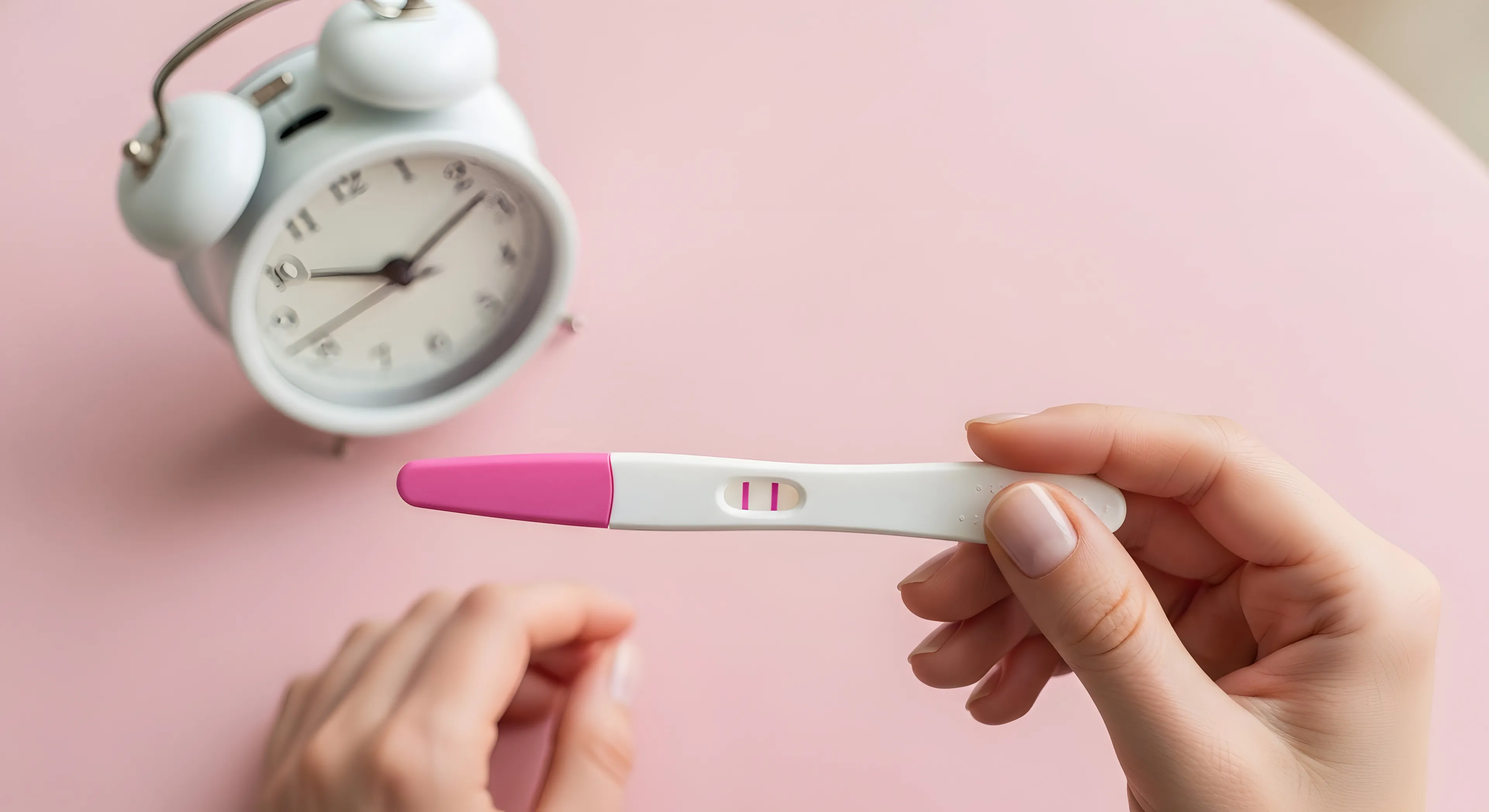
See a doctor sooner if:

  • You have irregular cycles and aren't sure when to test
  • You've had two or more consecutive negative home tests but your period hasn't arrived
  • You experience pelvic pain, heavy bleeding, or severe nausea alongside a positive result
  • You've had a previous miscarriage or ectopic pregnancy

For women with irregular cycles, predicting ovulation from calendar counting alone is unreliable. A doctor can guide you on monitoring methods or blood testing to get accurate answers.

Contraindications and Situations Needing Medical Guidance

Certain situations can make home urine test results unreliable and require a doctor's interpretation.

  • Medications that may affect results: HCG-containing fertility medications (used in some ovulation induction protocols) can cause a false positive because the injected HCG is still present in urine. If you are undergoing fertility treatment, always confirm results through your treating specialist using blood tests, not home kits.
  • Medical conditions: Rare conditions such as certain ovarian or testicular tumours, and some trophoblastic diseases, produce HCG even without pregnancy. A persistently positive test in someone not trying to conceive warrants prompt medical evaluation.
  • False positives can also result from a very early pregnancy loss (chemical pregnancy), where HCG rises briefly and then falls. This is not a test error; it reflects a real biological event.

Report adverse events related to any medical product or device, including faulty test kits, to your healthcare provider or the relevant regulatory authority.

Who should not rely solely on home testing:

  • Women on fertility medications containing HCG
  • Anyone with a history of ectopic pregnancy or trophoblastic disease
  • Women with highly irregular cycles where ovulation timing is unknown
  • Anyone with symptoms such as severe abdominal pain or heavy bleeding, regardless of test result

Conclusion

A pregnancy test can detect human chorionic gonadotropin (hCG) after implantation, but the timing of testing affects how reliably pregnancy can be detected. Home urine tests are generally more reliable around the time of a missed period, while blood tests can detect lower levels of hCG and may identify pregnancy earlier in some cases. Testing too early can result in a false-negative result because hCG may not yet be high enough to detect. If a test is negative but the period remains delayed or pregnancy is still suspected, repeating the test after several days may be appropriate. hCG levels vary widely between pregnancies and should be interpreted according to the timing of pregnancy and clinical findings rather than a single value alone. A positive result should be followed by appropriate prenatal care, while severe abdominal pain, heavy bleeding, dizziness, fainting, or shoulder pain requires prompt medical evaluation.

FAQS

How soon can I take a pregnancy test after unprotected sex?

Most tests will not give a reliable result until at least 10 to 14 days after ovulation, which is roughly the time of a missed period. Testing sooner than this risks a false negative because HCG levels are still too low to detect.

Can I take a pregnancy test at night?

You can, but morning urine gives a more accurate result because it is more concentrated. If you do test at night, avoid drinking large amounts of fluid beforehand, as dilute urine can mask a low but real HCG level.

What if the test line is very faint?

A faint line still indicates the presence of HCG and is generally considered a positive result. Repeat the test with first-morning urine in 48 to 72 hours; if you are pregnant, the line should be noticeably darker as HCG levels rise.

How long does HCG stay in urine after a miscarriage?

HCG levels decline after a pregnancy loss, but the rate varies. A home test may remain positive for several days to a few weeks after a miscarriage; a doctor can track blood HCG levels to confirm they are returning to zero.

Are digital pregnancy tests more accurate than strip tests?

Digital tests are not more sensitive than a good-quality strip test. They simply convert the same antibody reaction into a word ("pregnant" or "not pregnant"), which is easier to read. Both types are equally reliable when used at the right time.

Apollo 247 Floating Action Button