logo
0

When to Start Solid Foods for Babies

Learn when babies can start solid foods, signs of readiness, suitable first foods, and safe tips for introducing solids around 6 months.

article image

Dr. Mayank

Watching your little one grow is an amazing journey, and one of the most exciting milestones is when your baby begins to show interest in what is on your plate. If you are wondering when to start solid food for babies, you are not alone. Knowing exactly when a baby eat food for the first time can feel overwhelming with so much conflicting advice out there.

This comprehensive guide will help you understand the perfect baby solid food start age, how to recognize when your little one is ready, and how to begin starting solids safely and confidently so your baby having food is a joyful experience.

The Recommended Age: When Can Babies Eat Food?

For the first few months of life, your little one gets all the hydration and nutrition they need from breast milk or formula. But as they grow, their nutritional needs change. So, when can babies eat food?

Major health organizations, including the World Health Organization (WHO) and the Centers for Disease Control and Prevention (CDC), recommend that babies be exclusively breastfed or formula-fed for about the first six months. If you are wondering in which month baby start solid food, six months is the widely accepted standard.

  • Key Point: Most babies are ready to start solid foods at around 6 months.
  • Look for Readiness: Your baby should show signs such as good head and neck control, sitting with support, and showing interest in food.
  • Start Based On Development: The right time depends on your baby’s developmental readiness, not only their age.
  • Remember: Every baby develops differently, so avoid comparing your baby’s readiness with other babies.

Age is only one part of readiness. A baby who has good head control and can sit upright safely may be ready to begin exploring food, while another baby of the same age may need more time. 

How to Know Baby Is Ready for Solids: Key Developmental Signs

Age is an excellent guideline, but physical development is what truly determines when to introduce solid food to baby.Before the first meal, watch your baby during everyday activities. Good head control, sitting upright with support, and showing interest when others eat are useful signs that they may be ready. Here is how to know baby is ready for solids and the primary signs baby is ready for solids:

  • Excellent Head and Neck Control: Your baby must be able to hold their head steady and upright without support.
  • Sitting Upright: Your child should be able to sit with little to no support in a high chair.
  • Loss of the Tongue-Thrust Reflex: If you put a tiny bit of puree on their tongue and they instantly push it out of their mouth, they aren't ready for a baby solid food start yet.
  • Curiosity About Meals: If your little one watches you eat intently, reaches for your plate, or opens their mouth when food is nearby, they are showing interest.
  • Double the Birth Weight: Many pediatricians look for a baby to have doubled their birth weight (usually weighing at least 13 pounds or more) before starting solids for babies.

Knowing how to know if baby is ready for solids prevents choking risks and ensures a positive experience when your baby start solid food. If you observe these milestones, it is the best time to start solid food for babies.

Can We Give Solid Food to a 4-Month-Old Baby?

It is highly common for parents to ask, "can we give solid food to 4 month baby?" or look into preparing solid food for 4 month baby because their little one seems exceptionally hungry. However, introducing baby food before 6 months should only be done under the explicit guidance of your pediatrician.

There are several significant disadvantages of starting solids at 4 months:

  • Immature Digestive System: A four-month-old’s gut is still highly permeable. Introducing solid food for 4 months baby or 4 month baby solid food too early can cause digestive discomfort, gas, and constipation.
  • Increased Risk of Choking: At four months, most infants still have a strong tongue-thrust reflex, making swallowing thick foods unsafe.
  • Low Nutrient Absorption: Breast milk and formula are packed with easily absorbable nutrients. Filling their small tummy with low-calorie foods like cereal for 4 months baby can displace the vital milk feeds they need.

While some families might consider starting solids at 5.5 months if their pediatrician approves, waiting closer to six months is highly recommended for safety and comfort.

How to Start Solids for Baby: A Step-by-Step Guide
 

Start with a small amount of smooth food once your baby is alert and comfortable. Keep the first few meals relaxed—your baby is learning how to taste, move food around the mouth, and swallow.

1. Gather Your Essentials

Before the first meal, gather your baby essentials for starting solids:
A sturdy high chair with proper straps.
Soft, silicone baby-safe spoons that are gentle on gums.
Waterproof bibs (things will get messy!).
Small, unbreakable suction bowls.

2. Choose the Right Consistency

Begin with a smooth, runny puree that is easy for your baby to swallow. As they become more comfortable eating, gradually make the texture thicker and move toward mashed or soft foods. Understanding when can we give semi solid food to baby and when to give semi solid food to baby will help you progress slowly.

As your child grows, you can move from watery purees to thicker mashed textures. If you are wondering when can i start semi solids for my baby, the answer is usually right at the 6-month mark when they show solid head control.

3. Keep Portions Small

When first starting solids for baby, remember that they only need a teaspoon or two. At this stage, they are learning how to move food to the back of their mouth and swallow.

In India, some families follow traditional weaning practices by introducing foods such as ragi or rice porridge and well-mashed lentils (dal) as some of the baby's first foods.

Best First Foods for a 6-Month-Old Baby

For the first foods, choose simple, soft options that are easy to swallow. Including iron-rich foods is also important as your baby's nutritional needs begin to increase.

  • Iron-Fortified Cereals: Single-grain oatmeal mixed with breast milk or formula.
  • Pureed Vegetables: Smoothly blended carrots, sweet potatoes, pumpkin, or green beans.
  • Mashed Fruits: Ripe bananas, avocados, or applesauce.
Food Type
Preparation
Key Nutrient
AvocadoMashed or smooth Healthy fats 
Sweet potato Pureed and runny Vitamin A 
Oatmeal cereal Warm with breast milk or formula Iron 

When introducing your baby's first foods, offer one new food at a time. Wait 3 to 5 days before introducing another food so you can monitor for any allergic reactions.

As your baby becomes comfortable with purees and mashed foods, gradually introduce a wider variety of soft fruits and cooked vegetables.

By six months, babies can begin exploring new textures and flavors as they gradually become familiar with solid foods. 

Milk vs. Solids: Balancing Breast Milk, Formula, and Solids

Even after you begin when baby start eating solid food, breast milk or formula remains your baby's primary source of nutrition for the first year of life. How Much Milk Does Baby Need?
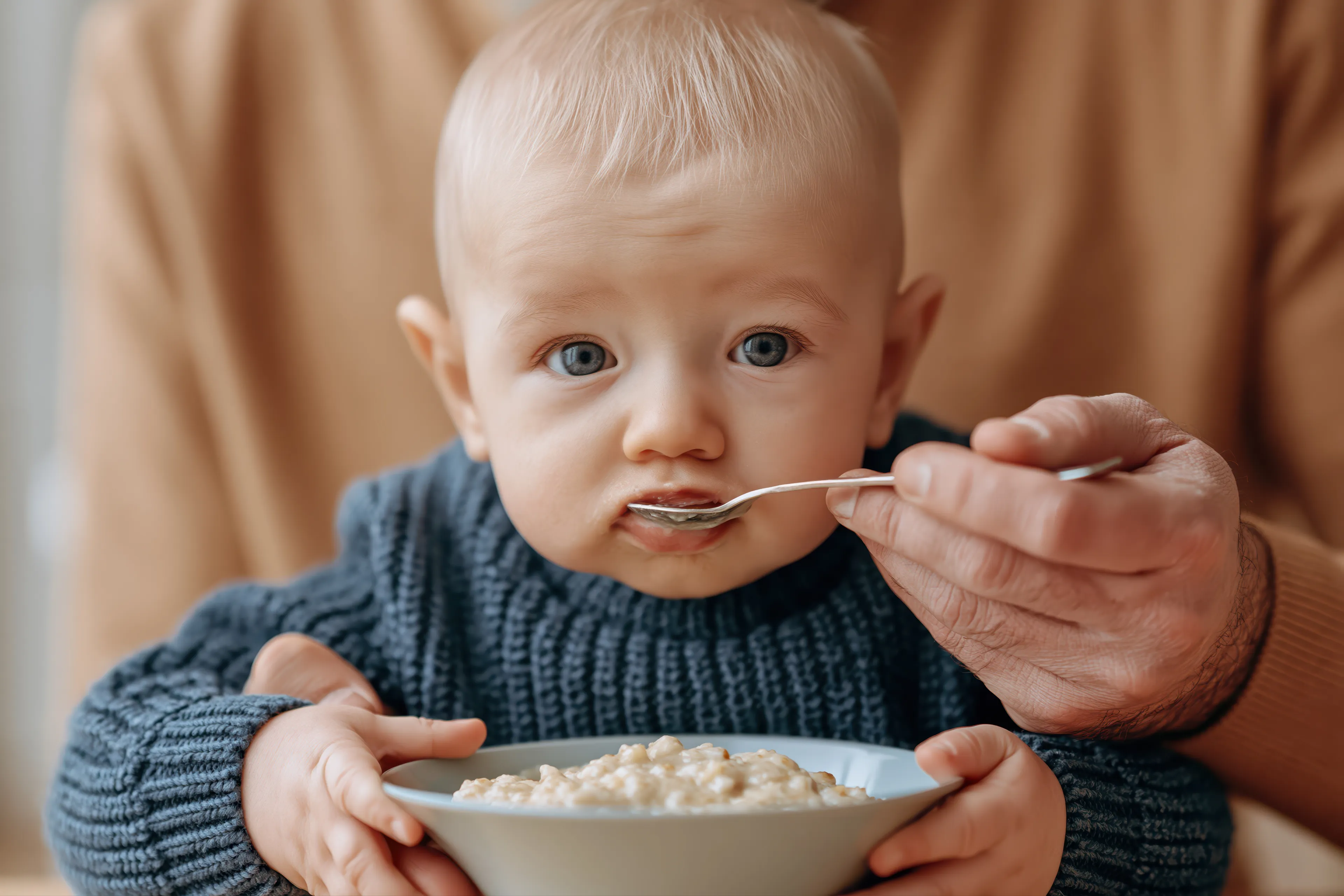
  • After starting solids how much breast milk: Continue to nurse on demand. You will notice they naturally nurse slightly less as they eat more solid meals.
  • After starting solids how much formula: Most babies still require 24 to 32 ounces of formula per day.
  • When starting solids how many times a day: Start by offering solids just once a day. By 7 to 8 months, you can increase this to twice a day.

If you are following a early pediatrician-approved plan, like a 5 month old baby feeding schedule solid food, solids are purely for sensory exploration, not meal replacement. As your baby reaches the toddler stage, you can transition them to options like 9 month bab

FAQS

When to start solid food for baby?

The ideal age to introduce solid food for baby is around 6 months. This is when their digestive system is developed, and they can sit upright with minimal support.

When should I start solids for my baby girl or boy?

The biological timeline is identical for both boys and girls. When considering when to start solids for baby girl or boy, always look for physical readiness cues, like good head control, around the 6-month mark.

When should we start solid food for babies if they seem hungry early?

Even if your baby seems hungry, do not start solids before 4 months. If your baby is between 4 and 6 months and shows signs of readiness, consult your pediatrician before introducing any solid food for babies.

When can I start solids for baby if we want to try cereals?

You can introduce single-grain, iron-fortified cereals at 6 months. Make sure the texture is very runny by mixing it with breast milk or formula.

When to give food to baby in terms of timing during the day?

The best time to feed your baby solids is when they are happy, alert, and not overly tired or starving. Mid-morning, between their usual milk feedings, is often the most successful time.

Apollo 247 Floating Action Button