logo
0

White Thick Discharge in Pregnancy: Causes & When to Worry

Learn about white thick discharge during pregnancy, its common causes, how it changes throughout pregnancy and the warning signs that need medical attention.
 

article image

Dr. J.T.Hema Prathima

Noticing thick white discharge during pregnancy can be unsettling, particularly when you are unsure whether it is normal or a sign of infection. However, increased vaginal discharge is common during pregnancy and is usually a normal response to hormonal changes.

The colour, consistency, odour and accompanying symptoms can help you understand whether your discharge is typical or needs medical attention. This guide explains why white thick discharge occurs during pregnancy, how it may change over time and which warning signs you should not ignore.

What Is White Thick Discharge and Why It Happens

Vaginal discharge is a fluid produced by glands in the cervix and vaginal walls. It helps remove old cells, keeps the vagina clean and maintains an environment that discourages the growth of harmful microorganisms.

The medical term for normal white or milky vaginal discharge is leukorrhoea. During pregnancy, rising oestrogen levels and increased blood flow to the pelvic region stimulate cervical mucus production, resulting in more noticeable discharge.

Normal pregnancy discharge typically has the following characteristics:

  • Colour: White or off-white.
  • Consistency: Thin to moderately thick, with a smooth or creamy texture.
  • Odour: Mild or odourless.
  • Associated symptoms: No itching, burning, soreness or irritation.

This type of discharge is generally a normal part of pregnancy. However, changes in its appearance or the development of other symptoms may indicate an infection or another condition that needs medical attention.

Discharge Changes Across the Menstrual Cycle

Vaginal discharge changes naturally throughout the menstrual cycle in response to hormonal fluctuations. Understanding these patterns can help you recognise changes, although discharge alone cannot reliably distinguish pregnancy from an approaching period.

  • Follicular phase (after your period): Discharge is usually scanty or relatively dry at first. It gradually increases as ovulation approaches.
  • Ovulatory phase (around ovulation): Discharge generally becomes clear, slippery and stretchy, resembling raw egg white. This type of cervical mucus is associated with increased fertility.
  • Luteal phase (after ovulation): Discharge often becomes thicker, creamier and whiter as progesterone levels rise.
  • Before your period: Discharge may become creamy or thick, although its amount and consistency vary between individuals.

Thick white discharge before a period can look similar to discharge in early pregnancy. However, neither its colour nor its consistency can reliably confirm pregnancy. A home pregnancy test  is more reliable for checking for pregnancy.

White Thick Discharge in Early Pregnancy

An increase in vaginal discharge can occur during early pregnancy. Hormonal changes, particularly rising oestrogen levels, increase blood flow to the pelvic region and stimulate mucus production in the cervix.

This discharge, known as leukorrhoea, may become more noticeable around the time of your missed period or during the following weeks. It is generally white or milky, mild-smelling or odourless, and may have a creamy consistency.

You may also experience other early pregnancy symptoms, such as breast tenderness, mild cramping or fatigue. However, these symptoms and increased discharge are not specific to pregnancy.

The amount of discharge varies from person to person and may fluctuate throughout pregnancy. Although persistent white discharge can be normal, it cannot confirm pregnancy or reliably distinguish it from premenstrual discharge. If your period is late, take a pregnancy test to check.

When White Discharge Is a Warning Sign

Although white discharge is usually normal during pregnancy, certain changes in its colour, consistency or odour may indicate an infection. Recognising these warning signs can help you seek appropriate care.

  • Colour changes: Yellow, green or grey discharge may indicate an infection, such as bacterial vaginosis or a sexually transmitted infection (STI). Consult your doctor if you notice these changes.
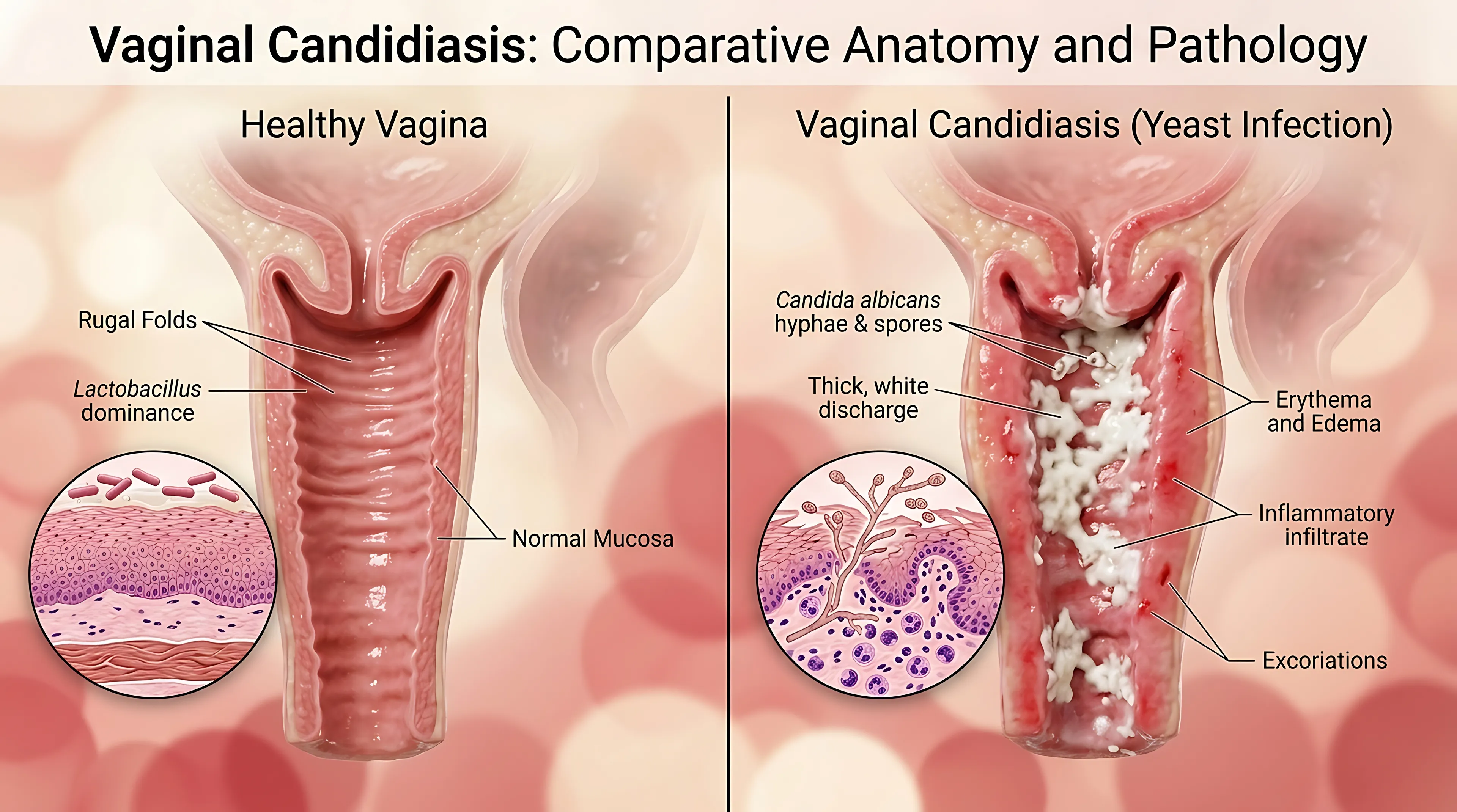
  • Cottage cheese-like texture: Thick, lumpy discharge resembling cottage cheese, particularly when accompanied by itching or soreness, may indicate a yeast infection, also known as vaginal thrush. Pregnancy increases the risk of thrush because hormonal changes affect the vaginal environment. Consult your doctor for confirmation and appropriate treatment.
  • Strong or unpleasant odour: A fishy smell, particularly with thin greyish discharge, may indicate bacterial vaginosis. Other infections can also cause an unpleasant odour and require assessment.
  • Itching, burning or soreness: These symptoms are not typical of normal pregnancy discharge. They may indicate an infection or irritation and should be evaluated, particularly if they persist.
  • Blood-tinged or pink discharge: Light spotting can occur during early pregnancy for several reasons, but its cause cannot be determined from appearance alone. Any bleeding during pregnancy should be discussed with your maternity care provider. Heavy bleeding, severe abdominal pain or dizziness requires urgent medical attention.
  • Watery, continuous leaking: A sudden gush or persistent trickle of watery fluid may indicate leakage of amniotic fluid. Contact your maternity unit immediately, even if you are unsure whether the fluid is urine or discharge.

Contraindications and Precautions

Abnormal discharge during pregnancy should not be treated without first identifying its cause. Using an over-the-counter antifungal cream or taking antibiotics without medical advice may delay appropriate treatment or expose you to unnecessary medication.

For example, antifungal medicines do not treat bacterial vaginosis. Similarly, treating a suspected yeast infection without confirming the diagnosis may leave another underlying condition untreated.

If you develop symptoms of an infection, consult your doctor before starting any treatment. Some antifungal medicines, including certain topical preparations, may be considered during pregnancy, but the appropriate choice and duration depend on your circumstances. Oral antifungal medicines are generally avoided during pregnancy unless specifically prescribed.

Antibiotics should also be selected according to the infection, your stage of pregnancy and the medicine's safety profile. Do not stop any prescribed medication without consulting your doctor.

If you experience a suspected adverse reaction to a medicine, inform your healthcare provider promptly.

When to See a Doctor

Normal white pregnancy discharge usually does not require treatment. However, certain symptoms warrant medical assessment to identify infections or pregnancy-related complications.

Consult your doctor promptly if you experience:

  • Discharge with a strong or unpleasant odour.
  • Yellow, green or grey discharge.
  • Persistent itching, redness, swelling or soreness around the vagina.
  • Thick, lumpy discharge accompanied by itching or irritation.
  • Any vaginal bleeding during pregnancy, particularly if it is persistent or accompanied by pain.

A sudden gush or continuous trickle of watery fluid requires immediate assessment by your maternity unit, as it may indicate leaking amniotic fluid. Heavy bleeding, severe abdominal pain, fainting or significant dizziness also requires emergency medical attention.

If you are uncertain whether your discharge is normal, consult your obstetrician or midwife. Prompt assessment can help identify conditions that require treatment and prevent avoidable complications.

Conclusion

White thick discharge during pregnancy is usually normal and commonly occurs because of hormonal changes and increased blood flow to the pelvic region. It is generally white or milky, mild-smelling or odourless, and does not cause itching or irritation. Its amount and consistency may vary throughout pregnancy.

However, unusual colours, a strong odour, a cottage cheese-like texture or accompanying irritation may indicate an infection. Persistent watery leakage or vaginal bleeding also requires appropriate assessment. Pay attention to changes in your discharge and consult your doctor when you notice warning signs.
FAQS

Is thick white discharge normal in early pregnancy?

Yes, thick white discharge can be normal during early pregnancy. Rising oestrogen levels increase cervical mucus production, resulting in more noticeable discharge. Normal discharge is generally white or milky, mild-smelling or odourless, and does not cause itching or irritation. However, it is not a reliable way to confirm pregnancy.

What does abnormal discharge look like during pregnancy?

Abnormal discharge may be yellow, green or grey, have a strong or fishy odour, or appear thick and lumpy, resembling cottage cheese. Discharge accompanied by itching, burning, soreness or irritation may also indicate an infection. Consult your doctor if you notice these changes.

Can thick white discharge mean infection in pregnancy?

Thick white discharge alone is usually normal during pregnancy. However, thick, lumpy discharge resembling cottage cheese, particularly when accompanied by itching or soreness, may indicate a yeast infection. A doctor can confirm the cause and recommend an appropriate treatment.

Does white discharge increase throughout pregnancy?

Vaginal discharge generally increases during pregnancy because of hormonal changes and increased blood flow to the pelvic region. Many women notice more discharge as pregnancy progresses, although the amount varies. A sudden change in consistency, unusual odour or watery leakage should be assessed by a healthcare professional.

How is pregnancy discharge different from period discharge?

Pregnancy discharge is often white or milky and may persist or increase as pregnancy progresses. Discharge before a period may also be thick and white because of hormonal changes. As these patterns can look similar, discharge alone cannot reliably distinguish pregnancy from an approaching period. A pregnancy test is a more reliable way to confirm pregnancy.

Apollo 247 Floating Action Button