
0

 Prescription Medicine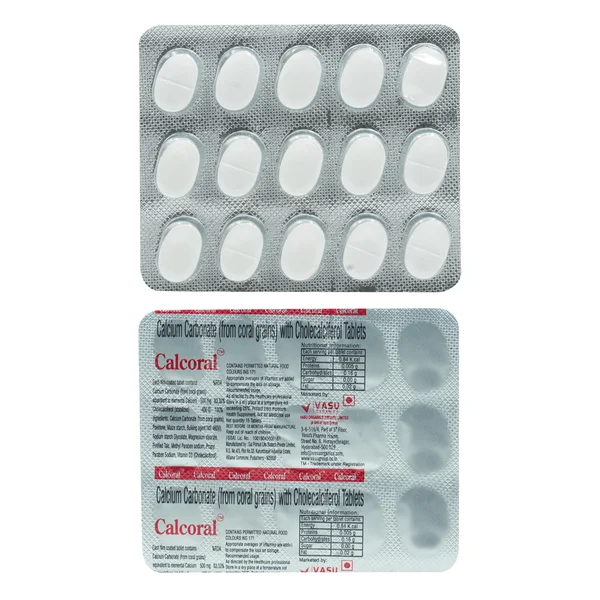


₹234
 ₹35.0Cashback (15%)
(Inclusive of all Taxes)
 Offers & Discounts
Get Free delivery (₹99) with


Composition :
Manufacturer/Marketer :
Consume Type :
Expires on or after :
Return Policy :
About Calcoral Tablet
Calcoral Tablet is used to treat low blood calcium levels. It may also be given to pregnant, nursing, and postmenopausal women to ensure that they are getting enough calcium.
Calcoral Tablet contains Calcium carbonate and Cholecalciferol. Calcium carbonate provides essential nutrients to maintain bone formation. Cholecalciferol aids in the absorption of calcium.
Take Calcoral Tablet as prescribed by your doctor. In some cases, Calcoral Tablet can cause side effects like constipation or stomach upset, nausea, vomiting, loss of appetite, and weakness. If these side effects persist longer, please consult your doctor.
If you are known to be allergic to Calcoral Tablet or its inactive components, please inform your doctor. Pregnant or breastfeeding women should consult their doctor before taking Calcoral Tablet .
Uses of Calcoral Tablet
Calcoral Tablet is used in the treatment of Osteoporosis, Postmenopausal osteoporosis, Osteomalacia, Rickets, Calcium deficiency, and Hypoparathyroidism. The detailed uses of Calcoral Tablet are as follows:

Have a query?
Directions for Use
Key Benefits
How Calcoral Tablet Works
Storage
What if I have taken an overdose of Calcoral Tablet
Drug Warnings
Drug-Drug Interactions


Login/Sign Up
Drug-Food Interactions
Login/Sign Up
Diet & Lifestyle Advise
Calcium-Rich Foods:
Healthy Dietary Choices:
Foods to Limit:
Habit Forming
Therapeutic Class

 RX
RXValue Formulations Pvt Ltd
₹84.5
(₹8.45 per unit)

Alcohol
Caution
Drinking alcohol can affect calcium absorption; hence it is advised to limit the alcohol intake while using Calcoral Tablet .

Pregnancy
Caution
During pregnancy, use higher doses of Calcoral Tablet than the daily dietary allowance only when advised by the doctor. Calcitriol in higher doses may harm the foetus. Your doctor will weigh the potential risks and benefits before prescribing Calcoral Tablet .

Breast Feeding
Caution
Consult your doctor before taking Calcoral Tablet if you are breastfeeding. Calcoral Tablet can pass into the breast milk. If Calcoral Tablet is used during breastfeeding, please monitor the mother and the infant's serum calcium levels.

Driving
Caution
No interaction found/established

Liver
Caution
Let your doctor know if you have any history of liver diseases before taking Calcoral Tablet . Hepatic impairment/liver disease can alter the metabolic and therapeutic activity of certain Vitamin D forms.

Kidney
Caution
Seek doctor advice before starting Calcoral Tablet if you have kidney diseases like kidney stones or undergoing dialysis. Calcitriol in Calcoral Tablet increases inorganic phosphate levels in serum; hence caution should be taken in patients undergoing dialysis to maintain adequate phosphorus levels and avoid ectopic calcification (calcium deposition).

Children
Caution
Calcoral Tablet should be used with caution in children and only if prescribed by a doctor.

Heart
Consult your doctor
Please inform your doctor if you have any pre-existing heart problems

Geriatrics
Consult your doctor
Limited information available for use of Calcoral Tablet in elderly patients. Please consult your doctor.
Calcoral Tablet used to treat low blood calcium levels. Calcoral Tablet effectively treats various conditions caused by low calcium levels in the body, such as osteoporosis (weak and brittle bones), osteomalacia/rickets (weak bones), hypoparathyroidism (low levels of parathyroid hormone) and latent tetany (a muscle disease with low blood calcium levels). Calcoral Tablet can also be given to pregnant, nursing, and postmenopausal women to ensure that they are getting enough calcium.
Calcoral Tablet contains Calcium carbonate and Cholecalciferol. Calcium carbonate provides essential nutrients to maintain bone formation. Cholecalciferol aids in the absorption of calcium.
Calcoral Tablet is used to increase low levels of calcium in the body. Hence, it is not advised to use Calcoral Tablet during hypercalcemia, since it causes the overdose of calcium, leading to kidney stones and other effects.
Do not use Calcoral Tablet if you are allergic to Calcoral Tablet or any other ingredients in it. Calcoral Tablet is not recommended in hypercalcemia (high calcium levels), metastatic calcification (extra deposits of calcium in the body), hypervitaminosis D (high vitamin D levels), and malabsorption syndrome (difficulty absorbing nutrients from food).
Individual factors, including health needs, diet, and lifestyle, influence the optimal timing for taking Calcoral Tablet . Furthermore, the timing may require adjustment to prevent interactions if you're taking other medications. Consulting a healthcare professional is crucial for personalized guidance tailored to your unique needs and circumstances.
Calcoral Tablet offers numerous benefits, including supporting bone health, essential for bone mineralization, and potentially reducing the risk of osteoporosis. Adequate calcium and vitamin D intake helps maintain strong bones and teeth while supporting muscle function and nerve transmission. Overall, Calcoral Tablet plays a vital role in maintaining overall health and well-being, particularly bone health.
Swallow the whole Calcoral Tablet with a glass of water, taking care not to crush, chew, or break it.
Do not take Calcoral Tablet if you have kidney disease, high levels of calcium in your blood (hypercalcemia), or a history of kidney stones, as it may worsen these conditions. It is crucial to inform your doctor about your medical history, underlying health conditions, and all medications you're currently taking to avoid potential interactions or adverse effects. Failure to do so may result in serious health complications. Consult your doctor or healthcare professional for personalized advice and careful monitoring.
Taking Calcoral Tablet more than the recommended dose leads to overdose, which might cause nausea/vomiting, loss of appetite, mental/mood changes, headache, drowsiness, weakness, and tiredness. If you suspect an overdose or unusual symptoms, seek medical attention right away.
The recommended daily intake of vitamin D varies based on factors such as age, sex, health status, diet, and lifestyle. It's best to consult your healthcare provider to determine the optimal dosage for your needs. They will consider your health status, medications, dietary habits, lifestyle, and other factors to recommend a suitable dose.
Low vitamin D levels can lead to various health issues, including weakened bones, increased risk of fractures, fatigue, mood changes, impaired immune function, infections, autoimmune diseases, cardiovascular disease, cognitive impairment, and neurodegenerative diseases. Severe deficiency can cause rickets in children and osteomalacia in adults. It is essential to maintain adequate vitamin D levels through sun exposure, diet, and supplements (if necessary). Consult a healthcare professional for personalized advice.
The common side effects of Calcoral Tablet , which may occur in some individuals, include constipation or stomach upset, nausea, vomiting, loss of appetite, mood changes, weakness, tiredness, fast or pounding heartbeat, bone/muscle pain, and headache. Most of these side effects of Calcoral Tablet do not require medical attention and gradually resolve over time. However, if these side effects persist longer, please consult your doctor.
Country of origin
Manufacturer/Marketer address


