
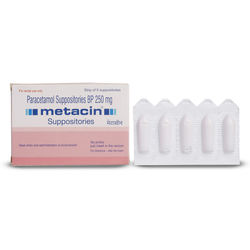
Metacin Suppositories 5's

₹14.5
 ₹2.0Cashback (15%)
(Inclusive of all Taxes)
₹10 with coupons & bank offers*
 Offers & Discounts
Get Free delivery (₹99) with


Delivery Information
More about the Product
Composition :
Manufacturer/Marketer :
Consume Type :
Expires on or after :
Return Policy :
About Metacin 250 mg Suppositories
Metacin 250 mg Suppositories is a rectal suppository used to reduce fever and relieve mild-to-moderate pain. This medicine is designed for situations where taking oral medications is not possible, such as during severe nausea, vomiting, or when a patient cannot swallow easily. It helps soothe discomfort from headaches, common colds, or minor aches.
For best results, use this medicine consistently as directed by your healthcare professional. It is typically used on an as-needed basis rather than on a regular daily schedule. Preparing your body by trying to empty your bowels before inserting the suppository can help ensure proper absorption. Additionally, resting in bed and drinking small, frequent sips of water can support your body's natural recovery process.
While using Metacin 250 mg Suppositories, some people may experience mild side effects like minor rectal discomfort or irritation. However, you should stop using this medicine and consult a doctor immediately if you experience severe signs, such as a serious skin rash, hives, or swelling of the face.
Talk to your doctor before starting this medicine if you have underlying health issues, particularly liver disease, kidney problems, or if you regularly consume alcohol. Do not take this if you are allergic to the active ingredient or any of the inactive ingredients used to make the suppository.
It is important to avoid combining this product with other pain-relieving medicines to prevent accidental liver damage. Always consult your doctor or pharmacist if you are pregnant, breastfeeding, or managing treatments for elderly individuals to ensure this is the safest option.
Uses of Metacin 250 mg Suppositories
Your doctor may prescribe Metacin 250 mg Suppositories to help manage the following conditions:
- Fever reduction: Metacin 250 mg Suppositories helps lower a high body temperature by acting on the brain's heat-regulating centre, making it ideal for managing fevers caused by infections or viruses.
- Mild to moderate pain: Metacin 250 mg Suppositories targets the pathways that transmit pain signals, providing effective relief for headaches, muscle aches, toothaches, and post-surgery discomfort.
- Pain relief when oral intake is restricted: Metacin 250 mg Suppositories serves as a reliable alternative for patients who are unable to take oral medications due to severe vomiting, nausea, or unconsciousness.
Key Benefits
When used as directed as part of your treatment plan, this medicine may provide the following benefits:
- Alternative route of delivery: When severe nausea or swallowing difficulties make taking tablets impossible, this medicine ensures you can still receive necessary pain and fever relief without irritating your stomach.
- Fast-acting comfort: The rectal lining contains many blood vessels, allowing the medication to dissolve and absorb efficiently into the body to start relieving your symptoms quickly.
- Restful recovery: By safely lowering your fever and easing body aches, this medicine helps you sleep and rest comfortably, which is essential for your body to heal.
- Inform your doctor about the nausea and discuss possible alternatives to the medication or adjustments to the dosage.
- Divide your daily food intake into smaller, more frequent meals to reduce nausea.
- Opt for bland, easily digestible foods like crackers, toast, plain rice, bananas, and applesauce.
- Avoid certain foods that can trigger nausea, such as fatty, greasy, spicy, and smelly foods.
- Drink plenty of fluids, such as water, clear broth, or electrolyte-rich beverages like coconut water or sports drinks.
- Use ginger (tea, ale, or candies) to help relieve nausea.
- Get adequate rest and also avoid strenuous activities that can worsen nausea.
- Talk to your doctor about taking anti-nausea medication if your nausea is severe.
- Record when your nausea occurs, what triggers it, and what provides relief to help you identify patterns and manage your symptoms more effectively.
- Preventing Vomiting (Before it Happens)
- Take medication exactly as prescribed by your doctor. This can help minimize side effects, including vomiting.
- Having a small meal before taking your medication can help reduce nausea and vomiting.
- Talk to your doctor about taking anti-nausea medication along with your prescribed medication.
- Managing Vomiting (If it Happens)
- Try taking ginger in the form of tea, ale, or candy to help alleviate nausea and vomiting.
- What to Do if Vomiting Persists
- Consult your doctor if vomiting continues or worsens, consult the doctor for guidance on adjusting your medication or additional treatment.
- Consume more fruits, vegetables, and cruciferous foods like cabbage, kale, and broccoli.
- Reduced alcohol intake can enhance liver enzyme function.
- Oxidative stress can be managed by eating foods rich in antioxidants, such as vitamins C and E.
- Liver function tests regularly can help manage increased levels of AST.
- Drink water or other clear fluids.
- To prevent worsening of pain, limit intake of tea, coffee, or alcohol.
- Include bland foods like rice, toast, crackers, and rice in your diet.
- Avoid lying down immediately after eating as it may cause indigestion or heartburn.
- Avoid acidic and spicy food as it may cause indigestion.
- Include iron-rich foods like dark leafy vegetables, lean red meat, legumes and fish in your diet.
- Consume vitamin C-rich foods as they aid iron absorption.
- Limit tea, cocoa, and coffee as these can slow iron absorption.
- Exercise regularly; however, do not overdo it.
- Skin rash caused by allergies is due to irritants or allergens. Therefore, avoid contact with such irritants.
- Consult your doctor for proper medication and apply an anti-itch medication. Follow the schedule and use the medication whenever needed.
- Protect your skin from extreme heat and try to apply wet compresses.
- Soak in the cool bath, which gives a soothing impact to the affected area.
- Tell your doctor immediately if you experience shortness of breath after taking medication.
- Your doctor may adjust the medication regimen or dosage or give alternative medical procedures to minimize the symptoms of shortness of breath.
- Monitor your oxygen levels and breathing rate regularly to track changes and potential side effects.
- For controlling stress and anxiety, try relaxation techniques like deep breathing exercises, meditation, or yoga.
- Make lifestyle changes, such as quitting smoking, exercising regularly, and maintaining a healthy weight.
- Seek emergency medical attention if you experience severe shortness of breath, chest pain, or difficulty speaking.
- Follow up regularly with your doctor to monitor progress, adjust treatment plans, and address any concerns or questions.
Directions for Use
- Follow your doctor's instructions on the dosage and timing of this medication.
- The suppository should be inserted into the rectum (back passage) by removing the plastic wrapper.
- Wash your hands before and after inserting the suppository.
- Try to sit still for a minute or two and then wash your hands.
How Metacin 250 mg Suppositories Works

Alcohol
Consult your doctor
It is not known if alcohol affects Metacin 250 mg Suppositories. Please consult your doctor if you have any concerns.

Pregnancy
Caution
Please consult your doctor if you are pregnant; your doctor will prescribe Metacin 250 mg Suppositories only if the benefits outweigh the risks.

Breast Feeding
Consult your doctor
Please consult your doctor if you are breastfeeding; your doctor will decide if Metacin 250 mg Suppositories can be taken by lactating mothers or not.

Driving
Safe if prescribed
Metacin 250 mg Suppositories is unlikely to affect your ability to drive.

Liver
Consult your doctor
Dose adjustment may be needed. Please consult your doctor if you have liver problems or any concerns regarding this. Avoid using Metacin 250 mg Suppositories if you have severe liver problems.

Kidney
Consult your doctor
Dose adjustment may be needed. Please consult your doctor if you have kidney problems or any concerns regarding this.

Children
Safe if prescribed
Metacin 250 mg Suppositories is safe for use in children if prescribed by the doctor. The dose and duration of the medicine will be decided by the physician

Heart
Safe if prescribed
Metacin 250 mg Suppositories is considered safe for patients with heart conditions when used within the recommended dosage. Please consult your doctor if you have any concerns.

Geriatrics
Safe if prescribed
Metacin 250 mg Suppositories is generally safe for elderly patients when given at prescribed doses, but total daily dose should be monitored to avoid toxicity.
What if I have taken an overdose of Metacin 250 mg Suppositories
Diet & Lifestyle Advise
- Stay hydrated: Sip water, clear soups, or electrolyte solutions regularly, as fevers can cause your body to lose fluids quickly.
- Create a restful environment: Keep your room cool and quiet to help lower your body temperature and allow your body to heal.
- Use cool compresses: Placing a cool, damp cloth on your forehead can provide additional physical comfort alongside the medication.
- Avoid alcohol entirely: Drinking alcohol while using this medicine increases the risk of severe liver damage, so it must be avoided.

Have a query?
How Soon It Starts Working
The time required for Metacin 250 mg Suppositories to start to work: The time required for Metacin 250 mg Suppositories to show its action is unknown. The time for which the effects of Metacin 250 mg Suppositories last: Metacin 250 mg Suppositories effect last for 4 to 6 hours.
Storage
What if you forget to take Metacin 250 mg Suppositories
Drug Warnings
- Inspect the packaging: Always check the suppository wrapper before use; if it is torn, punctured, or damaged, discard it safely.
- Do not cut suppositories: Do not attempt to split or cut the suppository to reduce the dose, as the active ingredient may not be distributed evenly.
- Check other medications: Always read the labels of other over-the-counter cough, cold, or sinus remedies to ensure they do not contain the same active pain reliever, preventing accidental double dosing.
- Empty bowels beforehand: Whenever possible, try to have a bowel movement before inserting the medicine so it can absorb fully without being expelled.
- Keep them firm: If a suppository feels too soft to insert, keep it in the refrigerator for 10 to 15 minutes before unwrapping it.
Drug-Drug Interactions


Drug-Drug Interaction Summary:
- Other pain relievers: Combining this medicine with other products containing the same active ingredient increases the risk of severe liver damage.
- Blood thinners: Daily, long-term use of this medicine may increase the risk of bleeding when taken alongside blood-thinning medications like warfarin.
Drug-Drug Interactions
Login/Sign Up
Co-administration of Metacin Suppositories and Leflunomide may increase the risk of liver problems.
How to manage the interaction:
Although there is a possible interaction between Metacin Suppositories and Leflunomide, they can be taken together if prescribed by a doctor. However, if you experience fever, chills, joint pain or swelling, unusual bleeding or bruising, skin rash, itching, less desire to eat, fatigue, nausea, vomiting, abdominal pain, or yellowing of the skin or eyes, contact a doctor immediately. Do not discontinue any medications without consulting a doctor.
Co-administration of Mipomersen with Metacin Suppositories may increase the risk or severity of liver injury.
How to manage the interaction:
There may be a possibility of interaction between Metacin Suppositories and Mipomersen, but it can be taken if prescribed by a doctor. Do not stop using any medications without talking to a doctor.
Co-administration of Metacin Suppositories and Valdecoxib may increase the risk or severity of adverse effects.
How to manage the interaction:
Although there is a possible interaction between Metacin Suppositories and Valdecoxib, you can take these medicines together if prescribed by a doctor. However, if the side effects worsen, please consult a doctor.
Co-administration of Teriflunomide with Metacin Suppositories may increase the risk or severity of Liver problems.
How to manage the interaction:
Taking Metacin Suppositories with Teriflunomide together can possibly result in an interaction, but it can be taken if a doctor has advised it. Do not discontinue any medications without consulting a doctor.
Co-administration of Lomitapide and Metacin Suppositories may increase the risk of severity of liver injury.
How to manage the interaction:
Although there is a possible interaction between Metacin Suppositories and Lomitapide, you can take these medicines together if prescribed by a doctor. Do not stop using any medications without a doctor's advice.
Co-administration of ketamine and Metacin Suppositories may decrease the effectiveness of Ketamine which could result in a higher blood level.
How to manage the interaction:
Although taking Ketamine and Metacin Suppositories together can evidently cause an interaction, it can be taken if a doctor has suggested it. If you're feeling very sleepy or having trouble breathing, it's important to contact your doctor right away. Do not stop using any medications without a doctor's advice.
Co-administration of Metacin Suppositories and Ketoconazole may increase the risk of liver injury.
How to manage the interaction:
Although there is a possible interaction between Metacin Suppositories and Ketoconazole, you can take these medicines together if prescribed by a doctor. However, if you have joint pain or swelling, fever, chills, unusual bleeding or bruising, skin rash, itching, over-tiredness, nausea, vomiting, loss of appetite, stomach pain, dark-colored urine, light-colored stools, and/or yellowing of the skin or eyes, contact a doctor immediately as these may be signs and symptoms of liver damage. Do not discontinue the medication without consulting a doctor.
Co-administration of Metacin Suppositories may decrease the excretion rate of Oxazepam which could result in a higher serum level.
How to manage the interaction:
Although there is a possible interaction between Oxazepam and Metacin Suppositories, you can take these medicines together if prescribed by a doctor. Do not stop using any medications without a doctor's advice.
Drug-Food Interactions
Drug-Food Interaction Summary:
- Alcohol: Drinking alcohol while taking this medicine significantly increases the risk of liver damage.
Drug-Food Interactions
Login/Sign Up

All Substitutes & Brand Comparisons


FAQs
Disclaimer
Author Details


Reference
- Paracetamol Paracetamol. 2015. [Accessed on 17 Jun. 2019]Check here
- Paracetamol for adults: painkiller to treat aches, pains and fever [Internet]. nhs. uk. 2025 [Accessed on 17th September 2025]Check here
- Freo U, et al. Paracetamol: A review of guideline recommendations. J Clin Med. 2021. [Accessed on 17th September 2025]Check here
- Accord Healthcare Limited. Electronic Medicines Compendium (EMC). [Revised in April 2022] [Accessed on 12th August 2022]Check here
- Zentiva Pharma UK Limited. Electronic Medicines Compendium (EMC). [Revised in May 2022] [Accessed on 12th August 2022]Check here
- Central Drugs Standard Control Organisation (CDSCO). [Accessed on 02 Apr. 2019]Check here
Country of origin
Manufacturer/Marketer address
Therapeutic Class
Habit Forming

