0



₹2.29 per gm
BEST VALUE
MRP ₹915
(Inclusive of all Taxes)
 Offers & Discounts
Get Free delivery (₹99) with


Manufacturer/Marketer :
Consume Type :
Expires on or after :
Return Policy :
Description
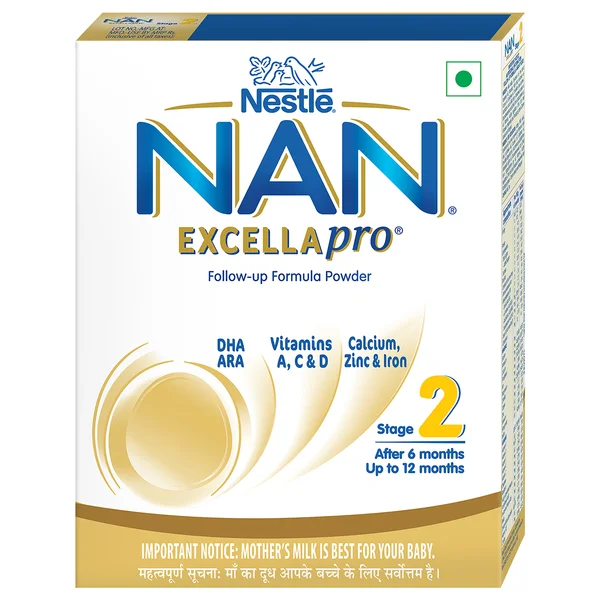
Transitioning your baby to the next stage of nutrition requires a formula that supports their rapid physical and cognitive development. Nestlé NAN EXCELLAPRO Stage 2 is a premium, spray-dried follow-up formula specifically designed for infants after 6 months up to 12 months, when they are not breastfed. This 400 gm refill pack offers a scientifically advanced blend of nutrients, bridging the gap between early infancy and the toddler years. It is formulated to be gentle on developing digestive systems while providing the robust nutritional foundation necessary for this active growth phase.


Key Ingredients
Vegetarian

Have a query?
Directions for Use
To ensure infant safety and hygiene, follow these precise preparation steps:
Pro Tip: Always prepare only one feed at a time. Discard any unconsumed formula after feeding. Never store leftover liquid formula for later use due to the risk of bacterial growth.
Key Benefits
Nestle NAN EXCELLAPRO Stage 2 is a premium follow-up formula designed for infants aged 6 to 12 months. It is used as an infant milk substitute to complement a weaning infant's diet. It provides essential nutrients like DHA, ARA, Iron, and Calcium, which are necessary for optimal physical growth, immune system support, and brain development in babies.
While both are high-quality follow-up formulas, NAN Excellapro features a more advanced, specialised lipid profile. It is specifically enriched with optimal ratios of DHA and ARA from vegetarian sources, which are clinically proven to support enhanced cognitive and visual development compared to standard formulations.
No. Stage 2 formulas have a specific protein and mineral concentration designed for older infants whose kidneys and digestive systems are more mature. For babies under 6 months, you should exclusively use breast milk or a Stage 1 infant formula as recommended by your paediatrician.
No. Mother's milk remains the best nutritional source. This formula milk for babies is meant to supplement the diet of an infant who is transitioning to solid foods (weaning). It bridges nutritional gaps but should be given alongside a balanced diet of pureed fruits, vegetables, and cereals, as advised by your doctor.
Mixed infant formula should be consumed immediately after preparation. If the baby does not finish the feed, you must discard the leftover milk within 1 hour. Do not refrigerate or reheat prepared formula, as it can harbour harmful bacteria that may compromise your baby's health.
Transitioning should be gradual to avoid digestive upset. Start by replacing one Stage 1 feed per day with NAN Excellapro Stage 2 milk powder. Monitor your baby for a few days for any signs of constipation or gas. Gradually increase the number of Stage 2 feeds until the transition is complete over a 7-10 day period.
Yes. Once prepared exactly according to the instructions with water, the liquid formula can be mixed into baby cereals or fruit purees to boost their nutritional value and create a familiar taste for your weaning infant. However, never add solid food directly into the baby's milk bottle.
DHA (Docosahexaenoic Acid) and ARA (Arachidonic Acid) are Omega-3 and Omega-6 fatty acids naturally found in breast milk. In a DHA and ARA baby formula, these nutrients are critical for structural brain development, cognitive function, and healthy retina formation during the baby's first year of life.
Generally, for a 7-month-old infant, the standard feeding table recommends 7 level scoops of powder mixed with 210 ml of lukewarm, previously boiled water. This is typically given 3 to 4 times a day alongside solid meals. Always refer to the exact feeding table on the box and consult your paediatrician.
Yes, minor changes in stool colour or consistency are common when transitioning to a follow-up formula due to the increased Iron content and different protein structures. Iron-fortified formulas can sometimes make stools darker green. If the stool becomes hard or the baby shows signs of discomfort, consult your healthcare provider.

1 Ratings,
1 Reviews
5
100%
4
0%
3
0%
2
0%
1
0%
Country of origin
Manufacturer/Marketer address


Customers Also Bought
Alternatives
Similar Products