
T 98 Paediateric Drops 15 ml

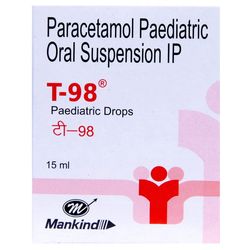


₹37
 ₹6.0Cashback (15%)
(Inclusive of all Taxes)
₹26 with coupons & bank offers*
 Offers & Discounts
Get Free delivery (₹99) with


Delivery Information
More about the Product
Composition :
Manufacturer/Marketer :
Consume Type :
Expires on or after :
Return Policy :


About T 98 Paediateric Drops
T 98 Paediateric Drops is a widely trusted liquid medicine designed to lower fever and relieve mild-to-moderate pain in babies and children. It is commonly used to treat discomfort from teething, immunisations, headaches, earaches, and common cold or flu symptoms. This medicine provides gentle, effective relief to help your child feel more comfortable and recover quickly.
This medicine is given only when needed to manage symptoms, rather than on a continuous, daily schedule. You can give T 98 Paediateric Drops to your child with or without food, as it is gentle on young stomachs. Ensuring your child drinks plenty of fluids and gets quiet rest will also help speed up their recovery and improve comfort.
While this medicine is highly safe when used correctly, some children may occasionally experience mild side effects like drowsiness or a mild stomach upset. If you notice any signs of a severe allergic reaction, such as a skin rash, swelling, or breathing difficulty, stop giving the medicine and contact your doctor immediately.
Before giving T 98 Paediateric Drops, talk to your doctor if your child has any pre-existing liver or kidney problems. Do not give this medicine if your child has a known allergy to any of its ingredients or has been diagnosed with severe liver disease.
Avoid giving T 98 Paediateric Drops alongside other medicines that contain the same active pain-relief ingredients to prevent accidental overdose. Since this is a paediatric formulation, consult your paediatrician or pharmacist if you have questions about using it for infants under three months of age.
Uses of T 98 Paediateric Drops
T 98 Paediateric Drops is used to relieve fever and mild to moderate pain in children. It may be recommended for the following conditions:
- Fever reduction: It helps lower a high body temperature caused by viral infections, colds, or following childhood vaccinations.
- Teething pain: It relieves pain and discomfort caused by sore, tender gums during teething.
- Mild to moderate pain: It helps ease common childhood aches, including earache, sore throat, headache, and minor muscle pain.
Key Benefits
T 98 Paediateric Drops provides effective relief from fever and pain, helping children feel more comfortable while they recover. Its key benefits include:
- Reduces fever quickly: It helps bring down a high temperature, improving your child's comfort and allowing them to rest more easily.
- Relieves everyday pain: It eases discomfort from teething, earaches, sore throats, headaches, and other mild aches, helping children remain active and comfortable.
- Supports better rest and recovery: By reducing pain and fever, it helps children sleep more comfortably, which is important for healing.
- Easy for young children to take: The liquid formulations, including oral drops and oral suspension, are easier for infants and young children to swallow than tablets.
- Preventing Vomiting (Before it Happens)
- Take medication exactly as prescribed by your doctor. This can help minimize side effects, including vomiting.
- Having a small meal before taking your medication can help reduce nausea and vomiting.
- Talk to your doctor about taking anti-nausea medication along with your prescribed medication.
- Managing Vomiting (If it Happens)
- Try taking ginger in the form of tea, ale, or candy to help alleviate nausea and vomiting.
- What to Do if Vomiting Persists
- Consult your doctor if vomiting continues or worsens, consult the doctor for guidance on adjusting your medication or additional treatment.
- Manage stress by practising deep breathing, yoga or meditation.
- Participating in activities you enjoy, or exercising may also help manage agitation.
- Get enough sleep. Maintain a regular sleep cycle.
- Exercise regularly. Try physical activities like walking, running, or dancing.
- Inform your doctor about the nausea and discuss possible alternatives to the medication or adjustments to the dosage.
- Divide your daily food intake into smaller, more frequent meals to reduce nausea.
- Opt for bland, easily digestible foods like crackers, toast, plain rice, bananas, and applesauce.
- Avoid certain foods that can trigger nausea, such as fatty, greasy, spicy, and smelly foods.
- Drink plenty of fluids, such as water, clear broth, or electrolyte-rich beverages like coconut water or sports drinks.
- Use ginger (tea, ale, or candies) to help relieve nausea.
- Get adequate rest and also avoid strenuous activities that can worsen nausea.
- Talk to your doctor about taking anti-nausea medication if your nausea is severe.
- Record when your nausea occurs, what triggers it, and what provides relief to help you identify patterns and manage your symptoms more effectively.
- Prepare for a restful night's sleep: Develop a calming pre-sleep routine, like reading or meditation, to help your body relax and prepare for sleep.
- Create a sleep-conducive Environment: Make bedroom a sleep haven by ensuring it is quiet, dark and calm.
- Follow a Sleep Schedule: Go to bed and get up at the same time every day to help regulate your body's internal clock and increase sleep quality.
- Try relaxing techniques like deep breathing, mindfulness meditation and any others.
- Limit stimulating activities before bedtime: Avoid stimulating activities before bedtime to improve sleep quality.
- Monitor Progress: Keep track of your sleep patterns to identify areas for improvement.
- Consult a doctor if needed: If these steps don't improve your sleep, consult a doctor for further guidance and therapy.
- Inform your doctor about your constipation symptoms. They may adjust your medication or advise alternative treatments.
- Stay hydrated by drinking sufficient of water (at least 8-10 glasses a day) to help soften stool and promote bowel movements.
- Increase fibre intake by eating foods high in fibre, such as fruits, whole grains, vegetables and legumes, to help bulk up the stool.
- Establish a bowel routine by trying to go to the bathroom at the same time each day to train your bowels.
- Engaging in regular exercise, like walking or yoga, can support in bowel movement stimulation.
- Consult your doctor if constipation persists, and discuss alternative treatments or adjustments to your medication.
- Inform Your Doctor: Notify your doctor immediately about your diarrhoea symptoms. This allows them to adjust your medication or provide guidance on managing side effects.
- Stay Hydrated: Drink plenty of fluids to replace lost water and electrolytes. Choose water, clear broth, and electrolyte-rich drinks. Avoid carbonated or caffeinated beverages to effectively rehydrate your body.
- Follow a Bland Diet: Eat easy-to-digest foods to help firm up your stool and settle your stomach. Try incorporating bananas, rice, applesauce, toast, plain crackers, and boiled vegetables into your diet.
- Avoid Trigger Foods: Steer clear of foods that can worsen diarrhoea, such as spicy, fatty, or greasy foods, high-fibre foods, and dairy products (especially if you're lactose intolerant).
- Practice Good Hygiene: Maintain good hygiene to prevent the spread of infection. To stay healthy, wash your hands frequently, clean and disinfect surfaces regularly, and avoid exchanging personal belongings with others.
- Take Anti-Diarrheal Medications: If your doctor advises, anti-diarrheal medications such as loperamide might help manage diarrhoea symptoms. Always follow your doctor's directions.
- Keep track of your diarrhoea symptoms. If they don't get better or worse or are accompanied by severe stomach pain, blood, or dehydration signs (like extreme thirst or dark urine), seek medical help.
Directions for Use
- T 98 Paediateric Drops can be administered with or without food as directed by the doctor.
- Follow your doctor's instructions on the dosage and timing of this medication to ensure safety.
- Administer the prescribed dose to the child using the measuring cup/dosing syringe/dropper.
- Shake well before use.
How T 98 Paediateric Drops Works

Alcohol
Not applicable
-

Pregnancy
Not applicable
-

Breast Feeding
Not applicable
-

Driving
Not applicable
-

Liver
Caution
If your child has a liver impairment, inform your doctor before using T 98 Paediateric Drops. Your doctor may adjust the dose if required.

Kidney
Caution
If your child has kidney impairment, inform your doctor before using T 98 Paediateric Drops. Your doctor may adjust the dose if required.

Children
Safe if prescribed
T 98 Paediateric Drops is safe for babies under two years of age if prescribed by a doctor. Your paediatrician will decide the dose of the medicine. Do not exceed the prescribed dose.

Heart
Consult your doctor
T 98 Paediateric Drops is generally safe for children with heart problems when used at recommended doses. Still, it's best to consult your doctor to ensure it's appropriate for your child’s specific condition and medications.

Geriatrics
Not applicable
T 98 Paediateric Drops is specifically for children use and is not meant for geriatric patients.
What if I have taken an overdose of T 98 Paediateric Drops
Diet & Lifestyle Advise
- Encourage plenty of fluids: Offer frequent small sips of water, breast milk, formula, or clear broths to help prevent dehydration, especially if your child has a fever.
- Dress your child comfortably: Use lightweight, breathable clothing and keep the room at a comfortable temperature to help the body cool naturally.
- Promote adequate rest: Encourage quiet activities and plenty of sleep, as rest helps your child's body recover from illness.
- Use cool compresses if needed: Apply a cool, damp washcloth to your child's forehead or chest to provide additional comfort during a fever.


Have a query?
How Soon It Starts Working
- The time required for T 98 Paediateric Drops to start to work: T 98 Paediateric Drops shows its action within 30-60 minutes of administration.
- The time for which the effects of T 98 Paediateric Drops last: T 98 Paediateric Drops effect lasts for 6 hours.
Storage
What if you forget to take T 98 Paediateric Drops
Drug Warnings
- Check other medicines for T 98 Paediateric Drops: Many cold, cough, and flu medicines also contain T 98 Paediateric Drops. Giving more than one such product at the same time may cause serious liver damage.
- Shake the suspension well before use: Shake the bottle thoroughly for at least 10 seconds before measuring each dose to ensure the medicine is evenly mixed.
- Use the supplied measuring device: Always use the dropper, oral syringe, or measuring device provided with that specific product. Do not interchange measuring devices between different brands.
- Inspect the medicine before use: Do not give the medicine if the liquid appears discoloured, unusually clumpy, or if the bottle shows signs of leakage.
- Keep a dosing record: Write down the time and amount of each dose given to help prevent accidental double dosing by different caregivers.
Drug-Drug Interactions


The following medicines may interact with T 98 Paediateric Drops and require medical advice before use:
- Other medicines containing T 98 Paediateric Drops: Giving more than one medicine containing T 98 Paediateric Drops at the same time increases the risk of accidental overdose and serious liver damage.
- Certain anti-seizure medicines: Some epilepsy medicines may increase the breakdown of T 98 Paediateric Drops and may also raise the risk of liver injury.
- Certain medicines used to prevent nausea or vomiting: These medicines may delay or reduce the absorption of T 98 Paediateric Drops, affecting how quickly it works.
Drug-Drug Interactions
Login/Sign Up
Co-administration of ketamine and T 98 Paediateric Drops 15 ml may decrease the effectiveness of Ketamine which could result in a higher blood level.
How to manage the interaction:
Although taking Ketamine and T 98 Paediateric Drops 15 ml together can evidently cause an interaction, it can be taken if a doctor has suggested it. If you're feeling very sleepy or having trouble breathing, it's important to contact your doctor right away. Do not stop using any medications without a doctor's advice.
Co-administration of T 98 Paediateric Drops 15 ml and Valdecoxib may increase the risk or severity of adverse effects.
How to manage the interaction:
Although there is a possible interaction between T 98 Paediateric Drops 15 ml and Valdecoxib, you can take these medicines together if prescribed by a doctor. However, if the side effects worsen, please consult a doctor.
Co-administration of Teriflunomide with T 98 Paediateric Drops 15 ml may increase the risk or severity of Liver problems.
How to manage the interaction:
Taking T 98 Paediateric Drops 15 ml with Teriflunomide together can possibly result in an interaction, but it can be taken if a doctor has advised it. Do not discontinue any medications without consulting a doctor.
Co-administration of Lomitapide and T 98 Paediateric Drops 15 ml may increase the risk of severity of liver injury.
How to manage the interaction:
Although there is a possible interaction between T 98 Paediateric Drops 15 ml and Lomitapide, you can take these medicines together if prescribed by a doctor. Do not stop using any medications without a doctor's advice.
Co-administration of T 98 Paediateric Drops 15 ml and Leflunomide may increase the risk of liver problems.
How to manage the interaction:
Although there is a possible interaction between T 98 Paediateric Drops 15 ml and Leflunomide, they can be taken together if prescribed by a doctor. However, if you experience fever, chills, joint pain or swelling, unusual bleeding or bruising, skin rash, itching, less desire to eat, fatigue, nausea, vomiting, abdominal pain, or yellowing of the skin or eyes, contact a doctor immediately. Do not discontinue any medications without consulting a doctor.
Co-administration of T 98 Paediateric Drops 15 ml may decrease the excretion rate of Oxazepam which could result in a higher serum level.
How to manage the interaction:
Although there is a possible interaction between Oxazepam and T 98 Paediateric Drops 15 ml, you can take these medicines together if prescribed by a doctor. Do not stop using any medications without a doctor's advice.
Co-administration of T 98 Paediateric Drops 15 ml and Ketoconazole may increase the risk of liver injury.
How to manage the interaction:
Although there is a possible interaction between T 98 Paediateric Drops 15 ml and Ketoconazole, you can take these medicines together if prescribed by a doctor. However, if you have joint pain or swelling, fever, chills, unusual bleeding or bruising, skin rash, itching, over-tiredness, nausea, vomiting, loss of appetite, stomach pain, dark-colored urine, light-colored stools, and/or yellowing of the skin or eyes, contact a doctor immediately as these may be signs and symptoms of liver damage. Do not discontinue the medication without consulting a doctor.
Co-administration of Mipomersen with T 98 Paediateric Drops 15 ml may increase the risk or severity of liver injury.
How to manage the interaction:
There may be a possibility of interaction between T 98 Paediateric Drops 15 ml and Mipomersen, but it can be taken if prescribed by a doctor. Do not stop using any medications without talking to a doctor.
Drug-Food Interactions
The following foods may affect how T 98 Paediateric Drops works:
- High-fibre foods: Large amounts of high-fibre foods may slightly delay the absorption of T 98 Paediateric Drops. However, the medicine can generally be given with or without food.
Drug-Food Interactions
Login/Sign Up

All Substitutes & Brand Comparisons


FAQs
Disclaimer
Author Details


Reference
- Paracetamol Paracetamol. 2015. [Accessed on 17 Jun. 2019]Check here
- Paracetamol for adults: painkiller to treat aches, pains and fever [Internet]. nhs. uk. 2025 [Accessed on 17th September 2025]Check here
- Freo U, et al. Paracetamol: A review of guideline recommendations. J Clin Med. 2021. [Accessed on 17th September 2025]Check here
- Accord Healthcare Limited. Electronic Medicines Compendium (EMC). [Revised in April 2022] [Accessed on 12th August 2022]Check here
- Zentiva Pharma UK Limited. Electronic Medicines Compendium (EMC). [Revised in May 2022] [Accessed on 12th August 2022]Check here
- Central Drugs Standard Control Organisation (CDSCO). [Accessed on 02 Apr. 2019]Check here
Country of origin
Manufacturer/Marketer address
Therapeutic Class
Habit Forming

