apollo
logo
0
Not for online sale

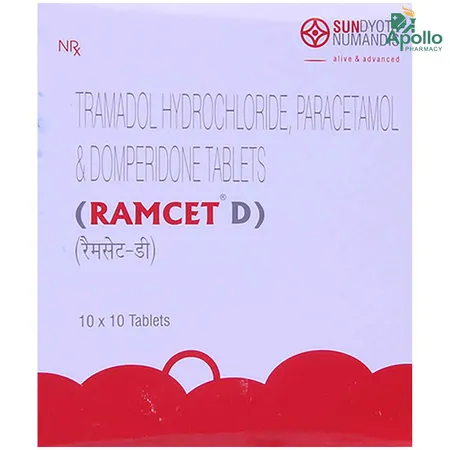
Ramcet D Tablet is used in the symptomatic treatment of moderate to severe pain. It blocks the transmission of pain signals to the brain to lower pain perception. Also, it works on the region in the brain that controls vomiting. It increases the movement of the stomach and intestines, allowing food to move more easily through the stomach. It may cause common side effects like sleepiness, weakness, dizziness, nausea, vomiting, diarrhoea, or constipation. Before taking this medicine, you should tell your doctor if you are allergic to any of its components or if you are pregnant/breastfeeding, and about all the medications you are taking and pre-existing medical conditions.

Read more
Written By Veda Maddala , M Pharmacy
Reviewed By Dr Aneela Siddabathuni , MPharma., PhD
OffersOffers & Discounts

Get Free delivery (₹99) with circle icon

Join Circle
Get Extra 10% Off with Coupons
Extra 10% Off with Bank Offers
bank offer
bank offer
bank offer

More about the Product

Consume Type :

Oral

Expires on or after :

Jan-27

Return Policy :

Not Returnable

About Ramcet D Tablet

Ramcet D Tablet is a prescription medication used to manage moderate to severe pain, particularly when it is accompanied by nausea and vomiting. By combining two distinct pain-relieving agents with an anti-nausea component, this oral medicine helps restore comfort while keeping your stomach settled. It is typically prescribed when standard pain relievers alone are not sufficient to manage your symptoms.

To achieve the best results, you should take Ramcet D Tablet exactly at the intervals recommended by your doctor, rather than taking it on an irregular schedule. It can be taken with or without food, though taking it with a meal may help if you are prone to an upset stomach. Combining this treatment with lifestyle adjustments, such as resting in a quiet, dark room during a pain flare-up and staying hydrated, can significantly support your recovery.

While taking Ramcet D Tablet , you may experience some common, mild side effects such as drowsiness, dizziness, or a dry mouth. However, if you notice any severe reactions—such as difficulty breathing, a rapid heart rate, or extreme sleepiness—you must stop taking the medicine and contact your doctor immediately.

Before starting Ramcet D Tablet , it is crucial to discuss your complete medical history with your doctor, especially if you have a history of liver disease, kidney problems, or breathing disorders like asthma. Do not take this if you have a known blockage in your stomach or intestines, severe bleeding in your digestive tract, or a history of drug addiction.

This medicine can interact dangerously with alcohol, causing extreme drowsiness and slowed breathing, so you must completely avoid alcohol while on this treatment. You should also consult your doctor before using this medication if you are pregnant, breastfeeding, or are an elderly individual, as special dosage adjustments or monitoring may be required.

Uses of Ramcet D Tablet

Ramcet D Tablet is used to treat Moderate to severe pain. The detailed uses of Ramcet D Tablet are as follows:

  • Moderate to severe pain with nausea: Helps control intense pain (such as post-operative pain or musculoskeletal pain) while simultaneously preventing the sickness or vomiting that often accompanies severe physical distress.
  • Migraine attacks: Relieves severe throbbing headaches while actively stopping the nausea and vomiting frequently triggered by migraine episodes.
     

Key Benefits

  • By addressing both pain and sickness at the same time, this medication prevents you from needing to take multiple separate pills, making your recovery process much smoother.
  • The rapid action of the ingredients helps reduce severe discomfort quickly, allowing you to move more freely, recover faster, and return to your normal daily routine sooner.
  • Because it contains a component that speeds up stomach emptying, it helps settle your stomach, making it easier to keep down fluids and other necessary medications.
Side effects of Ramcet D Tablet
Here are the steps to cope with constipation as a side effect of medication:
  • Inform your doctor about your constipation symptoms. They may adjust your medication or advise alternative treatments.
  • Stay hydrated by drinking sufficient of water (at least 8-10 glasses a day) to help soften stool and promote bowel movements.
  • Increase fibre intake by eating foods high in fibre, such as fruits, whole grains, vegetables and legumes, to help bulk up the stool.
  • Establish a bowel routine by trying to go to the bathroom at the same time each day to train your bowels.
  • Engaging in regular exercise, like walking or yoga, can support in bowel movement stimulation.
  • Consult your doctor if constipation persists, and discuss alternative treatments or adjustments to your medication.
To prevent, manage, and treat Constipation caused by medication usage, follow these steps:
  • Preventing Vomiting (Before it Happens)
  • Take medication exactly as prescribed by your doctor. This can help minimize side effects, including vomiting.
  • Having a small meal before taking your medication can help reduce nausea and vomiting.
  • Talk to your doctor about taking anti-nausea medication along with your prescribed medication.
  • Managing Vomiting (If it Happens)
  • Try taking ginger in the form of tea, ale, or candy to help alleviate nausea and vomiting.
  • What to Do if Vomiting Persists
  • Consult your doctor if vomiting continues or worsens, consult the doctor for guidance on adjusting your medication or additional treatment.
Here are the step-by-step strategies to manage the side effects of "indigestion" caused by medication usage:
  • Take medications with food (if recommended): It can help prevent stomach distress and indigestion.
  • Eat smaller, more frequent meals: Divide daily food intake into smaller, more frequent meals to ease digestion.
  • Avoid trigger foods: Identify and avoid foods that trigger indigestion, such as spicy, fatty, or acidic foods.
  • Stay upright after eating: Sit or stand upright for at least 1-2 hours after eating to prevent stomach acid from flowing into the oesophagus.
  • Avoid carbonated drinks: Avoid drinking carbonated beverages, such as soda or beer, which can worsen indigestion.
  • Manage stress: To alleviate indigestion, engage in stress-reducing activities like deep breathing exercises or meditation.
  • Consult a doctor if needed: If indigestion worsens or persists, consult a healthcare professional to adjust the medication regimen or explore alternative treatments.
  • Skin rash caused by allergies is due to irritants or allergens. Therefore, avoid contact with such irritants.
  • Consult your doctor for proper medication and apply an anti-itch medication. Follow the schedule and use the medication whenever needed.
  • Protect your skin from extreme heat and try to apply wet compresses.
  • Soak in the cool bath, which gives a soothing impact to the affected area.
Here are the seven steps to manage medication-triggered Dyspnea (Difficulty Breathing or Shortness of Breath):
  • Tell your doctor immediately if you experience shortness of breath after taking medication.
  • Your doctor may adjust the medication regimen or dosage or give alternative medical procedures to minimize the symptoms of shortness of breath.
  • Monitor your oxygen levels and breathing rate regularly to track changes and potential side effects.
  • For controlling stress and anxiety, try relaxation techniques like deep breathing exercises, meditation, or yoga.
  • Make lifestyle changes, such as quitting smoking, exercising regularly, and maintaining a healthy weight.
  • Seek emergency medical attention if you experience severe shortness of breath, chest pain, or difficulty speaking.
  • Follow up regularly with your doctor to monitor progress, adjust treatment plans, and address any concerns or questions.
  • Talk to your doctor about oral potassium supplements.
  • Eat potassium rich foods such as bananas, avocados, oranges, dark leafy greens, beans and peas, fish, spinach, milk and tomatoes.
Here are the steps to Dry Mouth (xerostomia) caused by medication:
  • Inform your doctor about dry mouth symptoms. They may adjust your medication regimen or prescribe additional medications to manage symptoms.
  • Drink plenty of water throughout the day to help keep your mouth moist and alleviate dry mouth symptoms.
  • Chew sugar-free gum or candies to increase saliva production and keep your mouth moisturized.
  • Use saliva substitutes, such as mouthwashes or sprays, only if your doctor advises them to help moisturize your mouth and alleviate dry mouth symptoms.
  • Avoid consuming smoking, alcohol, spicy or acidic foods, and other irritants that may aggravate dry mouth symptoms.
  • Schedule regular dental check-ups to keep track of your oral health and handle any dry mouth issues as they arise.

Directions for Use

  • Swallow the tablet whole with a full glass of water.
  • Do not crush, chew, break, or dissolve the tablet, as this can release too much of the medicine at once and increase the risk of side effects.
  • You can take this medication with or without food, but taking it with meals can help prevent stomach upset if you have a sensitive stomach.
  • Always take this medication exactly as prescribed by your doctor. Never increase your dose, take it more frequently, or use it for a longer duration than directed.

How Ramcet D Tablet Works

This medication works through a powerful, triple-action mechanism to target both your nervous system and your digestive tract, bringing you comprehensive relief. • Tramadol: It is an opioid pain reliever that works in the brain and spinal cord to reduce pain signals. It also slightly increases the levels of serotonin and norepinephrine, which helps improve pain control. Although uncommon, taking tramadol with other medicines that affect serotonin may increase the risk of a serious condition called serotonin syndrome. Always tell your doctor about all medicines you are taking. • Paracetamol: This component helps relieve pain and reduce fever. It works mainly in the brain and nervous system to reduce pain signals. Unlike anti-inflammatory medicines such as ibuprofen, it does not significantly reduce inflammation. When combined with tramadol, it provides more effective pain relief. • Domperidone: This component helps prevent nausea and vomiting that can occur with strong pain medicines. It works by blocking dopamine receptors in the digestive tract, helping food move through the stomach more efficiently. Because it has limited entry into the brain, it generally causes fewer nervous system side effects than medicines such as metoclopramide. However, older adults and people with conditions affecting the blood-brain barrier may be more sensitive to its effects and should use it with caution.
bannner image

Alcohol

Unsafe

Alcohol should not be consumed while using Ramcet D Tablet as it may cause serious side effects.

bannner image

Pregnancy

Unsafe

Ramcet D Tablet is not recommended for use in pregnant women. If you are pregnant, consult your doctor before taking Ramcet D Tablet .

bannner image

Breast Feeding

Caution

Ramcet D Tablet is not used in breastfeeding mothers as it may get excreted in the breast milk. However, if given, breastfeeding mothers are advised to refrain from breastfeeding while taking Ramcet D Tablet .

bannner image

Driving

Caution

Ramcet D Tablet may cause dizziness. Therefore, it is advised not to drive when taking Ramcet D Tablet .

bannner image

Liver

Caution

Ramcet D Tablet should be used with caution in patients with liver diseases. Therefore, the doctor may adjust the dose while using it in patients with liver diseases.

bannner image

Kidney

Caution

Patients with renal impairment may require dose adjustments of Ramcet D Tablet .

bannner image

Children

Caution

Ramcet D Tablet is not recommended for use in children. Inform your doctor before taking Ramcet D Tablet .

bannner image

Heart

Unsafe

This medicine is not recommended in cardiac patients due to its adverse effects. However, if prescribed extreme caution should be exercised.

bannner image

Geriatrics

Caution

Ramcet D Tablet can be given in elderly patients with caution due to the serious adverse effects.

What if I have taken an overdose of Ramcet D Tablet

If you take more than the prescribed amount, seek emergency medical attention or contact a poison control centre immediately. An overdose can cause serious liver damage, severe breathing difficulties, or heart complications.

Diet & Lifestyle Advise

  • Stay well-hydrated: Drink plenty of water throughout the day, as dehydration can worsen both headaches and constipation caused by pain medications.
  • Eat small, frequent meals: If you suffer from nausea, eating small portions of bland foods (like crackers or toast) rather than large, heavy meals can help settle your stomach.
  • Increase dietary fiber: To prevent the sluggish digestion and constipation common with strong pain relievers, include fiber-rich foods like whole grains, fruits, and vegetables in your diet.
  • Identify and avoid triggers: Keep a diary of your pain episodes to track and avoid triggers like bright lights, loud noises, stress, or specific foods that may set off your migraines or pain.
health query

Have a query?

How Soon It Starts Working

  • The time required for Ramcet D Tablet to start to work: Ramcet D Tablet ideally shows its action within 30 to 60 minutes after administration.
  • The time for which the effects of Ramcet D Tablet last: The duration of action for Ramcet D Tablet is unknown.

What if you forget to take Ramcet D Tablet

If you miss a dose, take it as soon as you remember. However, if it is almost time for your next scheduled dose, skip the missed dose and return to your regular schedule. Never take a double dose to make up for a missed one.

Storage

• Store in a cool and dry place away from sunlight. • Keep out of sight and reach of children. • Non cold chain - To be stored in cool places at 10ºC to 25ºC or below 30ºC.

Drug Warnings

  • Avoid driving or operating machinery: This medicine can make you feel extremely dizzy or drowsy, so do not perform tasks requiring high alertness until you know how it affects you.
  • Check other over-the-counter medicines: Always inspect the labels of other cough, cold, or pain remedies to ensure they do not also contain paracetamol, as taking them together can lead to accidental liver damage.
  • Do not stop taking suddenly: If you have been taking this medicine regularly for a prolonged period, talk to your doctor before stopping it, as stopping suddenly can trigger unpleasant withdrawal symptoms.
  • Limit use of other sedatives: Avoid taking sleeping pills, muscle relaxants, or anxiety medications while taking this medicine unless explicitly approved by your doctor, as this combination can dangerously slow down your breathing.

Drug-Drug Interactions

verifiedApollotooltip

       Drug-Drug Interactions:

  • Monoamine oxidase inhibitors (MAOIs): Can cause life-threatening reactions—including a severe, dangerous spike in brain chemical levels known as serotonin syndrome—if taken with or within 14 days of this medication.
  • Other paracetamol-containing products: Significantly increases the risk of severe, irreversible liver damage by accidentally exceeding the safe daily limit of paracetamol.
  • Blood thinners (like warfarin): May increase the risk of bleeding when taken regularly over long periods, requiring close monitoring by your doctor to keep your blood levels safe.
  • Ketoconazole, erythromycin, or other medications that trigger serotonin syndrome: May increase the levels of the anti-nausea component in your blood, increasing the risk of serious heart rhythm problems. Additionally, taking this medicine alongside other serotonergic drugs (like common antidepressants or triptans) significantly raises your risk of serotonin syndrome, which can cause confusion, a rapid heart rate, severe sweating, and muscle twitching.

    Drug-Food Interactions:

  • Alcohol: Significantly increases the risk of severe drowsiness, liver damage, and life-threatening breathing difficulties.
  • Grapefruit juice: May interfere with how your body breaks down the medication, potentially increasing side effects.

        Drug-Disease Interactions:

  • Liver disease: Can worsen liver function and increase the risk of severe liver damage.
  • Asthma or breathing disorders: May cause breathing rates to slow down to dangerous levels.
  • Heart conditions (such as a prolonged QT interval): The anti-nausea component can trigger serious, irregular heart rhythms in patients with pre-existing heart conditions.
  • Epilepsy or history of seizures: The pain-relieving components can increase the risk of experiencing a seizure.
  • Kidney Disease: If you have any kidney issues, your body may clear this medication much more slowly, which can cause the medicine to build up to unsafe levels. Your doctor will likely need to adjust your dose or extend the time between your doses to keep your kidneys safe and protect you from severe side effects. 
     

Drug-Drug Interactions

Login/Sign Up

How does the drug interact with Ramcet D Tablet:
Taking Tranylcypromine with Domperidone, Paracetamol and Tramadol can increase the risk of serotonin syndrome (a condition in which a chemical called serotonin increase in your body).

How to manage the interaction:
Taking Tranylcypromine with Domperidone, Paracetamol and Tramadol is not recommended, but can be taken together if prescribed by a doctor. However, if you experience symptoms such as fits, increased heart rate, fever, excessive sweating, shivering, blurred vision, muscle spasm, stomach pain, consult the doctor. Do not discontinue any medications without consulting a doctor.
How does the drug interact with Ramcet D Tablet:
Co-administration of Ziprasidone with Domperidone, Paracetamol and Tramadol can increase the risk of irregular heart rhythm.

How to manage the interaction:
Taking Ziprasidone with Domperidone, Paracetamol and Tramadol together can possibly result in an interaction, but it can be taken if a doctor has advised it. However, consult a doctor immediately if you experience sudden dizziness, lightheadedness, fainting, shortness of breath, or heart palpitations. Do not discontinue any medications without consulting a doctor.
How does the drug interact with Ramcet D Tablet:
Taking Phenelzine with Domperidone, Paracetamol and Tramadol can increase the risk of serotonin syndrome(a condition in which a chemical called serotonin builds up in your body).

How to manage the interaction:
Taking Domperidone, Paracetamol and Tramadol with Phenelzine is not recommended, it can possibly lead to an interaction, it can be taken if prescribed by your doctor. However, if you experience symptoms such as fits, increased heart rate, fever, excessive sweating, shivering, blurred vision, muscle spasm, stomach pain, consult the doctor. Do not discontinue any medications without consulting a doctor.
How does the drug interact with Ramcet D Tablet:
Co-administration of Linezolid with Domperidone, Paracetamol and Tramadol may cause serotonin syndrome(a condition in which a chemical called serotonin builds up in your body).

How to manage the interaction:
Taking Linezolid with Domperidone, Paracetamol and Tramadol is not recommended, consult a doctor before taking it. However, if you experience symptoms such as confusion, fits, increased heart rate, fever, excessive sweating, shivering, blurred vision, muscle spasm, stomach pain, consult the doctor. It is advised to wait at least 7 to 14 days after stopping Tramadol before starting linezolid. Do not discontinue any medications without consulting a doctor.
How does the drug interact with Ramcet D Tablet:
Taking rasagiline with Domperidone, Paracetamol and Tramadol can increase the risk of serotonin syndrome (A condition in which a chemical called serotonin increase in your body).

How to manage the interaction:
Taking Domperidone, Paracetamol and Tramadol with Rasagiline is not recommended, but can be taken if advised by your doctor. However, if you experience symptoms such as fits, increased heart rate, fever, excessive sweating, shivering, blurred vision, muscle spasm, stomach pain, consult the doctor. Do not discontinue any medications without consulting a doctor.
How does the drug interact with Ramcet D Tablet:
Taking Safinamide with Domperidone, Paracetamol and Tramadol can increase the risk of serotonin syndrome (A condition in which a chemical called serotonin increase in your body).

How to manage the interaction:
Taking Safinamide with Domperidone, Paracetamol and Tramadol is not recommended, but can be taken together if prescribed by a doctor. However, if you experience symptoms such as fits, increased heart rate, fever, excessive sweating, shivering, blurred vision, muscle spasm, stomach pain, consult the doctor. Do not discontinue any medications without consulting a doctor.
How does the drug interact with Ramcet D Tablet:
Co-administration of Domperidone, Paracetamol and Tramadol with Alvimopan can increase the risk of side effects.

How to manage the interaction:
Taking Domperidone, Paracetamol and Tramadol with Alvimopan is not recommended, it can be taken if prescribed by the doctor. However, if you experience stomach pain, nausea, vomiting, and diarrhea(loose stools), consult the doctor. Do not discontinue any medications without consulting a doctor.
How does the drug interact with Ramcet D Tablet:
Co-administration of amiodarone with Domperidone, Paracetamol and Tramadol can increase the risk of irregular heart rhythms.

How to manage the interaction:
Taking amiodarone with Domperidone, Paracetamol and Tramadol together can result in an interaction, it can be taken if your doctor has advised it. However, contact a doctor immediately if you experience any symptoms such as dizziness, lightheadedness, fainting, shortness of breath, or irregular heartbeat. Do not discontinue any medications without consulting a doctor.
How does the drug interact with Ramcet D Tablet:
Co-administration of nilotinib with Domperidone, Paracetamol and Tramadol can increase the chance of a serious abnormal heart rhythm.

How to manage the interaction:
Taking nilotinib with Domperidone, Paracetamol and Tramadol together can result in an interaction, it can be taken if your doctor has advised it. However, if you experience sudden dizziness, lightheadedness, fainting, breathing difficulty, or rapid heartbeat, consult the doctor immediately. Do not stop any medications without a doctor's advice.
How does the drug interact with Ramcet D Tablet:
Co-administration of Ibutilide with Domperidone, Paracetamol and Tramadol can increase the chance of a serious abnormal heart rhythm.

How to manage the interaction:
Taking Ibutilide with Domperidone, Paracetamol and Tramadol together can possibly result in an interaction, it can be taken if your doctor has advised it. However, if you experience sudden dizziness, lightheadedness, fainting, breathing difficulty, or rapid heartbeat, consult the doctor immediately. Do not stop any medications without a doctor's advice.

Drug-Food Interactions

verifiedApollotooltip
No Drug - Food interactions found in our database. Some may be unknown. Consult your doctor for what to avoid during medication.

Drug-Food Interactions

Login/Sign Up

Habit Forming

Yes

Therapeutic Class

[ANALGESICS]

FAQs

Ramcet D Tablet is used in the symptomatic treatment of moderate to severe pain.
It is best to avoid alcohol while taking Ramcet D Tablet as it can damage your liver.
Yes, Ramcet D Tablet can cause dry mouth. If you feel excessively thirsty, please increase your fluid intake and do frequent mouth rinses.
Your doctor decides the dose and duration of the medicine depending on your health condition. It is generally not used for more than 5 days as prolonged usage may lead to dependence.
People taking Ramcet D Tablet may experience common side effects like sleepiness, weakness, dizziness, nausea, vomiting, diarrhea, or constipation. However, all patients may not develop the same side effects. Inform your doctor if you experience any symptoms like chest tightness, breathing difficulties, fever, skin rashes, or increased heart rate. If these side effects persist, stop taking Ramcet D Tablet and consult your doctor immediately.
When the pain subsides, it's essential to consult your doctor before discontinuing the medication. Abruptly stopping the treatment may trigger a relapse or withdrawal symptoms. Moreover, if the pain is a symptom of an underlying condition, ceasing the medication without addressing the root cause may lead to further complications. If necessary, your doctor will evaluate your progress, provide personalized guidance on gradually tapering the dosage, and recommend appropriate next steps or alternative treatments to ensure your continued well-being.
Yes, taking Ramcet D Tablet may potentially harm your liver, as they contain Paracetamol and Tramadol. Paracetamol can cause liver damage in high doses or prolonged use, while Tramadol can increase liver enzyme levels and rarely lead to liver failure. To minimize risks, use this medication only as prescribed and inform your doctor if you have pre-existing liver conditions. If your doctor advises taking Ramcet D Tablet long-term, they will regularly check your liver and overall health to ensure your safety.
If you forget a dose of Ramcet D Tablet , take it immediately when you remember. However, if your next dose is near, skip the missed dose and continue with your regular schedule. Never double dose to make up for a missed dose, as this may increase side effects.
Take only Ramcet D Tablet recommended by your doctor. Follow their dosage instructions carefully to ensure your safety and well-being. Your doctor will prescribe the optimal dose for your specific condition. Taking excess amounts can lead to severe side effects such as severe liver damage. If you need to experience the desired effects of your current dose, consult your doctor. They will assess the risks and benefits and adjust your dosage if necessary.
Yes, taking Ramcet D Tablet may cause constipation as a common side effect. If you experience constipation, it's important to drink plenty of water, eat a high-fiber diet, and consult your doctor if the problem persists.
Ramcet D Tablet is contraindicated if you are allergic to any of its ingredients, have heart disease, liver or kidney problems, or suffer from gastric ulcers or intestinal obstruction. It is also not recommended for individuals under treatment for depression, those with porphyria, or pregnant and breastfeeding women without consulting a doctor. Always follow your doctor's instructions and take necessary precautions to avoid adverse effects.
Yes, you can take Ramcet D Tablet with or without food. However, if you are experiencing nausea or have a sensitive stomach, taking it with a small meal or a snack may help prevent stomach upset. Talk to your doctor if your nausea persists.
Because this medication contains an opioid-based pain reliever, there is a risk of physical dependence and addiction, especially if it is used for a long time or in higher doses than prescribed. Your doctor will monitor your use closely to minimise this risk. Talk to your doctor if you have a history of substance abuse.
You should not take other pain relievers containing paracetamol while taking Ramcet D Tablet , as this can easily lead to an accidental overdose and severe liver damage. Always check with your pharmacist or doctor before combining any over-the-counter pain medications with this prescription.
Dizziness is a common side effect of this medicine. If you feel dizzy, sit or lie down immediately, and avoid standing up too quickly. Do not drive, ride a bicycle, or operate tools or machinery while feeling this way. Talk to your doctor if the dizziness is severe or does not go away.
Ramcet D Tablet is typically prescribed for short-term use to manage acute pain flare-ups or post-surgical recovery. Long-term use is generally avoided due to the risk of tolerance, dependence, and potential side effects. Always follow the duration recommended by your physician, and talk to your doctor if you need ongoing pain management.

Disclaimer

While we strive to provide complete, accurate, and expert-reviewed content on our 'Platform', we make no warranties or representations and disclaim all responsibility and liability for the completeness, accuracy, or reliability of the aforementioned content. The content on our platform is for informative purposes only, and may not cover all clinical/non-clinical aspects. Reliance on any information and subsequent action or inaction is solely at the user's risk, and we do not assume any responsibility for the same. The content on the Platform should not be considered or used as a substitute for professional and qualified medical advice. Please consult your doctor for any query pertaining to medicines, tests and/or diseases, as we support, and do not replace the doctor-patient relationship.

Country of origin

INDIA

Manufacturer/Marketer address

Aurobindo Pharma Limited, Plot no. 2, Maitrivihar, Ameerpet, Hyderabad - 500038 , Telangana, India.
Other Info - RAM0037
whatsapp Floating Button