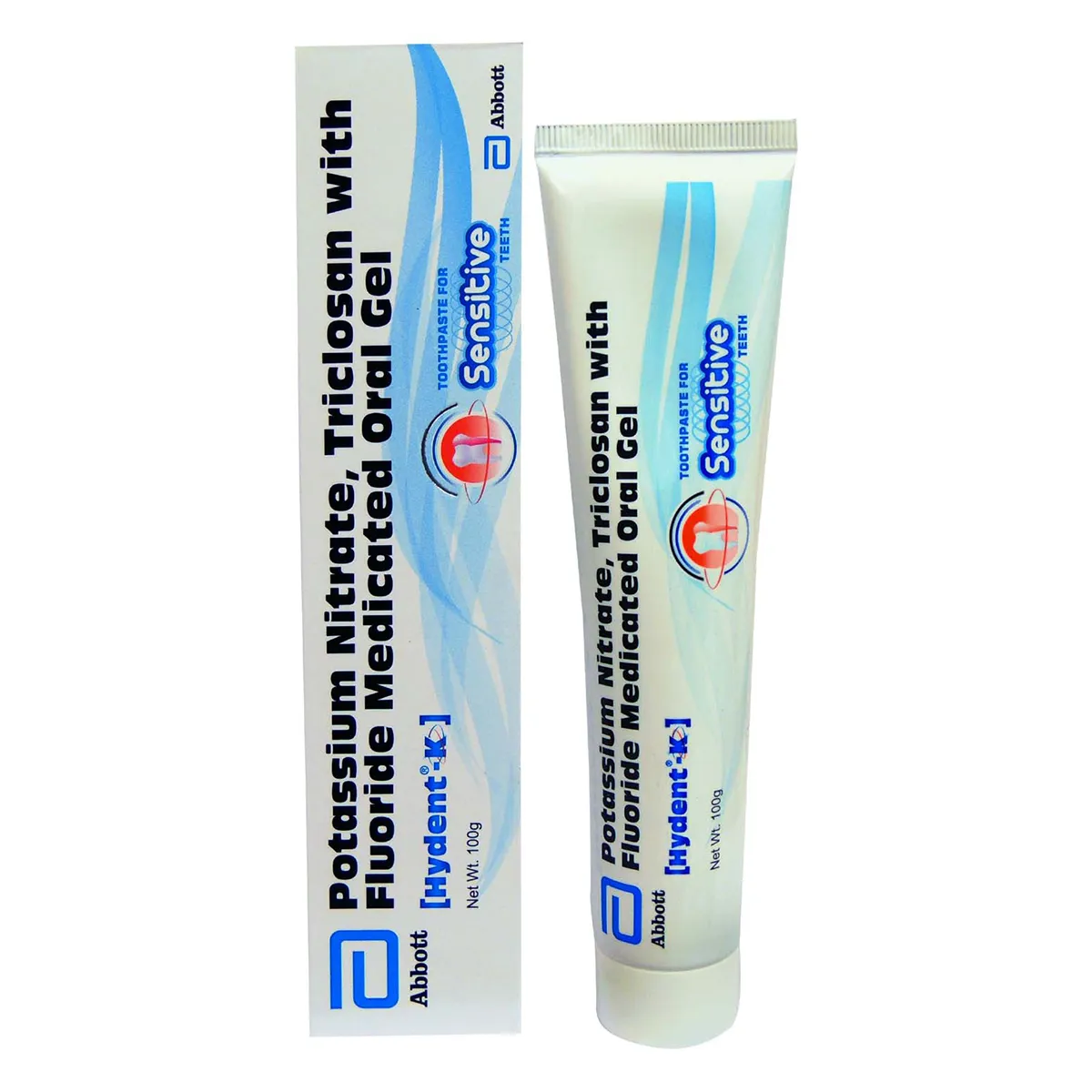
Hydent K Paste is formulated for daily dental care and contains potassium nitrate with sodium monofluorophosphate in a toothpaste base. The formulation includes potassium nitrate, sodium monofluorophosphate, sorbitol, glycerin and hydrated silica that help support sensitivity care and enamel maintenance during regular brushing. The smooth paste texture spreads evenly during brushing. The toothpaste comes in a 100 g squeeze tube designed for convenient daily use.
Features
Medicated toothpaste
Contains potassium nitrate 5% w/w
Fluoride-enriched formula
Smooth paste texture
Mild mint flavour
Easy-squeeze tube
Suitable for daily use
Key Benefits
Rapid Tooth Sensitivity Relief: Acts quickly to block pain signals. The active potassium ions penetrate deep into the dentinal tubules, depolarising the nerve endings and preventing sharp, shooting pain triggered by temperature changes.
Calms Exposed Dentin Nerves: Directly targets the root cause of sensitivity. By creating a soothing, protective shield around the dental nerves, it helps manage chronic discomfort effectively.
Strengthens and Protects Enamel: Supports the remineralisation process of weakened enamel. Regular brushing forms a microscopic barrier that guards your teeth against everyday acidic wear and tear.
Superior Cavity Protection: Functions as a comprehensive medicated dental paste that fights plaque accumulation and harmful oral bacteria, significantly reducing the risk of dental caries (cavities).
Promotes Overall Oral Hygiene: Maintains a clean, fresh mouth. Its gentle foaming action sweeps away food particles and debris without being overly abrasive on compromised teeth.
Safe for Daily Dental Care: Designed for long-term use. Unlike highly abrasive whitening pastes, it provides a gentle, non-irritating clean that dentists recommend for everyday sensitivity management.
Key Ingredients
Potassium Nitrate (5% w/w)
Sodium Monofluorophosphate
Sorbitol
Glycerin
Hydrated Silica
Sodium Lauryl Sulphate
Purified Water
Flavouring agents
Directions for Use
Apply a pea-sized amount onto a soft toothbrush.
Brush gently over all tooth surfaces.
Continue brushing for 2 minutes.
Spit out and rinse thoroughly.
Use twice daily.
Health Queries
I want to replace my missing teeth so I can eat hard foods comfortably again. Which treatment options may help restore my teeth and chewing ability?
Vikas Singh
M Pharmacy
Missing teeth can make chewing difficult and may also affect speech, jaw balance, and confidence while eating or smiling. Over time, nearby teeth may shift, gums can shrink, and chewing pressure on the remaining teeth may increase. The best replacement option depends on how many teeth are missing, bone condition, gum health, age, and overall medical condition. Common treatment options include removable dentures, fixed bridges, and dental implants. Dentures are usually more affordable and can replace multiple missing teeth, but some people may need time to adjust to eating hard foods. Fixed bridges provide greater stability when the teeth around them are healthy enough to support them. Dental implants are often the strongest and most natural-feeling option because they are fixed to the jawbone and can greatly improve chewing ability, though they are more expensive and require healthy bone support. Good oral hygiene and regular dental follow-up are important after tooth replacement. Pain, gum swelling, loose teeth, or difficulty fitting dentures should be properly evaluated.
I am experiencing sensitivity to cold water in a tooth where I had a gap filling done about 4 months ago. What could be causing this sensitivity, and does the filling need to be checked or replaced?
Chandrakanta Jena
Pharm D
Sensitivity to cold water after a tooth filling is quite common and can happen for different reasons. Sometimes the tooth needs time to settle after the treatment, especially if the cavity was deep or close to the nerve. In some cases, the filling may become slightly high, loose, worn out, or develop a tiny gap over time. This may allow cold water to reach the sensitive inner layer of the tooth (dentine), causing discomfort. Grinding of teeth, shrinking gums, or new decay near the filling may also lead to sensitivity. If the sensitivity is mild and slowly getting better, it is usually not a major concern. But if the pain becomes more severe, lasts for a long time after drinking something cold, or is accompanied by pain while chewing or swelling, it is important to visit a dentist. The dentist may check your bite, examine the filling, and take an X-ray to see if the filling needs adjustment or replacement. Meanwhile, using toothpaste for sensitive teeth and avoiding very cold foods or drinks may help reduce the discomfort.
My teeth are very sensitive and painful when I eat or drink cold things. What could be the possible reasons?
Chandrakanta Jena
Pharm D
Teeth sensitivity and pain when eating or drinking cold foods are quite common and can occur for several reasons. A common cause is damage or thinning of the tooth enamel (the protective outer layer of the teeth). When the enamel wears down, the dentine (the inner sensitive part of the tooth) becomes exposed, leading to pain or discomfort. Cavities or tooth decay can also make teeth sensitive, especially if the decay becomes deeper. Sometimes the gums may shrink or pull back, exposing the roots of the teeth, which are naturally more sensitive. Cracked teeth, loose or old fillings, teeth grinding, and brushing too hard may also contribute to sensitivity. Frequent consumption of acidic foods and drinks, such as soft drinks or citrus fruits, may slowly weaken the enamel over time. Using toothpaste specifically made for sensitive teeth may help reduce discomfort. It is also helpful to avoid very cold, sugary, or acidic foods for some time. If the sensitivity persists, becomes severe, or is accompanied by swelling or toothache, it is best to consult a dentist for a proper examination and treatment.
Over the past month, I have developed sensitivity and cavities in two teeth. I ate a lot of salted mangoes last month. Could this be the cause of my sudden tooth problems?
Chandrakanta Jena
Pharm D
Eating a lot of salted mangoes may have contributed to your tooth sensitivity, but they are unlikely to be the only reason for cavities developing so quickly. Mangoes, especially when eaten frequently with salt or spices, can be acidic and may weaken the protective outer layer of the teeth (enamel). Once the enamel becomes weak, the teeth can become sensitive to hot, cold, or sweet foods. However, cavities usually develop due to a combination of factors such as poor oral hygiene, frequent snacking, sugary or acidic foods, dry mouth, or existing weak enamel. If food particles and bacteria remain on the teeth, they produce acids that damage the tooth surface and lead to decay. It is important to visit a dentist for a thorough examination, as early cavities can often be treated with fillings before they become deeper or more painful. In the meantime, brush twice daily with a fluoride toothpaste, avoid very acidic or sugary foods, rinse your mouth after eating, and reduce frequent snacking. Using a toothpaste made for sensitive teeth may also help reduce discomfort.
I have a cavity in my tooth, and it becomes sensitive to hot and cold water. Can Hydent-K Sensitive Teeth Toothpaste help in this condition?
Chandrakanta Jena
Pharm D
A tooth cavity can make your teeth sensitive to hot and cold drinks because the protective outer layer (enamel) gets damaged, exposing the inner part of the tooth. In such cases, a desensitising toothpaste like Hydent-K Sensitive Teeth Toothpaste may help reduce the discomfort. It contains Potassium nitrate, which helps calm nerves inside the tooth and reduces pain, and Sodium monofluorophosphate, which helps strengthen the enamel and protects against further decay. It also helps gently clean the teeth and maintain good oral hygiene when used regularly. With continued use, it may provide relief from sensitivity and help protect the teeth from further damage. However, it is important to understand that toothpaste alone cannot fix an existing cavity. If there is a visible hole or decay in the tooth, dental treatments such as a filling are usually needed to stop it from getting worse. It is best to visit a dentist for proper examination and treatment advice.
While we strive to provide complete, accurate, and expert-reviewed content on our 'Platform', we make no warranties or representations and disclaim all responsibility and liability for the completeness, accuracy, or reliability of the aforementioned content. The content on our platform is for informative purposes only, and may not cover all clinical/non-clinical aspects. Reliance on any information and subsequent action or inaction is solely at the user's risk, and we do not assume any responsibility for the same. The content on the Platform should not be considered or used as a substitute for professional and qualified medical advice. Please consult your doctor for any query pertaining to medicines, tests and/or diseases, as we support, and do not replace the doctor-patient relationship.
Country of origin
India
Manufacturer/Marketer address
16th Floor, Godrej BKC, Plot C, G Block, Bandra-Kurla Complex, Bandra (East), Mumbai, 400 051, India.