apollo
logo
0
Select Delivery Location

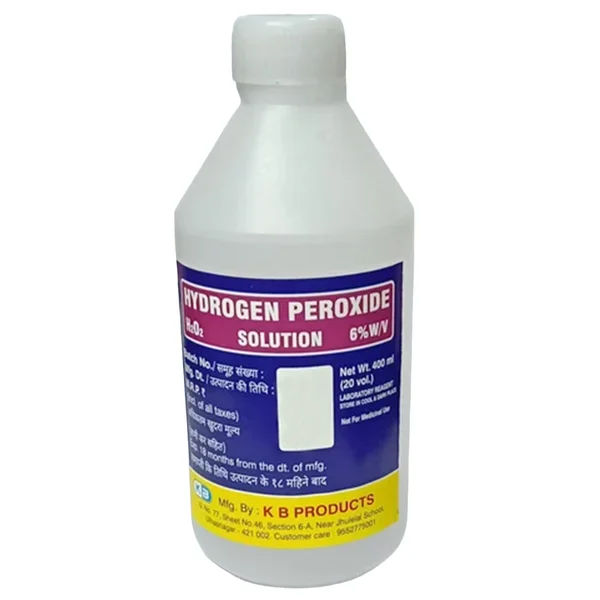
Hydrogen Peroxide Solution is used in the treatment of topical infections, leg ulcers, and pressure sores. It works by liberating oxygen when applied to the affected area, thus preventing infections occurring due to open scrapes, cuts, and wounds. You may experience common side effects like temporary stinging or redness. This is an external preparation. Hence, avoid contact with the eyes, nose, and mouth.

Read more
Written By Lakshmithulasi Yarragunta ,
Reviewed By Veda Maddala , M Pharmacy
OffersOffers & Discounts

Get Free delivery (₹99) with circle icon

Join Circle
coupon
Get 18% Off with Coupons
coupon
coupon
coupon
Extra 10% Off with Bank Offers

Have a query?

Side effects of Hydrogen Peroxide Solution 400 ml
Managing Medication-Triggered Erythema (Redness of the Skin or Skin redness): A Step-by-Step Guide:
  • Consult your doctor if you experience skin redness, itching, or irritation after taking medication.
  • Your doctor may adjust your treatment plan by changing your medication or providing guidance on managing your erythema symptoms.
  • Your doctor may recommend or prescribe certain medications to help alleviate symptoms.
  • Apply cool compresses or calamine lotion to the affected skin area to reduce redness and itching.
  • Stay hydrated by drinking plenty of water to help alleviate symptoms and keep your skin hydrated.
  • Monitor your skin condition closely and promptly report any changes, worsening symptoms, or concerns to your healthcare provider.
  • Change positions or take a break from activity to relieve symptoms, as stinging can disturb your regular patterns.
  • Avoid postures that put much pressure on the body area where stinging is felt.
  • If you have a vitamin deficiency, take supplements or change your diet.
  • Exercise regularly to improve inner strength.
  • Follow your doctor's instructions to prevent stinging.
  • Massage the affected area gently to get temporary relief.
  • Reduce salt intake to minimize fluid buildup.
  • Use compression stockings, sleeves, or gloves.
  • Gently massage the affected area towards the heart.
  • Protect the swollen area from injury and keep it clean.
  • Use lotion or cream to keep the skin moisturized.
  • Consult a doctor or dermatologist to identify and stop the medication causing the blisters.
  • Your doctor may prescribe antibiotics, steroid creams, or immune system-targeting medications to heal your skin, manage symptoms, and prevent new blisters.
  • Limit activities if necessary, as blisters on your hands or feet may affect your mobility.
  • Try not to scratch the affected area and avoid exposure to excessive heat and sun.
  • Wear loose, cotton clothing to avoid irritating your skin.
  • Place nonstick bandages over the blisters to protect them and prevent irritation.
  • After taking a shower or bath, apply a moisturizer to damp skin.
  • Use petroleum jelly or other thick emollients.
  • Use a hypoallergenic, fragrance-free moisturizer 2 to 3 times a day or as frequently as required.
  • Exfoliate your skin gently using a pumice stone or slightly abrasive sponge.
  • Do not scrub your skin.
  • Avoid hot showers or baths. Instead take short, warm showers or baths.
  • Use mild soap or skin cleansers with added moisturizer.
  • Drink lots of water.
  • Use sunscreen and wear protective clothing while going out to protect yourself from sun damage.
  • Apply a moisturizer after bathing while your skin is still damp. You can use creams, ointments, or lotions.
  • Use a mild, fragrance-free, non-soap cleanser. Avoid harsh soaps, deodorant soaps, and antibacterial soaps.
  • Limit your bath time and use warm water instead of hot water.
  • Use humidifier and add moisture to the air in your home.
  • Protect your skin by wearing gloves, scarves, and other clothing.
  • Avoid scratching or picking at scabs that can lead to infection and delay healing.
  • Brush teeth twice daily with fluoride toothpaste and a soft toothbrush.
  • Limit sugary and acidic foods like citrus fruits and soda.
  • When drinking acidic beverages, use a straw. Rinse your mouth with water after drinking.
  • Eat healthy food like vegetables and nuts.
  • Avoid eating before bedtime and wait 30 minutes to brush your teeth after meals.
  • Limit alcohol consumption.
  • Chew sugar-free gum after eating to help stimulate saliva flow.
  • Visit your dentist regularly for checkups and cleanings.

Drug-Drug Interactions

verifiedApollotooltip
No Drug - Drug interactions found in our data. We may lack specific data on this medicine and are actively working to update our database. Consult your doctor for personalized advice

Drug-Drug Interactions

Login/Sign Up

Drug-Food Interactions

verifiedApollotooltip
No Drug - Food interactions found in our database. Some may be unknown. Consult your doctor for what to avoid during medication.

Drug-Food Interactions

Login/Sign Up

All Substitutes & Brand Comparisons

Disclaimer

While we strive to provide complete, accurate, and expert-reviewed content on our 'Platform', we make no warranties or representations and disclaim all responsibility and liability for the completeness, accuracy, or reliability of the aforementioned content. The content on our platform is for informative purposes only, and may not cover all clinical/non-clinical aspects. Reliance on any information and subsequent action or inaction is solely at the user's risk, and we do not assume any responsibility for the same. The content on the Platform should not be considered or used as a substitute for professional and qualified medical advice. Please consult your doctor for any query pertaining to medicines, tests and/or diseases, as we support, and do not replace the doctor-patient relationship.

Author Details

Doctor imageWe provide you with authentic, trustworthy and relevant information

whatsapp Floating Button
Buy Now
Add to Cart