Welcoming a new baby into your family is one of life’s greatest joys. However, it also comes with a lot of questions, especially regarding what to feed them. Providing the right newborn baby food is critical for your little one's brain development, physical growth, and immune system. During the first year of life, a baby’s weight triples, and their brain grows at an astonishing rate. Fuelling this growth requires highly specific, nutrient-dense foods. Navigating the world of baby nutrition doesn't have to be overwhelming. Whether you are breastfeeding, using infant formula, or preparing to introduce your baby’s very first solid foods, this comprehensive guide will help you make the best choices. Read on to explore a complete, age-appropriate feeding guide, including a helpful diet chart, to ensure your baby gets a healthy, delicious start to life.
In this article
- The Importance of Species-Specific Diets
- What is the Best Baby Food for a Newborn Baby? (0 to 6 Months)
- Signs Your Baby is Ready for Solids
- The Ultimate Baby Nutrition Food Chart (6 to 12 Months)
- Simple Diet Chart for Newborn Babies and Infants
- Navigating Store-Bought Baby Nutrition Products
- Foods You Must Avoid in the First Year
- Essential Nutrients to Focus On
- Conclusion
Baby Nutrition: Best Newborn Baby Food & Diet Chart by Age
Learn the best newborn baby food by age, including milk feeding, first solids, essential nutrients, and a simple baby diet chart for the first year.
Dr. Vasantha Sree
The Importance of Species-Specific Diets
We all know that every living creature needs highly specialised, age-appropriate nutrition in its earliest days of life to survive and thrive. For example, animal lovers know they must purchase specific newborn dog food for a growing puppy, specialised newborn bird food for hatchlings, easily digestible newborn rabbit food for kits, or microscopic newborn fish food for aquarium fry. Just like these animals, human babies require a diet tailored perfectly to their delicate, developing digestive systems. You cannot simply give an infant a blended version of an adult's meal. Their kidneys and stomachs are not ready to process salt, complex proteins, or heavy fibres. Choosing the right, developmentally appropriate food is vital.


What is the Best Baby Food for a Newborn Baby? (0 to 6 Months)
If you are wondering about the best baby food for a newborn baby (from birth up to six months of age), the answer from medical experts is incredibly simple: breast milk or iron-fortified infant formula.
During the first six months of life, babies do not need water, juice, cereal, or purees. Their digestive systems are only equipped to handle milk.
- Breast milk: World Health Organization recommends exclusive breastfeeding for the first six months of life. Breast milk is dynamic; it changes composition to meet your growing baby's exact nutritional needs and is packed with antibodies that protect against illness.
- Infant formula: If breastfeeding is not possible or not your choice, commercially prepared, iron-fortified infant formula is the only safe alternative. It is heavily regulated and designed to mimic the nutritional profile of breast milk as closely as possible.
Note: Never give cow's milk, goat's milk, or plant-based milks to a newborn, as they lack the precise nutrients babies need and can cause severe intestinal issues.
Signs Your Baby is Ready for Solids
Around six months of age, breast milk or formula alone will no longer provide all the calories and nutrients (especially iron and zinc) your growing baby needs. But how do you know it is time to look at a baby nutrition chart and start serving solids? Look for these signs of readiness recommended by the Centers for Disease Control and Prevention:
Your baby can sit up with little or no support
- They have good head and neck control
- They open their mouth when food is offered
- They have lost the extrusion reflex (they no longer automatically push solid food out of their mouth with their tongue)
- They eagerly watch you eat and try to grab your food
The Ultimate Baby Nutrition Food Chart (6 to 12 Months)
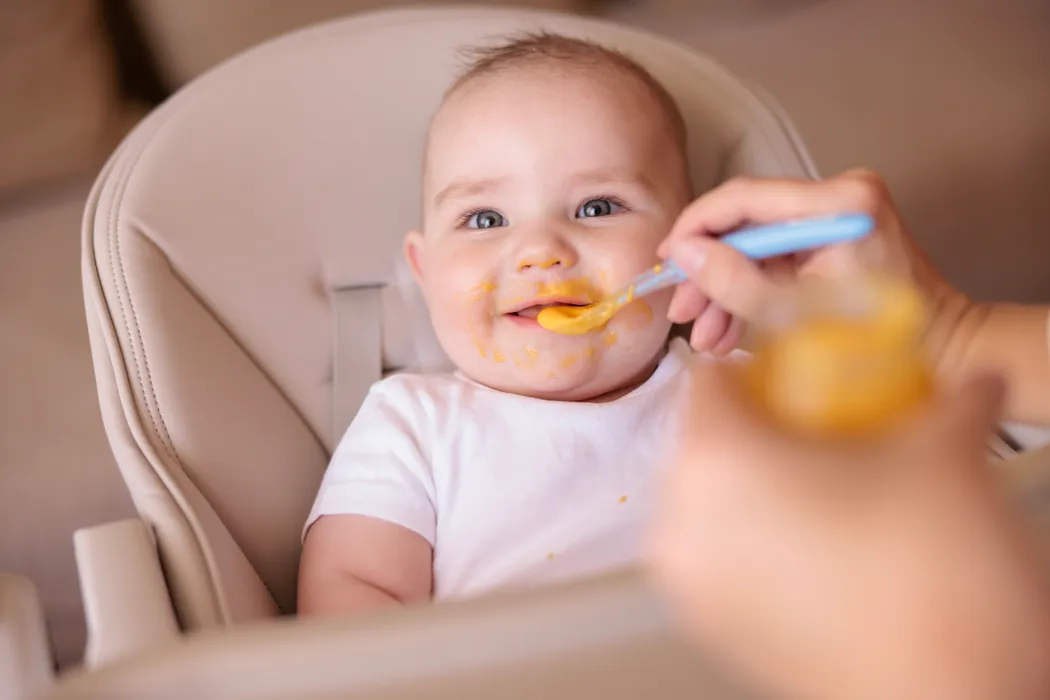
Transitioning to solid foods is an exciting milestone. Using a structured baby nutrition food chart can help you introduce new textures and flavours safely. Always introduce one new single-ingredient food at a time, waiting 3 to 5 days before introducing another. This makes it easy to identify any potential food allergies.
6 Months: Smooth Purees and Iron-Rich Foods
At this stage, newborn baby food transitions from purely liquids to very thin, runny purees.
- Best foods: Iron-fortified single-grain baby cereals (like oatmeal), pureed sweet potatoes, mashed avocados, pureed carrots, and pureed bananas
- Texture: Very smooth, runny, and easily swallowed. Mix solids with breast milk or formula to create a familiar taste
7 to 9 Months: Thicker Textures and Proteins
As your baby’s chewing skills improve, you can begin offering thicker, lumpier textures.
- Best foods: Mashed beans, pureed meats (chicken, beef, turkey), yogurt (unsweetened whole milk), cooked and mashed lentils, scrambled eggs, and well-cooked, mashed vegetables (peas, squash)
- Texture: Mashed, lumpy, or finely minced
10 to 12 Months: Finger Foods and Family Meals
Your baby is now ready to join the family at the table and practice their pincer grasp (picking up small objects with their thumb and forefinger).
- Best foods: Soft, bite-sized pieces of ripe fruit (peaches, bananas, berries cut in half), well-cooked pasta, soft shredded meats, pasteurized cheese bits, and lightly toasted bread
- Texture: Soft solids cut into small, manageable, bite-sized pieces to prevent choking
Simple Diet Chart for Newborn Babies and Infants
To make daily feeding easier for busy parents, here is a quick-reference diet chart for newborns and infants throughout their first year:
- 0–3 Months: Breast milk or infant formula only (feed on demand, typically every 2–3 hours).
- 4–5 Months: Breast milk or formula only (feeding frequency may stretch to every 3–4 hours).
- 6 Months: Breast milk/formula (4–5 times a day) + 1–2 tablespoons of iron-fortified cereal or thin vegetable/fruit puree (1 time a day).
- 7–9 Months: Breast milk/formula (3–5 times a day) + 2–3 small meals of mashed solids (vegetables, fruits, proteins).
- 10–12 Months: Breast milk/formula (3–4 times a day) + 3 meals of soft, diced family foods + 1 healthy snack.
Foods You Must Avoid in the First Year
While it is fun to explore new flavours, certain foods pose serious health risks to babies under 12 months old. According to Mayo Clinic and Centers for Disease Control and Prevention, you must avoid giving your baby the following:
- Honey: Can cause infant botulism, a rare but serious illness.
- Cow’s milk as a drink: Babies cannot digest cow's milk protein properly until age one, and it lacks adequate iron.
- Added sugars and salt: A baby's kidneys cannot process high sodium, and sugar offers no nutritional value.
- Choking hazards: Avoid whole grapes, whole cherry tomatoes, hot dogs, popcorn, hard candies, chunks of peanut butter, and whole nuts.
- Unpasteurised juices and dairy: These can contain harmful bacteria that cause severe foodborne illnesses in infants.
Essential Nutrients to Focus On
When planning your baby's diet, keep an eye on these three powerhouse nutrients that are critical during the first year of life:
- Iron: Prevents anaemia and supports brain development. Found in pureed meats, fortified cereals, and beans.
- Zinc: Vital for a healthy immune system and cellular growth. Found in beef, dark meat poultry, and lentils.
- Vitamin D: Helps absorb calcium for strong bones. Breastfed babies usually require a daily vitamin D supplement drop, as breast milk does not contain enough.
Conclusion
Providing the right nutrition during the early stages of life is essential for a baby’s healthy growth and development. In the first few months, breast milk or infant formula remains the primary source of nourishment, supplying the nutrients needed for brain development, immunity, and overall wellbeing. As babies grow, introducing age-appropriate foods gradually helps meet their increasing nutritional needs and supports healthy eating habits. Following a newborn baby food and diet chart by age can help parents understand when and how to introduce different foods safely. Starting with simple, easily digestible foods and slowly expanding the variety ensures that babies receive balanced nutrition while adjusting comfortably to new tastes and textures. Every baby grows at their own pace, so it is important to observe your baby’s hunger cues and developmental readiness when introducing new foods. Consulting a paediatrician before making major dietary changes can also provide helpful guidance. With proper planning and a balanced approach, parents can ensure their baby receives the best nutrition for a strong and healthy start in life.
FAQS
FAQS
When can I start giving my baby water?
You can introduce small sips of water (about 2 to 4 ounces a day in a sippy cup) when your baby begins eating solid foods, typically around 6 months of age. Before 6 months, breast milk or formula provides all the hydration your baby needs.
Is cow's milk safe as newborn baby food?
No. Cow’s milk should never be given as a primary drink before your child turns one year old. It does not have the right balance of fats, proteins, or iron needed for infant development.
How do I know if my baby is ready for solid food?
Your baby is likely ready if they are around 6 months old, can sit up with little to no support, have good head control, and show curiosity about food.
Are store-bought baby foods healthy?
Yes, many store-bought baby foods are healthy and safe. Avoid products with added sugars, syrups, or salt.
Can my baby have fruit juice?
The American Academy of Paediatrics strongly advises against giving any fruit juice to babies under 12 months old.


