0
Welcome User
Login/Sign Up

Login/Sign Up
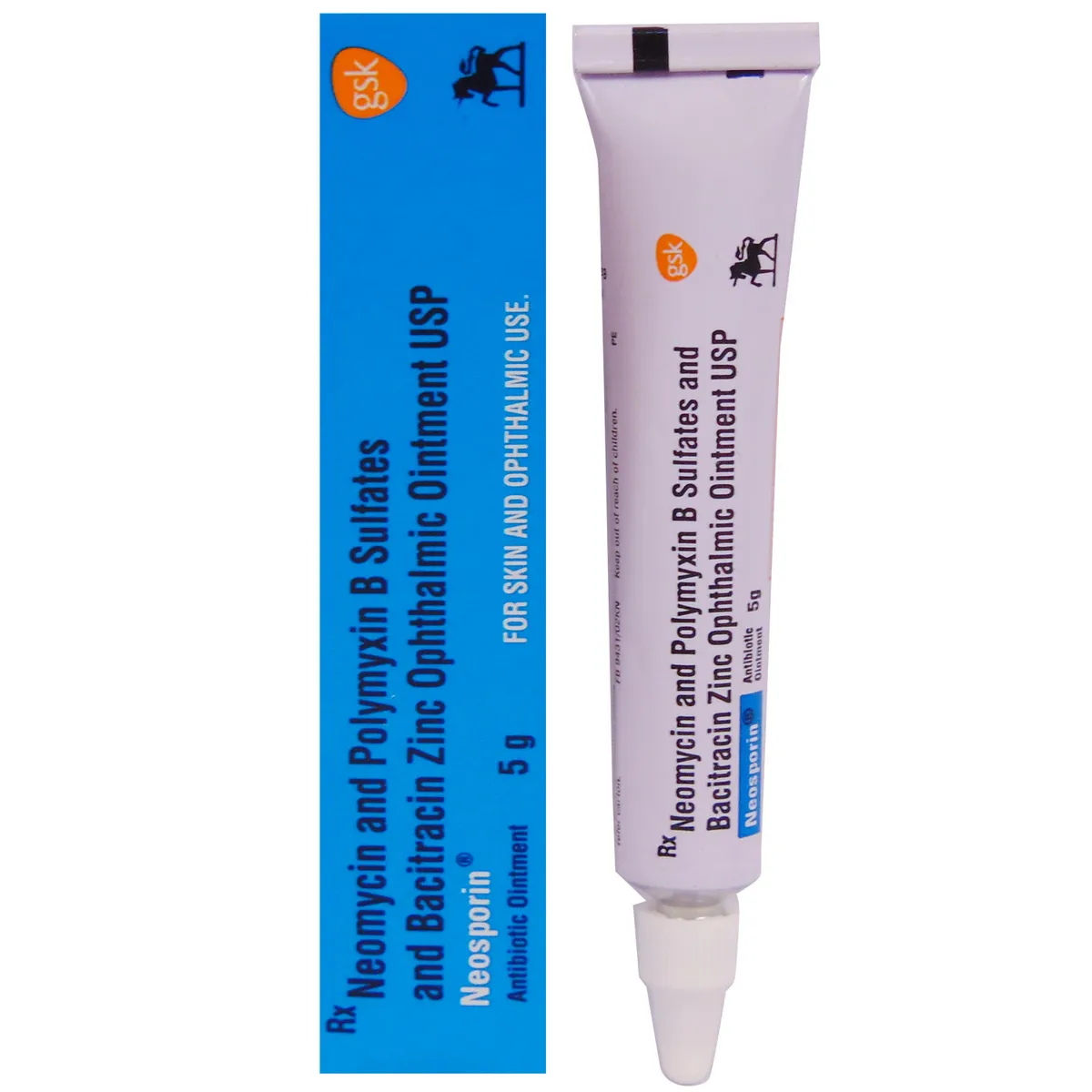
₹135.5
(Inclusive of all Taxes)
₹107 with coupons & bank offers*
Get Free delivery (₹99) with
नियोस्पोरिन ऑइंटमेंट 5 ग्राम का उपयोग मुख्य रूप से त्वचा पर मामूली कट, खरोंच या जलने में संक्रमण को रोकने के लिए प्राथमिक उपचार एंटीबायोटिक के रूप में किया जाता है। बैक्टीरियल त्वचा संक्रमण तब होता है जब बैक्टीरिया बालों के रोम या टूटी हुई त्वचा के माध्यम से प्रवेश करते हैं और संक्रमण का कारण बनते हैं।
नियोस्पोरिन ऑइंटमेंट 5 ग्राम बैकीट्रैसिन, नियोमाइसिन और पॉलीमाइक्सिन बी से बना है। बैकीट्रैसिन बैक्टीरियल कोशिका भित्ति संश्लेषण को रोककर काम करता है। नियोमाइसिन बैक्टीरिया द्वारा महत्वपूर्ण कार्यों को पूरा करने के लिए आवश्यक प्रोटीन के संश्लेषण को रोकता है। पॉलीमाइक्सिन बी फॉस्फोलिपिड्स से जुड़कर बैक्टीरियल झिल्ली को नष्ट कर देता है, इस प्रकार बैक्टीरियल त्वचा संक्रमण का इलाज करता है।
नियोस्पोरिन ऑइंटमेंट 5 ग्राम के सामान्य दुष्प्रभावों में खुजली, त्वचा में जलन, दाने, लालिमा और लगाने वाली जगह पर सूजन शामिल है। ये दुष्प्रभाव इस दवा का उपयोग करने वाले हर मरीज में नहीं हो सकते हैं और व्यक्तिगत रूप से भिन्न होते हैं। यदि दुष्प्रभाव लंबे समय तक बने रहते हैं या बिगड़ जाते हैं, तो कृपया डॉक्टर की सलाह लें।
अपने डॉक्टर को सूचित करें यदि आपको नियोस्पोरिन ऑइंटमेंट 5 ग्राम या अन्य दवाओं से एलर्जी है। नियोस्पोरिन ऑइंटमेंट 5 ग्राम को गहरे घावों, गंभीर जलन, गहरे कट या जानवरों के काटने पर न लगाएं। नियोस्पोरिन ऑइंटमेंट 5 ग्राम का उपयोग करने से पहले अपने डॉक्टर को बताएं कि क्या आपको वायरल या फंगल त्वचा संक्रमण, पुराने कान के संक्रमण और फटा हुआ कान का पर्दा है। गर्भवती और स्तनपान कराने वाली महिलाओं को नियोस्पोरिन ऑइंटमेंट 5 ग्राम शुरू करने से पहले अपने डॉक्टर से सलाह लेनी चाहिए।
नियोस्पोरिन ऑइंटमेंट 5 ग्राम का उपयोग मामूली त्वचा की चोटों के कारण होने वाले बैक्टीरियल त्वचा संक्रमण को रोकने के लिए प्राथमिक उपचार एंटीबायोटिक के रूप में किया जाता है। नियोस्पोरिन ऑइंटमेंट 5 ग्राम के विस्तृत उपयोग इस प्रकार हैं:
कृपया अपने डॉक्टर से सलाह लें।
कोई इंटरैक्शन नहीं पाए गए हैं। यदि आपको कोई शंका या चिंता है, तो कृपया अपने डॉक्टर से सलाह लें।
कृपया अपने डॉक्टर से सलाह लें।
यदि आप नियोस्पोरिन ऑइंटमेंट 5 ग्राम शुरू करने से पहले गर्भवती हैं, तो आपको अपने डॉक्टर से सलाह लेने की सलाह दी जाती है।
कृपया अपने डॉक्टर से सलाह लें।
नियोस्पोरिन ऑइंटमेंट 5 ग्राम का स्तनपान कराने वाले शिशुओं पर क्या प्रभाव पड़ता है, इस बारे में सीमित अध्ययन उपलब्ध हैं। यदि आप स्तनपान करा रही हैं, तो नियोस्पोरिन ऑइंटमेंट 5 ग्राम शुरू करने से पहले कृपया अपने डॉक्टर से सलाह लें। यदि आपको अपने स्तनों पर ऑइंटमेंट लगाने की आवश्यकता है, तो बच्चे को दूध पिलाने से ठीक पहले ऐसा न करें।
अगर डॉक्टर ने इसे लेने की सलाह दी हो, तो यह सुरक्षित है।
नियोस्पोरिन ऑइंटमेंट 5 ग्राम का गाड़ी चलाने या मशीन चलाने की क्षमता पर कोई या नगण्य प्रभाव नहीं पड़ता है।
कृपया अपने डॉक्टर से सलाह लें।
नियोस्पोरिन ऑइंटमेंट 5 ग्राम शुरू करने से पहले अपने डॉक्टर को बताएं कि क्या आपको लिवर की कोई बीमारी या हेपेटिक इम्पेयरमेंट का इतिहास रहा है।
कृपया अपने डॉक्टर से सलाह लें।
नियोस्पोरिन ऑइंटमेंट 5 ग्राम शुरू करने से पहले अपने डॉक्टर को बताएं कि क्या आपको किडनी से जुड़ी कोई बीमारी है।
कृपया अपने डॉक्टर से सलाह लें।
नियोस्पोरिन ऑइंटमेंट 5 ग्राम 2 साल से कम उम्र के बच्चों के लिए इस्तेमाल करने की सलाह नहीं दी जाती है। कृपया अपने डॉक्टर से सलाह लें। अपने बच्चे के लिए इस दवा का उपयोग तब तक न करें जब तक कि डॉक्टर इसकी सलाह न दें।
कृपया अपने डॉक्टर से सलाह लें।
नियोस्पोरिन ऑइंटमेंट 5 ग्राम शुरू करने से पहले अपने डॉक्टर को बताएं कि क्या आपको हृदय रोग का कोई इतिहास रहा है।
कृपया अपने डॉक्टर से सलाह लें।
नियोस्पोरिन ऑइंटमेंट 5 ग्राम के बुज़ुर्ग मरीज़ों में इस्तेमाल के बारे में सीमित जानकारी उपलब्ध है। कृपया अपने डॉक्टर से सलाह लें।
Have a query?
Login/Sign Up
Login/Sign Up
Disclaimer