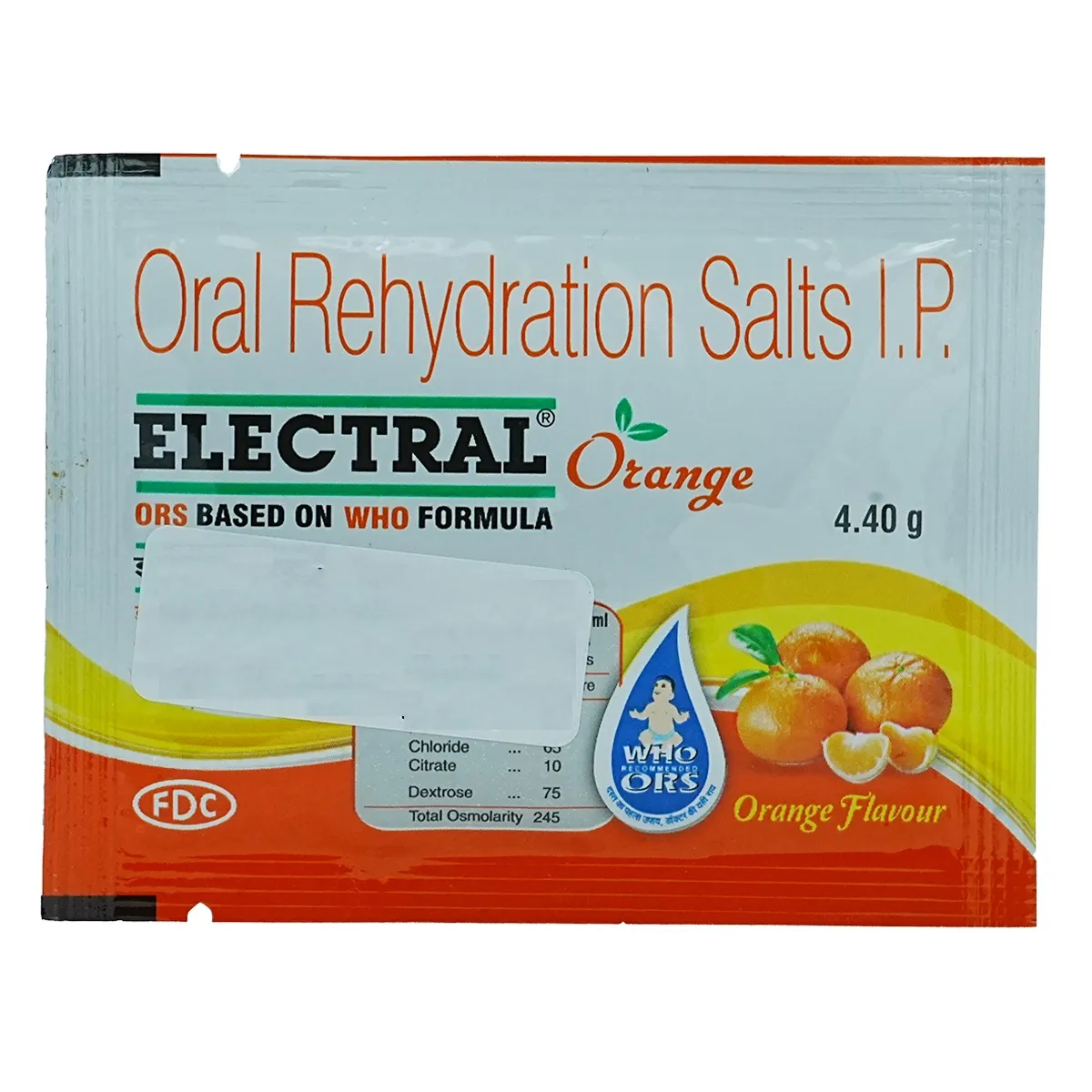
How does the drug interact with Electral Orange Powder 4.4 gm:
Taking Orphenadrine with Potassium chloride may increase the irritant effects of potassium on the stomach and upper intestine.
How to manage the interaction:
Taking Orphenadrine (citrate) with Potassium chloride is not recommended, as it can lead to an interaction, can be taken if a doctor has prescribed it. However, if you experience severe stomach pain, bloating, sudden lightheadedness or dizziness, nausea, vomiting (especially with blood), decreased hunger, dark, tarry stools, consult the doctor immediately. Do not discontinue any medications without consulting a doctor.
How does the drug interact with Electral Orange Powder 4.4 gm:
Taking Olanzapine with Potassium chloride may increase the irritant effects of potassium on the stomach and upper intestine.
How to manage the interaction:
Co-administration of Olanzapine and Potassium chloride is not recommended as it leads to an interaction, it can be taken if advised by a doctor. However, if you experience any symptoms like severe abdominal pain, bloating, sudden dizziness or lightheadedness, nausea, vomiting (especially with blood), loss of appetite, and/or black, tarry stools, contact a doctor immediately. Do not discontinue any medications without consulting a doctor.
How does the drug interact with Electral Orange Powder 4.4 gm:
Taking Mepenzolate and Potassium chloride (in tablet or capsule form) may increase the irritant effects of potassium on the stomach and upper intestine.
How to manage the interaction:
Taking Mepenzolate with Potassium chloride is not recommended, as it can lead to an interaction, it can be taken if a doctor has prescribed it. However, if you experience severe stomach pain, bloating, sudden lightheadedness or dizziness, nausea, vomiting (especially with blood), decreased hunger, dark, tarry stools, consult the doctor immediately. Do not discontinue any medications without consulting a doctor.
How does the drug interact with Electral Orange Powder 4.4 gm:
Taking Cyproheptadine with Potassium chloride may increase the irritant effects of potassium on the stomach and upper intestine.
How to manage the interaction:
Taking Cyproheptadine with Potassium chloride is not recommended, as it can lead to an interaction, can be taken if a doctor has prescribed it. However, if you experience severe stomach pain, bloating, sudden lightheadedness or dizziness, nausea, vomiting (especially with blood), decreased hunger, dark, tarry stools, consult the doctor immediately. Do not stop any medication without talking to a doctor.
How does the drug interact with Electral Orange Powder 4.4 gm:
Taking Difenoxin and Potassium chloride (in tablet or capsule form) may increase the irritant effects of potassium on the stomach and upper intestine.
How to manage the interaction:
Taking Difenoxin with Potassium chloride is not recommended, as it can lead to an interaction, it can be taken if a doctor has prescribed it. However, if you experience severe stomach pain, bloating, sudden lightheadedness or dizziness, nausea, vomiting (especially with blood), decreased hunger, dark, tarry stools, consult the doctor immediately. Do not discontinue any medications without consulting a doctor.
How does the drug interact with Electral Orange Powder 4.4 gm:
Taking Dexchlorpheniramine and Potassium chloride (in tablet or capsule form) together may increase the irritant effects of potassium on your stomach and upper intestine.
How to manage the interaction:
Taking Dexchlorpheniramine with Potassium chloride (in tablet or capsule form) is not recommended, as it can lead to an interaction, but it can be taken if a doctor has prescribed it. However, if you experience severe stomach pain, bloating, sudden lightheadedness or dizziness, nausea, vomiting (especially with blood), decreased hunger, or dark, tarry stools, consult the doctor immediately. Do not stop using any medications without talking to a doctor.
How does the drug interact with Electral Orange Powder 4.4 gm:
Taking Promethazine with Potassium chloride may increase the irritant effects of potassium on the stomach and upper intestine.
How to manage the interaction:
Taking Promethazine with Potassium chloride is not recommended, as it can lead to an interaction, they can be taken if a doctor has prescribed it. However, if you experience severe stomach pain, bloating, sudden lightheadedness or dizziness, nausea, vomiting (especially with blood), decreased hunger, dark, tarry stools, consult the doctor immediately. Do not stop using any medications without talking to a doctor.
How does the drug interact with Electral Orange Powder 4.4 gm:
Taking Tolterodine and Potassium chloride together may increase the irritant effects of potassium on the stomach and upper intestine.
How to manage the interaction:
Taking Tolterodine and Potassium chloride together is not recommended, as it can lead to an interaction, they can be taken if prescribed by a doctor. However, contact a doctor immediately if you develop severe abdominal pain, bloating, sudden dizziness or lightheadedness, nausea, vomiting (especially with blood), or loss of appetite. Do not discontinue medications without consulting a doctor.
How does the drug interact with Electral Orange Powder 4.4 gm:
Co-administration of Flavoxate with Potassium chloride may increase the irritant effects of potassium on the stomach and upper intestine.
How to manage the interaction:
Taking Flavoxate with Potassium chloride is not recommended, as it can lead to an interaction, it can be taken if a doctor has prescribed it. However, if you experience severe stomach pain, bloating, sudden lightheadedness or dizziness, nausea, vomiting (especially with blood), decreased hunger, or dark, tarry stools, consult the doctor immediately. Do not discontinue the medication without consulting a doctor.
How does the drug interact with Electral Orange Powder 4.4 gm:
Taking Orphenadrine and Potassium chloride (in tablet or capsule form) together may increase the irritant effects of potassium on the stomach and upper intestine.
How to manage the interaction:
Taking Orphenadrine (chloride) with Potassium chloride is not recommended, as it can lead to an interaction, it can be taken if a doctor has prescribed it. However, if you experience severe stomach pain, bloating, sudden lightheadedness or dizziness, nausea, vomiting (especially with blood), decreased hunger, dark, tarry stools, consult the doctor immediately. Do not discontinue any medications without consulting a doctor.