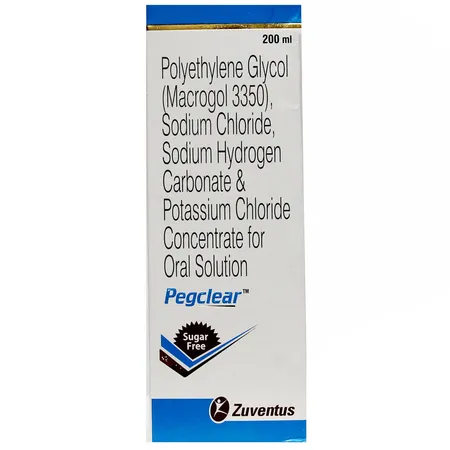
How does the drug interact with Pegclear Oral Solution 200 ml:
Using Pegclear Oral Solution 200 ml together with Eplerenone may significantly increase potassium levels in the blood.
How to manage the interaction:
Taking Pegclear Oral Solution 200 ml with eplerenone is not recommended. You can take these medicines if prescribed by a doctor. Consult a doctor if you experience nausea, vomiting, weakness, disorientation, tingling in your hands and feet, feelings of heaviness in your legs, a weak pulse, or an irregular heartbeat, consult a doctor immediately. Do not discontinue any medications without a doctor's advice.
How does the drug interact with Pegclear Oral Solution 200 ml:
Taking Pegclear Oral Solution 200 ml together with Meclizine can increase the potassium levels in blood.
How to manage the interaction:
Taking Pegclear Oral Solution 200 ml with Meclizine is not recommended, as it can lead to an interaction, it can be taken if a doctor has prescribed it. However, if you experience severe stomach pain, bloating, sudden lightheadedness or dizziness, nausea, vomiting (especially with blood), decreased hunger, dark, tarry stools, consult a doctor immediately. Do not discontinue any medications without a doctor's advice.
How does the drug interact with Pegclear Oral Solution 200 ml:
Co- administration of Pegclear Oral Solution 200 ml with Amitriptyline may cause stomach and upper intestinal discomfort.
How to manage the interaction:
Taking Pegclear Oral Solution 200 ml with Biperiden is not recommended as it can lead to an interaction, but can be taken if prescribed by a doctor. However, if you experience severe stomach pain, bloating, sudden lightheadedness or dizziness, nausea, vomiting (especially with blood), decreased hunger, or dark, tarry stools, consult a doctor immediately. Do not discontinue any medications without a doctor's advice.
How does the drug interact with Pegclear Oral Solution 200 ml:
Taking Pegclear Oral Solution 200 ml with clidinium bromide may increase the risk of irritant effects of potassium on your stomach and upper intestine.
How to manage the interaction:
Co-administration of Pegclear Oral Solution 200 ml with clidinium bromide is not recommended, as it can lead to an interaction, it can be taken if prescribed by a doctor. However, if you experience symptoms such as severe stomach pain, bloating, sudden dizziness or lightheadedness, nausea, vomiting (especially with blood), decreased hunger, black, tarry stools, consult a doctor immediately. Do not discontinue any medications without consulting a doctor.
How does the drug interact with Pegclear Oral Solution 200 ml:
Taking Pegclear Oral Solution 200 ml together with Mepenzolate can increase the risk of stomach ulcers and bleeding.
How to manage the interaction:
Taking Pegclear Oral Solution 200 ml with Mepenzolate is not recommended, as it can lead to an interaction, it can be taken if a doctor has prescribed it. However, if you experience severe stomach pain, bloating, sudden lightheadedness or dizziness, nausea, vomiting (especially with blood), decreased hunger, dark, tarry stools, consult a doctor immediately.
How does the drug interact with Pegclear Oral Solution 200 ml:
Taking Pegclear Oral Solution 200 ml together with Disopyramide can increase the risk of stomach ulcers and bleeding.
How to manage the interaction:
Taking Pegclear Oral Solution 200 ml with Disopyramide is not recommended, as it can lead to an interaction, it can be taken if a doctor has prescribed it. However, if you experience severe stomach pain, bloating, sudden lightheadedness or dizziness, nausea, vomiting (especially with blood), decreased hunger, dark, tarry stools, consult a doctor immediately. Do not discontinue any medications without a doctor's advice.
How does the drug interact with Pegclear Oral Solution 200 ml:
Taking Pegclear Oral Solution 200 ml with Olanzapine can increase the risk of stomach ulcers and bleeding.
How to manage the interaction:
Co-administration of Pegclear Oral Solution 200 ml with Olanzapine is not recommended as it leads to an interaction, it can be taken if advised by a doctor. However, if you experience any symptoms like severe abdominal pain, bloating, sudden dizziness or lightheadedness, nausea, vomiting (especially with blood), loss of appetite, and/or black, tarry stools, contact a doctor immediately. Do not discontinue any medications without consulting a doctor.
How does the drug interact with Pegclear Oral Solution 200 ml:
Co-administration of Pegclear Oral Solution 200 ml with Dimenhydrinate can increase the risk of stomach ulcers and bleeding.
How to manage the interaction:
Co-administration of Pegclear Oral Solution 200 ml with Dimenhydrinate is not recommended, as it can lead to an interaction, it can be taken when a doctor has prescribed it. However, if you experience severe stomach pain, sudden dizziness, vomiting (especially with blood), or dark stools, consult a doctor immediately. Do not discontinue any medications without a doctor's advice.
How does the drug interact with Pegclear Oral Solution 200 ml:
Co- administration of Pegclear Oral Solution 200 ml with Darifenacin may cause stomach and upper intestinal discomfort.
How to manage the interaction:
Taking Pegclear Oral Solution 200 ml with Darifenacin is not recommended, as it can lead to an interaction, it can be taken if a doctor has prescribed it. However, if you experience severe stomach pain, bloating, sudden lightheadedness or dizziness, nausea, vomiting (especially with blood), decreased hunger, dark, tarry stools, consult a doctor immediately. Do not stop taking any medications without doctor's advise.
How does the drug interact with Pegclear Oral Solution 200 ml:
Taking Pegclear Oral Solution 200 ml together with Tolterodine can increase the risk of stomach ulcers and bleeding.
How to manage the interaction:
Taking Pegclear Oral Solution 200 ml together with Tolterodine is not recommended, as it can lead to an interaction, they can be taken if prescribed by a doctor. However, contact a doctor immediately if you develop severe abdominal pain, bloating, sudden dizziness or lightheadedness, nausea, vomiting (especially with blood), or loss of appetite. Do not discontinue medications without consulting a doctor.