
0
Welcome User
Login/Sign Up

Login/Sign Up
₹305
(Inclusive of all Taxes)
Get Free delivery (₹99) with
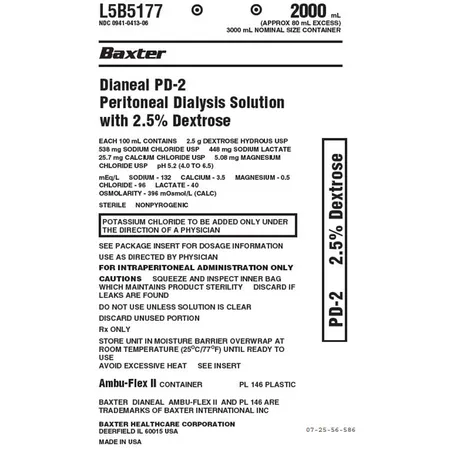
Dianeal 2.5 % Pd-2 2000 ml is a sterile fluid treatment used to quickly raise low blood sugar levels and replace lost body fluids. It is commonly prescribed to treat severe dehydration and provide essential calories when you cannot eat or drink. This medicine is injected directly into your vein to support your body's energy needs.
Because this treatment is given directly through a vein, it is usually injected as a continuous fluid drip or a single dose in a clinic or hospital. Your doctor will determine how often you need it based on your blood sugar levels and fluid balance. To help maintain your results, your healthcare team may recommend specific diet adjustments, such as eating regular meals once you are able to take food by mouth.
While this treatment is highly effective, some patients may experience mild side effects like redness or pain at the injection site. However, you must seek immediate medical attention if you notice serious issues like trouble breathing or severe swelling in your limbs.
Before starting this treatment, you must tell your doctor if you have heart disease, kidney issues, or diabetes. Do not take this if you have severe bleeding in your brain or spine, or if you are severely dehydrated with very high blood sugar.
This medicine can interact with certain water-retaining medications and alcohol, which can alter your blood sugar levels or cause fluid retention. If you are pregnant, breastfeeding, or an older adult, you should discuss the risks and benefits with your doctor before receiving this injection.
Dianeal peritoneal dialysis solution is indicated for the management of acute or chronic renal failure. It helps remove extra salt, water and waste products from the body when kidneys fail to do so. Dianeal peritoneal dialysis solutions are intended for use in Continuous Ambulatory Peritoneal Dialysis (CAPD) or Automated Peritoneal Dialysis (APD). In CAPD, gravity moves the fluid through the catheter and into and out of your abdomen where as in APD, a machine called a cycler fills and drains your belly.
Dianeal 2.5 % Pd-2 2000 ml is used to treat severe dehydration and provide essential calories when you cannot eat or drink. The detailed uses of Dianeal 2.5 % Pd-2 2000 ml are as follows:
Dianeal 2.5 % Pd-2 2000 ml provides rapid support during episodes of low blood sugar and dehydration by delivering glucose and fluids directly into the bloodstream. It helps restore energy quickly, supports recovery, and provides essential nutritional support when oral intake is not possible.
Caution
The interaction of alcohol with Dianeal 2.5 % Pd-2 2000 ml is unknown. Please consult a doctor before consuming alcohol while using Dianeal 2.5 % Pd-2 2000 ml.
Caution
Dianeal 2.5 % Pd-2 2000 ml is a category C pregnancy drug and is given to pregnant women only if doctor thinks benefits outweigh risks. Please consult a doctor if you are pregnant.
Caution
Please consult a doctor if you are breastfeeding. Dianeal 2.5 % Pd-2 2000 ml is given to a breastfeeding mother only if doctor thinks benefits are greater than risks.
Caution
Drive only if you are alert after taking Dianeal 2.5 % Pd-2 2000 ml.
Caution
Take Dianeal 2.5 % Pd-2 2000 ml with caution, especially if you have a history of Liver diseases/conditions. The dose may be adjusted by your doctor as required.
Caution
Take Dianeal 2.5 % Pd-2 2000 ml with caution, especially if you have a history of Kidney diseases/conditions. The dose may be adjusted by your doctor as required.
Caution
Dianeal 2.5 % Pd-2 2000 ml is given to children only if prescribed by a doctor.
Caution
Dianeal 2.5 % Pd-2 2000 ml should be administered with caution in patients with heart problems. Therefore, please talk to your doctor before receiving Dianeal 2.5 % Pd-2 2000 ml.
Caution
Dianeal 2.5 % Pd-2 2000 ml should be administered with caution in older adults. Always seek medical advice before receiving it.
Dianeal Pd solution is contraindicated in patients with pre-existing severe lactic acidosis (build-up of lactic acid in the blood). Inform the doctor if you have peritonitis (inflammation of the abdominal lining). Consult the doctor if you are pregnant or breastfeeding. Monitoring of lactic acidosis in patients at risk is advised. Also, monitoring of electrolyte, fluid, and nutrition imbalance is recommended. Inspect for particulate matter and discolouration before administration. Avoid using discoloured, cloudy solutions that contain visible particles and show evidence of leakage. Consult a doctor immediately if you notice swelling, bleeding or any signs of infections.
Have a query?
The time required for Dianeal 2.5 % Pd-2 2000 ml to start to work: Dianeal 2.5 % Pd-2 2000 ml ideally shows its action within few minutes after administration. The time for which the effects of Dianeal 2.5 % Pd-2 2000 ml last: The duration of action for Dianeal 2.5 % Pd-2 2000 ml is clinically unknown.
Login/Sign Up
Login/Sign Up
Disclaimer


