apollo
logo
0
Select Delivery Location
compositionComposition:DESMOPRESSIN-0.1MG
prescription
Prescription Medicine
info

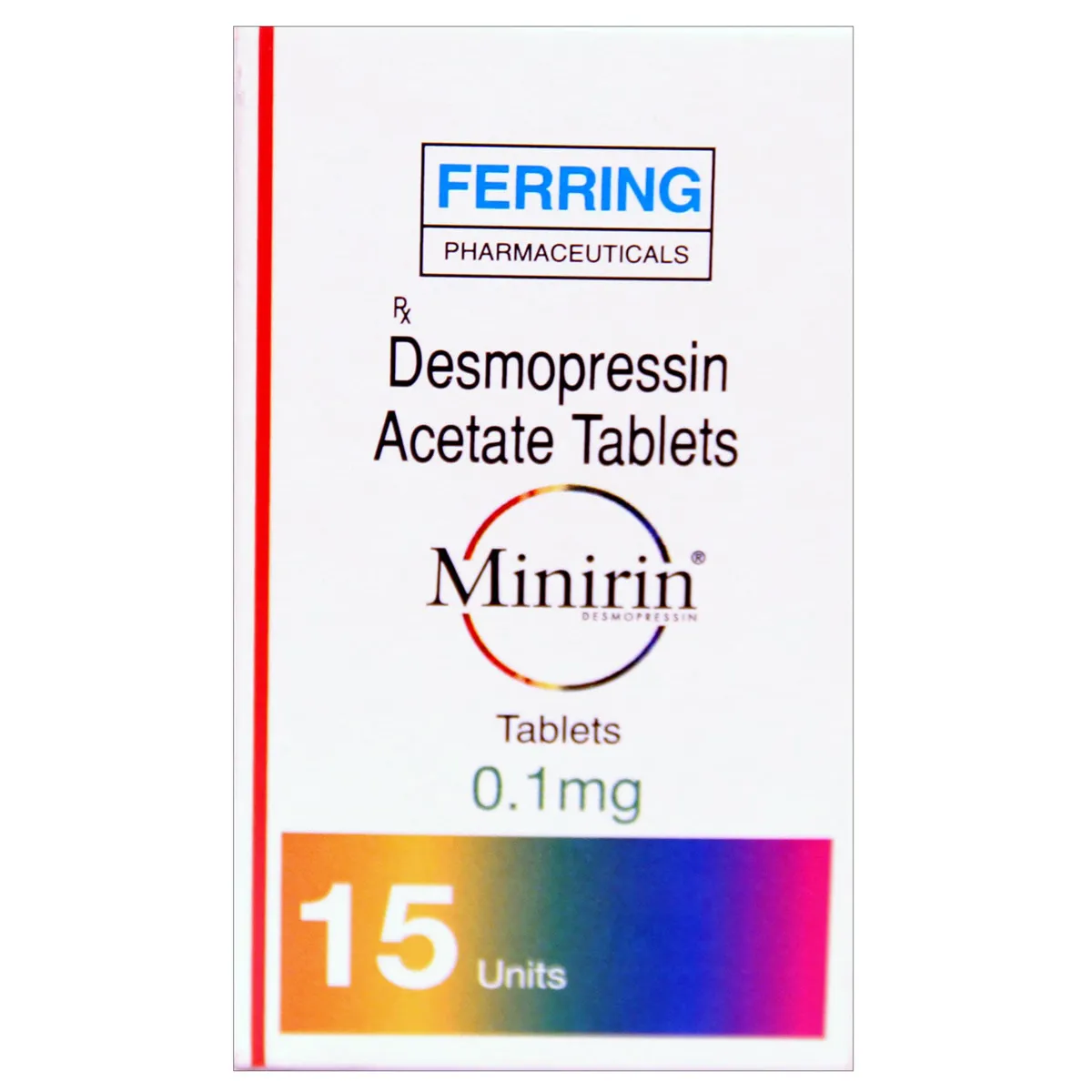
Minirin 0.1 Tablet is used to treat diabetes insipidus, post-hypophysectomy polyuria (extreme urination), polydipsia (extreme thirst), and bedwetting. It contains Desmopressin, which works by reabsorbing water from the kidneys, decreasing the amount of urine produced, and controlling bedwetting in children. Additionally, it reduces bleeding tendency in haemophilia (bleeding disorder) by promoting the release of blood-clotting factors. It may cause common side effects such as headache, nausea, abdominal cramp, and flushing (sense of warmth in the face, ears, neck, and trunk). Before taking this medicine, you should tell your doctor if you are allergic to any of its components or if you are pregnant/breastfeeding, and about all the medications you are taking and pre-existing medical conditions.

Read more
Written By Bayyarapu Mahesh Kumar , M Pharmacy
Reviewed By Dr Aneela Siddabathuni , MPharma., PhD
OffersOffers & Discounts

Get Free delivery (₹99) with circle icon

Join Circle
Get Extra 12% Off with Coupons
Extra 10% Off with Bank Offers
bank offer
bank offer
bank offer

More about the Product

Composition :

DESMOPRESSIN-0.1MG

Manufacturer/Marketer :

Ferring Pharmaceuticals Pvt Ltd

Consume Type :

Oral

Expires on or after :

Jan-27

Return Policy :

Not Returnable

About Minirin 0.1 Tablet

Minirin 0.1 Tablet is an oral medication prescribed to manage conditions like nighttime bedwetting in children and adults, frequent nighttime urination, and central diabetes insipidus. It works by replacing or mimicking a natural hormone in the body that helps regulate how much urine your kidneys produce. This helps reduce the frequency and volume of urination, especially during hours of sleep.

To achieve the best results, you must take this medication consistently at the same time every day, typically once daily at bedtime. You can take it with or without food, though taking it with a large or high-fat meal can occasionally reduce its effectiveness. Along with taking your medicine regularly, limiting your fluid intake in the evening is a crucial lifestyle change required to ensure this medication works safely.

While taking Minirin 0.1 Tablet , some people may experience mild side effects like minor headaches, stomach pain, or nausea. However, you must contact your doctor immediately if you develop more serious symptoms, such as severe headache, confusion, vomiting, or muscle weakness, which can point to dangerously low sodium levels in your blood.

Talk to your doctor or pharmacist before starting this medicine if you have certain health conditions. Do not take this if you have moderate to severe kidney disease, heart failure, a history of low blood sodium levels, or a condition that causes fluid imbalances. It is also not suitable for individuals who are unable to restrict their fluid intake when required.

This medicine can interact with other substances, including certain pain relievers, antidepressants, and water pills. You should avoid drinking alcohol while on this medication, as it can interfere with fluid balance and increase your risk of dehydration or low sodium levels. If you are pregnant, breastfeeding, or an elderly individual, consult your doctor to discuss whether this medication is safe for your specific situation.

Uses of Minirin 0.1 Tablet

Minirin 0.1 Tablet is used in the treatment of diabetes insipidus and other conditions related to excessive urination. The detailed uses of Minirin 0.1 Tablet are as follows:

  • Bedwetting (Nocturnal Enuresis): Minirin 0.1 Tablet helps reduce the amount of urine your body produces overnight, allowing children and adults to sleep through the night without wetting the bed.
  • Nighttime Urination (Nocturia): Minirin 0.1 Tablet helps adults who wake up multiple times during the night to urinate by temporarily decreasing urine production, which promotes longer, uninterrupted sleep.
  • Central Diabetes Insipidus: Minirin 0.1 Tablet helps replace a missing natural hormone in patients with central diabetes insipidus, which prevents excessive, constant thirst and extremely high volumes of urination.

Key Benefits

Minirin 0.1 Tablet helps reduce excessive urine production, making it easier to manage conditions such as bedwetting, frequent nighttime urination, and diabetes insipidus. By improving bladder control and reducing excessive thirst, it can help you sleep better, feel more comfortable, and carry out daily activities with greater confidence.

Benefits may include:

  • Helps reduce excessive urine production, especially at night.
  • Improves sleep by reducing frequent nighttime trips to the bathroom.
  • Supports better bladder control in children and adults with bedwetting.
  • Reduces excessive thirst associated with diabetes insipidus.
  • Promotes greater confidence and emotional well-being by reducing bedwetting episodes.
  • Provides better day-to-day comfort and supports a more stable daily routine.
Side effects of Minirin 0.1 Tablet
Dealing with Medication-Induced Headache:
  • Hydrate your body: Drink enough water to prevent dehydration and headaches.
  • Calm Your Mind: Deep breathing and meditation can help you relax and relieve stress.
  • Rest and Recharge: Sleep for 7-8 hours to reduce headache triggers.
  • Take rest: lie down in a quiet, dark environment.
  • Cold or warm compresses can help reduce tension.
  • Stay Upright: Maintain good posture to keep symptoms from getting worse.
  • To treat headaches naturally, try acupuncture or massage therapy.
  • Over-the-counter pain relievers include acetaminophen and ibuprofen.
  • Prescription Assistance: Speak with your doctor about more substantial drug alternatives.
  • Severe Headaches: Seek emergency medical assistance for sudden, severe headaches.
  • Frequent Headaches: If you get reoccurring headaches, consult your doctor.
  • Headaches with Symptoms: Seek medical attention if your headaches include fever, disorientation, or weakness.
  • Consume controlled amounts of salt to raise sodium levels.
  • Eat fresh fruits like apples, berries, oranges, mangoes, and bananas.
  • Include fresh vegetables like broccoli, sweet potatoes, beets, okra, spinach, peppers, carrots, and edamame.
  • Choose frozen vegetables without added butter or sauce.
  • Drink electrolyte beverages like sports drinks or electrolyte solutions to replenish sodium and other electrolytes.
  • Avoid excessive salt intake, but allow for controlled increases as needed.
  • Monitor and manage underlying health conditions that may contribute to hyponatremia.
Here are the 7 steps to manage Dizziness caused by medication:
  • Inform your doctor about dizziness symptoms. They may adjust your medication regimen or prescribe additional medications to manage symptoms.
  • Follow your doctor's instructions for taking medication, and take it at the same time every day to minimize dizziness.
  • When standing up, do so slowly and carefully to avoid sudden dizziness.
  • Avoid making sudden movements, such as turning or bending quickly, which can exacerbate dizziness.
  • Drink plenty of water throughout the day to stay hydrated and help alleviate dizziness symptoms.
  • If you're feeling dizzy, sit or lie down and rest until the dizziness passes.
  • Track when dizziness occurs and any factors that may trigger it, and share this information with your doctor to help manage symptoms.
Managing Medication-Triggered Epistaxis (Nosebleed): A Step-by-Step Guide:
  • If you experience nosebleeds or unusual bleeding after taking medication, seek medical attention right away and schedule an appointment to discuss your symptoms with your doctor.
  • Your doctor may adjust your treatment plan by changing the dosage, switching to a different medication, or stopping the medication.
  • If your doctor advises, take steps to manage bleeding and promote healing, such as applying pressure, using saline nasal sprays, or applying a cold compress, using humidifiers, avoiding blowing or picking your nose, and applying petroleum jelly to the nostrils.
  • Schedule follow-up appointments with your doctor to monitor progress, adjust treatment plans, and prevent future episodes.

Directions for Use

  • Swallow the tablet whole with a small sip of water. Do not crush, chew, or break the tablet unless your doctor tells you to.
  • For nighttime bedwetting or frequent urination, take your dose exactly 1 hour before you plan to go to sleep.
  • Strictly limit your fluid intake (including water, juice, soda, and soup) from 1 hour before you take your dose until at least 8 hours afterwards.
  • Always follow your doctor's exact instructions regarding how and when to take this medication. Do not adjust your timing or your dose on your own.

How Minirin 0.1 Tablet Works

Minirin 0.1 Tablet works by acting as a substitute for vasopressin, a natural hormone that your body produces to control water retention. In a healthy body, this hormone signals the kidneys to hold onto water rather than filtering it all out as waste. When you take this medicine, it binds to specific receptors in your kidneys. This action tells your kidneys to reabsorb more water back into your bloodstream instead of releasing it into your bladder. As a result, your body produces less urine, which helps prevent dehydration, stops bedwetting, and reduces the need to urinate frequently during the night.
bannner image

Alcohol

Unsafe

It is unsafe to consume alcohol since it may worsen the side effects and increase urination.

bannner image

Pregnancy

Caution

Minirin 0.1 Tablet is a pregnancy category B drug. It can cause pre-eclampsia in pregnant women, leading to high blood pressure, oedema (swelling due to the build-up of fluid) and proteinuria (protein in the urine). Please consult your doctor before starting Minirin 0.1 Tablet if you are pregnant or planning to conceive.

bannner image

Breast Feeding

Caution

Minirin 0.1 Tablet is excreted into the breast milk when used by a breastfeeding mother. Please seek medical advice before you start Minirin 0.1 Tablet if you are nursing.

bannner image

Driving

Caution

Do not drive or operate machinery if you experience any unmanageable side effects with Minirin 0.1 Tablet .

bannner image

Liver

Caution

Please let your doctor know if you have any history of liver diseases or hepatic impairment when you are prescribed Minirin 0.1 Tablet .

bannner image

Kidney

Caution

Minirin 0.1 Tablet is contraindicated in patients with moderate to severe renal impairment. Please let your doctor know if you have any history of kidney diseases when prescribed Minirin 0.1 Tablet .

bannner image

Children

Safe if prescribed

Minirin 0.1 Tablet can be prescribed to children by the doctor, depending on the disease. The doctor decides the right dose for a child based on his/her age and weight.

bannner image

Heart

Consult your doctor

Please inform your doctor if you have a history of heart disease before using Minirin 0.1 Tablet . Your doctor will prescribe it only if the benefits outweigh the risks.

bannner image

Geriatrics

Caution

This medicine should be taken in elderly patients under caution due to low sodium effects and other serious adverse effects.

What if I have taken an overdose of Minirin 0.1 Tablet

If you suspect an overdose, seek immediate medical attention or contact a poison control centre right away. Signs of an overdose can include severe headache, confusion, drowsiness, sudden weight gain, and, in severe cases, seizures or loss of consciousness due to water retention.

Diet & Lifestyle Advise

  • Strictly restrict fluids: Limit your intake of water and all other liquids starting 1 hour before taking your bedtime dose, and keep liquids to an absolute minimum for at least 8 hours afterwards.
  • Avoid evening bladder irritants: Do not consume drinks containing caffeine, alcohol, or artificial sweeteners in the evening, as these can stimulate your bladder and trigger urination.
  • Empty your bladder: Make sure to urinate right before taking your medication and once more immediately before going to sleep.
  • Keep a bladder diary: Track your daily fluid intake, urination times, and bedwetting episodes to help your doctor evaluate how well the treatment is working.

Have a query?

How Soon It Starts Working

  • The time required for Minirin 0.1 Tablet to start to work: Minirin 0.1 Tablet ideally shows its action within 60 minutes after administration.
  • The time for which the effects of Minirin 0.1 Tablet last: The effect of Minirin 0.1 Tablet lasts for 6 to 14 hours.

What if you forget to take Minirin 0.1 Tablet

If you miss a dose at bedtime, skip the missed dose entirely and resume your regular dosing schedule the following night. Do not take a double dose in the morning or at your next scheduled time to make up for the missed one, as this can increase your risk of fluid retention.

Storage

• Store in a cool and dry place away from sunlight. • Keep out of sight and reach of children. • Non cold chain - To be stored in cool places at 10ºC to 25ºC or below 30ºC.

Drug Warnings

  • Monitor for low sodium: Be highly vigilant for signs of low blood sodium (hyponatremia), especially in children and the elderly. If unexplained headaches, nausea, or confusion occur, stop the medication and seek medical help.
  • Pause during illness: If you experience an illness that causes vomiting, diarrhoea, a fever, or a severe cold, contact your doctor. You may need to stop taking Minirin 0.1 Tablet temporarily until your fluid levels normalise.
  • Avoid self-treating: Never take over-the-counter pain relievers or cold medicines without checking with your doctor first, as they can interact with Minirin 0.1 Tablet .

Drug-Drug Interactions

verifiedApollotooltip

Drug-Drug Interaction:

  • NSAIDs (e.g., ibuprofen, naproxen): Taking these medicines alongside Minirin 0.1 Tablet may increase the risk of water retention and dangerously low blood sodium levels.
  • Antidepressants (e.g., sertraline, escitalopram): These medicines may increase the risk of water retention and low blood sodium when taken with Minirin 0.1 Tablet and may require closer monitoring.
  • Antiepileptic Medicines (e.g., carbamazepine, oxcarbazepine): These medicines may increase the risk of water retention and low blood sodium when taken with Minirin 0.1 Tablet .
  • Loop Diuretics (e.g., furosemide, bumetanide): Taking these medicines alongside Minirin 0.1 Tablet may increase the risk of severe fluid and electrolyte imbalances and should generally be avoided.

Drug-Food Interaction:

  • High-Fat Meals: Consuming a high-fat meal while taking Minirin 0.1 Tablet may reduce the amount of medicine absorbed, making it less effective.
  • Alcohol: Consuming alcohol while taking Minirin 0.1 Tablet may affect fluid balance and increase the risk of low blood sodium levels.

Drug-Disease Interaction:

  • Hyponatremia (Low Blood Sodium): Patients with this condition may be at increased risk of dangerously low blood sodium levels while taking Minirin 0.1 Tablet .
  • Kidney Disease: Patients with moderate to severe kidney disease may be at increased risk of fluid retention and side effects while taking Minirin 0.1 Tablet .
  • Heart Failure and High Blood Pressure: Patients with this condition may be at increased risk of worsening fluid retention while taking Minirin 0.1 Tablet .
  • Syndrome of Inappropriate Antidiuretic Hormone Secretion (SIADH): Patients with this condition may be at increased risk of severe fluid retention and dangerously low blood sodium while taking Minirin 0.1 Tablet .

Drug-Drug Interactions

Login/Sign Up

How does the drug interact with Minirin 0.1 Tablet:
Co-administration of Minirin 0.1 Tablet with Betamethasone can increase the risk of hyponatremia (low levels of salt in the blood).

How to manage the interaction:
Co-administration of Betamethasone and Minirin 0.1 Tablet can lead to an interaction, it can be taken if advised by a doctor. However, if you experience any symptoms like loss of appetite, nausea, vomiting, headache, lethargy, irritability, difficulty concentrating, memory impairment, confusion, muscle spasm, weakness, unsteadiness, decreased urination, and/or sudden weight gain, consult a doctor immediately. Do not stop using any medications without a doctor's advice.
How does the drug interact with Minirin 0.1 Tablet:
Using Minirin 0.1 Tablet together with fludrocortisone may increase the risk of hyponatremia( a condition associated with low levels of salt in the blood).

How to manage the interaction:
Taking Minirin 0.1 Tablet with Fludrocortisone is not recommended, but it can be taken if prescribed by a doctor. However, if you experience loss of appetite, nausea, vomiting, headache, lethargy, irritability, difficulty concentrating, memory impairment, confusion, muscle spasm, weakness, unsteadiness, decreased urination and sudden weight gain contact your doctor immediately. Do not discontinue any medications without consulting a doctor.
How does the drug interact with Minirin 0.1 Tablet:
Co-administration of Deflazacort and Minirin 0.1 Tablet may increase the risk of hyponatremia (low levels of salt in the blood).

How to manage the interaction:
Although co- administration of Daflazacort with Desmopression can possibly lead to an interaction, it can be taken in case a doctor advices you. You should seek medical attention if you experience loss of appetite, nausea, vomiting, headache, lethargy, irritability, difficulty in concentrating, memory impairment, confusion, muscle spasm, weakness, unsteadiness, decreased urination, or sudden weight gain. Do not stop using any medications without consulting a doctor.
How does the drug interact with Minirin 0.1 Tablet:
Co-administration of Minirin 0.1 Tablet together with fluticasone may increase the risk of hyponatremia, a condition associated with low levels of salt in the blood.

How to manage the interaction:
If you have to use Minirin 0.1 Tablet and Fluticasone together, your doctor may adjust the dose or monitor you more frequently to safely use both medications. However, if you experience loss of appetite, headache, nausea, vomiting, lethargy (very tired), irritability, difficulty concentrating, weakness, unsteadiness, memory impairment, confusion, muscle spasm, decreased urination, and/or sudden weight gain, contact your doctor immediately as these may be symptoms of water intoxication (water poisoning) and hyponatremia (low levels of salt in the blood). Do not discontinue the medication without consulting a doctor.
DesmopressinCortisone
Critical
How does the drug interact with Minirin 0.1 Tablet:
Co-administration of Cortisone and Minirin 0.1 Tablet may increase the risk of hyponatremia (low levels of salt in the blood).

How to manage the interaction:
If you have to use Minirin 0.1 Tablet and Cortisone together, your doctor may adjust the dose or monitor you more frequently to safely use both medications. However, if you experience loss of appetite, headache, nausea, vomiting, lethargy (very tired), irritability, difficulty concentrating, weakness, unsteadiness, memory impairment, confusion, muscle spasm, decreased urination, and/or sudden weight gain, contact your doctor immediately as these may be symptoms of water intoxication (water poisoning) and hyponatremia (low levels of salt in the blood). Do not discontinue the medication without consulting a doctor.
How does the drug interact with Minirin 0.1 Tablet:
Co-administration of Minirin 0.1 Tablet together with triamcinolone may increase the risk of hyponatremia (a condition associated with low levels of salt in the blood).

How to manage the interaction:
Taking Triamcinolone with Minirin 0.1 Tablet is not recommended, but it should be taken if advised by a doctor. However, if you experience nausea, vomiting, headache, tiredness, irritability, difficulty concentrating, confusion, muscle spasm, weakness, , decreased urination and loss of appetite(less desire to eat), contact your doctor immediately. Do not discontinue any medications without consulting a doctor.
How does the drug interact with Minirin 0.1 Tablet:
Co-administration of Minirin 0.1 Tablet with Dexamethasone may increase the risk of hyponatremia (low levels of salt in the blood).

How to manage the interaction:
Co-administration of Dexamethasone and Minirin 0.1 Tablet can lead to an interaction, it can be taken if advised by a doctor. However, if you experience any symptoms like confusion, hallucination, seizure, changes in blood pressure, increased heart rate, fever, excessive sweating, shivering or shaking, blurred vision, muscle stiffness, tremors, stomach cramps, nausea, vomiting, and diarrhea, consult a doctor immediately. Do not stop using any medications without a doctor's advice.
How does the drug interact with Minirin 0.1 Tablet:
Co-administration of Torasemide can make Minirin 0.1 Tablet may increase the risk of hyponatremia (low levels of salt in the blood).

How to manage the interaction:
If you have to use Minirin 0.1 Tablet and Torasemide together, a doctor may adjust the dose or monitor you more frequently to safely use both medications. However, if you experience loss of appetite, headache, nausea, vomiting, lethargy (very tired), irritability, difficulty concentrating, weakness, unsteadiness, memory impairment, confusion, muscle spasm, decreased urination, and/or sudden weight gain, contact your doctor immediately as these may be symptoms of water intoxication (water poisoning) and hyponatremia (low levels of salt in the blood). Do not discontinue the medication without consulting a doctor.
How does the drug interact with Minirin 0.1 Tablet:
Co-administration of Minirin 0.1 Tablet together with Beclomethasone may increase the risk of hyponatremia (low levels of salt in the blood).

How to manage the interaction:
If you have to use Minirin 0.1 Tablet and Beclomethasone together, your doctor may adjust the dose or monitor you more frequently to safely use both medications. However, if you experience loss of appetite, headache, nausea, vomiting, lethargy (very tired), irritability, difficulty concentrating, weakness, unsteadiness, memory impairment, confusion, muscle spasm, decreased urination, and/or sudden weight gain, contact your doctor immediately as these may be symptoms of water intoxication (water poisoning) and hyponatremia (low levels of salt in the blood). Do not discontinue the medication without consulting a doctor.
How does the drug interact with Minirin 0.1 Tablet:
Co-administration of Prednisolone and Minirin 0.1 Tablet may increase the risk of hyponatremia (low levels of sodium in the blood).

How to manage the interaction:
Taking Prednisolone with Minirin 0.1 Tablet is not generally advised as they lead to an interaction, they can be taken together if advised by a doctor. However, if you experience loss of appetite, headache, nausea, vomiting, lethargy (very tired), irritability, difficulty concentrating, weakness, unsteadiness, memory impairment, confusion, muscle spasm, decreased urination, and/or sudden weight gain, contact a doctor immediately. Do not discontinue the medication without consulting a doctor.

Drug-Food Interactions

verifiedApollotooltip
No Drug - Food interactions found in our database. Some may be unknown. Consult your doctor for what to avoid during medication.

Drug-Food Interactions

Login/Sign Up

All Substitutes & Brand Comparisons

Habit Forming

No

Therapeutic Class

[ANTIHEMOPHILICS]

FAQs

Minirin 0.1 Tablet is used to treat diabetes insipidus, post-hypophysectomy polyuria (extreme urination), polydipsia (extreme thirst), and bedwetting.
Minirin 0.1 Tablet contains Desmopressin, a human-made form of vasopressin (antidiuretic hormone). When your body cannot produce enough vasopressin, Minirin 0.1 Tablet is used to replace it. It helps treat diabetes insipidus, post-hypophysectomy polyuria or polydipsia, and bedwetting by causing water reabsorption in the kidneys and reducing the amount of urine to be filled up in the bladder.
Minirin 0.1 Tablet does not cause weight gain. But it may cause fluid overload as a side effect by reducing the amount of fluid to be urinated. This fluid overload can result in weight gain.
Minirin 0.1 Tablet does not cure bedwetting, but it helps control bedwetting. It is usually prescribed at night to prevent frequent urination.
Take the missed dose as soon as possible. However, if it is time for the next dose, skip the missed dose and go back to your regular dosing schedule.
Optimal intake of fluids is recommended. However, avoid excess intake of water and other liquids like coffee, tea, cola, and energy drinks, which can lead to worsening of the electrolyte imbalance.
Before starting Minirin 0.1 Tablet , let your doctor know if you have any medical history of severe kidney disease, hyponatremia (low sodium levels in your body), extreme thirst, uncontrolled high blood pressure, heart failure, fluid/mineral imbalance (cystic fibrosis), bleeding/clotting problems, or fluid retention. While using Minirin 0.1 Tablet , limit water and other fluid intake since it may lead to an electrolyte imbalance. Tell your doctor about allergic reactions or lactose intolerance before using Minirin 0.1 Tablet . Also, let your doctor know if you are pregnant, planning to conceive or are a breastfeeding mother. It is not recommended to consume alcohol since it may worsen the side effects and increase urination.
Your doctor will decide the duration of treatment depending on your medical condition and response to the treatment.
Minirin 0.1 Tablet contains Desmopressin, a human-made form (synthetic) of Vasopressin. Vasopressin is an antidiuretic (that controls fluid balance) hormone.
Swallow it whole with water; do not crush, break, or chew it. Follow the dose and duration as directed by the physician.
It is unsafe to consume alcohol since it may worsen the side effects and increase urination.
Minirin 0.1 Tablet can cause pre-eclampsia in pregnant women, leading to high blood pressure, oedema (swelling due to the build-up of fluid), and proteinuria (protein in the urine). When used by a breastfeeding mother, Minirin 0.1 Tablet is excreted into the breast milk. So, caution should be exercised. Pregnant and breastfeeding women should not use Minirin 0.1 Tablet unless prescribed by the doctor.
Minirin 0.1 Tablet is contraindicated in patients with moderate to severe renal impairment. So, it is essential to inform your doctor about your condition. Your doctor will prescribe the medication only if the benefits outweigh the risks.
The common side effects of Minirin 0.1 Tablet include headache, nausea, abdominal cramps, and flushing (sense of warmth in the face, ears, neck, and trunk). Although not everyone experiences these side effects, if they occur, seek medical attention.
Yes, but you must strictly limit your fluids starting 1 hour before taking your bedtime dose and for 8 hours afterwards. Drinking too much water during this period can cause dangerous fluid retention and low blood sodium. Talk to your doctor about safe fluid limits.
If your child develops a fever, diarrhoea, vomiting, or a severe cold, stop giving them Minirin 0.1 Tablet and contact your doctor immediately. These illnesses can cause fluid imbalance, making the medication unsafe to use temporarily. Talk to your doctor before restarting.
You should avoid taking NSAID pain relievers like ibuprofen or naproxen with Minirin 0.1 Tablet , as they can cause your body to hold onto too much water. This increases your risk of low blood sodium. Talk to your doctor or pharmacist about safer pain relief options.
Signs of low blood sodium include a severe or worsening headache, nausea, vomiting, confusion, extreme sleepiness, or muscle spasms. If you experience any of these symptoms, stop taking the medication and seek emergency medical care. Talk to your doctor for more details.
You should not stop taking this medication suddenly without consulting your healthcare provider. Your doctor will often suggest a plan for gradually decreasing the dose to ensure your symptoms do not return immediately. Talk to your doctor first.
Older adults can use Minirin 0.1 Tablet , but they are at a much higher risk of developing dangerously low blood sodium levels. Doctors typically recommend regular blood tests to monitor sodium levels in elderly patients. Talk to your doctor to see if this is the right option for you.

Disclaimer

While we strive to provide complete, accurate, and expert-reviewed content on our 'Platform', we make no warranties or representations and disclaim all responsibility and liability for the completeness, accuracy, or reliability of the aforementioned content. The content on our platform is for informative purposes only, and may not cover all clinical/non-clinical aspects. Reliance on any information and subsequent action or inaction is solely at the user's risk, and we do not assume any responsibility for the same. The content on the Platform should not be considered or used as a substitute for professional and qualified medical advice. Please consult your doctor for any query pertaining to medicines, tests and/or diseases, as we support, and do not replace the doctor-patient relationship.

Country of origin

INDIA

Manufacturer/Marketer address

K-28/1, ADDITIONAL MIDC , ANAND NAGAR , AMBERNATH - 421506 , INDIA
Other Info - MIN0067
whatsapp Floating Button

Recommended for a 30-day course: 2 Strips

Buy Now
Add 2 Strips