
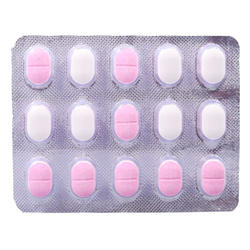
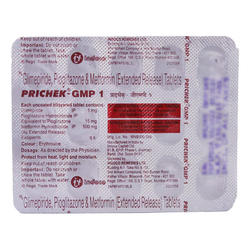
Prichek-GMP 1 Tablet 15's


₹168.5
 ₹25.0Cashback (15%)
(Inclusive of all Taxes)
 Offers & Discounts
Get Free delivery (₹99) with


Delivery Information
More about the Product
Composition :
Manufacturer/Marketer :
Consume Type :
Expires on or after :
Return Policy :
About Prichek-GMP 1 Tablet
Prichek-GMP 1 Tablet is a prescription medication used to manage and control high blood sugar levels in adults with type 2 diabetes. It is typically prescribed when a single or double treatment medicine is no longer sufficient to keep blood sugar within a target range. By keeping blood sugar levels controlled, this medication helps prevent serious, long-term complications associated with diabetes.
For the best results, you must take Prichek-GMP 1 Tablet regularly and consistently exactly as prescribed by your doctor. It is highly recommended to take this tablet with food, specifically with your first main meal of the day, to reduce the chances of a stomach upset. Alongside taking this medication, adopting healthy lifestyle habits such as eating a balanced, low-sugar diet and engaging in regular physical activity is essential to achieve optimal blood sugar control.
While taking Prichek-GMP 1 Tablet , some people may experience mild side effects like nausea, a metallic taste in the mouth, or low blood sugar. However, if you experience sudden swelling in your legs, shortness of breath, severe stomach pain, or yellowing of your skin or eyes, you must stop taking the medication and consult your doctor immediately.
Do not take this if you have severe kidney disease, active liver damage, or severe heart failure. Before starting Prichek-GMP 1 Tablet , it is crucial to tell your doctor if you have a history of bladder cancer, fluid retention, or heart conditions.
This medicine can interact with alcohol, which significantly increases your risk of dangerously low blood sugar and a rare but serious condition called lactic acidosis. If you are pregnant, planning to become pregnant, breastfeeding, or are an elderly individual, you must talk to your doctor or pharmacist before using this medicine, as alternative treatments may be safer.
Uses of Prichek-GMP 1 Tablet
It is mainly used to manage and control high blood sugar levels in adults with type 2 diabetes.
- Type 2 Diabetes Mellitus: Prichek-GMP 1 Tablet helps lower blood glucose levels in adults whose high blood sugar is not adequately controlled by diet, exercise, or other single-agent medications.
Key Benefits
Taking Prichek-GMP 1 Tablet consistently provides several vital health benefits that help you manage your daily life with confidence:
- Effective Blood Sugar Control: By targeting multiple pathways in the body, it helps keep your daily blood glucose readings within a stable, healthy range.
- Prevention of Diabetes Complications: Maintaining steady blood sugar levels reduces the long-term risk of kidney damage, nerve pain, blindness, and cardiovascular problems like heart attacks or strokes.
- No Need for Multiple Separate Pills: Since it combines three highly effective blood-sugar-lowering agents into a single convenient tablet, it simplifies your daily medication routine.
- If you experience low blood sugar levels, inform your doctor. They will assess the severity and make recommendations for the next actions.
- Your doctor will assess your symptoms, blood sugar levels, and overall health before recommending the best course of action, which may include treatment, lifestyle modifications, or prescription adjustments.
- Follow your doctor's instructions carefully to manage the episode and adjust your treatment plan.
- Make medication adjustments as recommended by your doctor to prevent future episodes.
- Implement diet and lifestyle modifications as your doctor advises to manage low blood sugar levels.
- Monitor your blood sugar levels closely for patterns and changes.
- Track your progress by recording your blood sugar levels, food intake, and physical activity.
- Seek further guidance from your doctor if symptoms persist or worsen so that your treatment plan can be revised.
- Reduce salt intake to minimize fluid buildup.
- Use compression stockings, sleeves, or gloves.
- Gently massage the affected area towards the heart.
- Protect the swollen area from injury and keep it clean.
- Use lotion or cream to keep the skin moisturized.
- Inform your doctor about the nausea and discuss possible alternatives to the medication or adjustments to the dosage.
- Divide your daily food intake into smaller, more frequent meals to reduce nausea.
- Opt for bland, easily digestible foods like crackers, toast, plain rice, bananas, and applesauce.
- Avoid certain foods that can trigger nausea, such as fatty, greasy, spicy, and smelly foods.
- Drink plenty of fluids, such as water, clear broth, or electrolyte-rich beverages like coconut water or sports drinks.
- Use ginger (tea, ale, or candies) to help relieve nausea.
- Get adequate rest and also avoid strenuous activities that can worsen nausea.
- Talk to your doctor about taking anti-nausea medication if your nausea is severe.
- Record when your nausea occurs, what triggers it, and what provides relief to help you identify patterns and manage your symptoms more effectively.
- Preventing Vomiting (Before it Happens)
- Take medication exactly as prescribed by your doctor. This can help minimize side effects, including vomiting.
- Having a small meal before taking your medication can help reduce nausea and vomiting.
- Talk to your doctor about taking anti-nausea medication along with your prescribed medication.
- Managing Vomiting (If it Happens)
- Try taking ginger in the form of tea, ale, or candy to help alleviate nausea and vomiting.
- What to Do if Vomiting Persists
- Consult your doctor if vomiting continues or worsens, consult the doctor for guidance on adjusting your medication or additional treatment.
- Inform Your Doctor: Notify your doctor immediately about your diarrhoea symptoms. This allows them to adjust your medication or provide guidance on managing side effects.
- Stay Hydrated: Drink plenty of fluids to replace lost water and electrolytes. Choose water, clear broth, and electrolyte-rich drinks. Avoid carbonated or caffeinated beverages to effectively rehydrate your body.
- Follow a Bland Diet: Eat easy-to-digest foods to help firm up your stool and settle your stomach. Try incorporating bananas, rice, applesauce, toast, plain crackers, and boiled vegetables into your diet.
- Avoid Trigger Foods: Steer clear of foods that can worsen diarrhoea, such as spicy, fatty, or greasy foods, high-fibre foods, and dairy products (especially if you're lactose intolerant).
- Practice Good Hygiene: Maintain good hygiene to prevent the spread of infection. To stay healthy, wash your hands frequently, clean and disinfect surfaces regularly, and avoid exchanging personal belongings with others.
- Take Anti-Diarrheal Medications: If your doctor advises, anti-diarrheal medications such as loperamide might help manage diarrhoea symptoms. Always follow your doctor's directions.
- Keep track of your diarrhoea symptoms. If they don't get better or worse or are accompanied by severe stomach pain, blood, or dehydration signs (like extreme thirst or dark urine), seek medical help.
Directions for Use
- Prichek-GMP 1 Tablet can be taken with food to avoid stomach upset or as advised by the doctor.
- Follow your doctor's instructions on the dosage and timing of this medication to ensure safety.
- Swallow Prichek-GMP 1 Tablet as a whole with a glass of water.
- Do not chew, crush or break it.
How Prichek-GMP 1 Tablet Works

Alcohol
Unsafe
You are recommended to avoid consumption of alcohol with Prichek-GMP 1 Tablet as it may increase the risk of lactic acidosis (accumulation of lactic acid in the body).

Pregnancy
Unsafe
Prichek-GMP 1 Tablet is not recommended for pregnant women as it may harm an unborn baby. Please consult a doctor if you are pregnant or planning for pregnancy.

Breast Feeding
Unsafe
Avoid breastfeeding while taking Prichek-GMP 1 Tablet as it may be excreted in breastmilk and cause adverse effects in the baby. Therefore, please consult a doctor before using Prichek-GMP 1 Tablet if you are breastfeeding.

Driving
Caution
Prichek-GMP 1 Tablet may decrease alertness in some people. Therefore, drive only if you are alert after taking Prichek-GMP 1 Tablet .

Liver
Caution
Take Prichek-GMP 1 Tablet with caution, especially if you have a history of Liver diseases/conditions. The dose may be adjusted by your doctor as required.

Kidney
Caution
Take Prichek-GMP 1 Tablet with caution, especially if you have a history of Kidney diseases/conditions. The dose may be adjusted by your doctor as required.

Children
Unsafe
Prichek-GMP 1 Tablet is not recommended for children as the safety and effectiveness were not established.
Heart
Caution
Prichek-GMP 1 Tablet should be used with caution in patients with heart problems. Inform your doctor about any heart-related conditions before taking Prichek-GMP 1 Tablet .

Geriatrics
Caution
Prichek-GMP 1 Tablet should be given with caution in elderly patients due to an increased risk of side effects. Seek medical advice before using Prichek-GMP 1 Tablet .
What if I have taken an overdose of Prichek-GMP 1 Tablet
Diet & Lifestyle Advise
- Monitor your carbohydrates: Focus on complex carbohydrates with a low glycemic index, such as whole grains, oats, vegetables, and legumes, to prevent sudden spikes in blood sugar.
- Stay physically active: Aim for at least 150 minutes of moderate-intensity exercise, such as brisk walking or swimming, each week. Physical activity helps your body use insulin more efficiently.
- Keep a sugar source nearby: Because this medicine can cause low blood sugar, always carry fast-acting sweets, glucose tablets, or fruit juice with you to treat sudden symptoms of hypoglycemia.
- Check your feet daily: Diabetes can affect blood circulation and nerve sensitivity. Inspect your feet daily for any cuts, sores, or blisters, and report any non-healing wounds to your doctor.
- Stay hydrated: Drink plenty of water throughout the day to support your kidney function and help your body flush out excess glucose.

Have a query?
How Soon It Starts Working
The time required for Prichek-GMP 1 Tablet to start to work: Prichek-GMP 1 Tablet ideally shows its action within a few hours after administration.
The time for which the effects of Prichek-GMP 1 Tablet last: The duration of action for Prichek-GMP 1 Tablet is clinically unknown.
What if you forget to take Prichek-GMP 1 Tablet
Storage
- Proper storage ensures your medication remains effective and safe to use.
- Keep Prichek-GMP 1 Tablet stored in its original packaging at room temperature, ideally below 30°C (86°F).
Drug Warnings
- Monitor blood sugar: Check your blood sugar regularly as directed by your healthcare provider to ensure the medication is working safely.
- Watch for swelling: Watch for sudden weight gain or swelling in your lower legs or ankles, which can indicate fluid buildup, and notify your doctor immediately.
- Avoid alcohol: Limit or avoid alcohol consumption while taking this medication, as alcohol increases the risk of severe low blood sugar and dangerous acid buildup in the body.
- Inform healthcare provider: Inform any doctor, dentist, or surgeon that you are taking Prichek-GMP 1 Tablet before undergoing any medical procedures or receiving contrast dye for imaging scans.
- Be aware: Stress, illness, injury, or surgery can affect your blood sugar levels, and your doctor may need to temporarily adjust your treatment plan during these times.
Drug-Drug Interactions


Drug-Drug Interaction Summary:
Inform your doctor if you are taking any of the following medicines, as they may interact.
- Blood pressure medicines (such as beta-blockers or ACE inhibitors): They may hide the warning signs of low blood sugar, like a racing heart, or increase the risk of hypoglycemia.
- Water pills (diuretics) and corticosteroids: It May raise your blood sugar levels, making Prichek-GMP 1 Tablet less effective.
- Certain pain relievers (like NSAIDs): They can increase the risk of kidney strain when taken alongside this medication.
Drug-Drug Interactions
Login/Sign Up
Co-administration of Metformin and Iodamide can increase the risk of lactic acidosis (when the body produces too much lactic acid).
How to manage the interaction:
Taking Metformin with Iodamide is generally avoided as it can result in an interaction, consult a doctor before taking it. Do not stop using any medications without talking to a doctor.
Co-administration of Iopamidol with Metformin can increase the risk of lactic acidosis (a medical condition characterized by a build-up of lactate in the body).
How to manage the interaction:
Taking Metformin with Iopamidol is not recommended, consult a doctor before taking it. Do not stop using any medications without talking to a doctor.
Co-administration of Iomeprol with Metformin can increase the risk of lactic acidosis (a medical condition characterized by a build-up of lactate in the body).
How to manage the interaction:
Taking Metformin with Iomeprol is not recommended, consult a doctor before taking it. Do not stop using any medications without talking to a doctor.
Co-administration of Iopromide with Metformin can increase the risk of lactic acidosis (a medical condition characterized by a build-up of lactate in the body).
How to manage the interaction:
Taking Iopromide with Metformin is not recommended, consult a doctor before taking it. Do not stop using any medications without talking to a doctor.
Co-administration of Metformin and Metrizamide together can cause the risk of lactic acidosis (when the body produces too much lactic acid).
How to manage the interaction:
Taking Metformin with Metrizamide is generally avoided as it can result in an interaction, it can be taken if a doctor has advised it. However, if you experience headaches, nausea, vomiting, diarrhea, muscle cramps or pain, body weakness, extreme fatigue, and visual disturbances, contact a doctor immediately. Do not discontinue any medications without consulting a doctor.
Co-administration of Iodixanol with Metformin can increase the risk of lactic acidosis (a medical condition characterized by a build-up of lactate in the body).
How to manage the interaction:
Taking Metformin with Iodixanol is not recommended, consult a doctor before taking it. Do not stop using any medications without talking to a doctor.
Taking Glimepiride with Gatifloxacin may cause both low blood glucose and, less frequently, high blood glucose.
How to manage the interaction:
Gatifloxacin is not recommended for patients with diabetes, however, it can be taken if advised by a doctor. Consult the prescriber if you experience symptoms such as nervousness, confusion, headache, dizziness, drowsiness, tremors, nausea, hunger, weakness, perspiration, palpitation, rapid heartbeat, increased urination, increased thirst, and increased hunger. Do not discontinue the medications without consulting a doctor.
Co-administration of Mipomersen and Pioglitazone may increase the risk of liver damage.
How to manage the interaction:
Although taking Pioglitazone and Mipomersen together can result in an interaction, it can be taken if a doctor has prescribed it. However, if you experience symptoms such as fever, chills, joint pain or swelling, unusual bleeding or bruising, skin rash, itching, nausea, vomiting, dark urine, light stools, and skin or eye yellowing, decreased hunger, consult the doctor. Do not stop using any medications without talking to the doctor.
Co-administration of Fluconazole may increase the blood levels and effects of Glimepiride may cause low blood glucose.
How to manage the interaction:
Although there is a possible interaction, glimepiride can be taken with fluconazole if prescribed by the doctor. Consult the prescriber if you experience symptoms of low blood sugar like headache, dizziness, drowsiness, nervousness, confusion, tremor, nausea, hunger, weakness, perspiration, palpitation, and rapid heartbeat. Monitoring of blood glucose levels is advised. Do not discontinue the medications without consulting a doctor.
When Glimepiride is taken with Nalidixic acid, can cause both hyperglycemia (high blood glucose) and, less frequently, hypoglycemia (low blood glucose).
How to manage the interaction:
There may be a possibility of interaction between Glimepiride and Nalidixic acid, but it can be taken if prescribed by a doctor. If you experience headache, dizziness, drowsiness, nervousness, confusion, tremor, nausea, hunger, weakness, perspiration, palpitation, and rapid heartbeat, increased thirst, increased hunger, and increased urination contact a doctor right away. Do not discontinue any medications without consulting a doctor.
Drug-Food Interactions
Drug-Food Interaction Summary:
- Alcohol: Dramatically increases the risk of low blood sugar and can trigger a dangerous buildup of lactic acid in the blood.
Drug-Food Interactions
Login/Sign Up

All Substitutes & Brand Comparisons
Customers Also Bought



FAQs
Disclaimer
Author Details


Reference
- Drugs.com Clinical Review Team. Pioglitazone Clinical Drug Monograph. Auckland, NZ: Drugs.com; 2026. [Accessed on 02 Jun. 2026]Check here
- Metformin hydrochloride oral solution. 2003. [Accessed on 08 Apr. 2019]Check here
- Brown & Burk UK Limited. Electronic Medicines Compendium (EMC). [Revised in December 2020] [Accessed on 9th August 2025]Check here
Country of origin
Manufacturer/Marketer address
Therapeutic Class
Habit Forming


Recommended for a 30-day course: 2 Strips