logo
0

6 Month Baby Food Chart and Guide: Safely Introducing Solids

Explore a 6 month baby food chart with first foods, feeding quantities, meal timings and safety tips for introducing solids.

article image

Dr. Vasantha Sree

Reaching the half-year milestone is an incredibly exciting time for you and your little one. If your baby has just turned six months old, you are likely looking for a reliable 6-month baby food chart to guide you through this new transition. Introducing solid foods is a major developmental step, turning bottle or breast milk feedings into a fun journey of exploring textures, flavours, and colours.

While breast milk or formula remains your baby’s primary source of nutrition, starting 6-month baby food helps bridge the nutritional gap as their natural iron stores begin to deplete. In this comprehensive guide, we will provide you with a paediatrician-aligned 6-month baby diet chart, meal schedules, and practical safety tips to make starting solids at 6 months simple and stress-free.
 

How to Know If Your Baby Is Ready for Solids?

Before diving into a six-month baby food chart, it is crucial to ensure your baby is physically ready for complementary feeding. According to the World Health Organization (WHO) and the Centers for Disease Control and Prevention (CDC), parents should wait until around 6 months of age to introduce solids.
Look for these key signs of readiness:

  • Good Head and Neck Control: Your baby can hold their head up steadily and sit upright with minimal support in a high chair.
  • Loss of the Tongue-Thrust Reflex: They no longer automatically push food out of their mouth with their tongue.
  • Curiosity and Interest: They watch you eat, reach for your plate, or open their mouth when food is nearby.
  • Double Birth Weight: Most babies are ready for solids when they have doubled their birth weight.
     

What Baby Food is Recommended for 6 Months?

When deciding what baby food is recommended for 6 months, focus on simple, single-ingredient foods that are easy on your little one’s developing digestive system. Since infants begin to lose their natural iron reserves around this age, iron-rich foods are highly recommended as first steps.

Best first foods for 6-month-olds:

  1. Single-Grain Cereals: Iron-fortified oatmeal, ragi (finger millet), or rice cereal mixed with breast milk or formula.
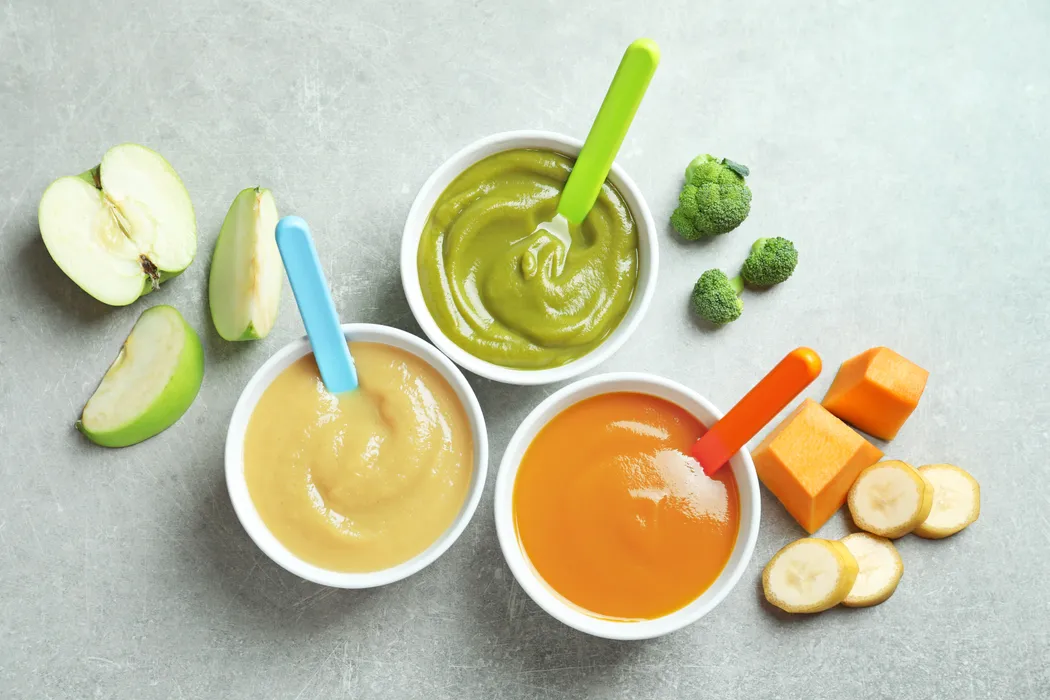
  2. Fruit Purees: Soft fruits like mashed bananas, steamed apple puree, pear puree, or avocado mash.
  3. Vegetable Purees: Steamed and smoothly pureed sweet potato, carrots, pumpkin, or butternut squash.
  4. Lentils and Soups (Indian Context): Well-cooked and strained yellow moong dal water or highly diluted ragi porridge are excellent options for a 6 month baby food chart, Indian style.
  5. Meat Purees: Finely pureed chicken or beef (for families introducing meat early) provides excellent bioavailable iron.

To ensure easy digestion food for a 6-month-old baby's success, always cook vegetables and fruits thoroughly before blending them into a completely smooth, semi-liquid consistency. At first, smooth mashed, puréed or strained foods may be easier for your baby to eat. 
 

How Much Food is Recommended for a 6-Month-Old?

A common question among new parents is: How much food should my 6-month-old eat?
At this stage, food for a 6-month-old baby is strictly complementary. Your baby’s stomach is still very small, about the size of their fist, so start with small amounts and gradually increase the quantity according to your baby's appetite and development.

  • Initial Quantity: Start with just 1 to 2 teaspoons of puree once a day.
  • Progression: Gradually increase to 1 to 2 tablespoons per feeding, once or twice a day, depending on your baby's interest.
  • Milk Volume: Continue to offer on-demand breast milk or 24 to 32 ounces of formula daily. Solid foods should not replace milk feeds yet.

Daily Routine: 6 Month Baby Food Chart with Time

Having a structured schedule helps establish healthy eating habits. Below is a sample daily routine 6 month baby food chart with times to help you plan your week. This schedule is designed to balance breast milk/formula with introductory solids.

TimeMealTypeWhat to Offer
6:00 AM – 7:00 AMWake-up FeedBreast milk or formula
9:00 AM – 10:00 AMBreakfast (Solids)1–2 tbsp of iron-fortified oatmeal or ragi porridge
11:30 AMMid-MorningBreast milk or formula
1:30 PM – 2:00 PMLunch (Optional Solids)1–2 tbsp of sweet potato, carrot or apple purée
4:00 PMAfternoon Nap FeedBreast milk or formula
6:00 PMEvening / DinnerBreast milk or formula
8:00 PMBedtime FeedBreast milk or formula

Note: This 6 month baby diet chart with time can be adjusted based on your baby’s sleeping patterns and your household routine. WHO recommends complementary foods 2–3 times a day for infants aged 6–8 months, alongside continued breastfeeding or appropriate milk feeds.
 

Your Weekly Feeding Plan: 6 Month Baby Food Chart Week 1

Introducing solids should be slow and deliberate. Using a 6 month baby food chart, week 1 progression allows your baby’s gut to adapt without constipation or digestive distress.

Week 1 Solid Foods Intro Schedule 

The following is a simple example of how you can introduce different foods during the first week:

  • Day 1–2: Single-grain cereal (oatmeal or ragi) at 9:30 AM
    (1–2 teaspoons mixed with breast milk or formula)
  • Day 3–4: Apple or pear purée at 9:30 AM
    (Smoothly blended, warm, 1–2 teaspoons)
  • Day 5–7: Sweet potato or carrot purée at 9:30 AM
    (Thoroughly steamed, sieved, 1–2 teaspoons)

By 6 month baby food chart, week 2, you can begin offering a second small solid feed in the early afternoon, introducing new single ingredients while keeping a close eye on tolerance.
 

6 Month Baby Food Chart: Indian Vegetarian Options

If you are looking for a 6 months baby food chart Indian style, there are wonderful, nutrient-dense traditional foods you can offer. Indian home cooking provides superb options for babies starting their culinary journey.

  • Ragi Sari (Finger Millet Porridge): Wash, dry, and powder ragi seeds. Cook the powder with water or breast milk until smooth. Ragi is incredibly rich in calcium and iron.
  • Moong Dal Soup (Dal Pani): Boil yellow moong dal with a pinch of turmeric. Strain the water and feed it warm. It is very gentle on the stomach.
  • Mashed Banana: Ripe yellow bananas (such as Kerala Robusta or Elaichi bananas) can be mashed thoroughly with a fork. No cooking is needed!
  • Suji Halwa (Semolina Porridge): Roast semolina lightly, cook it in water until it reaches a smooth, semi-solid texture, and cool it before serving. Do not add sugar or cow's milk.
     

Essential Safety Rules for Feeding Your 6-Month-Old

Introducing solid food for a 6 month baby requires a few strict guidelines to ensure safety, avoid allergies, and prevent choking.

1. The 3-Day Rule

When offering a new 6 month baby solid food, serve it exclusively for three consecutive days before introducing another new ingredient. This helps you identify the exact culprit if your baby experiences an allergic reaction, such as hives, vomiting, diarrhoea, or gas.

2. Foods to Avoid Completely

The following foods should be avoided at this age:

  • Honey: Never give honey to a baby under 12 months due to the risk of infant botulism, a rare but serious disease.
  • Salt and Sugar: A baby’s kidneys are too immature to handle added salt, and added sugar can cause tooth decay and unhealthy taste preferences.
  • Cow’s Milk: Whole cow's milk is difficult for a young baby to digest and lacks the proper nutrients. Stick to breast milk or formula.
  • Choking Hazards: Avoid whole grapes, nuts, seeds, raw hard vegetables, or sticky textures.

3. Focus on Iron and Vitamin C

Iron is critical for healthy brain development. Include iron-rich foods such as meat, eggs, lentils, and iron-fortified infant cereals as part of a varied complementary diet. Offering fruits and vegetables rich in vitamin C alongside plant-based iron sources may help improve iron absorption. 
 

Conclusion: A Gentle Beginning

Starting your child on a 6 month baby food chart is a beautiful step in their development. Remember to keep the environment calm, positive, and mess-friendly. Let your baby touch, smell, and explore appropriate foods; this sensory exploration is a key part of learning how to eat. If your baby rejects a certain food, do not worry; it may take multiple exposures for an infant to accept a new flavour. Always consult your paediatrician before making major changes to your baby's diet.
 

FAQS

How much quantity of food for a 6 month baby should I give?

You should start very small. Begin with 1 to 2 teaspoons of smooth puree once a day. If your baby swallows it easily and looks for more, you can gradually increase this to 1 to 2 tablespoons per feeding, once or twice daily.

Can I give chicken soup to my 6 month baby?

Yes, but with caveats. You can introduce strained, unsalted, warm chicken broth or very finely pureed chicken. However, you must not give regular canned chicken soup, as it contains extremely high levels of sodium, which can harm your baby's kidneys. If you want to offer beef or lamb, similar rules apply; avoid mutton soup unless it is prepared completely at home without salt, spices, or excess fat.

What baby food is recommended for 6 months to start with?

Single-ingredient purees are highly recommended. Excellent options include iron-fortified single-grain infant oatmeal, mashed avocado, steamed sweet potato puree, or ripe banana mash. Always introduce one new food at a time to check for allergies.

How many times should solid food for 6 months old be offered daily?

At 6 months old, solid food should be offered 1 to 2 times a day. Breast milk or formula remains the primary source of nutrition, and solids are meant for sensory exploration, motor skill development, and gentle supplementation.

What is the best food for 6 months baby to prevent iron deficiency?

Iron-fortified infant cereals (such as oatmeal or barley), pureed meats, and pureed legumes (like well-cooked lentils) are the best options to prevent iron deficiency. Combining these with vitamin C-rich foods help the baby's body absorb the iron more efficiently.

Apollo 247 Floating Action Button