logo
0

8 Month Baby Food Chart and Guide: Meal Plans and Tips

Explore an 8 month baby food chart with meal plans, food ideas, quantities, textures and essential feeding and safety tips.

article image

Dr. Bhanu Prakash

At eight months, your baby is undergoing rapid physical and cognitive development. They are likely sitting up without support, showing off a brand-new tooth or two, and mastering the "pincer grasp", the ability to pick up small objects with their thumb and index finger. This is an exciting milestone for parents because it marks a major shift in your little one's culinary journey. If you are wondering how to navigate this transition safely, a well-structured 8 month baby food chart is the perfect tool to help you introduce new textures, flavours and feeding schedules.
 

As your infant starts exploring more complex textures, introducing a variety of nutrient-dense 8 month baby food is vital. At this stage, breast milk or formula remains a primary source of nutrition, but solid foods are taking a much more prominent role on their plate. Let's dive deep into understanding what to feed, how much to offer, and how to use a practical 8 month baby diet chart to simplify your daily routine.
 

Understanding Your 8-Month-Old Baby's Nutritional Needs

By eight months, your baby's natural iron stores, which they were born with, have started to deplete. Therefore, providing food for 8 month old baby that is rich in iron, zinc, healthy fats, calcium and vitamins is crucial for brain and physical development.

When planning an 8 month old baby food menu, focus on balancing essential macronutrients. Introducing solid food for 8 months baby should include:

The following food groups can help provide a varied and balanced diet:

  • Iron-Rich Foods: Crucial for cognitive development. Iron-fortified baby cereals, puréed meats and lentils are excellent options.
  • Healthy Fats: Essential for nervous system development. Think avocados, small amounts of cheese or full-fat plain yoghurt.
  • Vitamins and Minerals: A variety of brightly coloured fruits and vegetables provide necessary antioxidants and dietary fibre.
  • Proteins: Vital for cellular growth and muscle development. Offering protein-rich foods for 8 month baby, such as thoroughly cooked eggs, mashed tofu, beans and finely shredded chicken, provides the physical foundation they need.
     

Key Food Groups and an 8-Month-Old Baby Food List

To make grocery shopping easier, here is a breakdown of the best food for 8 months baby categorised by food groups. Using a comprehensive 8 month old baby food list can help you introduce variety while ensuring safety and balanced nutrition.

Fruits and Vegetables

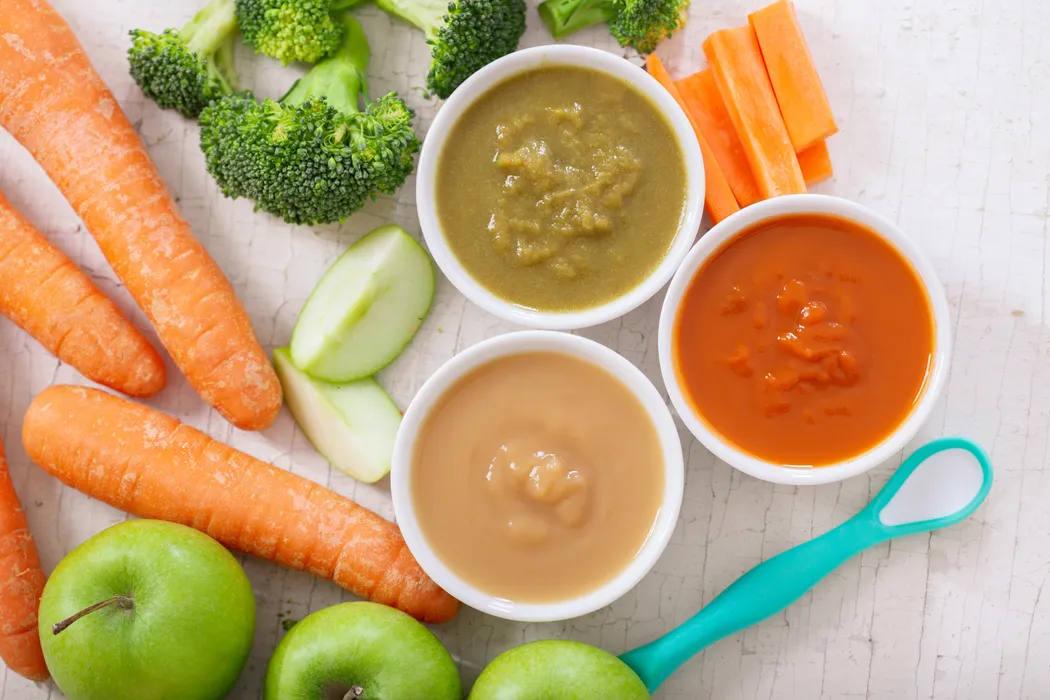
Fruits and vegetables should be steamed, boiled or baked until soft enough to be easily mashed. Excellent options to include as food for 8 months baby are:

  • Apples and pears, steamed and mashed
  • Bananas and avocados, mashed raw
  • Sweet potatoes, squash and carrots, steamed/roasted and mashed
  • Peas and green beans, cooked well and mashed or puréed

Grains and Cereals

Grains provide the carbohydrates your active infant needs. Good options to include in a food chart for 8 months baby are:

  • Oats, ragi (finger millet) and barley
  • Brown or white rice
  • Quinoa, cooked thoroughly and mashed
  • Whole wheat pasta, cooked extra soft and cut into tiny pieces

Proteins and Dairy

For healthy growth, incorporate high-protein baby food for 8 months:

  • Well-cooked and mashed lentils, chickpeas or kidney beans
  • Finely shredded or minced chicken, turkey or fish, ensuring no bones are present
  • Mashed hard-boiled egg yolks
  • Plain, unsweetened pasteurised whole-milk yoghurt or cottage cheese (paneer)
     

Food Consistency and Quantity: How Much Should an 8-Month-Old Eat?

One of the most common questions parents ask is: How much quantity of food for 8 month baby is ideal?
At eight months, the transition from smooth purées to thicker, lumpier textures is highly beneficial for developing eating skills.

Food Consistency for 8 Month Old
 

The food consistency for 8 month old babies should shift away from watery purées. Instead, aim for:
These textures can help your baby develop their eating skills:

  • Mashed foods with soft lumps: This encourages chewing motions.
  • Soft finger foods: Small, bite-sized pieces of soft foods that can be easily squashed between your fingers, such as ripe banana slices, well-cooked sweet potato sticks or soft-cooked pasta.

Maintaining a proper 8 month baby food consistency ensures your baby learns to manage different textures safely.

8 Month Baby Food Quantity and Frequency


Understanding the 8 month baby food quantity helps prevent overfeeding or underfeeding.

  • Frequency: If you are wondering how many times to give food to an 8 month old baby, the general recommendation is 2 to 3 solid meals per day, alongside breast milk or formula.
  • Portion Size: The 8 month old baby food quantity per meal can gradually increase according to your baby's appetite.
  • Breast Milk or Formula: Continue to offer breast milk or formula alongside solid foods. The amount your baby needs can vary according to their individual needs and feeding pattern.
     

A Complete 8 Month Baby Food Chart with Time

This structured 8 month baby food chart with time helps establish a consistent eating routine. You can customise this 8 month baby daily food chart based on your family's daily schedule and cultural preferences, such as adapting it into an 8 months baby food chart Indian or a Western-style schedule.

Time of Day

Meal Type

What to Serve / Food Options for 8 Month Old Baby

7:00 AM

Wake Up / Early Morning

Breast milk or formula

8:30 AM

Breakfast

8 month baby morning food: 2–3 tbsp of iron-fortified oatmeal or ragi porridge mixed with mashed banana or apple purée

10:30 AM

Mid-Morning Snack (Optional)

Breast milk, formula or a few slices of soft, ripe avocado

12:30 PM

Lunch

2–4 tbsp of mashed vegetable khichdi (rice and lentils cooked soft with a drop of ghee) or soft-cooked, mashed carrots with shredded chicken

3:30 PM

Afternoon Nap Feed

Breast milk or formula

5:30 PM

Evening Snack

8 month baby evening food: 1–2 tbsp of plain whole-milk yoghurt or steamed, mashed pear

7:00 PM

Dinner

2–4 tbsp of mashed sweet potato with well-cooked, mashed green peas or soft mashed tofu

8:30 PM

Bedtime Feed

Breast milk or formula

Note: This clear 8 month old baby food chart can act as a reliable blueprint. You can adjust the timings and food options according to your baby's appetite, preferences and family routine.
 

8 Month Baby Food Ideas and Quick Recipes

Preparing homemade meals for your little one can be a wonderful bonding experience. If you are looking for simple 8 month baby food ideas, here are three easy and delicious recipes that fit perfectly into any diet chart for 8 month old baby:

Recipe 1: Iron-Rich Lentil and Vegetable Mash (Khichdi)

This is an excellent option for parents seeking 8 month baby food Indian style meals, providing both protein and complex carbohydrates.

  • Ingredients: 1 tablespoon yellow moong dal (split yellow lentils), 1 tablespoon white or brown rice, a small handful of chopped carrots and spinach, a pinch of turmeric, and 1 cup of water.
  • Instructions: Wash the dal and rice thoroughly. In a pressure cooker or small saucepan, combine all ingredients and cook until extremely soft. Mash the mixture thoroughly with a fork, add a drop of melted ghee or olive oil, and serve warm.

Recipe 2: Creamy Avocado and Banana Mash

Perfect as a quick breakfast or as evening food for 8 month baby, this recipe is packed with healthy monounsaturated fats and potassium.

  • Ingredients: 1/2 ripe avocado, 1/2 ripe banana.
  • Instructions: Scoop out the avocado flesh and peel the banana. Mash them together in a bowl using a fork until a smooth yet thick consistency is achieved. Serve immediately to prevent browning.

Recipe 3: Steamed Apple and Cinnamon Oats

A sweet, comforting dish that makes a fantastic baby food for 8 month old breakfast.
Ingredients: 2 tablespoons of rolled oats, 1/2 cup water or formula, 1/2 organic apple (peeled, cored and finely chopped), a tiny pinch of cinnamon.

  • Instructions: Simmer the chopped apple in a little water until soft. Add the oats and the remaining water, cooking until the oats are fully softened. Stir in the pinch of cinnamon. Allow it to cool, then mash the apples into the oats before serving.
     

Crucial Safety and Feeding Tips for 8-Month-Olds

As you implement your 8 month diet chart for baby, keep these essential safety practices in mind to ensure a healthy feeding experience:

Avoid Choking Hazards

These precautions can help make mealtimes safer:

  • Avoid Choking Hazards: Never give your baby whole nuts, whole grapes, raw carrots, hard sweets, popcorn or large chunks of meat. Always ensure food is soft and cut into tiny, manageable pieces.
  • Say No to Honey: Do not give honey to infants under 12 months due to the risk of infant botulism, a serious illness.
  • Limit Added Salt and Sugars: Your baby's kidneys are still developing, so avoid adding salt or sugar to homemade baby foods.
  • Watch for Allergies: When introducing new items from your 8 month old baby food list, introduce one new food at a time initially to help identify any potential allergic reactions, such as hives, vomiting or diarrhoea.

Coordinate Play and Eating

Balance your 8-month baby activities and food. Engaging in tummy time, crawling practice and playing with toys helps stimulate their development. Avoid feeding your baby immediately after intense physical play; allow them 10–15 minutes to wind down first.
 

Conclusion: Supporting Your Baby's Growing Appetite

At eight months, your baby can explore a wider variety of foods and textures while continuing to receive breast milk or formula. Offer nutrient-dense foods from different food groups, gradually introduce suitable soft finger foods and follow your baby's hunger and fullness cues. Always prepare food appropriately for their developmental stage and supervise them while eating. If you have concerns about your baby's nutrition or feeding, consult your paediatrician.
 

FAQS

How much breast milk or formula does an 8-month-old need with solids?

At eight months, breast milk or formula remains the foundation of your baby's nutrition. They should still receive regular milk feeds alongside solid foods. The amount can vary between babies, so follow your baby's hunger and fullness cues. Solids should complement milk rather than replace it entirely.

Can I give my 8-month-old cow's milk?

No, cow's milk should not be introduced as a main drink until your baby reaches 12 months. However, it is safe to use small amounts of whole-milk yoghurt or cottage cheese, or to use a small amount of cow's milk when cooking dishes such as oatmeal.

What should I do if my baby rejects textured foods?

It is common for babies to reject new textures initially. If your baby gags slightly, remain calm; this is a natural reflex as they learn to manage food in their mouth. If they refuse lumpier foods, try mixing a small amount of mashed food into a smooth purée they already like, gradually increasing the texture over several days.

How many times a day should an 8-month-old eat solid food?

An 8-month-old should generally eat solid foods 2 to 3 times a day alongside breast milk or formula. This schedule can be adjusted according to your baby's hunger and fullness cues and individual needs.

Can I give water to my 8-month-old baby?

Yes. You can offer small sips of water during mealtimes in a suitable cup. This helps your baby practise drinking from a cup, but water should not replace breast milk or formula feeds.

Apollo 247 Floating Action Button