logo
0

A2 Cow Milk for Babies: Digestive Sensitivity Guide

Is A2 cow milk safe for babies? Learn how A2 milk differs from regular milk, when it can be introduced, its benefits and limitations, and allergy precautions.

article image

Dr.Yusuf

Many parents worry when their baby seems gassy, bloated, or unsettled after feeding. One option drawing increasing attention is A2 cow milk, marketed as gentler on digestion than standard cow's milk. Before switching your baby's formula or dairy, it helps to understand what the science actually says, how A2 milk differs from regular milk, and when to loop in your paediatrician.

What Is A2 Cow Milk and How Is It Different from Regular Milk?

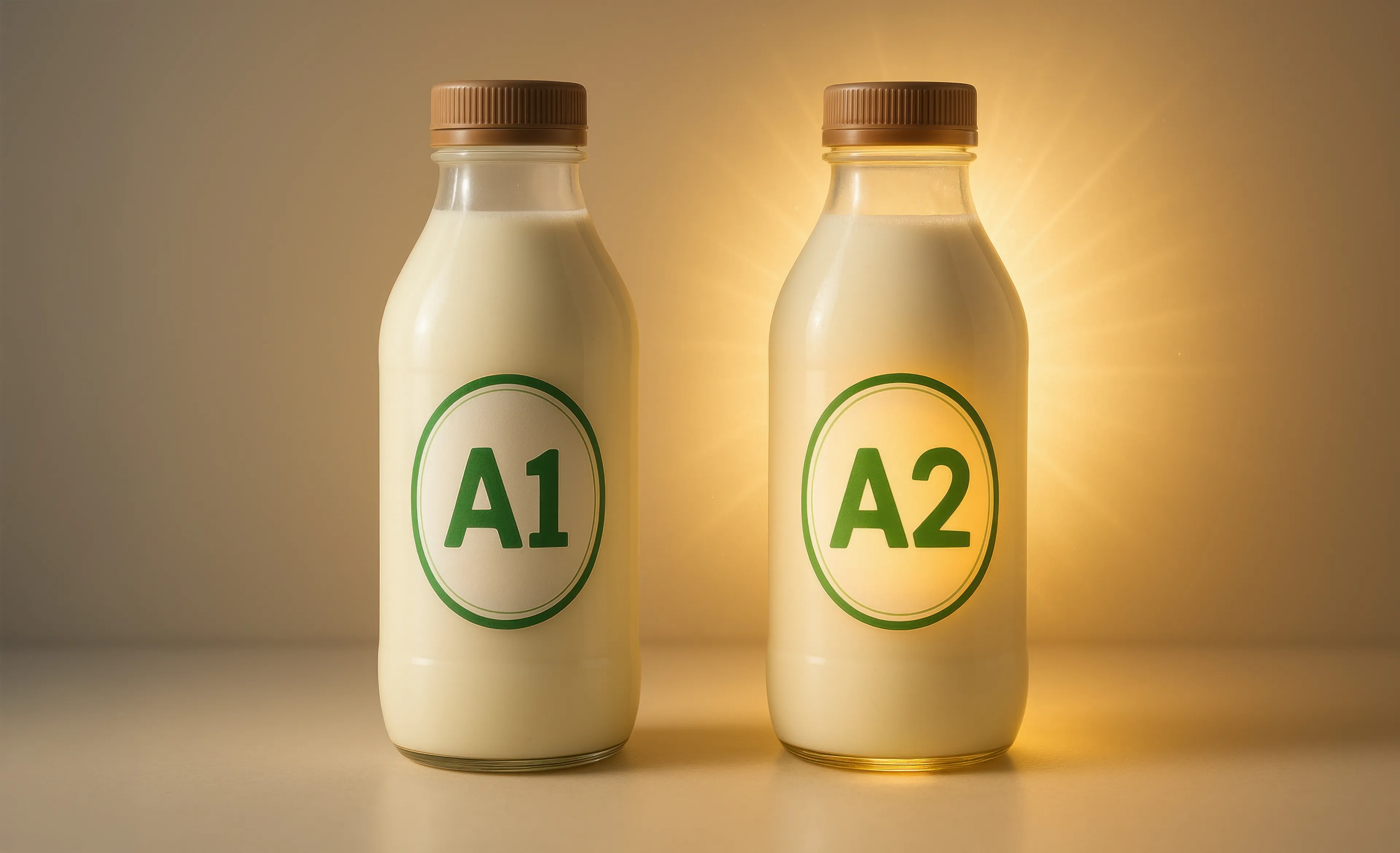
Cow's milk contains proteins, and the most abundant one is called beta-casein. Most cows in modern dairy herds produce a mixture of two forms: A1 and A2. A2 protein milk comes exclusively from cows that naturally produce only the A2 form of beta-casein.

The difference between A1 and A2 milk comes down to a single amino acid in the beta-casein chain. When A1 beta-casein is digested, it can release a small peptide called BCM-7 (beta-casomorphin-7). Some research has investigated whether BCM-7 may affect gastrointestinal symptoms or other digestive processes, but evidence of clinically meaningful effects in humans, particularly infants, remains limited. A2 beta-casein is generally considered not to release BCM-7 during digestion in the same way as A1 beta-casein.

Standard milk from most commercial dairy herds contains both A1 and A2 proteins. A2 milk can be sourced from cows that have been genetically tested to produce only A2 beta-casein. Some indigenous Indian cattle breeds have been reported to carry A2 beta-casein variants, but individual animals can differ, so breed alone does not guarantee that all milk is exclusively A2.

Why Do Parents Consider A2 Milk for Babies with Digestive Sensitivity?

Parents often notice colic, gas, bloating, or loose stools when introducing cow's milk-based products, and A2 milk for babies is sometimes suggested as a more comfortable alternative.

Some studies in adults and older children suggest that A2 protein milk may be better tolerated than conventional milk in some people. However, clinical evidence in infants remains limited, and there is insufficient evidence to conclude that A2 milk reliably reduces colic or digestive distress in babies.

If your baby shows signs of digestive sensitivity, common causes include:

  • Normal newborn gut immaturity, which is very common and usually self-resolving
  • Lactose overload, particularly in breastfed babies during growth spurts
  • Cow's milk protein sensitivity, which is distinct from a true allergy
  • Feeding technique issues such as swallowing too much air during feeds

Some studies suggest that A2 milk may be better tolerated by certain people with digestive discomfort associated with conventional milk, but evidence in infants is limited. A2 milk is not a treatment for any diagnosed condition. Switching without guidance can delay identifying the real cause of your baby's distress. Parents wondering whether A2 milk is good for toddlers with ongoing digestive sensitivity should discuss this with their child's doctor before making any change.

A2 Milk vs Cow Milk Protein Allergy: Important Distinction

This is perhaps the most critical point for parents to understand. Cow milk allergy in babies, also called CMPA, is an immune system reaction. The body identifies milk proteins as foreign and mounts an allergic response that can cause hives, vomiting, blood in stools, breathing difficulties, or severe eczema.

A2 cow's milk is not appropriate for babies with diagnosed cow's milk protein allergy (CMPA). A2 milk still contains cow's milk proteins that can trigger an allergic reaction. Babies with confirmed CMPA may need an extensively hydrolysed formula, while an amino acid-based formula may be recommended in certain situations. Formula choice should be guided by a paediatrician or paediatric allergist.

Babies with confirmed CMPA may need an extensively hydrolysed formula, while an amino acid-based formula may be recommended in certain situations. Signs that warrant an allergy assessment rather than a formula switch include blood or mucus in stools, persistent vomiting, poor weight gain, significant eczema, or any breathing difficulty after feeding. Formula choice should be guided by a paediatrician or paediatric allergist.

When to Introduce Cow Milk (A1 or A2) to Babies?

Standard paediatric guidance recommends that whole cow's milk, whether A1 or A2, should not be given as a main drink before 12 months of age. This applies to all forms of cow's milk.

Before 12 months, babies need breast milk or an appropriate infant formula as their primary nutrition. Cow's milk does not provide enough iron for an infant and contains higher amounts of protein and minerals than are appropriate as a main drink for babies under 12 months. Newborns cannot drink A2 milk as a substitute for breast milk or formula, regardless of how it is marketed.

From around 12 months onward, whole cow's milk, including A2 varieties, can be introduced as a drink for most toddlers, provided there are no known contraindications. Many parents then ask: is A2 milk good for toddlers compared to regular cow's milk? The honest answer is that it may suit toddlers who experience mild discomfort with standard milk, but it is not a nutritional upgrade for children without that issue.

Small amounts of age-appropriate dairy foods such as plain yoghurt or pasteurised cheese can be introduced as complementary foods from around 6 months, provided they are suitable for the baby's developmental stage. For more on caring for your baby in the early weeks, see Apollo's newborn care essentials guide.

Contraindications and Who Should Avoid A2 Milk

A2 milk is not suitable for everyone. The following groups should not use it without specialist medical advice:

  • Babies and toddlers with diagnosed CMPA, since the whey proteins that trigger allergy are still present in A2 milk
  • Children with galactosaemia, a rare inherited metabolic disorder in which the body cannot properly process galactose, a sugar released from lactose in milk
  • Babies with significant lactose intolerance, because A2 milk contains the same amount of lactose as regular cow's milk
  • Any infant under 12 months using it as a replacement for breast milk or formula
  • Babies with multiple food allergies or a history of anaphylaxis, until fully assessed by an allergist

Always consult your paediatrician before introducing A2 milk or changing your baby's milk source. Report adverse events, including any new allergic symptoms, rashes, or digestive reactions after introducing A2 milk, to your healthcare provider or the relevant regulatory authority.
Choosing Premium Dairy Options: What Parents Should Check

Not all A2 milk products are equal. When selecting a product for your toddler, check for the following:

  • Certification that the milk is sourced from cows verified to carry only the A2 beta-casein gene, ideally backed by third-party testing
  • Pasteurisation is important for young children. Raw or unpasteurised milk can contain harmful bacteria and may cause serious foodborne illness
  • Clear labelling of ingredients, including any added sugars, flavours, or thickeners that are unnecessary for toddlers
  • Proper refrigeration throughout the supply chain. Check that packaging is intact and that the cold chain has been maintained
  • An expiry date well within range at the time of purchase

Avoid products that make broad health claims without specifying what type of A2 milk they contain or how it is produced. When in doubt, ask your paediatrician or a registered dietitian to help you read the label.

Conclusion

A2 cow's milk is not recommended as a main drink for babies under 12 months, regardless of whether it is marketed as gentler on digestion. Although some research suggests that A2 milk may be better tolerated by certain people, evidence in infants remains limited. It also does not prevent cow's milk protein allergy because A2 milk still contains cow's milk proteins.

From around 12 months, A2 whole milk can be an option for most toddlers who tolerate dairy, as part of a varied and balanced diet. If your baby has persistent digestive symptoms, suspected cow's milk allergy, or another medical condition, consult a paediatrician before changing their milk or formula.

FAQS

Is A2 milk good for babies?

A2 milk is not recommended for babies under 12 months as a replacement for breast milk or formula. For toddlers over 12 months without a diagnosed milk allergy, it may suit those who experience mild digestive discomfort with standard cow's milk, but always check with your paediatrician first.

What is the difference between A1 and A2 milk?

The difference lies in the type of beta-casein protein the cow produces. A1 milk releases a peptide called BCM-7 during digestion, which some people may find harder to tolerate, while A2 milk does not. Both types still contain all the other major milk proteins, including whey.

Can A2 milk cause allergies in infants?

Yes, it can. A2 milk contains the same whey proteins that trigger cow milk allergy in babies. It is not safe for children with a diagnosed cow's milk protein allergy, and introducing it without medical guidance in a sensitive child may cause an allergic reaction.

At what age can I give my baby A2 milk?

Whole cow's milk, including A2 varieties, is generally introduced as a drink from 12 months onward. Before that age, breast milk or appropriate infant formula should be the main source of nutrition.

Is A2 milk better than regular formula for sensitive digestion?

There is no strong clinical evidence that A2 milk outperforms standard or partially hydrolysed infant formula for babies with milk protein sensitivity in infants. If your baby has confirmed digestive sensitivity or CMPA, a specialised formula recommended by your doctor is the safer and more evidence-based choice.

Apollo 247 Floating Action Button