logo
0

Baby Feeding Schedule by Age

Learn the ideal baby feeding schedule by age with a practical feeding chart, including breast milk, formula, solids, portions, and feeding frequency.

article image

Dr.Rohini priyanaka

Welcome to parenthood! Along with the beautiful cuddles and sleepless nights comes a mountain of questions, the most common being: Is my baby eating enough? Whether you are breastfeeding, formula feeding, or preparing to introduce solid foods, finding a reliable feeding chart for baby milestones can take a load off your mind and bring peace to your daily routine.

Every child is unique, and their nutritional needs will change rapidly during their first year. This comprehensive guide, backed by pediatric guidelines, will help you navigate your child's appetite from day one through their first birthday.

 Why You Need a Feeding Chart for Baby

During the first twelve months of life, infants undergo the most rapid growth spurt of their entire lives. Having a trustworthy chart for baby feeding provides a general roadmap so you can anticipate developmental changes, growth spurts, and shifting dietary needs.

While it is helpful to look at an established feeding chart infant guidelines recommend, it is equally important to practice responsive feeding. This means learning to read your baby’s unique hunger and fullness cues rather than relying strictly on the clock.

Signs Your Baby Is Hungry:

  • Rooting (turning their head and opening their mouth toward your breast or bottle)
  • Sucking on their hands, fingers, or toys
  • Smacking lips or opening and closing their mouth
  • Fidgeting, squirming, or becoming increasingly active
  • Crying (this is actually a late sign of hunger; try to feed your baby before they reach this stage)

Signs Your Baby Is Full:

  • Turning their head away from the breast or bottle nipple
  • Closing their mouth tightly
  • Relaxing their hands and body
  • Falling asleep mid-feed
  • Slowing down their sucking or spitting out the nipple

0 to 1 Month: The Newborn Phase

During the first month, your baby’s feeding needs change quickly as their tiny stomach grows and they gradually take more milk at each feeding.

  • Feed on Demand: Newborns typically feed around 8–12 times in 24 hours, often every 2–3 hours when breastfeeding.
  • Small Tummies, Small Feeds: A newborn’s stomach is very small at birth and gradually expands during the first month, so frequent feeding is normal.
  • Formula Feeding: Formula-fed newborns may take around 1–2 ounces every 2–3 hours, with amounts increasing as they grow.
  • Colostrum Comes First: During the first few days, breastmilk is mainly colostrum, a concentrated, nutrient-rich milk that babies need in small amounts.
  • Milk Volume Increases: Once mature milk comes in, usually around 2–5 days after birth, the amount your baby drinks gradually increases with their growing stomach capacity.
  • By 1 Month: Babies may typically take around 2–4 ounces per feeding, with feeds gradually becoming more spaced out.
  • Follow Hunger Cues: Rather than focusing only on the clock, respond to your baby’s hunger and fullness cues.

Months 2 to 3: Establishing a Routine

As your baby enters their second and third months, their stomach capacity expands, allowing them to drink more at each feeding and go slightly longer between meals.

  • Larger Feeds: As your baby’s stomach grows, they may take more milk at each feeding and gradually go longer between feeds.
  • Around 2 Months: Many babies take about 4–5 ounces per feeding, typically every 3–4 hours. Breastfed babies may feed more often.
  • Around 3 Months: Feeding may become more predictable, with around 5–6 feeding sessions in 24 hours and approximately 4–6 ounces per feed.
  • Expect Growth Spurts: Growth spurts can happen around 6 weeks and 3 months, and your baby may seem hungrier than usual during these periods.
  • Follow Baby’s Hunger Cues: If your baby wants to feed more frequently during a growth spurt, feed on demand rather than trying to follow a strict schedule.
  • Every Baby Is Different: Feeding amounts and frequency can vary, so use your baby’s hunger and fullness cues as a guide.

Months 4 to 6: Preparing for Solids

Between 4 and 6 months of age, your baby’s coordination improves. You might ask, "how much milk do babies drink at this stage?" Most babies consume about 6 to 8 ounces of breastmilk or formula per feeding, totaling roughly 24 to 32 ounces a day.

This is also the window when some pediatricians clear babies to begin solid foods. However, the World Health Organization (WHO) and the American Academy of Pediatrics (AAP) recommend exclusive breastfeeding or formula feeding for the first 6 months.

Signs Your Baby Is Ready for Solid Foods:

  • They can sit upright with little to no support.
  • They have good head and neck control.
  • They show interest in what you are eating (watching your fork, reaching for your food).
  • They have lost the "tongue-thrust reflex" (the automatic reflex where they push food out of their mouth with their tongue).

While a newborn baby food chart primarily focuses on milk, transitioning into solids requires a completely different approach. At this stage, solid food is purely educational. Breastmilk or formula remains their primary source of nutrition. Introduce single-ingredient purees—like mashed avocado, sweet potato, or iron-fortified infant cereal—just once or twice a day, offering only a few spoonfuls at a time.

Months 7 to 12: Expanding Tastes and Textures

As your baby grows, small changes in feeding can make mealtimes easier and more enjoyable. Here are a few simple tips to guide you along the way:

  • Milk Comes First: Breastmilk or formula remains the main source of nutrition during the first year. Offer milk before solid foods, particularly while your baby is getting used to solids.
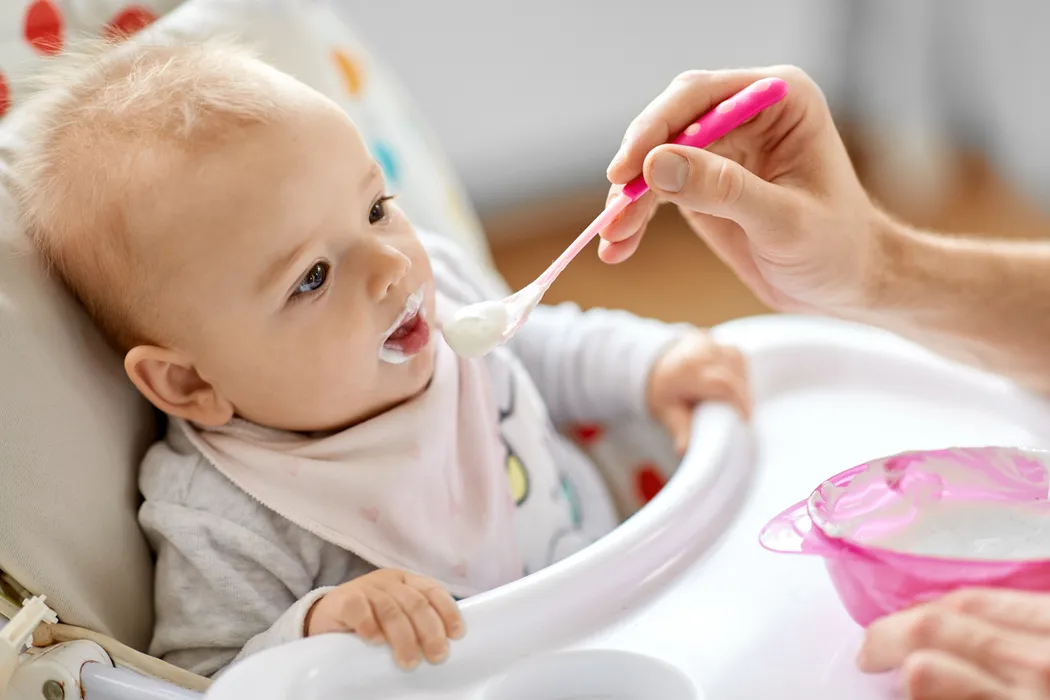
  • Start Small: Begin with about 1–2 tablespoons of solid food per meal and gradually increase the amount as your baby becomes more comfortable with eating.
  • Build Up Gradually: As your baby grows, slowly increase the variety, texture, and amount of foods offered rather than expecting them to eat large portions right away.
  • Explore New Textures: Around 7–9 months, gradually introduce soft mashed foods and age-appropriate finger foods to help your baby learn different textures.
  • Move Toward Family Meals: By around 10–12 months, babies can work toward three meals a day, with soft, appropriately prepared table foods.
  • Practice Cup Drinking: Offer small amounts of water in an open or straw cup from around 6 months to help your baby practice drinking skills.
  • Follow Baby’s Cues: Let your baby guide how much they eat. Watch for signs of hunger and fullness rather than focusing only on a specific portion size

The Master Feeding Chart for Baby (0-12 Months)

This convenient amount baby should eat chart serves as a quick reference for your child's first year of life.

AgePrimary Liquid Food (Breastmilk or Formula) Typical Amount Per Feed Feeding Frequency (Per 24 Hours) Solid Foods (Purees, Mashed, or Finger Foods) 
0–1 Month Breastmilk or Formula 1.5–3 ounces 8–12 times None 
1–2 Months Breastmilk or Formula 3–4 ounces 6–8 times None 
2–4 Months Breastmilk or Formula 4–6 ounces 5–7 times None 
4–6 Months Breastmilk or Formula 
 
5–8 ounces 5–6 times Optional: 1–2 tbsp of thin single-ingredient purees 
6–8 Months Breastmilk or Formula6–8 ounces 4–5 times 2–4 tbsp of purees/mashed foods (1–2 times/day) 
8–10 Months Breastmilk or Formula 6–8 ounces 3–4 times 1/4 to 1/2 cup of mashed/finger foods (2–3 times/day) 
10–12 Months  Breastmilk or Formula 6–8 ounces 3 times 1/2 cup of table foods (3 meals + optional snacks/day)


FAQS

How do I know if my baby is eating enough?

The best indicator that your baby is eating enough is their diaper output and steady weight gain. In the first few weeks, your baby should have at least 6 wet diapers and 3 to 4 dirty diapers daily. Your pediatrician will track your baby’s growth chart at every well-child checkup to ensure they are on a healthy upward curve.

Can I give my baby water before 6 months?

No. Infants under 6 months old do not need water. Breastmilk and formula are more than 80% water and provide all the hydration your baby needs. Giving water to a young infant can fill up their tiny stomach, preventing them from absorbing essential nutrients, and can even lead to dangerous electrolyte imbalances.

When can my baby start eating honey?

You must wait until your baby is at least 12 months old to introduce honey. Honey can contain spores of a bacterium called Clostridium botulinum, which can cause infant botulism—a rare but serious and potentially life-threatening illness in babies under one year old whose digestive systems are not yet mature enough to handle it.

What should I do if my baby refuses solid foods?

It is entirely normal for babies to reject solid foods initially. It can take up to 10 to 15 exposures to a new food before a baby accepts it. Never force your baby to eat. If they push the spoon away, turn their head, or spit the food out, simply stop and try again in a few days. Remember, before age one, solid foods are primarily for practice and sensory development.

How does formula feeding differ from breastfeeding amounts?

Formula is digested more slowly than breastmilk, so formula-fed babies typically eat less frequently than breastfed babies. While a breastfed baby might feed every 2 hours, a formula-fed baby of the same age may easily go 3 to 4 hours between bottles. Always follow your baby's hunger cues rather than a strict mathematical formula.

Apollo 247 Floating Action Button