logo
0

Baby's First Foods: How to Start Solids

Learn when to start solids, signs your baby is ready, the best first foods, feeding approaches, textures, and a simple baby food chart.

article image

Dr.Nallapu Siri

Watching your baby grow is a beautiful journey filled with exciting milestones. One of the most significant milestones is the transition from a milk-only diet to solid foods. As your little one approaches the half-year mark, you might find yourself feeling both excited and a bit overwhelmed. You may be wondering: what baby food can i start with?

Preparing your baby first food is a memorable event, but it also comes with many questions. Parents worldwide often wonder, when should we start feeding solids to a baby? or when to give solid food to a baby?

This comprehensive baby first food guide is designed to ease your mind. It provides medically backed advice, clear schedules, and practical tips to help you navigate this delicious new chapter of parenthood.

When is Your Baby Ready for Solids?

Before diving into what baby food can i start with?, it is crucial to determine if your child is developmentally ready. The World Health Organization (WHO) and the Centers for Disease Control and Prevention (CDC) recommend introducing solids at around 6 months of age. Prior to this, breast milk or formula provides all the necessary nutrition. If you are wondering, "when can we start semi solids for my baby?" or "when to start liquid food for baby?", look for these signs of developmental readiness:

  • Head Control: Your baby can hold their head up steadily and sit upright in a high chair.
  • Loss of Tongue-Thrust Reflex: They no longer automatically push food out of their mouth with their tongue.
  • Curiosity: They watch you eat, reach for your food, and open their mouth when food is offered.
  • Weight Gain: They have roughly doubled their birth weight.

 A Note on Liquids and Premature Babies

You may wonder when to start liquid food for babies or thin purées. Generally, thin, smooth purées are the step right after exclusive breastfeeding or formula.

However, if your baby was born early, your timeline will look a little different. Parents often ask: premature baby ko solid food kab dena chahiye (when should we give solid food to a premature baby?). For premature infants, readiness should be assessed based on their corrected age and developmental milestones rather than their chronological birth date. Always consult your pediatrician before starting.

What Baby Food Can I Start With? The Best First Foods

Once your baby is ready, the big question remains: what baby food can i start with?

Historically, parents were told that single-grain white rice cereal was the only acceptable 1st food for baby. Today, pediatric guidelines are much more flexible. When deciding which food to introduce first for baby, you want options that are nutrient-dense, easy to digest, and gentle on their developing stomach.

If you ask yourself, what first food should I give my baby?, here are some of the best, most nutrient-rich options:

1. Iron-Fortified Single-Grain Cereals

Iron is a critical nutrient for babies starting around 6 months, as their natural prenatal iron stores begin to deplete. An iron-fortified single-grain cereal (like oatmeal or barley) is an excellent first food to give baby. Mix it with breast milk or formula to create a familiar taste and a very thin, liquid-like consistency. This helps answer the question of what to start with baby food in a gentle, highly recognizable way.

2. Pureed Vegetables

Vegetables are fantastic options when deciding what should be first food for baby. Starting with savory vegetable purees helps prevent your baby from developing an immediate, exclusive preference for sweet flavors. Good starter vegetables include:

  • Sweet Potato: Baked, peeled, and puréed until smooth.
  • Carrots: Steamed and blended (rich in Vitamin A).
  • Peas: Steamed and strained to remove the outer skins.

3. Rich, Creamy Fruits

Knowing when to introduce fruits to baby is simple: you can introduce them right alongside vegetables! However, make sure they are thoroughly cooked (if hard, like apples and pears) and completely puréed. Excellent fruit options for a baby first solid food ideas list include:

  • Ripe Bananas: Simply mashed with a fork and thinned with a little breast milk.
  • Avocados: Naturally creamy, packed with healthy fats, and requiring no cooking.
  • Applesauce: Steamed apples pureed to a smooth consistency.

4. Puréed Meats and Legumes

If you are wondering what should be the first food for baby to support rapid brain growth, look to pureed meats or legumes. Puréed chicken, turkey, or well-cooked lentils provide essential zinc and highly bioavailable iron, making them an excellent choice for solid baby food.

Understanding the Baby Solid Food Chart

Using a structured starting solids chart can help take the guesswork out of meal planning. Below is a foundational pediatrics baby first food chart to help guide your daily routine.

Master Baby First Food Chart (Ages 6 to 8 Months)

Age RangeFood Type & ConsistencyDaily FrequencyApproximate Portion Size
6 MonthsVery thin, smooth purées, or finely mashed foods.1 meal per day 1 to 2 tablespoons 
7 Months Thicker purées, smooth mashes, and soft finger foods.1 to 2 meals per day 2 to 4 tablespoons per meal 
8 MonthsSoft, minced foods, mashed table foods, and small soft pieces. 2 to 3 meals per day 1/4 to 1/2 cup per meal

This solids chart for baby is a flexible guide. Every baby is unique, and their appetite will naturally vary from day to day.

If you are looking for a regionally specific guide, a baby solid food chart india will often feature traditional items like thoroughly cooked moong dal khichdi (diluted with water/breast milk), pureed ragi (finger millet) porridge, or mashed papaya. No matter where you live, the core principle remains: prioritize hygiene, soft textures, and nutrient density.

Setting a Baby Solid Food Schedule

When transitioning to solids, establishing a consistent baby solid food schedule can make meals predictable and enjoyable.

At 6 months, breast milk or formula is still your baby’s primary source of nutrition. Do not replace milk feeds with solids. Instead, offer solid food chart for baby meals about 30 to 60 minutes after a milk feed. This ensures they are not too hungry or fussy to practice swallowing, but still have enough room in their stomach to try something new.

Sample Daily Schedule (6 to 7 Months)

  • Early Morning: Breast milk or formula feed.
  • Mid-Morning (Breakfast): 1-2 tablespoons of iron-fortified oatmeal mixed with breast milk.
  • Noon: Breast milk or formula feed.
  • Late Afternoon: 1-2 tablespoons of pureed sweet potato or avocado.
  • Evening/Bedtime: Breast milk or formula feed.

Using this structured introducing food to baby chart strategy helps your little one gradually adapt to the digestive transition without experiencing sudden stomach upsets.

Safe Practices for Your Baby's First Foods

To ensure a smooth, safe, and positive experience when using your baby first solid food chart, keep these expert safety tips in mind:

  • The Four-Day Rule: When introducing a first food for babies, wait 3 to 4 days before introducing another new food. This allows you to easily identify the culprit if your baby experiences an allergic reaction or digestive trouble.
  • Watch for Allergies: Common allergens include eggs, peanuts, tree nuts, soy, wheat, fish, and dairy. Introduce these one at a time in very tiny, baby-safe amounts (like a tiny smear of smooth peanut butter thinned with water). Modern pediatric research suggests that early introduction of allergens can actually help prevent future food allergies.
  • Avoid Honey: Never give honey to a baby under 12 months old. It can contain spores of Clostridium botulinum, which cause infant botulism—a rare but serious gastrointestinal illness.
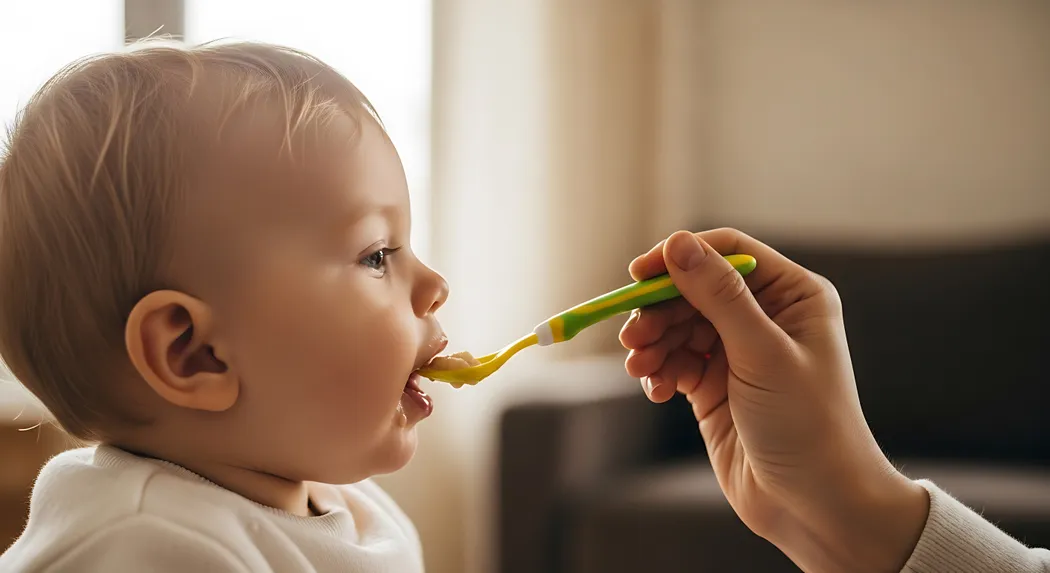
  • Skip Added Salt and Sugar: Your baby’s kidneys are still developing and cannot process added sodium, and added sugars can cause early tooth decay and unhealthy taste preferences.

FAQS

What is the first food for baby that pediatricians recommend most?

While there is no single "perfect" choice, pediatricians frequently recommend iron-fortified single-grain oatmeal or smooth purees of iron-rich meats and beans. These choices help replenish your baby's natural iron stores, which begin to decline around 6 months of age.

Can I give my baby water when starting solids?

Yes. Once your baby starts eating solids, you can offer a few sips of water (about 2 to 4 ounces per day) in an open cup or sippy cup during meal times. This helps them learn to drink from a cup and aids in digestion. However, water should never replace breast milk or formula.

Which food to start first for baby if they have a sensitive stomach?

If your baby is prone to gas or mild reflux, easily digestible, low-acid options like mashed avocado, pureed sweet potato, or thoroughly cooked and strained pears are excellent choices. Avoid gassy foods like broccoli, cauliflower, or beans in the very first weeks.

How do I know if my baby is full?

Your baby will tell you when they have had enough. Signs of fullness include turning their head away from the spoon, closing their mouth tightly, leaning back in their high chair, spitting out food, or starting to play with the spoon instead of eating.

What should I do if my baby gag when trying solids?

Gagging is a normal, reflexive safety mechanism that helps prevent choking. It is very common as babies learn to navigate textures. Do not panic; simply stay calm, keep your baby upright, and offer foods with a thinner consistency. However, familiarize yourself with the difference between gagging (noisy, coughing) and choking (silent, blue lips, inability to breathe), and always supervise meals.

Apollo 247 Floating Action Button