logo
0

Baby Food Guide: First Foods & Feeding Stages by Age

Complete parent guide to baby food — when to start, first foods, stage-wise progression, homemade recipes, and safety tips reviewed by a pediatrician.

article image

Dr.Kamran

Starting your baby on solid food is one of the most anticipated milestones of early parenthood, and also one of the most confusing. Knowing when to introduce baby food, what to offer first, and how textures should change over the months can feel overwhelming. This guide breaks it all down by age, texture, and safety so you can feed your baby with confidence.

When to Start Baby Food?

Most guidance widely followed in India recommends starting solid foods at around 6 months. Breast milk or formula remains the primary source of nutrition throughout infancy, and solids are introduced gradually alongside it. Starting earlier than 4 months is not recommended, as a young baby's gut and swallowing skills are not ready.

Before you begin, check with your pediatrician, especially if your baby was born prematurely or has any health concerns.

Signs Baby Is Ready for Solids

Knowing the signs baby is ready for solids takes the guesswork out of timing. Most babies show several of these cues around 6 months:

  • Holds their head steady and sits with minimal support
  • Shows interest in food when others are eating
  • Reaches toward food or opens their mouth when a spoon approaches
  • Has lost the tongue-thrust reflex and no longer automatically pushes food back out

If your baby is 4 to 5 months old and showing some signs, wait and recheck with your doctor. Starting too early carries a small risk of choking, digestive discomfort, and possible food sensitivity issues.

First Foods to Introduce

The best first foods for baby are simple, single-ingredient, and easy to digest. Introduce one new food at a time and wait 3 to 5 days before trying the next. This method makes it straightforward to spot any reaction.

Good First Foods to Try

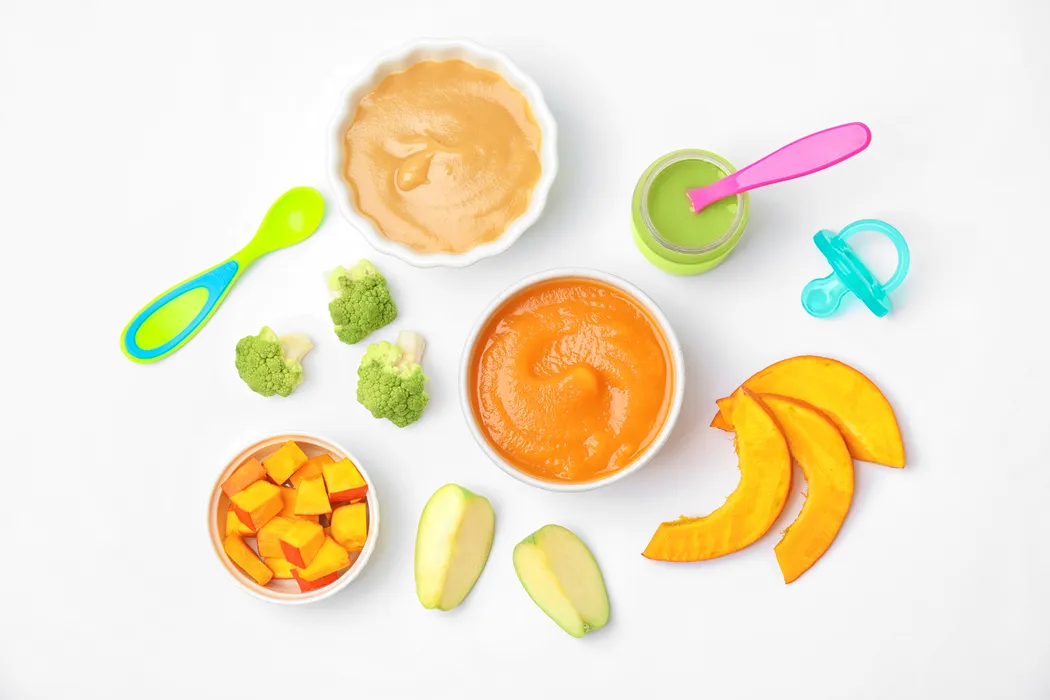
Single-ingredient purees and soft cereals work well at this stage. A basic baby food chart by age would put all of the following firmly in the 6-month column:

  • Rice cereal or ragi (finger millet) porridge, thinned with breast milk or formula
  • Steamed and pureed sweet potato or pumpkin
  • Mashed ripe banana or avocado
  • Pureed apple, pear, or mango
  • Pureed carrot or green peas
  • Plain pureed moong dal (yellow lentils)

Fruits and vegetables are gentle on a young digestive system. Ragi is a popular choice across India because it is iron-rich, easy to digest, and simple to prepare at home. Avoid multi-ingredient blends for the first few weeks. If your baby reacts to something, single-ingredient foods make it easy to identify the cause.

Baby Food Stages: Stage 1 to Stage 3

Baby food progresses through three stages based on texture, not just age. The ranges below are general guides. Your baby's developmental readiness matters more than the calendar.

StageAge RangeTextureExamplesPortion Guide
Stage 16 to 8 monthsSmooth, thin pureesSweet potato, banana, carrot, ragi porridge1 to 2 teaspoons, building to 2 to 3 tablespoons per meal
Stage 28 to 10 monthsThicker mashes, small soft piecesMashed dal and rice, soft fruit mash, vegetable blends3 to 4 tablespoons per meal, 2 to 3 meals daily
Stage 310 to 12 monthsSoft chopped pieces, lumpier texturesSoft-cooked pasta, small chapati pieces, khichdi, soft egg4 to 6 tablespoons per meal, plus finger foods

This baby food chart by age is a starting point. Watch your baby's cues. Some take longer to accept lumps, and that is perfectly normal.

How Texture Should Progress

Moving through textures is not just about variety. It builds the oral motor skills babies need for chewing and, later, speech. Once your baby handles Stage 1 purees confidently, with good swallowing and minimal gagging, start gradually thickening the consistency. Never rush a stage to match what another baby is doing.

Homemade Baby Food: Preparation and Storage

Preparing food at home gives you full control over ingredients and freshness. There is a wide range of homemade baby food recipes you can make in small batches, from simple ragi porridge to steamed vegetable purees. Here is how to do it safely:

Preparation Tips

  • Wash hands thoroughly before handling food, and clean all utensils and surfaces with hot soapy water.
  • Peel and steam vegetables and fruits until very soft. Steaming preserves more nutrients than boiling.
  • Blend or mash until completely smooth for Stage 1. Use boiled and cooled water, breast milk, or formula to adjust consistency.
  • Do not add salt, sugar, honey, or strong spices to baby food for children under 12 months.
  • Check the temperature yourself before feeding. Food should feel lukewarm on your wrist, not hot.

Storage and Freezing

Batch cooking homemade baby food recipes saves considerable time during busy weeks.

  • Refrigerator: Store in clean, airtight containers for up to 48 hours.
  • Freezer: Freeze in small portions using an ice cube tray, transfer to a labelled freezer bag, and use within one month for best quality.
  • Reheating: Thaw overnight in the refrigerator or in a bowl of warm water. Heat gently and stir thoroughly to avoid hot spots. Never reheat leftovers from a partially eaten portion, as saliva on the spoon introduces bacteria.

Foods to Avoid and Contraindications

Some foods are unsafe for babies under 12 months. Others need careful handling or should be introduced with extra caution. This section covers both.

Foods to Avoid Completely Under 12 Months

  • Honey, in any form including cooked or as an ingredient. It can carry spores that cause infant botulism, a serious and potentially life-threatening illness.
  • Cow's milk as a main drink. Small amounts in cooking are generally fine, but it should not replace breast milk or formula before 12 months.
  • Whole nuts, whole grapes, raw carrots, and large chunks of any firm food. These are choking hazards.
  • Added salt. Infant kidneys are not equipped to process extra sodium.
  • Added sugar. Early, repeated exposure to sweetened foods can shape taste preferences in ways that affect long-term eating habits.

Allergen Introduction

Common allergens such as peanuts, tree nuts, eggs, fish, wheat, and dairy are not automatically off-limits, but they require a careful approach. Introduce each one separately, in a small amount, and watch for 2 to 3 days before adding anything new. Talk to your paediatrician before introducing allergens if there is a family history of food allergy or if your baby has eczema.

When to Consult a Doctor?

Feeding problems are common and usually minor, but some situations call for medical attention.

Seek prompt care if your baby shows signs of an allergic reaction after a new food: hives, swelling around the mouth or eyes, vomiting shortly after eating, or difficulty breathing. These require immediate assessment.

Contact your pediatrician if your baby consistently refuses solid food well past 7 months, is not gaining weight as expected, gags or vomits with most textures, or shows signs of pain or discomfort around mealtimes. These may point to a feeding difficulty or underlying issue that is worth investigating early.

Report adverse events to your healthcare provider or the relevant regulatory authority.

If you are new to caring for an infant, you may also find it helpful to review newborn care basics for new parents for guidance on the early weeks before solids begin.

Conclusion

Introducing solid foods is an important milestone that helps your baby gradually explore new flavours, textures, and nutrients. Starting around 6 months when your baby shows signs of readiness, offering a variety of nutritious foods, and progressing from smooth purees to thicker and lumpier textures can support healthy eating and feeding skills. Breast milk or formula should continue to provide the main source of nutrition during the first year.

There is no single perfect baby food chart for every child. Follow your baby's hunger and fullness cues, introduce new foods and common allergens carefully, and avoid choking hazards, honey, added salt, and added sugar. If your baby has persistent feeding difficulties, poor weight gain, repeated vomiting, or signs of an allergic reaction, seek advice from a paediatrician. With patience, variety, and appropriate safety measures, introducing baby food can become a positive and enjoyable part of your baby's development.

FAQS

How much baby food should a 6-month-old eat?

Start with 1 to 2 teaspoons once a day and gradually increase to 2 to 3 tablespoons per meal as your baby shows interest. Breast milk or formula remains the main source of nutrition at this age, so do not worry if your baby only takes a little at first.
Can I give store-bought baby food instead of homemade?

Commercially prepared baby food is safe and convenient for many families. Check the label to ensure there is no added salt, sugar, or preservatives, and look for single-ingredient or clearly labelled options appropriate for your baby's stage.

How do I introduce allergens like peanuts and eggs?

Introduce allergens one at a time, starting with a small amount mixed into a food your baby already tolerates. Watch for any reaction over 2 to 3 days before trying another new allergen. Ask your paediatrician for specific guidance if your baby has eczema or a family history of food allergy.

What is baby-led weaning compared to purees?

Baby-led weaning skips spoon-fed purees and lets babies feed themselves soft finger foods from around 6 months, building independence and self-regulation. Purees are more controlled and may suit babies who are slower to develop hand-to-mouth coordination. Many families use a combination of both approaches.

Can babies have water with baby food?

Small sips of cooled boiled water can be offered alongside solid meals from around 6 months, but large amounts are not needed and can fill up a small stomach. Breast milk or formula continues to provide adequate hydration through the first year.

Apollo 247 Floating Action Button