logo
0

Baby Smoothie Recipes: Healthy & Easy Blends for Babies

Discover safe baby smoothie recipes and learn when babies can have smoothies, which ingredients to use, how to introduce allergens, and how to serve and store smoothies safely.

article image

Dr.Mayank

Introducing your baby to the world of solid foods is an exciting milestone. As your little one transitions from a liquid-only diet of breast milk or formula to complementary baby food, you may look for creative, nutrient-dense and delicious ways to expand their palate. If you are looking for a nutritious baby smoothie recipe to support this developmental stage, you have come to the right place.

Smoothies can combine fruits, vegetables, yoghurt, oats and other nutritious ingredients in one blend. However, when preparing foods for infants, safety, age-appropriateness and nutritional balance are important. Smoothies should complement, rather than replace, breast milk or infant formula during the first year.

This comprehensive guide covers when smoothies can be introduced, essential safety rules, five easy recipes, and practical advice on how to serve and store them.

When Can You Introduce a Baby Smoothie Recipe?

Infants generally begin complementary foods at around 6 months when they show appropriate developmental signs of readiness. These include being able to hold their head up steadily, sit with support, show an interest in food, bring objects to their mouth and swallow food rather than automatically pushing it out with their tongue.

Once your baby has successfully started eating basic single-ingredient purées, such as individual fruits or vegetables, you can begin introducing blended combinations as part of their complementary diet.

It is important to remember that smoothies should not replace breast milk or infant formula during the first year. Instead, a baby smoothie recipe can be offered as a complementary food when appropriate for your baby's developmental stage.

For younger babies, smoothies are best treated as food rather than a replacement for their usual milk feeds. As your baby develops, you can gradually introduce a wider variety of textures and foods.

Why Make a Smoothie Recipe for Baby Development?

As your child grows, their nutritional requirements change rapidly. A wholesome smoothie recipe for baby meals can combine several nutritious ingredients in one serving.

  • Loaded with Micronutrients: Smoothies allow you to combine fruits, vegetables and other nutrient-rich ingredients that provide a range of vitamins and minerals.
  • Healthy Fats: Ingredients such as avocado, nut butters and full-fat unsweetened yoghurt can provide dietary fats that are important for growth and development.
  • Supports Digestive Health: Fruits, vegetables and oats provide dietary fibre, which supports normal digestion.
  • Variety: Combining familiar foods with new flavours can help your baby experience a wider range of tastes and textures.

A smoothie should be part of a varied diet rather than a replacement for offering foods in other appropriate forms. As your baby develops eating skills, exposure to different textures remains important.

Safety Guidelines for Preparing Baby Smoothies

Before preparing a baby smoothie recipe, it is important to consider your baby's age, developmental stage and the ingredients you plan to use.

1. Absolutely No Honey Under 12 Months

Never add honey to any baby smoothie recipe if your child is under 12 months old. Honey can contain spores of Clostridium botulinum, which can cause infant botulism, a rare but serious illness.

2. Avoid Added Sugars and Sweeteners

Do not add refined sugar, syrups or artificial sweeteners to your baby's smoothie. Ripe fruits such as bananas, mangoes and pears can provide natural sweetness.

It is also important not to rely heavily on fruit-based smoothies. Blending makes it easy to consume a larger amount of fruit quickly, so keep portions appropriate and continue offering whole or appropriately prepared fruits as your baby develops.

3. Mind the Liquid Base

For babies under 12 months, breast milk or infant formula should remain an important source of nutrition. Small amounts of water can be offered from a cup with meals once complementary foods have started.

Cow's milk should not replace breast milk or infant formula as your baby's main drink before 12 months. However, small amounts of cow's milk can be used as an ingredient in foods from around 6 months.

4. Introduce Potential Allergens Individually

If you are adding common allergens to a smoothie, such as peanut butter, almond butter, soya or dairy yoghurt, introduce each ingredient in an appropriate form and in a small amount.

Introducing several new allergens at the same time can make it difficult to identify which ingredient caused a reaction. If your baby has severe eczema, an existing food allergy or another condition that may increase their allergy risk, speak with your healthcare professional before introducing certain allergens.

5. Serve in a Cup, Not a Bottle

Serve smoothies in an open cup or suitable straw cup rather than a baby bottle. Using a cup helps babies develop drinking skills and avoids prolonged exposure of the teeth to sweet drinks.

5 Nutritious Baby Smoothie Recipe Ideas

When crafting a healthy baby smoothie recipe, aim for a balanced combination of nutritious ingredients and an appropriate portion size. The following recipes can be adapted according to your baby's age, developmental stage and previously introduced foods.

1. The Creamy Green Starter

This is a gentle introduction to leafy greens. The sweetness of the banana complements the mild taste of spinach.

Ingredients:

  • 1/2 ripe banana, peeled
  • 1/2 cup fresh baby spinach leaves, thoroughly washed
  • 1/4 cup breast milk, infant formula or water
  • 1 tablespoon unsweetened plain whole-milk Greek yoghurt, optional if dairy has already been introduced

Nutritional Benefit: Provides potassium, folate and other vitamins and minerals, while yoghurt can contribute protein and calcium.

Instructions: Place all ingredients into a blender. Blend until completely smooth, ensuring no large pieces of spinach remain. Check the consistency before serving.

2. Berry Avocado Boost

Avocado provides healthy unsaturated fats, while blueberries contribute fibre and vitamin C.

Ingredients:

  • 1/4 ripe avocado
  • 1/4 cup fresh or thawed blueberries
  • 1/4 cup plain water
  • 1 tablespoon rolled oats, ground into a fine powder before blending

Nutritional Benefit: Provides healthy fats, dietary fibre and vitamin C.

Instructions: Blend the oats first to form a fine powder. Add the avocado, blueberries and liquid, then blend until creamy and uniform in texture.

3. Tropical Orange Sunshine

This vibrant smoothie combines mango and peach for a naturally sweet flavour.

Ingredients:

  • 1/4 cup ripe mango chunks, fresh or thawed
  • 1/4 cup ripe peach slices, peeled
  • 1/4 cup breast milk or infant formula
  • 1 tablespoon unsweetened plain kefir, optional if dairy has already been introduced

Nutritional Benefit: Provides beta-carotene, vitamin C and other nutrients from fruit. Kefir can also contribute protein and other nutrients when included.

Instructions: Combine all ingredients in a blender and process until smooth. If the mixture is too thick, add a small amount of water or an appropriate milk feed to achieve a suitable consistency.

4. Oatmeal & Banana Comfort Blend

Perfect for a simple breakfast, this blend combines banana and oats into a smooth, filling option.

Ingredients:

  • 1/2 ripe banana
  • 2 tablespoons rolled oats, cooked in water and cooled
  • 1/4 cup warm water or warm breast milk
  • A tiny pinch of ground cinnamon, optional if already introduced

Nutritional Benefit: Provides carbohydrates and dietary fibre, with oats contributing additional nutrients.

Instructions: Blend the oats, banana, liquid and cinnamon until completely smooth. Check carefully for any lumps before serving.

5. Purple Powerhouse

This recipe introduces beetroot alongside sweet pear to create a naturally colourful blend.

Ingredients:

  • 1/4 cup steamed and cooled beetroot, peeled
  • 1/2 ripe pear, peeled and cored
  • 1/4 cup water
  • 1 teaspoon chia seeds, soaked in water and blended thoroughly

Nutritional Benefit: Provides dietary fibre and a range of vitamins and minerals. Chia seeds also provide healthy fats, including omega-3 fatty acids.

Instructions: Steam the beetroot until very soft and allow it to cool. Add the beetroot, pear, liquid and soaked chia seeds to the blender. Blend until completely smooth.

How to Store and Serve Your Baby Smoothie Recipe

Once you have prepared a fresh baby smoothie recipe, proper storage and handling are important for food safety.
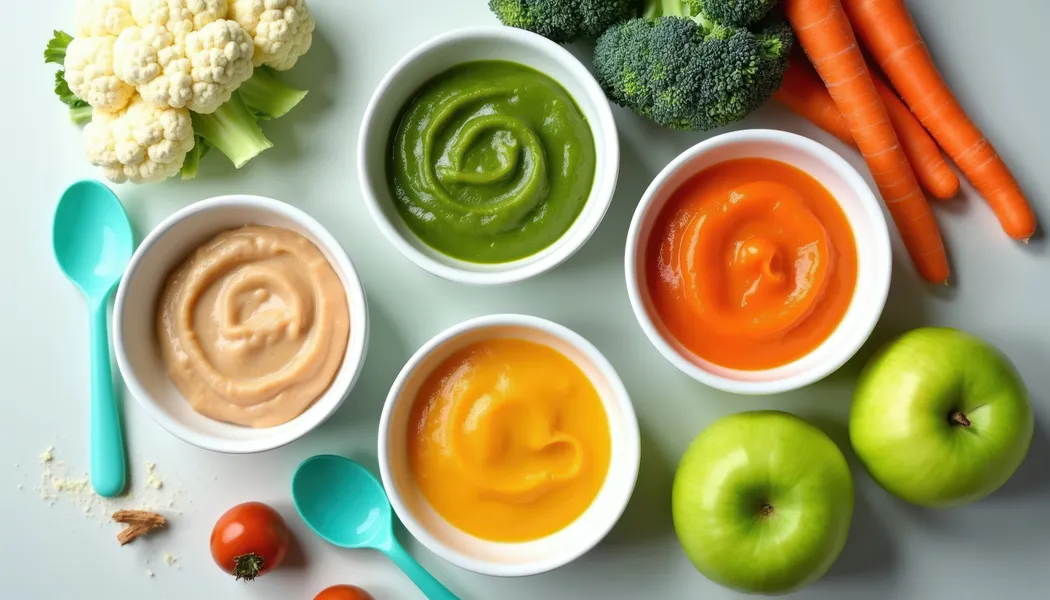
  • Refrigeration: Prepare smoothies fresh whenever possible. If a smoothie is not being served immediately, place it in a clean, covered container and refrigerate it promptly. Do not keep leftovers that have already been in your baby's mouth for another meal.
  • Freezing: If you have prepared more than your baby will eat, you can freeze suitable portions in clean, food-safe containers or moulds. Thaw frozen portions safely in the refrigerator and use them promptly.
  • Serving Temperature: Serve the smoothie cool or at room temperature according to your baby's preference. Avoid serving it extremely cold if it causes discomfort.

FAQs

Can babies have spinach in their smoothies?

Spinach can be included in an age-appropriate diet. Wash fresh spinach thoroughly and blend it well. However, smoothies should not replace offering vegetables in other suitable forms as your baby progresses through different textures.

Can I use cow's milk in a smoothie recipe for baby meals?

Cow's milk should not be used as the main drink before 12 months, but small amounts can be used as an ingredient in foods from around 6 months. Breast milk or infant formula should remain the main milk source during the first year.

Is it safe to add protein powder to a baby's smoothie?

No. Protein powders, collagen supplements and other dietary supplements should not be added to a baby's diet unless specifically recommended by a healthcare professional. Babies should get their nutrients from breast milk or infant formula and a varied range of complementary foods.

How do I introduce potential allergens in smoothies?

Introduce potentially allergenic foods such as peanut, tree nuts, egg, dairy, soya, wheat, fish and sesame when your baby is ready for complementary foods. Introduce each allergen in an appropriate form and preferably one at a time so that you can identify a possible reaction. Once tolerated, continue offering it regularly as part of a varied diet.

Why shouldn't I put smoothies in a baby bottle?

A cup is preferable for serving a smoothie. Introducing an open or free-flow cup from around 6 months helps babies learn to sip, while prolonged bottle use can contribute to dental problems and may interfere with the transition towards independent drinking.

Apollo 247 Floating Action Button