logo
0

Baby Yogurt: Guide to Introducing Dairy to Infants

Learn when babies can eat yoghurt, how to introduce dairy safely, choose suitable yoghurt, and recognise signs of allergy or intolerance.

article image

Dr.Kamran

Figuring out when and how to introduce baby yoghurt is one of those questions that trips up almost every new parent. Dairy is a useful early food, but it is also among the more common allergens in infancy, and there are real differences between what is safe at 6 months and what should wait until 12 months. This guide walks through everything you need to know, from choosing the right product to spotting a reaction early.

When Can Babies Start Eating yoghurt?

Most paediatric guidance recommends starting complementary foods at around 6 months, when your baby shows signs of developmental readiness, such as sitting with support and showing interest in food. Yoghurt for infants can be introduced at this point, after your baby has already tried a few simpler foods such as pureed vegetables or rice cereal.

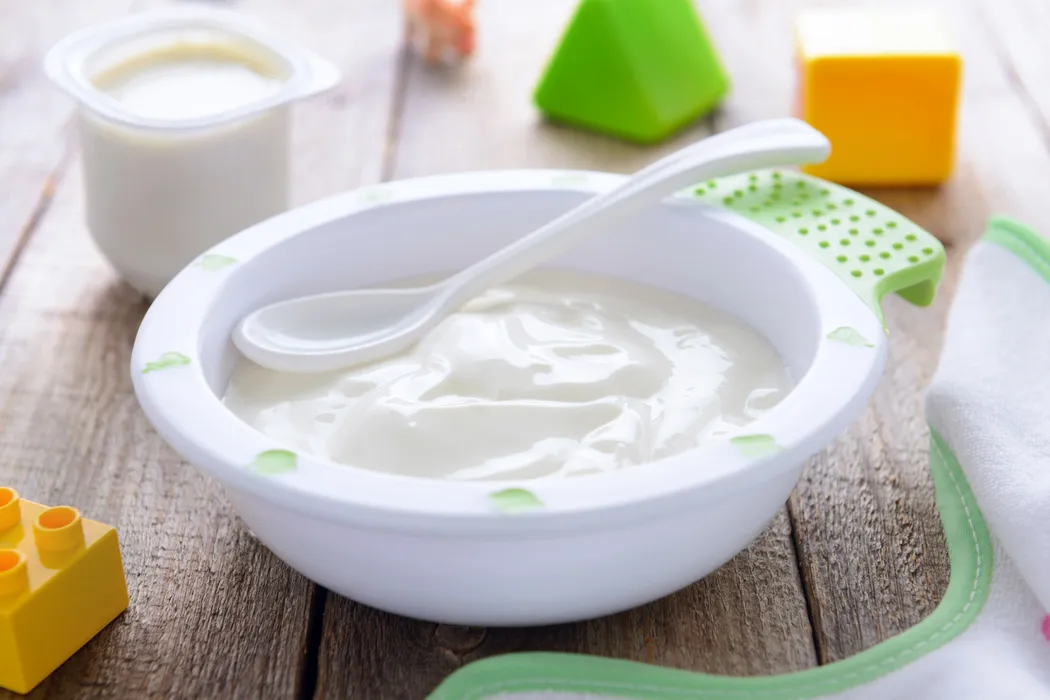
Plain, full-fat yoghurt can generally be introduced from around 6 months as part of complementary feeding. Whole cow's milk as a main drink is delayed until 12 months, but yoghurt and cheese can be introduced earlier as part of complementary feeding. Fermentation changes the structure and digestion of milk proteins, but this does not mean that dairy proteins are necessarily easier for every baby to tolerate.

If you are unsure whether your baby is ready, speak with your paediatrician before beginning.

Choosing the Right Yoghurt for Your Baby

Not every yoghurt on the shelf suits a baby. Look for these qualities:

  • Plain and unsweetened, with no fruit syrups, added sugar, or artificial sweeteners.
  • Full-fat, because infants need dietary fat for brain and nerve development.
  • Pasteurised to reduce the risk of harmful bacteria.
  • A short ingredient list, ideally just milk and live cultures.

Avoid flavoured varieties, even those sold as "baby" or "toddler" products. They often contain far more sugar than a young baby needs. Never offer honey or foods containing honey before 12 months because honey can cause infant botulism.

Plain, full-fat Greek yoghurt is also suitable as long as it meets the criteria above. Its thicker consistency may be suitable for babies learning to manage different textures.

How to Introduce Yoghurt and Other Dairy Safely


Start with a small amount and watch for any reaction before gradually increasing the amount. Some parents choose to introduce one new food at a time so they can more easily identify a possible reaction.

A rough portion guide as your baby grows:
 

Age    Approximate serving
6 to 8 months1 to 2 teaspoons, building gradually to 2 to 3 tablespoons
8 to 10 months3 to 4 tablespoons
10 to 12 monthsUp to half a small bowl

Yoghurt can be served plain, stirred through pureed fruit, or mixed into mashed vegetables. Hold off on adding salt, sugar, or spices at this stage.

Signs of Dairy Allergy or Intolerance in Infants

Some immediate cow's milk allergy symptoms can appear within minutes to a few hours after feeding, while other reactions can have a delayed onset. Watch for:

  • A rash around the mouth, face, or body.
  • Vomiting or excessive spitting up shortly after eating.
  • Loose stools, diarrhoea, or noticeable bloating.
  • Prolonged crying or back-arching that suggests stomach pain.
  • Blood or mucus in the stool, which needs prompt medical attention.

Swelling of the lips or face, wheezing, or difficulty breathing are more serious signs that need emergency care immediately.

Cow's milk protein allergy (CMPA) and lactose intolerance are different conditions. Lactose intolerance results from difficulty digesting lactose and mainly causes digestive symptoms, while CMPA involves an immune response to milk proteins and can cause allergic reactions.

Report adverse events to your healthcare provider or to the Indian Pharmacopoeia Commission (IPC) Pharmacovigilance Programme of India (PvPI) at 1800-180-3024.

Contraindications and When to Avoid Dairy

Some babies should not have dairy without specialist guidance:

  • A confirmed diagnosis of CMPA or significant lactose intolerance.
  • A strong family history of dairy allergy, especially a sibling with confirmed CMPA.
  • Babies currently being investigated for digestive or immune conditions.

If your baby reacted to dairy proteins in your breast milk, discuss this with a paediatrician before offering baby yoghurt directly. Do not use yoghurt as a substitute for breast milk or formula; both remain the primary nutrition source through 12 months.

Other Dairy Products to Introduce After Yoghurt

Yoghurt has a smooth texture, and fermentation changes the structure of milk proteins. Once your baby has tolerated it without any reaction, you can consider:

  • Soft paneer: mashed or prepared in an age-appropriate texture, can be introduced once your baby is developmentally ready for complementary foods and can manage the texture safely.
  • Grated mild cheese: melted into porridge or vegetables.
  • Homemade curd (dahi): made from full-fat pasteurised milk, which many Indian families introduce alongside or instead of commercial yoghurt.

Homemade curd can provide similar key nutrients to plain yoghurt when made from full-fat milk, although nutrient content can vary.

Whole cow's milk as a main drink should wait until 12 months. Small amounts of cow's milk used in cooking before 12 months can generally be included.

Conclusion

Choosing the right yoghurt can make introducing dairy easier and safer for your baby. Plain, full-fat, pasteurised yoghurt can be introduced from around 6 months, while breast milk or infant formula remains the primary source of nutrition. Introduce dairy gradually, watch for signs of an allergic reaction, and consult your paediatrician if your baby has a known allergy, digestive condition, or feeding concern.

FAQS

Can I give my 6-month-old baby yoghurt daily?

Yes, once your baby has tolerated a small amount without any reaction, plain full-fat yoghurt can be part of the daily diet. Keep portions age-appropriate and ensure breast milk or formula remains the primary nutrition source.

Is Greek yoghurt good for babies?

Plain, unsweetened, full-fat Greek yoghurt is a good choice from 6 months. Its thicker texture and slightly higher protein content can be suitable; just check the label for added sugars or flavours before serving.

Can yoghurt replace milk feeds for infants?

No. Breast milk or infant formula provides a complete nutritional profile that yoghurt cannot replicate. Yoghurt is a complement to milk feeds, not a replacement, at this age.
What if my baby refuses yoghurt?

Try mixing a small amount into a food your baby already accepts, such as pureed apple or mashed banana. If refusal continues, wait a week or two and try again; taste preferences at this age shift frequently.

Is homemade curd better than store-bought yoghurt for babies?

Both can be suitable when they are plain, full-fat, and made from pasteurised milk. Homemade curd gives you control over the ingredients, while commercial yoghurt may offer more consistent manufacturing and quality controls.

Apollo 247 Floating Action Button