logo
0

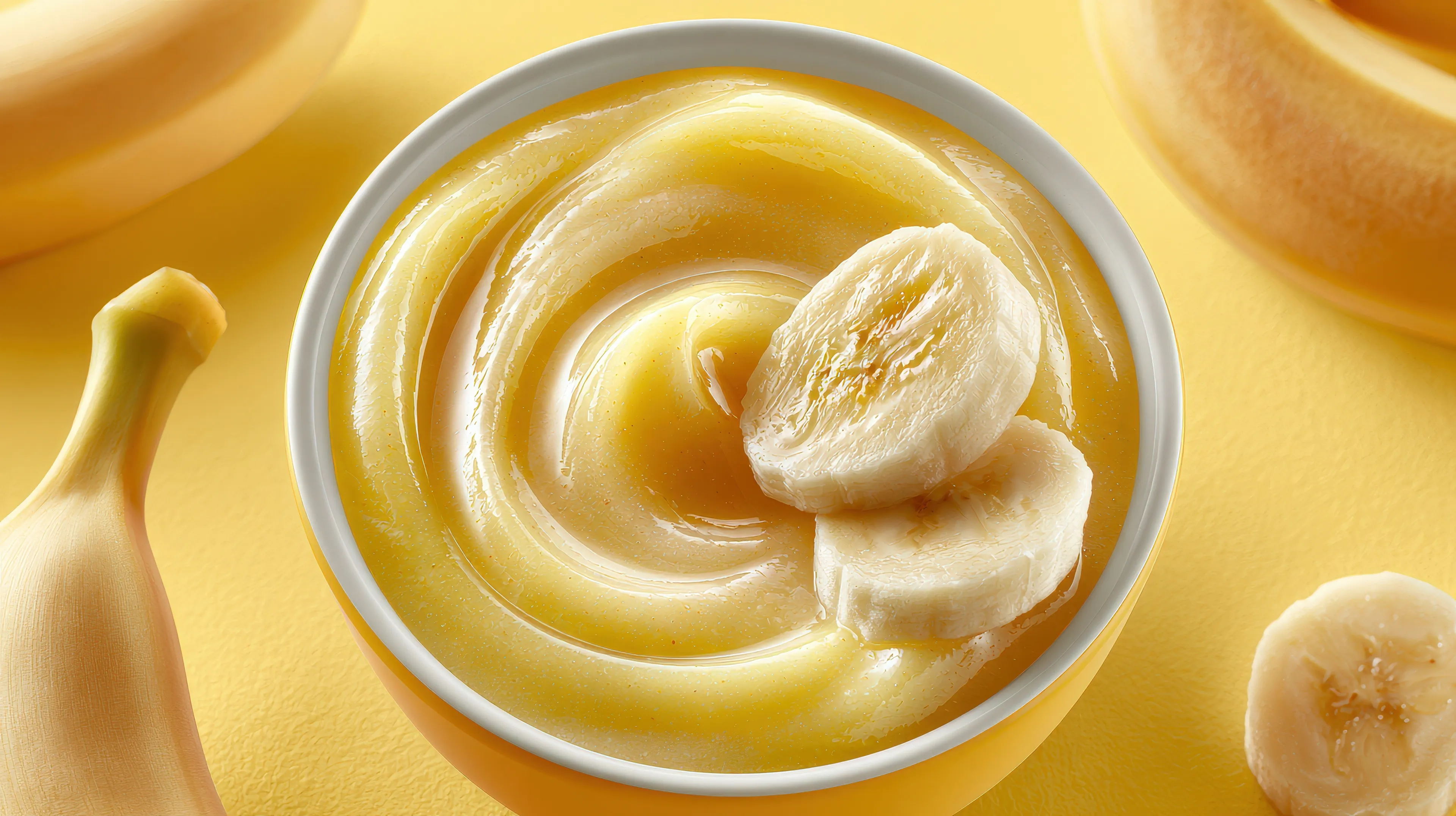
Banana Purée and Mash for Babies

Learn how to safely prepare mashed banana baby food and banana purée at home. Discover age-appropriate textures, nutritious combinations, feeding tips, and storage guidance.

article image

Dr. Vasantha Sree

Introducing solid foods to your infant is a milestone filled with excitement and wonderful memories. As you explore options for your baby's very first solid baby food, mashed banana baby food consistently stands out as a convenient choice. It is naturally sweet, soft, and easy to prepare. Whether you want to prepare a smooth banana puree for baby or a slightly textured banana mash baby food, bananas are a convenient no-cook option for families.

Bananas provide carbohydrates, potassium, vitamin B6, vitamin C, and dietary fibre. When introduced as part of a varied complementary diet, they can be a useful fruit for babies.
 

Why Bananas Are an Excellent First Solid Food

Why is the humble banana such a popular choice for weaning? To start, banana baby food provides an excellent source of energy through carbohydrates, alongside nutrients such as potassium, vitamin B6, vitamin C, and dietary fibre. Banana puree baby food is therefore a convenient way to introduce these nutrients as part of a varied diet.

If you are choosing a baby first food banana puree, you are opting for a mild, creamy food that can be prepared quickly. Offering a baby first food banana mash can also provide a thicker texture as your baby's feeding skills develop.

A baby first solid food mashed banana is particularly convenient because it requires no cooking. However, bananas should not be relied upon as a baby's only complementary food. As solids are introduced, offer a range of foods that provide iron, protein, healthy fats, vegetables, fruits, and other essential nutrients.
 

Texture Guide by Age: Purées, Mashes, and More

Infants develop their chewing, swallowing, and self-feeding skills at different rates, meaning the texture of their food should evolve with them. Choosing an appropriate mashed banana baby food texture is important for safe feeding.

4 to 5 Months Old

The World Health Organization (WHO) recommends exclusive breastfeeding for the first six months of life. Some babies may be developmentally ready for complementary foods between 4 and 6 months, but solids should not be introduced before 4 months. If your paediatrician advises starting complementary foods before 6 months, a smooth banana puree for 4 month baby or banana puree for 5 month baby may be considered according to your baby's readiness.

6 Months Old

Most babies are ready to begin complementary foods at around six months when they show appropriate developmental signs. At this stage, a simple 6 month baby banana puree or banana puree for 6 month baby can be prepared by mashing a ripe banana thoroughly until smooth.

A serving of mashed banana baby food 6 months should have a texture that your baby can manage comfortably. Breast milk or infant formula remains an important source of nutrition during early complementary feeding.

7 Months and Beyond

As your baby's feeding skills progress, you can gradually move from a completely smooth banana puree for 7 month baby towards a thicker, fork-mashed consistency. Later, your baby can progress to appropriately prepared soft banana pieces and other finger foods as their self-feeding skills develop.

For babies who are just starting solids, a banana puree baby smooth texture can be prepared by blending thoroughly. If you prefer mashing over blending, use a fork to create a soft banana mash baby food with no large or hard pieces.
The aim is to gradually introduce different textures rather than keeping your baby on smooth purées for longer than necessary.
 

How to Make Homemade Banana Purée and Mash

Making fresh food at home is simple and cost-effective. Learning how to make banana puree for baby or how to prepare banana puree for baby takes only a few minutes.

Selecting the Perfect Banana

To get started, selecting the right banana is key. Always choose a fully ripe banana for baby food. A ripe banana is softer and naturally sweeter, making it easy to mash.
A ripe banana for baby food requires no added sugar, artificial thickeners, or preservatives. You can simply mash it with a clean fork or blend it into a smooth purée.

Step-by-Step Homemade Banana Purée Baby Recipe

If you are looking for a reliable banana puree for baby recipe, banana puree recipe for baby, or a general banana baby recipe, follow these simple steps.

Ingredients

  • 1 fully ripe banana with yellow skin and a few brown spots
  • 1–2 tablespoons of breast milk, prepared infant formula, or water, if needed to adjust consistency

Instructions

  1. Peel the Fruit: Peel a fresh, ripe banana and remove any fibrous strings.
  2. Blend: For a smooth banana puree baby food consistency, place the banana slices into a clean blender or food processor and blend until smooth.
  3. Mash: For a textured alternative, place the banana on a clean plate and press it with a fork until there are no large lumps.
  4. Adjust Consistency: If the mixture is too thick, thin it with a small amount of breast milk, prepared infant formula, or water.

Creating homemade banana baby puree ensures you know exactly what goes into your child's food. As your baby progresses through complementary feeding, gradually adjust the texture to match their developing skills.
 

Creative Banana Purée Combinations and Mix-Ins

Once your baby has successfully tried plain banana, you might wonder: what can I mix with banana for baby food? There are several suitable combinations that can add variety and additional nutrients.

1. Breast Milk or Prepared Infant Formula

To make a creamy, familiar dish, you can mix banana with a small amount of breast milk or prepared infant formula to adjust the consistency. Cow's milk should not be used as a main drink before 12 months, although small amounts of pasteurised whole cow's milk can be used in food preparation from around six months.

2. Nutritious Ghee

In many traditional diets, ghee is combined with banana. A small amount of ghee can add energy and fat to a baby's meal. Use only a small quantity and ensure that the overall diet contains a variety of healthy fat sources.

3. Peanut Butter for Allergen Introduction

Peanut is a common food allergen, and current guidance supports introducing peanut-containing foods when developmentally appropriate rather than unnecessarily delaying them. For a baby who is ready for complementary foods, smooth peanut butter can be thinned thoroughly and mixed into banana purée.

Never give a baby a spoonful or thick blob of peanut butter on its own, as its sticky texture can pose a choking risk.

If your baby has severe eczema, an existing food allergy, or another risk factor for food allergy, speak with your healthcare professional about the appropriate way to introduce peanut.

4. Banana Powder and Traditional Varieties

For convenience, banana powder can be used in some baby-food preparations. When choosing a commercial product, check the ingredient list and choose an unsweetened product without unnecessary additives.
You can also use traditional varieties such as Nendran banana. If you are wondering, is Nendran banana good for babies? Yes, it can be offered when appropriately cooked and prepared. Steamed Nendran banana can be mashed to create a soft complementary food.
 

Helpful Tips for Feeding and Storage

Here are some useful tips to help you serve banana safely, maintain good hygiene, and store baby food appropriately: 

  • Serve Fresh: Bananas brown quickly when exposed to air. Slight browning does not necessarily mean the banana is unsafe, but freshly prepared banana purée is preferable.
  • Encourage Self-Feeding: As your baby's motor skills develop, you can offer appropriately prepared soft banana pieces or load a soft spoon with mashed banana for your baby to hold.
  • Maintain Hygiene: Always wash your hands and use clean utensils and surfaces when preparing baby food.
  • Observe Closely: Babies should always be supervised while eating and seated upright in a suitable feeding seat.
  • Discard Leftovers: If your baby has eaten directly from a bowl or spoon, discard any remaining portion rather than storing it for another meal.
     

FAQS

Can babies eat mashed banana baby food every day?

Babies can eat bananas regularly as part of a balanced diet. However, variety is important in infant nutrition. Rotate bananas with other fruits, vegetables, grains, pulses, and iron-rich foods so your baby receives a broad range of nutrients.

Do bananas cause constipation in infants?

Bananas do not automatically cause constipation. Fully ripe bananas are soft and contain soluble fibre, while individual babies may respond differently to different foods. If your baby develops constipation, offer a varied diet appropriate for their age and discuss persistent symptoms with your paediatrician.

Can I freeze homemade banana purée?

Yes, you can freeze banana purée in clean, food-safe containers or silicone ice-cube trays. Frozen homemade baby food should be stored and thawed safely. Thawed banana may become darker because of oxidation, but colour change alone does not mean it has spoiled.

How do I know my baby is ready for a banana mash instead of a smooth purée?

Texture should be increased gradually as your baby's feeding skills develop. Rather than relying on a specific age alone, look for signs that your baby can safely manage thicker textures. Once your baby is comfortable with smooth foods, you can progress to thicker, fork-mashed banana with soft lumps.
Can I save leftover banana mash that my baby did not finish?

It is safest to discard food that has been in contact with your baby's mouth. Saliva can introduce bacteria into the food, so do not return unfinished portions to the refrigerator.

Apollo 247 Floating Action Button