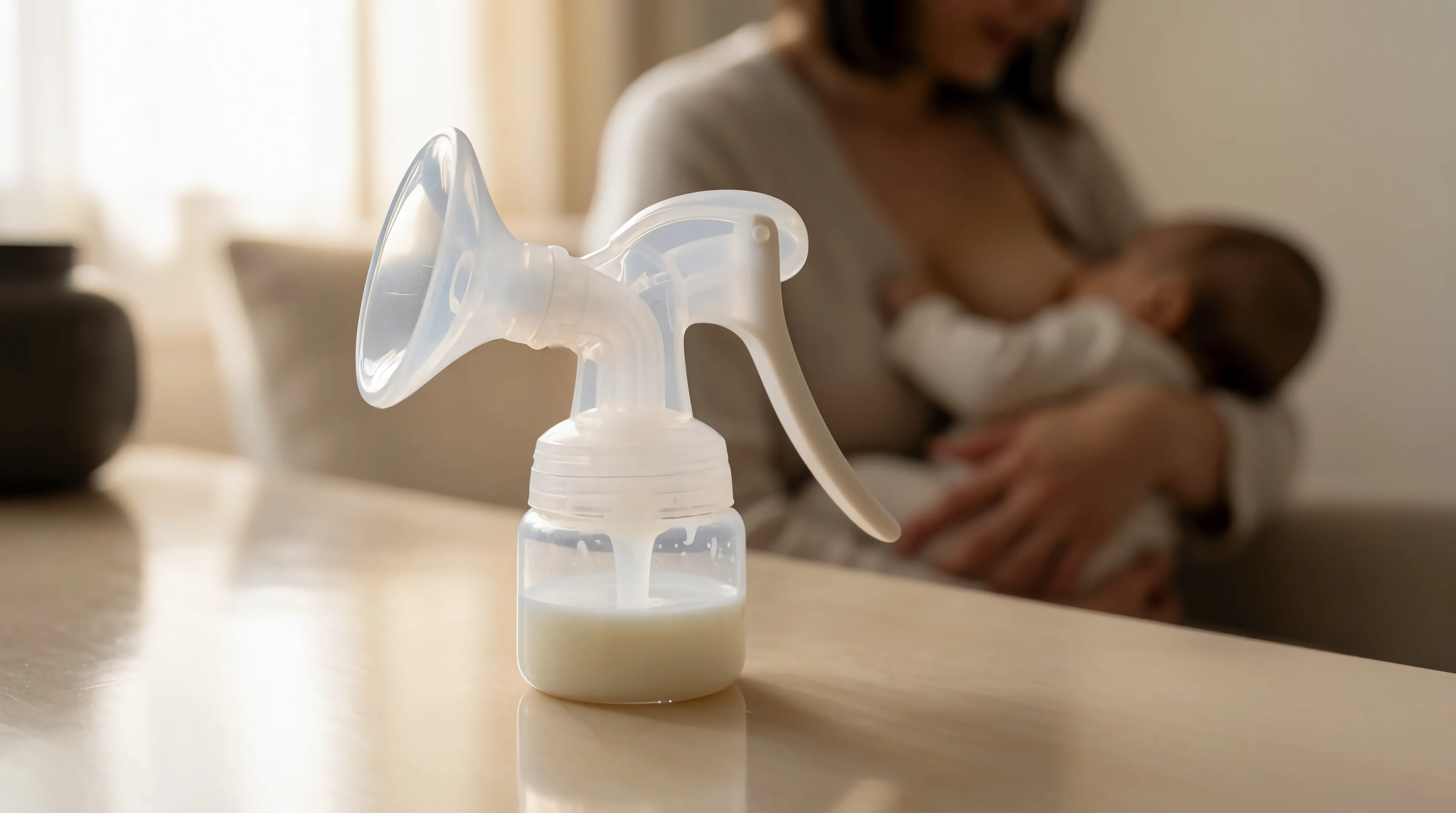
Breast Milk vs Formula: Evidence-Based Comparison Guide
Compare breast milk and infant formula, including nutrition, health benefits, feeding options, safety considerations and key differences.
Dr.Kamran
Choosing how to feed your newborn is one of the first and most personal decisions you will make as a parent. Breast milk has been the subject of decades of research, and the evidence consistently points to its unique nutritional and immunological properties. At the same time, infant formula has improved significantly and remains a safe, viable option for families where breastfeeding is not possible or preferred. This guide lays out what the science actually says, without judgement, so you can make the most informed choice for your baby and yourself.
What Is Breast Milk and How Is It Produced?
Lactation begins during pregnancy when hormonal changes prepare the mammary glands. After delivery, the drop in progesterone combined with rising prolactin levels triggers milk production. Suckling stimulates oxytocin, which causes the let-down reflex and moves milk through the ducts.
Breast milk goes through two distinct stages:
Colostrum is the thick, yellowish fluid produced during the first few days after birth, generally during the first two to five days. It is rich in antibodies, particularly secretory IgA, and other protective factors that support the baby's developing immune system. Its volume is small but highly concentrated.
Mature milk gradually replaces colostrum. It is generally thinner in appearance and contains more fat and lactose than colostrum. Its composition changes over the course of lactation in response to the baby's developmental needs.
This adaptability is something infant formula cannot fully replicate. The composition of breast milk can also change during an individual feed, with milk fat concentration tending to increase as the breast empties. However, describing milk strictly as "foremilk" and "hindmilk" can be misleading, as there is no sharp division between the two. Breast milk composition also changes as the baby grows older.
Nutritional Composition: Breast Milk vs Infant Formula
The table below compares the key components of breast milk and standard cow's-milk-based infant formula.
Component
Breast Milk
Infant Formula
Protein
Whey-dominant, easily digested
Casein-dominant or whey-adjusted; harder to digest
Fat
Contains DHA, ARA, lipase enzyme
DHA/ARA added in many brands; no digestive lipase
Carbohydrate
Lactose plus human milk oligosaccharides (HMOs)
Lactose or corn syrup solids; no HMOs
Antibodies
Secretory IgA, IgG, IgM
None
Enzymes
Lipase, amylase, lysozyme
Not present
Iron
Lower quantity but highly bioavailable (around 50%)
Higher quantity, lower absorption (around 10 to 12%)
Vitamins D and K
Low; supplementation usually recommended
Added to meet regulatory guidelines
Fortification
Not fortified
Standardised to regulatory requirements
Breast milk nutrition facts are difficult to capture in a single row because the composition is dynamic. Formula, by contrast, has a consistent composition within a specific product, which can help parents monitor intake more precisely.
The difference in iron absorption should also be interpreted carefully. Studies have found that a relatively high proportion of breast-milk iron can be absorbed, with one study reporting approximately 49% absorption in term infants. Estimates for formula iron are lower and vary according to the type of formula and the infant's age. Therefore, the commonly quoted figures of 50% versus 10–12% should not be treated as fixed values for all breast milk and formula.
Formula has improved considerably in recent years. The addition of DHA and ARA supports the provision of long-chain fatty acids, and some products include prebiotics or other ingredients intended to more closely resemble certain functions of human milk. These additions do not reproduce the full range of immune, hormonal and bioactive components found in breast milk.
Health Benefits for Baby and Mother
Breastfeeding is associated with several health benefits for both babies and mothers, although the effects can vary between individuals.
For the Baby
The benefits of breast milk for infants are well-documented across large population studies.
Lower risk of some infections: Breastfeeding is associated with lower rates of gastrointestinal infections and some respiratory and ear infections, with protective effects attributed partly to antibodies and other bioactive components in human milk.
Lower risk of necrotising enterocolitis in premature infants: Human milk feeding is associated with a lower risk of necrotising enterocolitis, a serious intestinal condition affecting premature and very low-birth-weight infants.
Possible longer-term health benefits: Breastfeeding has been associated with lower risks of childhood overweight and obesity and some other health conditions. However, observational studies are affected by factors such as maternal education, socioeconomic status and other differences between families, making the size of individual effects difficult to determine.
Exposure to varied flavours: Flavours from the mother's diet can pass into breast milk, and repeated exposure may contribute to infants becoming familiar with a wider range of flavours. Whether this results in a broader diet later in childhood varies between individuals.
For the Mother
Breastfeeding offers meaningful benefits beyond the baby. Mothers who breastfeed may experience:
Faster uterine recovery: Oxytocin released during breastfeeding helps the uterus contract after birth.
Lower risk of breast and ovarian cancer: Longer cumulative breastfeeding has been associated with a greater reduction in the long-term risk of these cancers.
Delayed return of menstruation: Frequent, exclusive breastfeeding can delay the return of ovulation and menstruation, although this varies considerably between women.
Lower risk of type 2 diabetes: Some studies have found an association between breastfeeding and a lower long-term risk of developing type 2 diabetes.
Skin-to-skin contact and the hormonal response during feeding may also support close interaction and bonding between mother and baby.
When Is Formula Feeding Necessary or Preferred?
Formula feeding guidelines exist because breastfeeding is not always possible, and that is completely acceptable. Common situations where formula becomes the primary or supplementary choice include:
Insufficient milk supply despite appropriate lactation support, which can affect some mothers.
Adoptive parents or same-sex male couples without a breastfeeding parent.
Returning to work or other circumstances where breastfeeding or expressing milk is not possible or practical.
Maternal exhaustion or mental health challenges where breastfeeding adds unsustainable stress.
Previous breast surgery that has affected milk production.
A properly prepared infant formula provides the nutrients required for normal growth and development when it is used as directed. Formula feeding is a safe and established way to feed an infant when breastfeeding is not possible, not desired, or needs to be supplemented.
For practical guidance on caring for your newborn regardless of feeding method, see these newborn care tips after birth.
Contraindications to Breastfeeding
There are specific medical situations where breastfeeding or feeding expressed breast milk is not recommended. These situations are relatively uncommon, and some conditions require temporary interruption rather than permanent avoidance.
Maternal conditions:
HIV infection: Recommendations depend on the mother's treatment, viral suppression, and the healthcare setting. In some settings, breastfeeding may be supported when the mother is receiving effective antiretroviral therapy and maintains viral suppression. Where safe and feasible replacement feeding is available, local guidelines may recommend avoiding breastfeeding. Individual medical guidance is essential.
Active, untreated tuberculosis: A mother with untreated active tuberculosis should temporarily avoid direct breastfeeding because of the risk of respiratory transmission, although expressed breast milk may generally be given. CDC guidance states that breastfeeding can usually resume once appropriate treatment has been given for at least two weeks and the mother is no longer considered contagious.
Certain medications: Some medicines can pass into breast milk and may pose a documented risk to the infant. However, most medicines are compatible with breastfeeding, so mothers should discuss individual medicines with their doctor rather than assuming that a prescription automatically means breastfeeding must stop.
Human T-cell lymphotropic virus (HTLV-1 or HTLV-2) infection: These viruses can be transmitted through breast milk, and breastfeeding is generally avoided when the mother has HTLV infection.
Infant conditions:
Classic galactosaemia: Infants with classic galactosaemia cannot safely metabolise galactose and should not receive breast milk. They require an appropriate lactose-free, galactose-free specialised formula under specialist medical supervision.
Report adverse events related to feeding or any medication taken while breastfeeding to your healthcare provider or the relevant regulatory authority.
Choosing and Transitioning Between Feeding Methods
Mixed feeding, meaning combining breast milk and formula, is practical and widely used. A few things to keep in mind:
Introducing a bottle when breastfeeding is established may work well for some families. There is no strong evidence that introducing a bottle at a specific age, such as three to four weeks, universally prevents or reduces "nipple confusion". Babies differ in how they respond to different feeding methods.
Paced bottle feeding, where the bottle is held at a more horizontal angle and feeding pauses are built in, may help the baby regulate intake and can reduce the likelihood of feeding too quickly.
If you plan to switch fully from breast milk to formula, a gradual transition may make the change more comfortable for some mothers by allowing milk production to decrease gradually and reducing breast fullness. There is no fixed one- to two-week transition period that every baby requires.
Always consult your paediatrician before making a complete switch, especially in the first three months, to confirm the chosen formula is appropriate for your baby's age and any specific needs.
There is no single correct path. Some mothers exclusively breastfeed; others combine methods from the start; others move to full infant formula feeding. What matters most is that the baby receives adequate nutrition, is fed safely and responsively, and receives appropriate healthcare.
Conclusion
Breast milk and infant formula can both provide nourishment for babies, although they are not compositionally identical. Breast milk contains antibodies, HMOs, enzymes and other bioactive components that infant formula cannot fully reproduce. Formula, however, is carefully formulated to provide the nutrients required for normal infant growth and development and is an important feeding option for families who cannot or choose not to breastfeed.
WHO and UNICEF recommend exclusive breastfeeding for the first six months of life, followed by the introduction of safe and nutritionally adequate complementary foods while breastfeeding continues up to two years of age or beyond.
Feeding decisions can also change over time. Exclusive breastfeeding, combination feeding and formula feeding can each be part of an individual family's feeding journey. The appropriate approach depends on the baby's nutritional needs, the mother's circumstances and preferences, and any relevant medical considerations.
FAQS
How long should you breastfeed a baby?
WHO and UNICEF recommend exclusive breastfeeding for around the first six months, followed by appropriate complementary foods while continuing breastfeeding up to two years of age or beyond. The duration beyond this depends on what works for the mother and baby.
Does formula have the same benefits as breast milk?
Formula meets a baby's nutritional needs but does not replicate the antibodies, HMOs, enzymes and other bioactive components naturally present in breast milk. For most healthy, full-term babies, appropriately prepared infant formula can provide adequate nutrition for normal growth and development.
How do I know if my baby is getting enough breast milk?
Steady weight gain, regular wet and soiled nappies, effective feeding and a baby who appears alert and generally well are useful signs that feeding is going well. After the first several days of life, around six or more wet nappies a day is commonly used as one indicator of adequate intake, although nappy output should be considered alongside weight gain and feeding behaviour. If you are concerned, a lactation consultant or paediatrician can assess feeding and, where appropriate, use a weighted feed to estimate milk intake.
Can I switch from breast milk to formula suddenly?
A sudden switch is not generally harmful to the baby, but a gradual transition may be more comfortable for the mother because it allows milk production to decrease and may reduce breast fullness. If a sudden switch is medically necessary, your doctor can guide you through managing discomfort and choosing an appropriate formula.
Is it safe to mix breast milk and formula in one bottle?
Breast milk and prepared formula can be given during the same feed, but it is generally better to offer them separately where possible. If formula and breast milk are combined in one bottle, the bottle should be handled according to the more restrictive formula safety guidelines. Once the baby has started drinking from the bottle, any leftover mixture should be discarded rather than saved for another feed.