logo
0

Broccoli Puree for Baby: Benefits, Recipes, & Feeding Tips

Learn how to make a nutritious broccoli puree for baby. Discover easy recipes, baby-led weaning tips, and answers to all your baby feeding questions.

article image

Dr.Mayank

Starting your little one on solid foods is an exciting milestone. As a parent, you want to ensure your baby gets the best start in life with nutrient-dense, wholesome foods. Introducing a healthy broccoli puree for baby is a wonderful way to introduce green vegetables early in their flavour journey.

While green vegetables can sometimes have a reputation for being rejected by older kids, introducing them early can help your baby develop a lifelong love for nutritious greens. In this comprehensive guide, we will explore the health benefits of broccoli, when to safely introduce it, how to prepare it, and delicious flavour combinations your baby will love.

Is Broccoli Good for Babies?

You might be wondering, is broccoli good for babies? The short answer is a resounding yes! Broccoli is widely considered a nutritional powerhouse. It is packed with essential vitamins, minerals, and dietary fibre that support your growing baby's rapid development.

Here are some of the key health benefits that make broccoli good for babies:

  • Immune System Support: Broccoli is exceptionally high in vitamin C. This essential vitamin strengthens your baby's immune system and helps their body absorb iron from other foods.
  • Healthy Digestion: The dietary fibre in broccoli aids in digestive health, helping to keep bowel movements regular and preventing constipation as your baby transitions to solid foods.
  • Bone Development: It contains calcium and vitamin K, which are crucial for building strong bones and teeth.
  • Brain and Eye Health: Broccoli contains folate, vitamin A, and lutein, which support cognitive development and healthy vision.
  • Cell Growth: The folate found in broccoli plays a key role in DNA synthesis and healthy cell division during rapid growth phases.

When Can I Introduce Broccoli to My Baby?

The World Health Organization (WHO) and the Centers for Disease Control and Prevention (CDC) recommend introducing complementary solid foods to infants around 6 months of age, when they are developmentally ready.

Can I Give Broccoli to My 6-Month-Old?

Many parents ask, can i give broccoli to my 6 month baby? Yes, you can. At 6 months, most babies are ready for smooth, single-ingredient purees. A thin, well-strained broccoli puree for baby is an excellent option at this stage.

Can I Give Broccoli to My 7-Month-Old?

If you are wondering, can i give broccoli to my 7 month baby, the answer is absolutely. By 7 months, your baby may be ready for slightly thicker purees with a bit more texture. You can start mixing broccoli with other fruits and vegetable purees to introduce complex flavours.

Can I Give Broccoli to My 8-Month-Old?

If your little one is growing quickly, you might ask, can i give broccoli to my 8 month baby? Yes, by 8 months, many babies are developing their "pincer grasp" (picking up food with their thumb and forefinger). At this stage, you can offer very soft, finely chopped broccoli pieces or small, easily mashable florets alongside purees.

How to Make Broccoli Puree for Baby: Step-by-Step

Making homemade broccoli baby food is simple, cost-effective, and ensures that your child is eating fresh food free from artificial preservatives.

Here is a simple, step-by-step guide on how to make broccoli puree for baby that is packed with flavour and nutrition.

Ingredients:

1 head of fresh, organic broccoli (florets cut off, stems peeled and chopped)

Water, breast milk, or prepared formula (for thinning the puree)

Instructions:

1. Wash and Prep: Rinse the broccoli thoroughly under cold, running water to remove any dirt or debris. Cut the florets from the main stem. Peel the tough outer layer of the stem and chop the tender inner stem into small pieces (the stems are highly nutritious too!).

2. Steam the Broccoli: Steaming is the best cooking method because it preserves more water-soluble vitamins (like vitamin C) than boiling. Place a steamer basket in a pot with an inch of water. Bring the water to a boil, add the broccoli, cover, and steam for 8 to 10 minutes. The broccoli should be fork-tender and bright green.

3. Blend to Perfection: Transfer the steamed broccoli to a blender or food processor. Add a splash of breast milk, formula, or the remaining steaming water.

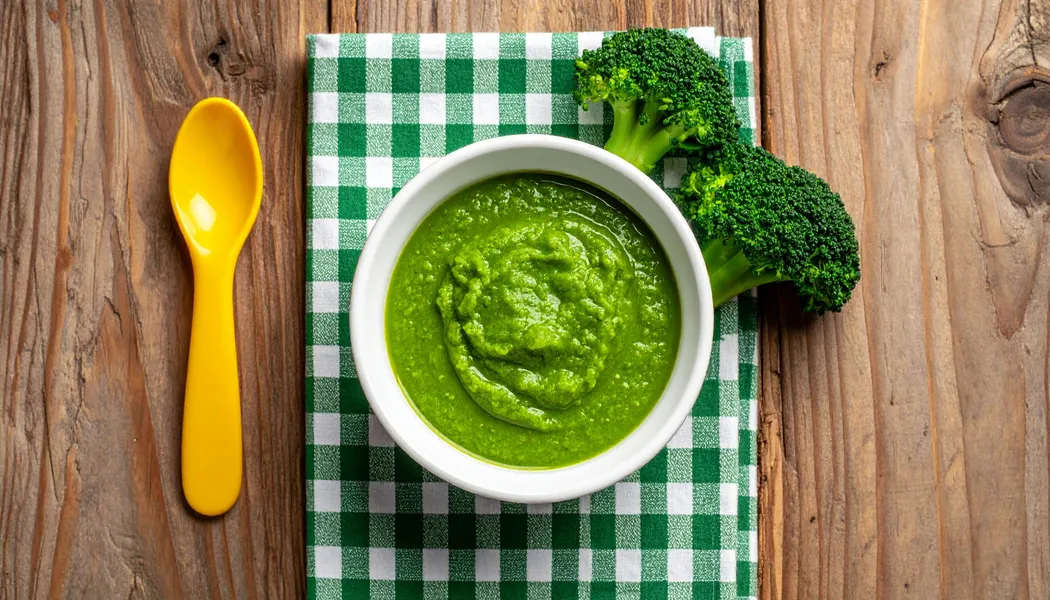
4. Achieve the Right Texture: Blend the mixture until you achieve a broccoli puree baby smooth texture. For younger babies (around 6 months), add more liquid to make it quite runny. For older babies, you can leave it slightly thicker.

5. Cool and Serve: Let the puree cool to room temperature before offering it to your baby.

What to Mix with Broccoli Puree for Baby

On its own, broccoli can have a slightly bitter or earthy taste that might surprise your baby's delicate palate. To make it more appealing, you can blend it with sweet or creamy ingredients.

When deciding what to mix with broccoli puree for baby, consider these delicious and healthy combinations:

  • Sweet Potato or Butternut Squash: The natural sweetness of root vegetables perfectly balances the earthy flavour of broccoli.
  • Apple or Pear: Blending cooked apples or pears with your broccoli puree baby mixture adds a delicious sweetness and smooth texture.
  • Breast Milk or Formula: This adds a familiar flavour to the new vegetable, making your baby more likely to accept it.
  • Greek Yogurt: For babies older than 6 months, mixing broccoli puree with full-fat Greek yogurt adds a rich, creamy texture and a boost of protein and calcium.
  • Potato or Cauliflower: Mixing broccoli with mashed white potatoes or cauliflower creates a comforting, mild, and creamy veggie blend.

Broccoli and Baby-Led Weaning (BLW)

If you are skipping traditional purees and practicing Baby-Led Weaning (BLW), broccoli is actually one of the easiest first foods to introduce.

Because of its natural shape, a broccoli floret has a built-in "handle" that makes it easy for tiny hands to grasp. Knowing how to cook broccoli for baby led weaning is essential to ensure it is safe and easy for your baby to eat.

How to Prepare Soft Broccoli Florets for BLW:

1. Cut Large Florets: Keep the stems relatively long so your baby can hold onto them easily.

2. Steam Until Very Soft: Steam the broccoli longer than you would for adults. You want soft broccoli florets baby led weaning style, which means the florets should easily mash between your thumb and forefinger with gentle pressure. If it is too firm, it poses a choking hazard.

3. Cool Safely: Allow the broccoli to cool completely before serving it on your baby's high chair tray.

4. Supervise Always: Always sit with your baby during meals and watch for signs of gagging or choking.

Easy Broccoli Recipe for Baby: The Veggie-Medley

Once your baby has tried broccoli on its own and shown no signs of allergy or digestive distress, you can try this simple, vitamin-rich broccoli recipe for baby:

The Green & Gold Medley

Ingredients:

1 cup of fresh broccoli florets

1/2 cup of peeled, diced sweet potato

1/2 cup of peeled, diced sweet apple (such as Gala or Fuji)

Breast milk or warm water

Instructions:

1. Steam Sweet Potato and Apple: Place the sweet potato and apple pieces into a steamer basket and steam for 5 minutes.

2. Add and Steam Broccoli: Add the broccoli florets to the basket and steam for an additional 8 to 10 minutes, until all ingredients are completely tender.

3. Transfer to Food Processor: Transfer the steamed mixture to a food processor.

4. Blend to a Smooth Puree: Add a small amount of breast milk or water and puree until smooth.

5. Nutritious Serving Note: This colourful, naturally sweet blend is a highly nutritious way to serve broccoli puree baby food to your growing infant.

How to Store Homemade Broccoli Baby Food

To save time, you can prepare homemade broccoli puree baby food in large batches and store it safely for future use.

  • Refrigerating: Store fresh puree in an airtight, BPA-free container in the refrigerator for up to 3 days.
  • Freezing: Spoon the puree into clean silicone ice cube trays and freeze. Once frozen solid, transfer the broccoli cubes into a freezer-safe zip-top bag. Label the bag with the date. Frozen baby food keeps well for up to 3 months.
  • Thawing: Thaw frozen puree cubes in the refrigerator overnight, or warm them gently in a heat-safe bowl set inside a pan of hot water. Always stir thoroughly and test the temperature on your wrist before feeding your baby.

Conclusion

Introducing broccoli can be a nutritious way to help your baby explore new flavours, textures, and vegetables from around six months, when they are developmentally ready for solid foods. Whether you choose a smooth broccoli puree, a sweet potato and broccoli blend, or soft broccoli florets for baby-led weaning, broccoli can provide useful nutrients as part of a varied complementary diet. By cooking it until soft, serving it in an age-appropriate texture, storing homemade baby food safely, and avoiding added salt and sugar, you can make broccoli an enjoyable part of your baby’s feeding journey. Always supervise your baby during meals, follow their readiness and feeding cues, and consult your paediatrician if you have concerns about introducing new foods.
FAQS

Does broccoli cause gas in babies?

Yes, broccoli is a cruciferous vegetable containing complex sugars and high fibre, which can sometimes cause mild gas or bloating. To minimize gas, introduce broccoli in small amounts at first and ensure it is thoroughly cooked, which makes it easier to digest.

Can I use frozen broccoli to make baby food?

Absolutely. Frozen broccoli is frozen at peak ripeness and is just as nutritious as fresh broccoli. Steaming frozen broccoli is a quick and convenient option when making baby purees.

Can babies choke on broccoli?

Yes, raw or undercooked broccoli is a choking hazard. Always ensure broccoli is steamed until very soft, whether you are blending it into a smooth puree or serving it as soft florets for baby-led weaning.

What is the difference between gagging and choking?

Gagging is a normal, noisy, and safe reflex that helps babies learn how to manage food in their mouths. Choking is silent, dangerous, and occurs when the airway is blocked. Always educate yourself on infant first aid and CPR before starting solids.

How do I know if my baby is allergic to broccoli?

While broccoli is not a common allergen, any food can trigger a reaction. When introducing broccoli for the first time, serve it alone without other new foods for 3 to 5 days. Watch for signs of an allergic reaction, such as hives, swelling, vomiting, or diarrhea. If you notice severe symptoms, seek immediate medical attention.

Apollo 247 Floating Action Button