logo
0

Complementary Feeding: IAP Guide to Starting Solids

Learn when and how to start complementary feeding, including first foods, feeding frequency, nutrition, allergens, textures and safety tips for infants.

article image

Dr.Rohini priyanaka

Starting your baby on solid foods is one of the most exciting milestones of the first year, and one of the most anxiety inducing. Getting complementary feeding IAP guidance right matters more than many parents realize: the foods you introduce between 6 and 24 months shape your baby's nutrition, gut health, taste preferences, and long-term disease risk. This guide translates current Indian Academy of Paediatrics (IAP) recommendations into practical steps for Indian families.

What Is Complementary Feeding and Why It Matters?

Complementary feeding means giving a baby foods and liquids other than breast milk or formula, starting around 6 months of age, while continuing to breastfeed. The word "complementary" is key: solids add to breast milk, they do not replace it in the first year.

Breast milk alone meets all of a young infant's nutritional needs up to around 6 months. After that, energy and nutrient demands, especially for iron, zinc, and certain vitamins, outgrow what breast milk can supply on its own. Poorly timed or poorly chosen complementary feeding choices are a leading cause of childhood malnutrition and growth faltering in India, which is why evidence-based complementary feeding guidelines matter so much.

The IAP, aligned with World Health Organization principles, recommends:

  • Starting complementary feeding at around 6 completed months (26 weeks), not before 4 months
  • Continuing breastfeeding alongside solids until at least 2 years of age
  • Offering a variety of locally available, nutrient-dense foods from multiple food groups

If you are still in the early weeks of parenthood, newborn care essentials for new parents is a helpful place to begin before you reach the solids stage.

When to Start: IAP Recommended Age and Readiness Signs

The IAP recommendation is clear: begin complementary feeding at 6 completed months. Starting earlier raises the risk of infections, gut problems, and choking. Starting later risks iron deficiency, growth faltering, and feeding difficulties.

Age is only one part of the picture. Your baby should also show physical readiness signs before you begin:

  • Can hold their head steady and upright without support
  • Can sit with minimal support and stay in that position
  • Shows clear interest in food by watching others eat, reaching toward plates, or opening their mouth when food comes close
  • Has lost the tongue-thrust reflex, meaning they no longer automatically push objects out with their tongue

Most babies reach all four milestones around 6 months. If your baby is 6 months old but still cannot sit with support or hold their head up, speak to your paediatrician before starting solids.

Age-Wise Food Chart: 6-8, 9-11, 12+ Months

The table below summarises IAP-aligned progression by age band. Textures and meal frequency increase gradually as your baby's oral motor skills develop.
 

Age BandTextureExample FoodsMeals per DayBreast Milk
6 to 8 monthsmooth purees, thick porridges, well-mashedRice or ragi porridge, mashed banana, mashed moong dal, pureed carrot or potato2 to 3 small meals + 1 to 2 snacksContinue on demand
9 to 11 monthsSoft lumps, finely chopped, mashed family foodsSoft khichdi, mashed egg, soft paneer, well-cooked lentils, soft fruit pieces3 to 4 meals + 1 to 2 snacksContinue on demand
12 months and aboveChopped family foods, firmer texturesRoti softened with dal, rice with sabzi, soft cooked fish, small fruit pieces, plain yoghurt3 to 4 meals + 2 snacksContinue, ideally up to 2 years

Portion guidance: Start with 2 to 3 teaspoons per meal at 6 months and increase gradually. By 9 months, most babies manage roughly half a small katori per meal. Let hunger cues guide quantity; never force-feed.

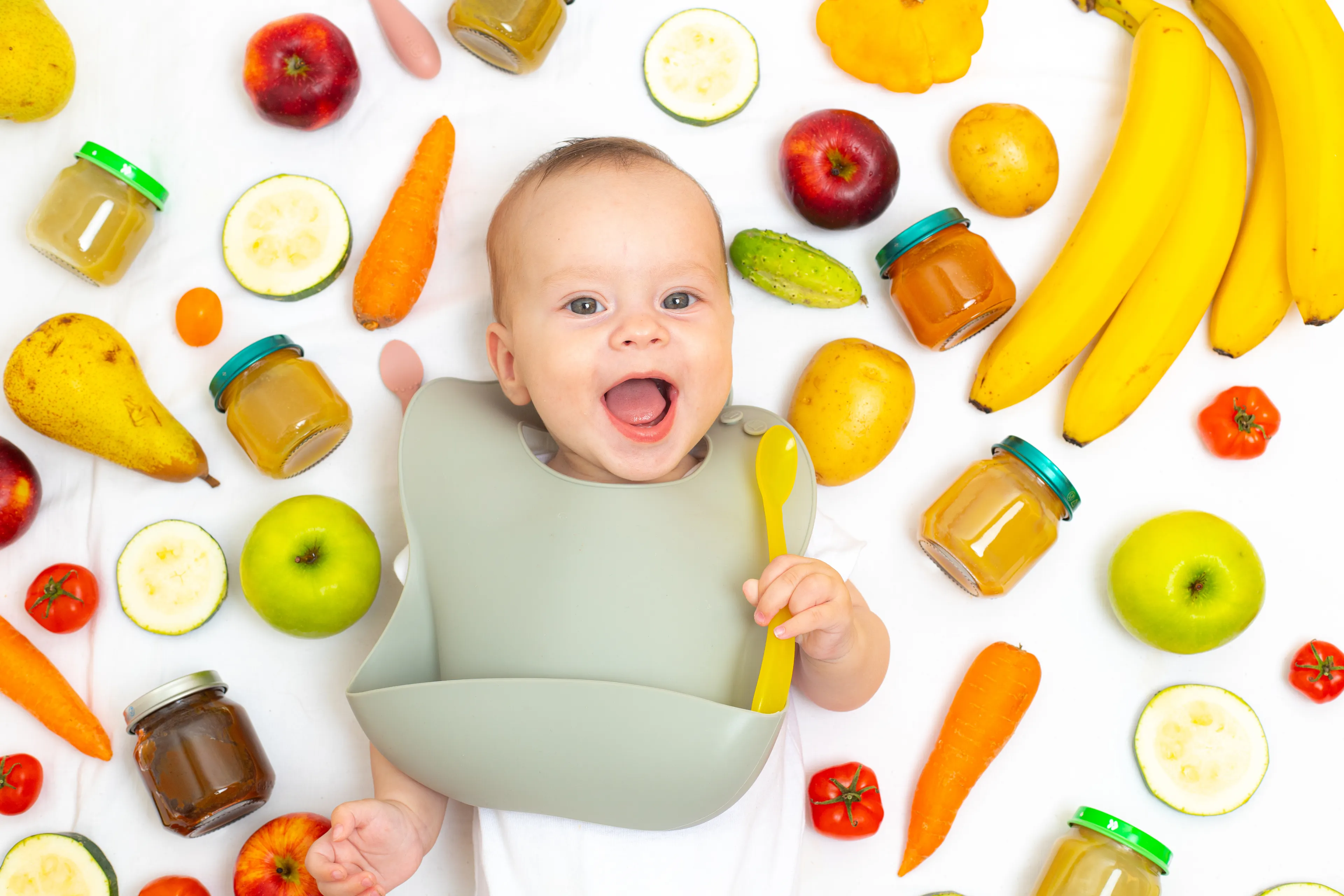
First foods for baby in India commonly include ragi kanji, rice porridge with a small amount of ghee, mashed moong dal, and ripe mashed banana. These are nutrient-dense, easy to digest, and culturally familiar, making them practical age-appropriate foods for infants in most Indian households.

How to Introduce New Foods Safely

Introduce one new food at a time and offer it for 3 consecutive days before adding another. This makes it easy to identify the cause if your baby reacts.

After each new food, watch for rashes around the mouth, swelling, vomiting, diarrhoea, or unusual fussiness. These may signal a food allergy or intolerance.

  • On allergens: Current evidence, endorsed by IAP weaning guidelines, supports introducing common allergens such as egg, fish, peanut-based foods, and wheat from 6 months onward rather than delaying them. Early introduction in most babies actually reduces allergy risk. Introduce one allergen at a time in a small amount, and wait 3 days before the next new food. If your baby has severe eczema or a known food allergy, consult your paediatrician before introducing high-risk allergens.
  • Texture progression matters. Moving from smooth purees to soft lumps to chopped foods by 9 to 12 months supports oral development and prevents future feeding refusal. Babies who remain on smooth textures too long often resist lumpy food later.
  • Responsive feeding: Feed your baby face-to-face, offer food on a spoon, and respond to fullness cues such as turning away, closing the mouth, or pushing the spoon aside. Pressure-based or distraction-based feeding can disrupt your baby's natural hunger regulation.

Foods and Practices to Avoid

The following are considered contraindications for infant feeding in the first year:

  • Honey before 12 months: Honey can contain Clostridium botulinum spores and may cause infant botulism, a serious illness.
  • Cow's milk as a main drink: Do not give cow's milk as the main drink before 12 months. Small amounts used in cooking are generally fine, but it should not replace breast milk or formula as the primary drink.
  • Added salt and sugar: Avoid added salt and sugar. High salt intake is unsuitable for infants, while early exposure to sugary foods may encourage a preference for sweet tastes.
  • Whole nuts and large chunks of firm food: These can pose a choking hazard. Grind nuts into a smooth paste before offering them to your baby.
  • Sugary and caffeinated drinks: Avoid sugary drinks, packaged juices and caffeinated beverages, as they are not appropriate for infants.
  • Unpasteurised and undercooked foods: Avoid unpasteurised dairy products and raw or undercooked meat and eggs because they can increase the risk of foodborne infections.

Avoid giving solid foods in a bottle or feeding while your baby is lying flat, both practices increase choking risk.

When to Consult a Paediatrician?

Most feeding challenges are normal and temporary, but some signs need prompt medical attention:

  • Consistent refusal to eat over several days, especially combined with poor weight gain
  • A suspected allergic reaction after a new food: hives, swelling of the lips or face, breathing difficulty, or persistent vomiting
  • Choking episodes or gagging severe enough to cause distress
  • Your baby is 7 months or older and still showing no interest in food or cannot manage any texture
  • Diarrhoea or blood in stools after introducing a new food

If your baby has a known medical condition such as a metabolic disorder, prematurity, or swallowing difficulty, your IAP-aligned complementary feeding plan should be individualised with your paediatrician from the start.

Report adverse events to your healthcare provider or the relevant regulatory authority.

Conclusion

Complementary feeding is an important step in your baby's growth and development. Starting around 6 months, offering a variety of nutritious foods, gradually increasing textures and meal frequency, and continuing breastfeeding can help support your baby's nutritional needs. Follow responsive feeding practices, avoid foods that may pose health or choking risks, and introduce new foods safely. If your baby has feeding difficulties, allergies, prematurity or any medical condition, consult your paediatrician for personalised guidance.

FAQS

Can I start complementary feeding before 6 months?

IAP and WHO guidelines recommend against starting solids before 4 months under any circumstance, and before 6 months in most healthy infants. Starting too early raises the risk of gut infection, choking, and allergies. If you feel your baby seems hungry before 6 months, speak to your paediatrician before introducing any food.

How much water should a baby drink during complementary feeding?

Small sips of boiled and cooled water can be offered from 6 months onward, mainly to accompany meals. Breast milk or formula still provides most fluid needs at this stage, so water intake does not need to be large. Avoid offering water in place of milk feeds.

Is rice cereal the best first food for babies?

Rice cereal is one option, but it is not nutritionally superior to other first foods. Ragi porridge, mashed moong dal, or mashed banana are equally good and often more nutrient-dense choices for Indian infants. Variety from the start is more important than any single "best" first food.

How many meals a day for a 7-month-old?

At 7 months, most babies manage 2 to 3 small solid meals per day plus 1 to 2 snacks, alongside continued breast milk on demand. Portion sizes are small at this stage; the goal is building the habit and skill of eating, not replacing milk feeds.

Should I continue breastfeeding after starting solids?

Yes. IAP weaning guidelines recommend continuing breastfeeding alongside complementary feeding until at least 2 years of age. Breast milk remains an important source of nutrition, immune protection, and comfort well into toddlerhood.
Apollo 247 Floating Action Button