logo
0

Complementary Feeding Guide: Timing, Foods & Tips

Evidence-based guide to complementary feeding: when to start solids, first foods, textures, and safe progression for infants. Doctor-reviewed.

article image

Dr.Yusuf

Starting your baby on solid foods is one of the most exciting milestones of early parenthood, and one of the most confusing. Complementary feeding, the gradual introduction of foods alongside breast milk or formula, shapes your child's nutrition, gut health, and food preferences for years. Getting the timing, sequence, and textures right matters, and this guide walks you through each step with evidence behind every recommendation.

What Is Complementary Feeding?

Complementary feeding is the process of giving an infant foods and liquids in addition to breast milk or infant formula. The word "complementary" is deliberate: these foods work alongside milk feeds, not instead of them. Breast milk or formula remains the primary source of nutrition through the first year.

This is different from weaning, which refers to the gradual reduction and eventual stopping of breastfeeding. A baby can begin complementary feeding while continuing to breastfeed well into toddlerhood. Understanding this distinction helps parents feel confident that starting solids does not mean giving up on breastfeeding.

Global health guidance consistently recommends starting complementary feeding at around 6 months of age. Major pediatric bodies, including those aligned with WHO guidance, note that the digestive system and motor skills needed to handle solid food are generally mature by 6 months in full-term, healthy infants. Starting a thoughtful complementary feeding schedule from this point sets the stage for good nutrition through the first two years.

When to Start: Signs of Readiness

Knowing when to start solid foods for your baby involves watching for developmental cues, not just the calendar. Age is a guide, not a guarantee, and most babies show all of these signs between 5 and 7 months.

  • Signs your baby is ready for solids:
  • Holds head steady and sits with minimal support
  • Shows interest in food, reaches toward what you eat, and watches you eat
  • Has lost the "tongue-thrust reflex" that pushes objects out of the mouth
  • Opens mouth when a spoon approaches

Has roughly doubled birth weight, typically by 4 to 6 months

Do not start before 4 months. The gut and kidneys are not ready, and early introduction is linked to a higher risk of obesity and allergies. Starting too late, after 7 months in most cases, can increase the risk of iron deficiency and feeding difficulties. Recognizing the signs baby is ready for solids makes the transition smoother for both of you.

If you are unsure about timing, your pediatrician can assess readiness during a routine check-up. For broader guidance on newborn care essentials during early infancy, Apollo's resources cover the early months in detail.

First Foods and Food Types to Introduce

Iron is the nutrient most likely to fall short when breast milk alone continues beyond 6 months, so iron-rich foods should be among the very first you offer. A well-planned complementary feeding schedule prioritizes these from day one.

Good first foods for babies include:

  • Pureed or mashed iron-fortified cereals (ragi is a nutritious and widely used Indian option)
  • Well-cooked, pureed lentils such as moong dal or masoor dal
  • Mashed egg yolk, and whole egg, which also supports early allergen exposure
  • Pureed or soft-cooked meats, including chicken and fish
  • Mashed ripe banana or cooked, mashed apple
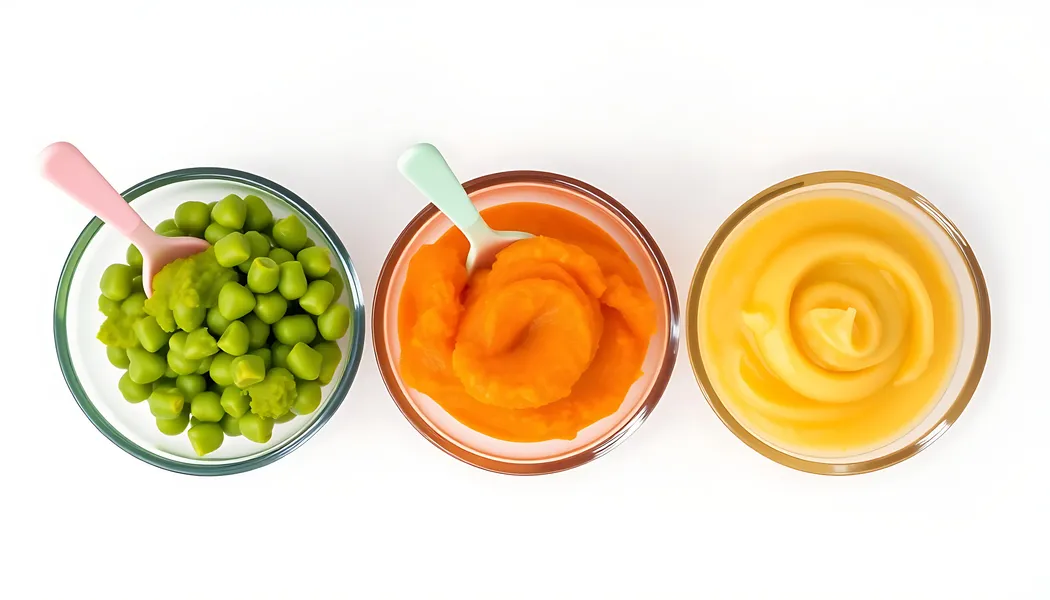
  • Cooked, mashed vegetables such as sweet potato, carrot, or pumpkin

Introduce one new food at a time and wait about 3 days before adding another. This 3-day rule gives you a clear window to spot any adverse reaction before the picture gets complicated by multiple new foods.

When to Introduce Common Allergens?

Current evidence supports introducing allergenic foods early, at around 6 months, rather than deliberately delaying them. Common allergens include peanut products in age-appropriate forms such as smooth peanut butter thinned with water or breast milk, egg, fish, wheat, and cow's milk products such as curd or paneer. Deliberate delay does not protect against allergy and may actually increase risk.

If your baby has severe eczema or a known food allergy in the family, discuss allergen introduction with your doctor before you begin.

Progressive Feeding: Textures and Portions by Age

This is where a good complementary feeding chart becomes genuinely useful. Texture and portion both need to grow as your baby does. Staying with smooth purees too long can make it harder for a baby to accept lumpy or finger foods later, a pattern that can persist well into toddlerhood.
AgeTextureFrequencyApproximate Portion
6 to 8 monthsSmooth purees, well-mashed2 to 3 times a day2 to 3 tablespoons per meal, building gradually
9 to 11 monthsMashed, minced, soft lumps, soft finger foods3 to 4 times a day plus 1 to 2 snacksHalf a small bowl per meal
12 to 24 monthsFamily foods, soft and chopped small3 meals plus 1 to 2 snacksThree-quarters to one small bowl per meal

Breast milk or formula continues alongside solids at every stage. At 6 months, milk is still providing most of the calories. By 12 months, the balance shifts and family foods become the main energy source. Following this complementary feeding schedule by age helps you avoid under-feeding or overwhelming your baby's still-developing digestive system.

Baby Led Weaning vs. Spoon Feeding

Baby led weaning (BLW) means offering soft finger foods from the start and letting the baby self-feed rather than being spoon-fed purees. Spoon feeding means a caregiver offers mashed or pureed food at the baby's pace. Both are safe and effective when done correctly, and choosing between baby led weaning vs spoon feeding does not have to be an either-or decision.

Many families use a combination: spoon feeding iron-rich foods in the early weeks while also offering soft finger foods the baby can pick up. Research does not show one method to be clearly superior for nutrition or development. Choose what works for your baby, your schedule, and your confidence level, and stay responsive to hunger and fullness cues throughout.

Foods and Practices to Avoid

Some foods carry real risks for infants and must be avoided strictly:

  • Honey, including in cooked food, before 12 months because of the risk of infant botulism
  • Whole cow's milk as the main drink before 12 months (small amounts in cooking or as curd or paneer are fine)
  • Added salt and added sugar; infant kidneys cannot handle excess sodium, and early sugar exposure shapes future taste preferences
  • Round, firm foods that are choking hazards, such as whole grapes, whole cherry tomatoes, whole nuts, raw hard vegetables, and large chunks of meat
  • Unpasteurized dairy or juice
  • Caffeinated drinks, including tea and some soft drinks

Avoid forcing a baby to finish a portion. Responsive feeding, following the baby's hunger and fullness cues, builds a healthy long-term relationship with food and supports appropriate weight gain.

Contraindications and When to Consult a Doctor

Some situations call for a doctor's guidance before you follow any standard complementary feeding schedule. These are not reasons to avoid solids entirely, but reasons to get personalised advice:

  • Preterm infants: corrected age, not birth age, guides readiness, and gut maturity may lag behind a full-term peer of the same calendar age.
  • Family history of severe food allergies or a baby with significant eczema: allergen introduction should be planned with a paediatrician or allergist.
  • Diagnosed or suspected gastrointestinal conditions such as reflux, malabsorption, or failure to thrive: the standard texture and volume progression may need to be modified.
  • Babies with swallowing difficulties or neurodevelopmental conditions: a speech and feeding therapist should assess before solids begin.
  • Any infant who seems unwell, has persistent vomiting after feeds, or shows signs of distress when eating: pause and seek medical review.

Report adverse events, including allergic reactions such as hives, swelling, vomiting, or difficulty breathing after introducing a new food, to your healthcare provider or the relevant regulatory authority immediately.

Conclusion

Complementary feeding done well is less about following a rigid plan and more about staying responsive to your baby's cues while covering the nutritional bases. Start at around 6 months when developmental signs confirm readiness, lead with iron-rich foods, progress textures steadily using a complementary feeding chart as your guide, and keep milk feeds going throughout the first year. When in doubt, your pediatrician is the right first call.

FAQS 

What is the best age to start complementary feeding?

Most healthy, full-term infants are ready at around 6 months. Starting before 4 months is not recommended because the gut and kidneys are not yet mature enough to handle solid foods safely.

Can I give water to my baby during complementary feeding?

Small sips of water (around 30 to 60 ml a day) can be offered once solids begin at 6 months, mainly to help with swallowing. Before 6 months, breast milk or formula provides all the fluid a baby needs.

How many meals a day for a 6-month-old?

Start with 2 to 3 small meals a day, each around 2 to 3 tablespoons, alongside continued breast milk or formula feeds. Increase gradually as your baby's appetite and acceptance grow.

What is the 3-day rule for introducing new foods?

The 3-day rule means offering one new food and waiting 3 days before adding another. This window makes it easier to identify which food caused a reaction if any redness, rash, vomiting, or change in stool appears.

Is baby led weaning safe?

Yes, when practiced correctly with age-appropriate soft foods and close supervision, baby led weaning vs spoon feeding shows no difference in safety or nutrition outcomes. Avoid hard, round, or sticky foods that pose a choking risk regardless of the feeding approach you choose.

Apollo 247 Floating Action Button