logo
0

Rusks for Babies: Safety, Age Guide, and Nutrition

Are Farley's rusks safe for babies? Know the right age, sugar content, choking risks, and healthier baby-safe biscuit alternatives.

article image

Dr.Yusuf

When your baby starts eating solid foods, you may wonder whether rusks are a good choice. Rusks are commonly offered during weaning because they are easy to handle and some can be softened before feeding. However, they are not essential for starting solids, and different products can vary in their ingredients, sugar and salt content.

This guide explains when babies can have rusks, how to offer them safely, what to look for on the label and how they can fit into a varied diet.

What Are Rusks?

Rusks are baked foods that are usually made from ingredients such as wheat or other cereals, along with fat and other ingredients depending on the recipe. Some are made specifically for babies, while others are ordinary rusks or biscuits intended for older children and adults.

Baby rusks may be made to soften when mixed with liquid. However, their texture, ingredients and nutritional content vary between products. Some may contain added sugar, salt, milk, wheat, gluten or other ingredients that may not be suitable for every baby.

For this reason, check the ingredient list, nutrition information and age guidance on the packaging rather than assuming that every rusk is suitable for babies.

At What Age Can Babies Eat Rusks?

Most babies are ready to start complementary foods at around 6 months. The WHO recommends introducing complementary foods at 6 months, alongside continued breastfeeding, as babies' nutritional needs begin to increase beyond what milk alone provides.

Look for signs that your baby is ready, such as:

  • Sitting upright and holding their head steady
  • Coordinating their eyes, hands and mouth so they can look at food, pick it up and bring it towards their mouth
  • Opening their mouth when food is offered
  • Swallowing food rather than repeatedly pushing it back out with their tongue
  • Showing an interest in food and reaching towards it

You do not need to wait for your baby to reach a particular weight or double their birth weight before starting complementary foods. Developmental readiness is more useful when deciding whether your baby is ready.

If your baby was born prematurely or has a health condition that affects feeding or swallowing, speak to your paediatrician about when and how to start complementary foods.

Nutritional Profile: Sugar, Salt and Additives

Rusks can differ considerably in their nutritional content. Some contain added sugar or salt, while others contain little or none. Checking the ingredient list and nutrition information can help you make a more informed choice.

Infants and young children should not have foods with added sugars. Choosing a rusk without added sugar, where available, can help keep sweet foods to a minimum.

WHO advises not adding salt or sugars to foods for babies and young children. Young babies need only small amounts of sodium, so there is no need to add salt to their food or choose foods that are high in salt.

When choosing a commercial rusk, check for:

  • Added sugar
  • Salt or sodium
  • Wheat or gluten
  • Milk and other allergenic ingredients
  • Honey
  • Iron and other nutrients listed on the label
  • The recommended age for the product

Some infant foods are fortified with iron, but you should not assume that a rusk provides iron unless this is stated on the label. From around 6 months, include a range of iron-rich foods as your baby's diet develops.

Choking Hazard and Safety Precautions

Rusks can have a firm or crumbly texture, so they need to be offered in a way that matches your baby's feeding skills. Softening a rusk may make it easier to eat, but it does not remove the need for supervision.
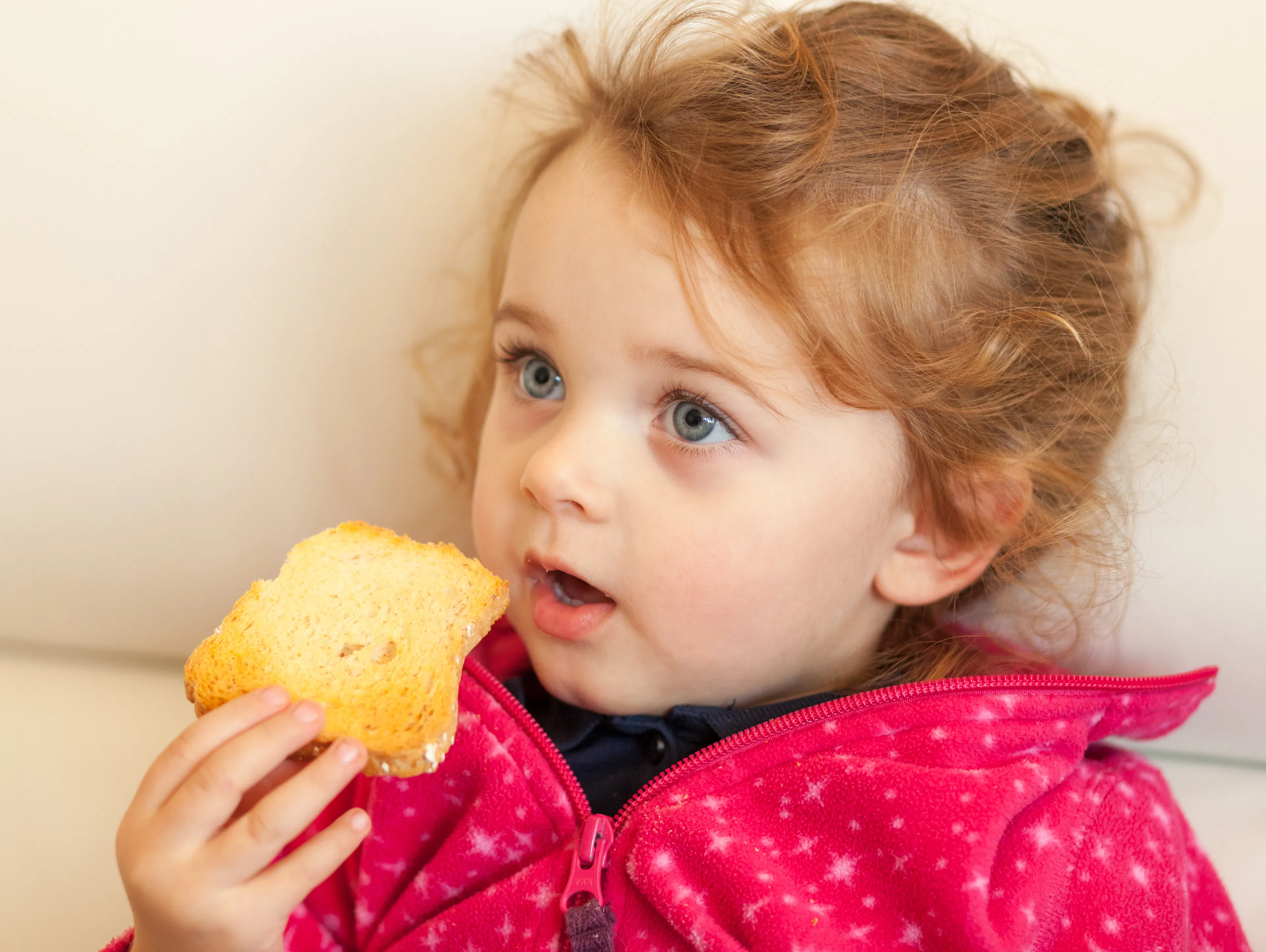
When offering a rusk:

  • Choose a product intended for your baby's age.
  • Follow the preparation instructions on the packaging if the product is designed to be softened.
  • Make sure the texture is soft and manageable for your baby.
  • Check for hard pieces or large lumps before offering the food.
  • Seat your baby upright during feeding.
  • Stay with your baby while they are eating.
  • Let your baby eat at their own pace rather than putting food directly into their mouth.
  • Do not put rusks or other solid foods into a feeding bottle.

Gagging can happen while babies learn to manage new foods and textures. It is different from choking, but parents and caregivers should still stay with the baby during meals and know what to do if choking occurs.

Contraindications and When to Avoid Rusks

Most babies can gradually enjoy a wide range of foods from around 6 months. Some babies, however, may need individual advice based on their health, allergies or feeding development.

  • Wheat or gluten: Many rusks contain wheat and gluten. There is no need to routinely avoid gluten when introducing complementary foods unless your healthcare professional has advised you to do so. If your baby has coeliac disease or a diagnosed wheat allergy, follow the dietary advice given by your healthcare professional.
  • Cow's milk allergy: Some rusks contain milk or milk-derived ingredients. If your baby has a confirmed cow's milk protein allergy, check the ingredient list carefully and follow the advice provided by your paediatrician or dietitian.
  • Other allergies: Depending on the product, rusks may contain ingredients such as egg, soya, nuts or sesame. Always check the allergen information, particularly if your baby has a known food allergy.
  • Honey: The CDC advises not giving honey to babies younger than 12 months because of the risk of infant botulism. Check the ingredient list before offering a rusk or other packaged food.
  • Feeding or swallowing difficulties: If your baby has difficulty chewing or swallowing, speak to your paediatrician or feeding specialist before offering rusks or other foods with a firm or crumbly texture.
  • Premature babies: Babies born prematurely may need individual guidance about when to start complementary foods and which textures to introduce first.

If your baby has a known allergy or medical condition, you do not necessarily need to avoid all rusks. Choose foods that fit the dietary advice given by your healthcare professional.

Alternatives to Rusks for Babies

Rusks are not necessary for weaning. From around 6 months, your baby can gradually explore a wide range of soft, nutritious foods that provide different tastes, textures and nutrients. WHO recommends gradually increasing the variety and consistency of foods as babies grow and develop their feeding skills.

You can offer foods such as:

  • Soft-cooked vegetables such as carrot, pumpkin, sweet potato or
  • broccoli
  • Mashed or soft ripe fruits
  • Porridge made from oats or other suitable cereals
  • Iron-fortified infant cereals
  • Soft-cooked pulses such as lentils and beans
  • Well-cooked egg
  • Soft foods that your baby can pick up and manage as their finger
  • feeding skills develop
  • Plain full-fat yoghurt without added sugar, where suitable

You can also prepare simple homemade foods without added salt or sugar. There is no need to rely on biscuits or rusks to introduce your baby to new textures.

If you choose a commercial rusk or baby snack, check the age recommendation, ingredients and nutrition information. A product being labelled for babies does not mean that it needs to be included in your baby's diet.

Conclusion

Rusks can be offered as an occasional food once your baby is around 6 months old and ready for complementary feeding. Choose a product appropriate for your baby's age, check the ingredients and nutrition information, prepare it according to the instructions and make sure the texture is suitable for your baby.

Rusks are not essential for weaning, and your baby can enjoy a wide range of nutritious foods instead. Offering vegetables, fruits, cereals, pulses, eggs and other suitable foods alongside breast milk or infant formula can help your baby become familiar with different tastes and textures as they grow.

FAQS

Can a 6-month-old baby eat rusks?

A baby who is around 6 months old and showing the developmental signs of readiness for complementary foods can have a rusk if it is intended for that age and prepared in a texture they can manage. Check the ingredients and age guidance before offering it.

How should I give a rusk to my baby?

Follow the preparation instructions on the product. If the rusk is intended to be softened, make sure it reaches a soft texture that your baby can manage. Seat your baby upright and stay with them throughout the meal. Do not put the rusk into a feeding bottle.

Can rusks replace a meal for babies?

No. Rusks are not a substitute for breast milk or infant formula during the early stages of complementary feeding, and they do not provide the variety of nutrients found in a balanced diet. Offer them as one part of a varied diet rather than relying on them as a main meal.

Do rusks cause constipation in babies?

Changes in bowel movements are common when babies begin eating solid foods, but rusks do not cause constipation in every baby. If your baby has hard or painful stools, persistent constipation or blood in the stool, speak to your paediatrician.

Are rusks necessary for babies during weaning?

No. Rusks are not essential for weaning. From around 6 months, babies can gradually be introduced to a variety of nutritious foods, including vegetables, fruits, cereals, pulses, eggs and other suitable foods. What matters most is offering a varied diet with textures that match your baby's developing feeding skills.

Apollo 247 Floating Action Button