logo
0

Food for Infants 6 Months: Complete Weaning Guide

Learn which foods to introduce at 6 months, how to start solids safely, suitable textures and portions, essential nutrients, allergens and feeding tips.

article image

Dr.Kamran

Starting solid foods is one of the most exciting milestones in your baby's first year, and it can also feel overwhelming. Getting food for infants 6 months right matters more than most parents realise: what you introduce, when, and how can shape your child's eating habits, nutritional health, and relationship with food for years to come. This guide walks you through every step, from spotting readiness cues to making simple homemade recipes in your own kitchen. For a broader picture of early infant care, see newborn care basics every new parent should know.

Signs Your Baby Is Ready for Solid Foods

Not every baby is ready the day they turn six months. Watch for these cues before offering anything beyond breast milk or formula.

  • Good head and neck control: your baby can hold their head steady and upright without wobbling.
  • Sitting with minimal support: they can stay upright in a high chair with a little help.
  • Loss of the tongue-thrust reflex: when you bring a spoon close, the baby no longer automatically pushes it away with their tongue.
  • Showing interest in food: watching you eat, leaning forward, or opening their mouth when food is nearby.
  • Doubled birth weight: most babies reach roughly double their birth weight around this time.

If you are unsure whether your baby meets these milestones, speak to your paediatrician before starting. Beginning too early, before four to six months, is linked to a higher risk of choking, digestive discomfort, and overfeeding.

Why 6 Months Is the Recommended Start for Complementary Feeding?

The World Health Organization recommends exclusive breastfeeding for the first six months of life. After that, complementary feeding for babies should begin alongside continued breastfeeding up to two years and beyond.

The reasoning is nutritional. Breast milk alone meets almost all of a healthy full-term infant's needs through six months. But iron and zinc stores that babies are born with begin to deplete around this time, and milk alone cannot replenish them adequately. Starting iron-rich foods such as fortified cereals, dal, or soft-cooked meat fills this gap before deficiency develops.

There is also an immunological window: introducing varied foods between six and twelve months helps train the immune system and may reduce the risk of food allergies developing later. Starting before four months, on the other hand, is associated with increased allergy and obesity risk.

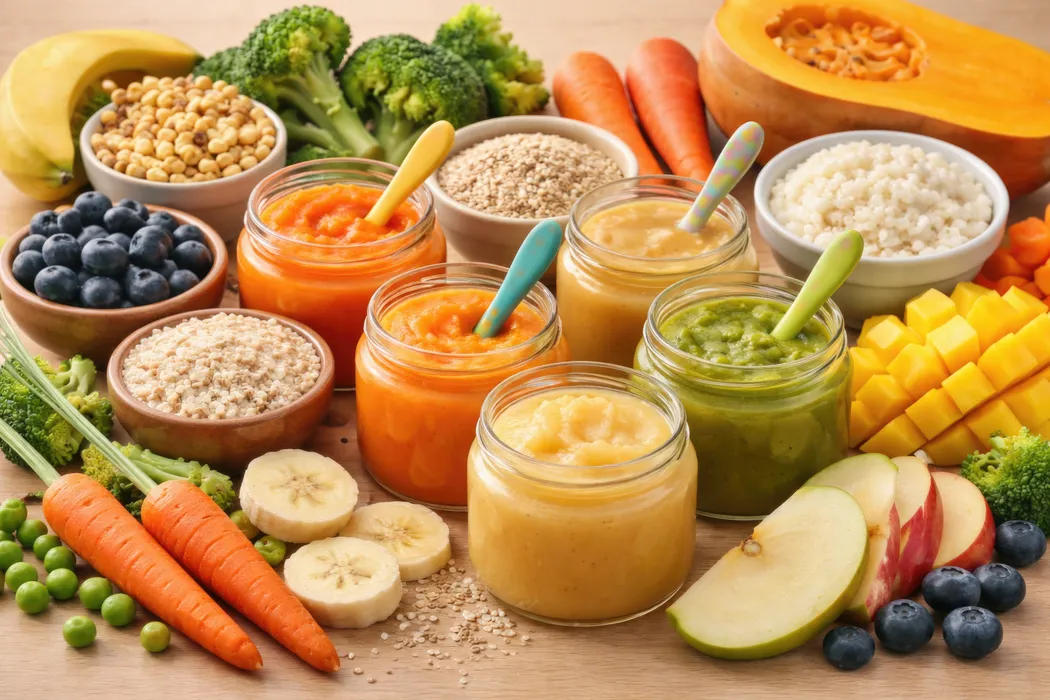
First Foods to Introduce: A Sample 6 Month Baby Food Chart

A simple rule for how to start solids for babies: introduce one new ingredient at a time, wait two to three days before adding another, and watch for any reactions. The table below gives a sample first-month progression.
 

WeekSuggested First FoodsTexture
1Rice cereal (thin porridge), mashed bananaSmooth, runny puree
2Sweet potato puree, apple puree    Smooth puree
3Dal water, mashed carrotThin, lump-free
4Mashed pear, soft-cooked potato    Slightly thicker puree

Start with just one or two teaspoons per meal. Volume matters less than familiarity at this stage; milk feeds remain the primary source of nutrition throughout the first year.

5 Easy Homemade Baby Food Recipes
 

Making food at home lets you control ingredients and texture. None of these homemade baby food recipes requires added salt, sugar, or spices for a six-month-old.

1. Rice Cereal Porridge

Dry-roast two tablespoons of rice, then grind to a fine powder. Boil one tablespoon of this powder in half a cup of water, stirring constantly for five to six minutes until smooth. Thin with breast milk or formula to a runny consistency your baby can swallow easily.

2. Mashed Banana

Peel half a ripe banana and mash thoroughly with a fork. Add a few drops of breast milk to loosen the texture. Banana is one of the easiest first foods for babies because no cooking is needed and it is gentle on a young stomach.

3. Sweet Potato Puree

Peel and cube a small sweet potato, steam until completely soft (about ten minutes), then blend or mash until smooth. Add boiled and cooled water to adjust the consistency. Sweet potato is rich in beta-carotene and usually well-accepted by babies.

4. Dal Water

Wash two tablespoons of moong dal and pressure-cook with half a cup of water until very soft. Strain the liquid (dal water) for beginners, or blend the dal with water to a thin puree once your baby manages liquids well. This provides early protein and iron without overwhelming the digestive system.

5. Apple Puree

Peel, core, and dice one small apple. Steam or boil for eight to ten minutes until soft, then blend to a smooth puree. If the texture is too thick, add a little boiled water. Serve at room temperature, never straight from the refrigerator.

A Note on Baby-Led Weaning at 6 Months

Some parents prefer baby-led weaning at 6 months, offering soft finger foods from the start rather than purees. This is a valid approach, but only if your baby has very strong head and trunk control and you are confident about safe food sizing. Purees remain a lower-risk starting point for most families, and both approaches can be combined.

Foods to Avoid and Choking Hazards

Some foods are genuinely unsafe for babies under twelve months.

  • Honey can contain Clostridium botulinum spores that produce a toxin babies cannot fight, causing infant botulism, a serious and potentially life-threatening illness.
  • Cow's milk as a main drink has protein and mineral levels that are too high for immature kidneys. Small amounts in cooking are acceptable, but it should not replace breast milk or formula.
  • Added salt and sugar: kidneys are not ready to handle excess sodium, and early sugar exposure shapes taste preferences in unhelpful ways.
  • Whole nuts, grapes, raw carrots, and cherry tomatoes are choking hazards. Always cut, mash, or cook until completely soft.
  • Unpasteurised dairy and raw eggs carry a risk of bacterial infection.
  • Fruit juices are high in sugar and low in nutrients; there is no nutritional reason to offer them at this age.

Report adverse events to your healthcare provider or the relevant regulatory authority if your baby has a severe reaction to any food.

Contraindications and When to Delay Solid Foods?

Certain babies should not start solids on the standard timeline without medical guidance first.
Talk to your paediatrician before beginning complementary feeding for babies in any of these situations:

  • Preterm birth: babies born before 37 weeks are typically assessed by corrected age rather than chronological age. A baby born two months early may not be developmentally ready until closer to eight months actual age.
  • Gastrointestinal conditions: reflux, malabsorption disorders, or recent gut surgery may require a specialist-guided plan for introducing solids.
  • Family history of severe food allergies or eczema: your doctor may recommend a specific order and pace for introducing allergenic foods.
  • Neurological or swallowing difficulties: babies who have trouble coordinating swallowing need assessment by a speech and language therapist before solids begin.
  • Low birth weight or failure to thrive: a dietitian or paediatrician should guide the introduction plan.

Starting solids too early or without appropriate support in these groups can cause real harm. If in doubt, ask before you start.

Hygiene, Storage, and Allergy Monitoring Tips

Safe Preparation

  • Wash your hands and all utensils before preparing food. Sterilise spoons, bowls, and any blending equipment until your baby is at least six months old.
  • Cook all vegetables and grains thoroughly, and cool food to a safe temperature before serving.
  • Never add salt, stock cubes, or seasoning blends to baby food; these often contain hidden sodium.

Storing Homemade Baby Food

  • Freshly made purees can be refrigerated in a sealed container for up to 48 hours.
  • Freeze purees in small portions using ice cube trays. Thaw in the refrigerator overnight and reheat thoroughly before serving.
  • Discard any food your baby has already eaten from; saliva introduces bacteria that spoil food quickly.

Tracking Allergens

The one-new-food-at-a-time rule is your best tool for allergy monitoring. Common allergens including milk products, egg, peanut products (as smooth paste, not whole), wheat, soy, and fish should be introduced one by one, with a two-to-three-day gap, watching for hives, swelling, vomiting, or breathing changes. Early introduction (rather than avoidance) of these foods is now generally recommended by paediatric allergy guidelines, but always check with your doctor if there is a family history of allergies.

Conclusion

Starting solid foods at around 6 months helps meet your baby’s increasing nutritional needs while they continue to receive breast milk or infant formula. Introduce a variety of nutrient-rich foods gradually, progressing to thicker textures and age-appropriate finger foods as your baby develops. Follow safe food preparation and feeding practices, introduce common allergens appropriately, and consult a paediatrician if you have concerns about feeding, allergies, growth or development.


FAQS

How much solid food should a 6-month-old eat per day?

At six months, solids are about exploration rather than replacing milk. Two to three tablespoons spread across one or two meals a day is a reasonable starting amount, with breast milk or formula continuing as the main nutrition.

Can I give water to a 6-month-old baby?

Small sips of cooled boiled water (around 60 ml per day) are fine once solids begin, mainly to help with swallowing and bowel regularity. Breast milk or formula should still provide most of your baby's fluid needs.

Should I continue breastfeeding after starting solids?

Yes. Breast milk remains a vital source of nutrition, antibodies, and comfort throughout the first year and beyond. Starting solids does not mean reducing milk feeds; the two should run alongside each other.

What consistency should baby food be at 6 months?

Food should be smooth, lump-free, and thin enough to fall off a spoon easily. Think runny porridge or a very soft puree. As your baby gains experience over the following weeks, you can gradually move to thicker textures.

How many times a day should I feed solids to my 6-month-old?

Begin with once a day and build to twice a day by seven to eight months as your baby shows interest and tolerates the new routine. There is no need to rush; following your baby's cues is more important than hitting a fixed schedule.

Apollo 247 Floating Action Button