logo
0

Ghee for Babies: Is Ghee Good for Babies?

Wondering, is ghee good for babies? Discover when to introduce ghee, its top health benefits, how to add it to baby food, and which ghee is best for infants.

article image

Dr.Kamran

As a parent, introducing solid foods to your little one is an exciting milestone. You want to ensure every spoonful is packed with vital nutrients to support your child's rapid growth and development. During this transitional phase, many parents ask: is ghee good for babies? This traditional golden fat has been a staple in households for generations, but you might wonder, is ghee safe for babies? Or perhaps you are asking yourself, can I give ghee to my baby and when can I give ghee to my baby?

In this comprehensive guide, we will explore the nutritional profile of clarified butter, its health benefits, safe introduction timelines and how to choose the right type of ghee for your baby's diet.

When to Introduce Ghee to Your Baby's Diet?

If you are wondering when to introduce ghee to your baby, the general consensus among paediatric nutritionists aligns with the introduction of solid foods. The World Health Organization (WHO) recommends exclusive breastfeeding for the first six months of life, after which complementary solid foods should be gradually introduced.

Timeline for Introducing Ghee

AgeRecommended Amount
6 Months2–3 drops per meal (start of solids)
7 Months1/4 teaspoon per meal
8 Months+1/2 teaspoon per meal

Here is a simple breakdown of how to navigate this milestone month by month:

Can I Give Ghee to My 6-Month-Old?

Yes! If you are asking, can I give ghee to my 6-month-old baby, the answer is yes, but in very small quantities. At this stage, a 6-month-old baby can eat ghee diluted into their first purées. Start with just two to three drops to see how their delicate digestive system tolerates it.

Can I Give Ghee to My 7-Month-Old?

By seven months, your little one is becoming more accustomed to swallowing textured foods. If you wonder, can I give ghee to my 7-month-old baby, you absolutely can. You can safely increase the portion to about one-fourth of a teaspoon mixed thoroughly into their meals.

Can I Give Ghee to My 8-Month-Old?

By the eighth month, your infant's digestive tract is stronger and producing more lipid-digesting enzymes. If you are asking, can I give ghee to my 8-month-old baby, you can comfortably add half a teaspoon of ghee to their daily solid foods.

Knowing when to add ghee to baby food is simple: as soon as they start transition foods, a tiny drop of this healthy fat can help make dry or bland purées smoother and much easier to swallow.

Why Is Ghee Good for Babies: The Health Benefits

When asking, is ghee good for babies, the answer is a resounding yes, provided it is consumed in moderation. Ghee, or clarified butter, is highly revered in paediatric nutrition because it offers concentrated energy and essential nutrients that support early childhood development.

Here are the primary reasons why ghee is good for babies:

  • Supports Rapid Brain Development: During the first two years of life, a baby's brain grows at an astonishing rate. Fats make up roughly 60% of the brain. Ghee is rich in essential fatty acids, including Omega-3 and Omega-9, which are crucial structural components for brain cells and cognitive development.
  • Aids Healthy Digestion: The digestive system of an infant is highly sensitive. Ghee contains butyric acid, a short-chain fatty acid that nourishes the cells of the intestinal wall, reduces inflammation and supports smooth bowel movements. This makes ghee good for babies who struggle with occasional infant constipation.
  • Rich in Fat-Soluble Vitamins: Ghee is a natural source of vitamins A, D, E and K. Vitamin A is vital for healthy eyesight and immune function; vitamin D is essential for calcium absorption and bone mineralisation; vitamin E acts as an antioxidant; and vitamin K plays a key role in blood clotting.
  • Calorie Dense for Healthy Weight Gain: Because babies have tiny stomachs, they cannot eat large volumes of food. Adding a small amount of healthy fat ensures they get enough calories to support their physical growth charts without feeling uncomfortably full.

How to Safely Add Ghee to Baby Food?

Once you decide to introduce this healthy ingredient, you need to know how to incorporate it into daily meals. You do not need to cook complex dishes; simply stirring a small amount of liquid ghee into their existing meals is highly beneficial.

Here are some easy ways to include ghee in baby food:

1. Baby Porridge with Ghee

Warm cereals are excellent first foods. Whether you are serving ragi (finger millet), oats, semolina or rice porridge, stirring in a few drops of ghee creates a nutritious baby porridge with ghee. Adding ghee to baby porridge not only enhances the nutritional profile but also gives the porridge a silky, appealing texture.

2. Ghee on Veggie and Fruit Purées

If your baby is just starting on mashed foods, you can add a tiny drop of ghee to baby food purées. It pairs beautifully with sweet potato, pumpkin, carrot and butternut squash, helping the body absorb the fat-soluble beta-carotene present in these orange vegetables.

3. Ghee Baby Food Mixes

For older infants eating mashed lentils (dal) and rice, mixing in a small touch of ghee creates a comforting, classic ghee baby food meal. This traditional baby food with ghee is incredibly easy for their stomachs to process.

If you are asking, can I add ghee to baby food daily? Yes, you can. However, keep the portion size minimal. Start with a couple of drops of ghee for baby food per meal, and do not exceed one teaspoon per day for infants under one year old.

For the highest level of purity, many paediatricians recommend making homemade ghee baby food. By clarifying unsalted, organic butter at home, you ensure the final product is completely free of added sodium, preservatives or artificial colours.

Which Ghee Is Good for Babies? Cow vs Buffalo

When shopping or preparing meals, a common question arises: which ghee is good for babies?

Let's look at the debate of which ghee is good for babies,, cow or buffalo,, to help you make an informed decision:

FeatureCow GheeBuffalo Ghee
Fat ContentModerate (easier to digest)High (heavier on stomach)
Nutrient DensityHigh in vitamin A and caroteneHigh in phosphorus and calcium
DigestibilityHighly suitable for infantsBetter suited for older children
RecommendationHighly recommendedUse sparingly for babies

Is Cow Ghee Good for Babies?

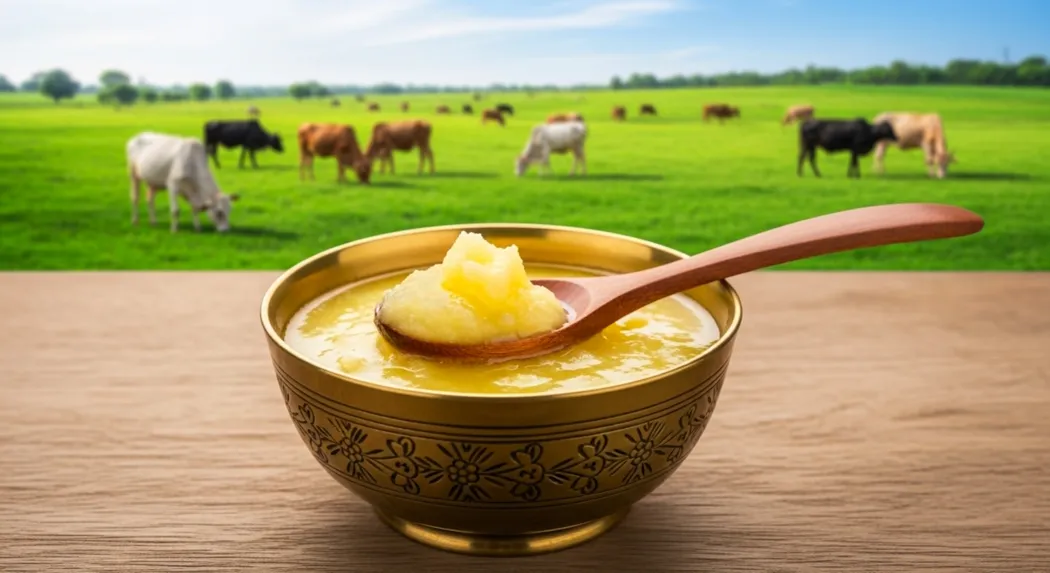
Yes, is cow ghee good for babies? Absolutely. Nutritionists widely consider organic, grass-fed A2 cow ghee to be a highly suitable option and a good ghee for babies. A2 cow ghee comes from indigenous cow breeds and contains proteins that are highly compatible with human digestion, making it much gentler on an infant's stomach.
Is Buffalo Ghee Good for Babies?

Now, is buffalo ghee good for babies? While buffalo ghee is highly nutritious and rich in minerals, it has a much higher fat content than cow ghee. This dense fat structure can sometimes be too heavy and difficult for an infant's immature digestive system to break down. Therefore, it is best to stick to cow ghee during the first year of life.

Which Brand Ghee Is Good for Babies in India?

If you cannot make it at home and are looking for commercial options, you might wonder which brand ghee is good for babies in India. Look for certified organic brands that specialise in A2 cow ghee made using the traditional "Bilona" method. This method involves churning curd to obtain butter, which is then slow-cooked to make ghee. Ensure the brand has zero preservatives, artificial flavours or added salt.

Ghee or Butter: Which Is Good for Babies?

When deciding between ghee and butter, which is good for babies, ghee often takes the lead for several nutritional reasons:

  • Lactose and Casein Content: Ghee is clarified butter. During the clarification process, the water and milk solids (which contain lactose and casein) are simmered and strained out. This leaves behind a pure fat that is virtually free of lactose and casein, making it highly tolerable for babies who might have mild dairy sensitivities.
  • Smoke Point: Ghee has a much higher smoke point (about 485°F/250°C) than butter (350°F/177°C). This means it does not burn or break down into harmful free radicals easily when used for cooking.
  • Preservation: Because it lacks moisture and milk solids, ghee has a much longer shelf life and does not spoil easily, whereas butter requires constant refrigeration.

Safety and Precautions: Ghee Allergy in Babies

While ghee is generally safe and highly beneficial, parents must remain vigilant regarding a potential ghee allergy in babies. Because ghee is derived from cow's milk, traces of dairy proteins can occasionally remain after the clarification process.

If your baby has a diagnosed Cow's Milk Protein Allergy (CMPA) or severe lactose intolerance, consult your paediatrician before introducing ghee.

Signs of an Allergic Reaction to Watch For

  • Skin reactions: Hives, eczema flares or unexplained rashes.
  • Digestive distress: Vomiting, diarrhoea or excessive gas.
  • Respiratory issues: Wheezing or chronic runny nose.
  • Swelling: Swelling around the lips, tongue or face.

Always follow the "three-day wait rule" when introducing any new food, including ghee. Introduce a tiny amount of ghee on the first day, and do not introduce any other new foods for the next three days. This allows you to easily identify and isolate the cause of any adverse reaction.

Conclusion

Ghee can be included in a baby’s complementary diet in small amounts once the baby is ready for solid foods. It provides energy and fat, which are important for growth and development, but it is not a necessary food or a substitute for a varied, nutrient-rich diet. Choose good-quality ghee and add small amounts to suitable foods such as porridges, khichdi, or mashed vegetables. Avoid relying on ghee as a primary source of nutrition and focus on offering a balanced variety of foods appropriate for your baby’s age and developmental stage.

FAQs

Can adding ghee to baby food help with weight gain?

Yes. Ghee is an excellent, healthy, calorie-dense source of dietary fat. For infants who are tracking low on growth charts or require extra energy, adding a few drops of cow ghee to their daily purées or porridges is a safe, natural way to increase caloric intake and support healthy weight gain.

Can I give my baby ghee if they are lactose intolerant?

Most babies with mild lactose sensitivity can tolerate pure ghee because the milk solids are entirely removed during the clarifying process. However, if your baby has a severe dairy allergy or Cow's Milk Protein Allergy (CMPA), consult your paediatrician before adding ghee to their diet.

Does ghee cause colds or coughs in babies?

No. This is a common myth. Pure cow ghee does not cause or worsen colds, coughs or mucus production. In fact, in traditional wellness practices, warm cow ghee is often used in small quantities to soothe a scratchy throat.

Is it better to buy organic ghee or make it at home for my baby?

Both options are fine, but homemade ghee is highly recommended because you have complete control over the hygiene, ingredients and preparation process. If you buy store-bought ghee, ensure it is certified organic, unsalted and made from A2 cow's milk.

Can I use ghee as a topical moisturiser for my baby's skin?

Yes. Pure cow ghee has natural moisturising and anti-inflammatory properties. It can be used to soothe dry skin patches, nappy rashes or chapped lips. However, for active eczema or severe skin conditions, consult your paediatrician for targeted medical treatments.

Apollo 247 Floating Action Button