logo
0

How Much Weight Should a Newborn Gain in a Month?

Learn how much weight a newborn may gain in a month, including expected growth patterns, feeding factors, growth charts, and signs that may require medical attention.

article image

Dr.Ezhilrasan

Knowing how much weight should a newborn gain in a month is one of the first things new parents want to understand. Weight gain is the clearest early signal that your baby is feeding well, digesting properly, and growing as expected. When the numbers on the scale shift, it is natural to feel anxious. This guide explains what is normal, what to watch for, and when to call your paediatrician.

Normal Weight Gain Range for Newborns in the First Month

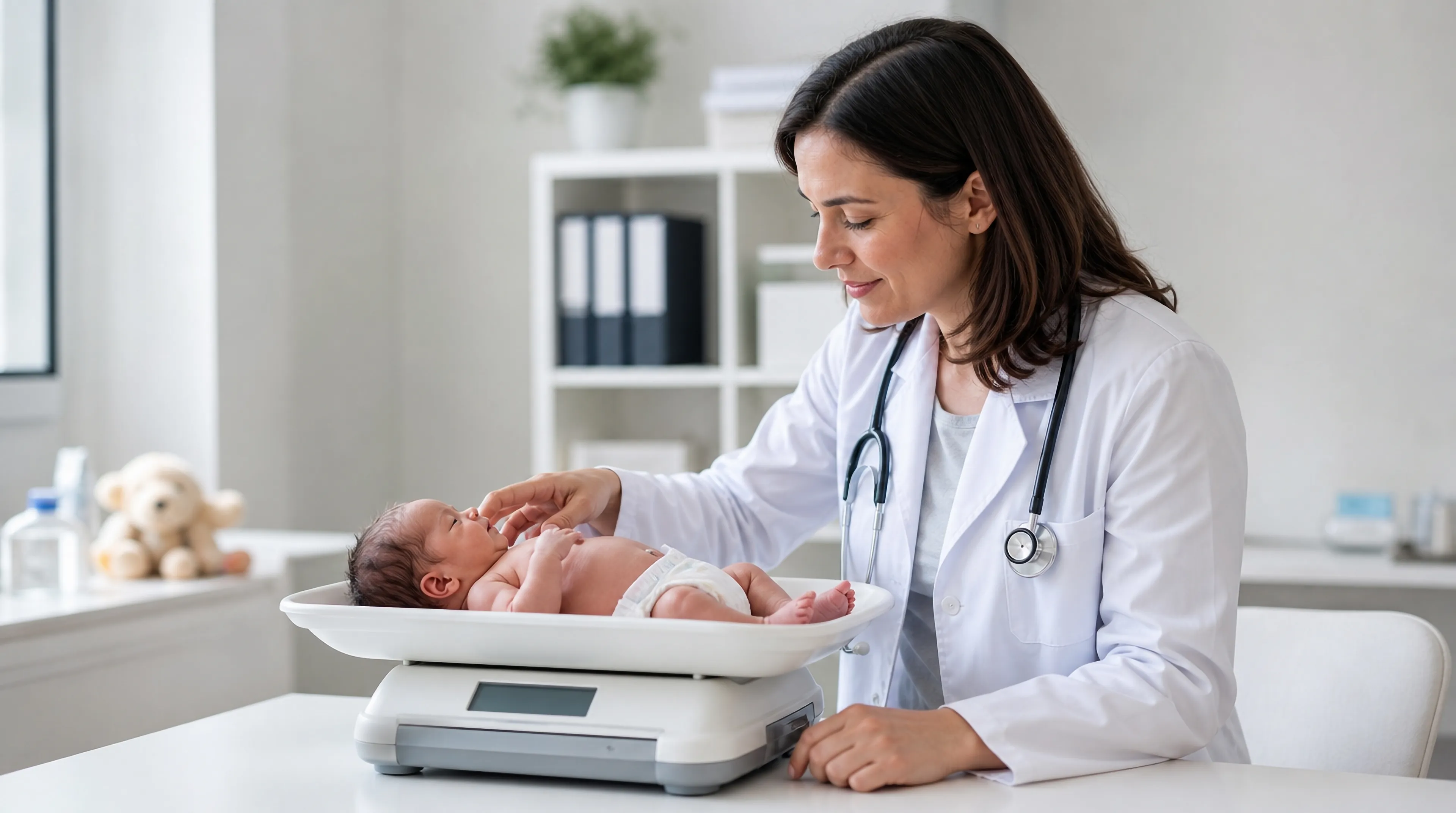
Most newborns gain roughly 150 to 200 grams per week after the first week or two. Over a full month, that adds up to about 600 to 800 grams above their birth weight by the four-week mark.

Guidelines from major pediatric organisations generally place the healthy range for average weight gain for newborn per week at 150 to 200 grams, though some babies grow slightly faster or slower and still thrive.

A practical way to think about it:

  • By day 14, most babies should be back at or above their birth weight.
  • Between weeks 2 and 4, steady gains of at least 150 grams per week are reassuring.
  • A newborn growth chart from your first month plots weight alongside length and head circumference, and the curve matters more than any single number.

Your pediatrician will plot your baby's measurements on a standard growth chart at each visit. Consistent upward movement along a percentile line is healthy, even if that line is the 10th percentile.

Why Newborns Lose Weight Before They Gain?

Almost every newborn loses weight in the first few days after birth, and this is completely expected. Babies are born with extra fluid, and they pass it through urine and stool before feeding is fully established. A loss of 5 to 10 percent of birth weight in the first three to five days is considered normal.

For a baby born at 3,200 grams, that means losing up to 320 grams before the scales start climbing again. Most healthy term babies regain their birth weight by day 10 to 14. If regain takes longer than two weeks, a pediatrician should assess feeding.

Factors That Affect Weight Gain

Newborn weight gain first month can vary for several reasons:

  • Feeding type: Breastfed babies sometimes gain slightly more slowly in the earliest weeks than formula-fed babies, though both patterns are normal when feeding is going well.
  • Prematurity: Babies born before 37 weeks may have different growth expectations and need closer monitoring.
  • Illness or infection: Any illness that reduces feeding interest or increases energy demand can slow weight gain.
  • Latch and milk supply: Poor latch or low supply directly limits how much a breastfed baby takes in per feed.
  • Birth weight: Smaller babies may show different gain patterns compared to larger newborns.
  • Genetics: Family build plays a role; a baby with smaller parents may track at a lower percentile and still be perfectly healthy.

Newborn feeding and weight gain are closely linked. If you are concerned about supply or latch, a lactation consultant can help identify and fix the issue early.

Signs Your Newborn Isn't Gaining Enough Weight

Signs of poor weight gain in newborns can be subtle at first. Contact your baby's doctor if you notice:

  • Fewer than six wet diapers in 24 hours after day four of life
  • Dark, concentrated urine rather than pale yellow
  • Persistent sleepiness or difficulty waking for feeds
  • Poor feeding sessions: pulling off frequently, crying at the breast, or feeding for less than five to ten minutes per side
  • A flat or downward curve on the growth chart over two or more visits
  • Baby appears thin, with loose skin around the thighs or buttocks
  • Jaundice that seems to be worsening rather than clearing

No single sign confirms a problem, but a cluster of these warrants prompt evaluation.

Contraindications and When Not to Self-Manage at Home

Home weight tracking with a baby scale can be reassuring, but there are situations where it is not enough and delays professional care. Do not rely solely on home monitoring if:

  • Your baby is losing weight beyond day five and has not started regaining
  • Your baby is premature, has a known health condition, or was admitted to a NICU after birth
  • Your baby is jaundiced and not feeding well
  • You notice any of the red flags listed above

In these situations, a full pediatric evaluation is essential. Home observation cannot replace clinical assessment of hydration, feeding technique, and overall health. Report adverse events or sudden changes in your newborn's condition to your healthcare provider or the relevant regulatory authority.

For general newborn care at home, including topics like newborn belly button care guide, reliable information from a trusted source can help you feel prepared.

When to Consult a Pediatrician?

Bring your baby to the pediatrician promptly if:

  • Weight gain is consistently below 150 grams per week after day 14
  • Your baby has not regained birth weight by two weeks of age
  • Weight is dropping after the initial expected loss has ended
  • You are unsure whether your baby is feeding adequately, regardless of weight numbers
  • Your instinct tells you something is off, even if you cannot name a specific sign

Routine well-baby visits at one week, two weeks, and one month are designed to catch these concerns early. Do not skip them, especially in the first month. Catching a slow weight gain early means simpler, faster correction.

Conclusion

Newborn weight gain varies between babies and should be assessed alongside length, head circumference, feeding, hydration, and overall development rather than by a single monthly figure. Most newborns lose some weight during the first few days after birth and generally regain their birth weight within the first couple of weeks, although the timing can vary. After this early period, babies typically gain weight steadily, but the rate can differ according to feeding method, genetics, health, and individual growth patterns. Regular measurements plotted on an appropriate growth chart help paediatricians assess whether a baby's growth is following an expected pattern. Parents should seek medical advice if a newborn is not regaining birth weight as expected, has poor feeding, significantly fewer wet diapers, repeated vomiting, unusual sleepiness, or other signs of inadequate intake or illness. Babies with feeding or growth concerns may benefit from assessment by a paediatrician or qualified lactation professional.

FAQS

How much weight should a newborn gain per week?

Most healthy newborns gain 150 to 200 grams per week after the first week. Gains below 150 grams per week consistently should be discussed with a pediatrician.

Is it normal for a newborn to lose weight in the first week?

Yes. A loss of up to 7 to 10 percent of birth weight in the first three to five days is expected and normal. Babies should begin regaining by day five to seven and be back to birth weight by day 14.
How do I know if my baby is gaining enough weight from breastfeeding?

Regular wet and dirty diapers, a baby who seems satisfied after feeds, and steady weight gain at check-ups are the clearest signs. When to worry about baby weight gain is typically when wet diapers drop below six per day or weight stalls.

What is a healthy weight gain chart for a 1-month-old?

A newborn growth chart for the first month tracks weight, length, and head circumference. Rather than focusing on a specific percentile, look for a consistent upward curve at each visit. Your pediatrician uses WHO-based charts to interpret these trends.

Can overfeeding cause too much weight gain in newborns?

Overfeeding is uncommon in breastfed babies because they self-regulate intake. With bottle feeding, offering more milk than a baby signals for can lead to faster gain, but rapid weight gain in the first month is rarely a clinical concern unless extreme. Discuss feeding volumes with your pediatrician if you are unsure.

Apollo 247 Floating Action Button