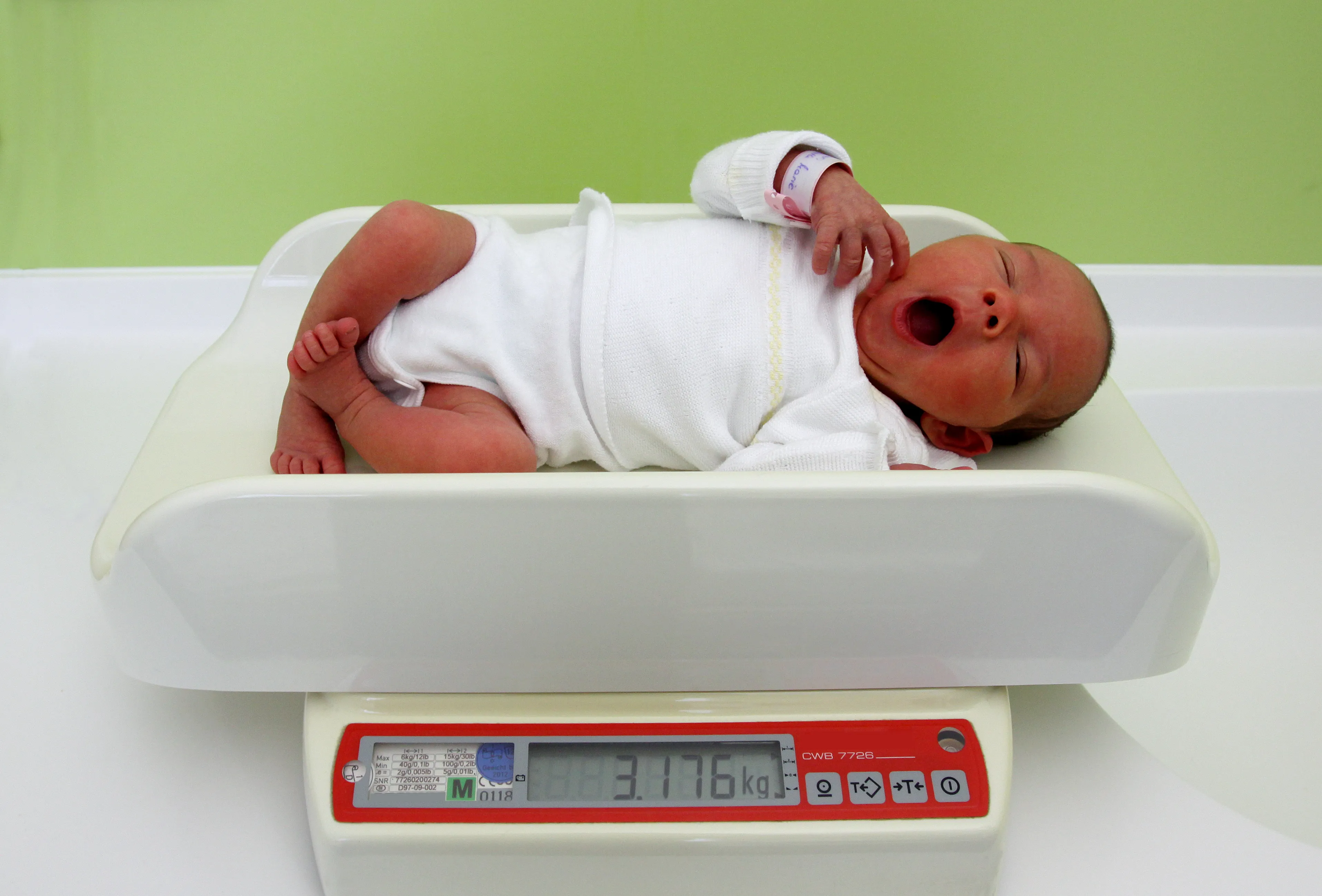
Learn how much weight a newborn may gain in a month, including expected growth patterns, feeding factors, growth charts, and signs that may require medical attention.
Dr.Nallapu Siri
Knowing how much weight should a newborn gain in a month is one of the first things new parents want to understand, and for good reason. A baby's weight is one of the clearest early signals that feeding is going well and development is on track. This guide walks you through what to expect month by month, what can slow things down, and exactly when to call your pediatrician.
Expected Weight Gain for Newborns Each Month
Most healthy newborns gain roughly 150 to 200 grams per week during the first three months of life. That works out to about 600 to 800 grams per month. After three months, the pace gradually eases as babies become more active.
Average baby weight gain per week, by age: Expected Weight Gain for Newborns Each Month Most healthy newborns gain roughly 150 to 200 grams per week during the first three months of life. That works out to about 600 to 800 grams per month. After three months, the pace gradually eases as babies become more active.
Average baby weight gain per week, by age:
Age
Typical weekly gain
0 to 3 months
150 to 200 g per week
3 to 6 months
100 to 150 g per week
6 to 12 months
70 to 90 g per week
For a 1-month-old, most babies weigh somewhere between 3.5 kg and 5 kg depending on birth weight and feeding pattern. A baby who started at 2.8 kg at birth could reasonably reach 3.4 to 3.6 kg by day 30, once the initial post-birth dip has been recovered. What matters most is a consistent upward trend, not a single number on any given day.
Pediatricians use newborn weight gain charts, typically based on WHO growth standards, to check whether a baby is following their own growth curve over time rather than comparing them to a fixed target.
Why Newborns Lose Weight After Birth?
Almost every newborn loses some weight in the first few days of life. This is completely normal and not a sign that something is wrong.
Babies are born with extra fluid that they shed in the first 48 to 72 hours. Most lose between 5% and 10% of their birth weight during this period. A 3 kg baby might drop to about 2.7 kg before starting to climb again.
The key milestone to watch is regaining birth weight by 10 to 14 days of age. If a baby has not regained birth weight by two weeks, a pediatrician visit is needed right away, not a wait-and-see approach.
Factors That Affect Newborn Weight Gain
Several things influence how quickly a baby puts on weight:
Breastfed babies sometimes gain a little more slowly in the first few weeks compared to formula-fed babies, simply because it takes a few days for milk supply to establish. Once feeding is well-established, breastfed babies gain well. A lactation consultant can help if you have concerns about supply before you consider switching or supplementing.
A low birth weight baby or a premature baby may follow a different growth curve entirely. Their weight gain is tracked against corrected age charts, not standard ones.
Even a mild illness can stall weight gain temporarily. Jaundice, for example, can make babies sleepy and feed poorly for several days.
Genetics play a role too. Smaller parents often have smaller babies who gain at a slower but perfectly healthy rate.
While your baby is growing, small daily care routines matter alongside feeding, including how to care for your newborn's belly button as the cord stump heals in those first weeks.
Poor weight gain does not always announce itself loudly. Watch for these signs of poor weight gain in infants:
Fewer than six wet diapers in 24 hours after day five of life
Stools that are still dark or meconium-coloured after day four
A baby who seems lethargic, is difficult to wake for feeds, or feeds for less than 10 minutes at a stretch
No measurable weight gain over two consecutive weeks
Skin that looks loose or the fontanelle (soft spot on the head) appears sunken
Feeding fewer than 8 times in 24 hours during the newborn period
Any of these warrants a call to your baby's doctor rather than a change in feeding on your own.
When to Seek Medical Guidance Before Changing Feeding?
Parents should not alter feeding routines, switch formula brands, dilute formula, or add supplements without speaking to a pediatrician first, particularly in these situations:
The baby was born premature or has a diagnosed metabolic, cardiac, or digestive condition
Birth weight was below 2.5 kg (low birth weight)
The baby has lost more than 10% of birth weight and has not recovered it
There are signs of dehydration or failure to thrive noted by a doctor
A specific formula or feeding plan has already been prescribed by a specialist
Diluting formula to make it last longer is particularly dangerous. It reduces calorie and nutrient intake and can cause serious harm. Adding cereal or solid foods before six months is also not recommended and should only happen under direct medical guidance for specific clinical reasons.
Report adverse events, including unexpected reactions to any formula or supplement, to your healthcare provider or the relevant regulatory authority.
Tips to Support Healthy Newborn Weight Gain
These practical steps support good weight gain without requiring special products or strict schedules:
Feed frequently. In the first month, most newborns need 8 to 12 feeds in 24 hours. Watch for hunger cues like rooting, hand-to-mouth movements, or fussing rather than waiting for a cry.
Check the latch. A poor latch means the baby works hard but gets little milk. A lactation consultant can assess and correct this in one or two sessions.
Burp between sides or mid-bottle. Some babies swallow a lot of air, which makes them feel full before they have taken enough milk.
Keep feeds calm. Overstimulation can cause babies to pull off the breast or bottle before a full feed is complete.
Track feeds loosely. A rough count of wet diapers and feeds gives your pediatrician useful information at each checkup without needing a detailed log.
Attend all scheduled well-baby visits. Newborn growth milestones month by month are best assessed by a professional comparing weight on a growth chart over time.
When to Consult a Paediatrician?
Some situations call for a doctor visit without delay:
Your baby has not regained birth weight by 14 days of age
Weight gain has stalled for two weeks in a row at any point in the first year
Your baby is showing signs of dehydration: very few wet diapers, dry mouth, or extreme sleepiness
You notice a sudden drop in weight after a period of normal gain
Your baby was born with low birth weight and is not following the growth curve set by the specialist
Do not try to correct these situations at home by increasing formula concentration, adding extra feeds without guidance, or introducing solids early. A paediatrician can identify the cause and suggest the right course of action.
Conclusion
Newborn weight gain varies between babies and should be assessed alongside length, head circumference, feeding, hydration, and overall development rather than by a single monthly figure. Most newborns lose some weight during the first few days after birth and generally regain their birth weight within the first couple of weeks, although the timing can vary. After this early period, babies typically gain weight steadily, but the rate can differ according to feeding method, genetics, health, and individual growth patterns. Regular measurements plotted on an appropriate growth chart help paediatricians assess whether a baby's growth is following an expected pattern. Parents should seek medical advice if a newborn is not regaining birth weight as expected, has poor feeding, significantly fewer wet diapers, repeated vomiting, unusual sleepiness, or other signs of inadequate intake or illness. Babies with feeding or growth concerns may benefit from assessment by a paediatrician or qualified lactation professional.
FAQS
How much weight should a newborn gain in the first month?
Most newborns gain around 600 to 800 grams in their first month, after recovering from the normal post-birth dip. The exact amount varies with birth weight and feeding method, so a consistent upward trend matters more than hitting a specific number.
What is the average weight gain per week for a newborn?
In the first three months, the average baby weight gain per week is roughly 150 to 200 grams. This is a general range; your pediatrician will use a growth chart to see whether your baby's own curve is healthy.
Is it normal for a newborn to lose weight after birth?
Yes. Most newborns lose 5% to 10% of their birth weight in the first few days as they shed excess fluid. They should regain this weight by 10 to 14 days of age.
What if my newborn isn't gaining enough weight?
Contact your pediatrician rather than changing feeds on your own. The doctor can identify whether the cause is a latch issue, low supply, illness, or something else, and recommend the right support.
How often should a newborn be weighed?
Most pediatricians weigh newborns at birth, at the 2-week visit, and then at 1, 2, 4, 6, 9, and 12 months as part of scheduled well-baby checkups. If there are concerns about weight gain, more frequent weigh-ins may be advised.