logo
0

How to Make Baby Eat: Feeding Tips for Baby Eating Food

Is your little one refusing meals? Discover expert tips on how to make baby eat, transition to solids, and establish stress-free baby eating food habits.

article image

Dr.J.T.Hema Prathima

Watching your baby eat food for the first time is an unforgettable milestone. It is a transition filled with adorable facial expressions, messy high chairs, and plenty of photos. However, for many parents, this exciting phase can quickly become a source of worry. If your little one turns their head away, pushes the spoon, or spits out everything you offer, you might find yourself searching for solutions on how to make your baby eat without tears.

You are not alone in this journey. Learning how to get your baby to eat is one of the most common challenges new parents face. In this comprehensive guide, we will explore infant nutrition, outline developmental milestones, and share gentle, expert-approved strategies to help your child build a healthy, lifelong relationship with food.

Healthy Milestones: Encouraging Your Baby to Eat Food Joyfully

Before diving into feeding techniques, it is essential to understand when and how to start. The World Health Organization (WHO) and the Centers for Disease Control and Prevention (CDC) recommend introducing solid foods around 6 months of age. Before then, breast milk or infant formula provides the nutrition your child needs.

How to Tell If Your Baby Is Ready for Solids

Age is not the only indicator. When you have a small baby eating solid baby food for the first time, you must look for key developmental signs of readiness:

  • Strong Head Control: Your baby can hold their head up steadily and sit upright with minimal support.
  • The Disappearance of the Tongue-Thrust Reflex: Infants naturally push objects out of their mouth with their tongue. This reflex needs to fade so they can swallow solids safely.
  • Curiosity About Meals: Your baby watches you eat, reaches for your plate, or opens their mouth when food is nearby.
    Good Grasping Skills: They can pick up toys or large pieces of food and bring them to their mouth.

Step-by-Step: Transitioning Your Baby to Solid Foods

When starting the milestone of eating solid baby food, texture progression helps your baby develop jaw strength, swallowing skills, and sensory tolerance.

Phase 1: Smooth Purées (6 Months)

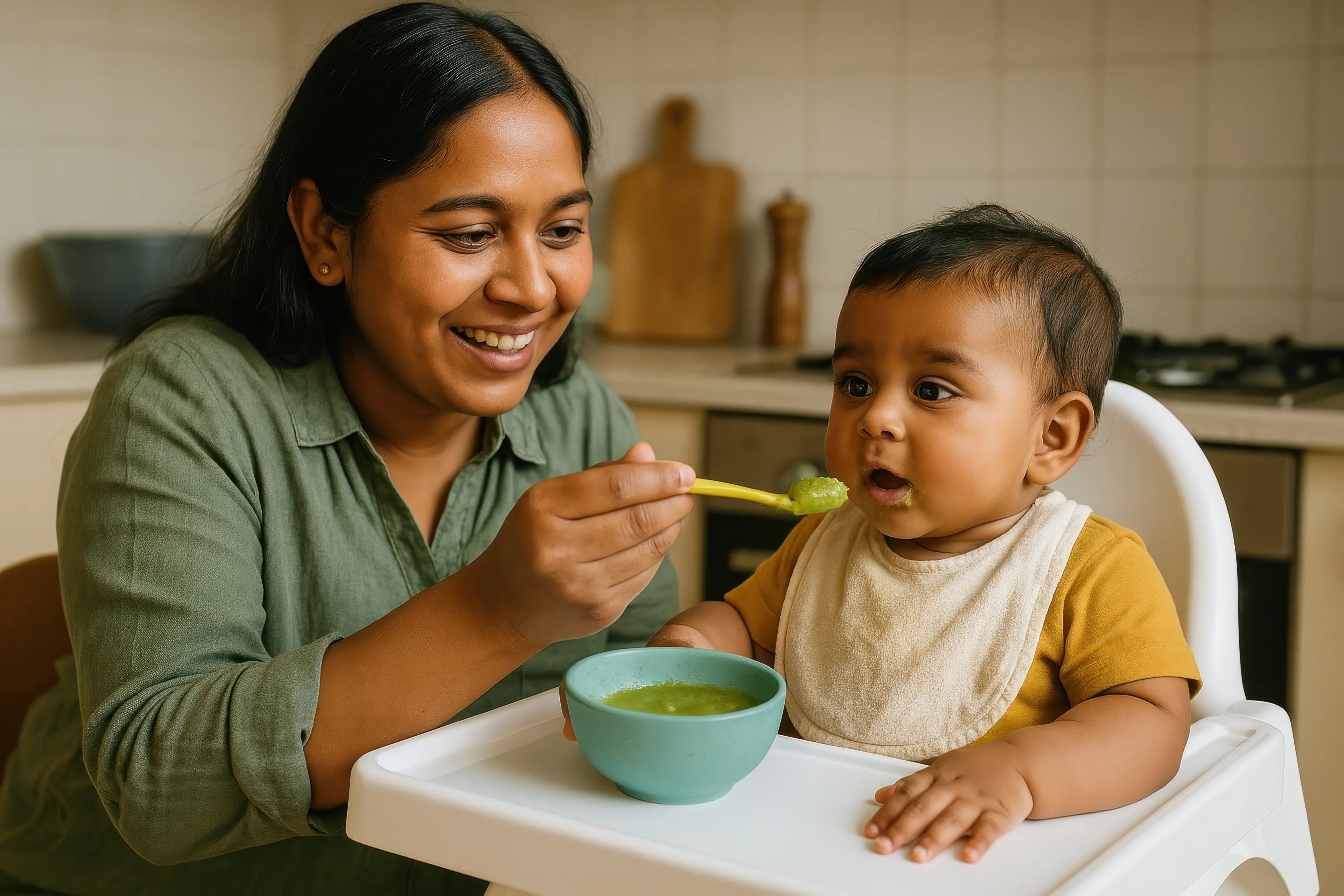
Picture a classic scene of a mother feeding baby purée with a soft silicone spoon. Purées are an excellent starting point because they have a consistency similar to liquid milk while introducing new, gentle flavours.

  • What to Serve: Single-ingredient purées such as iron-fortified baby cereal, puréed peas, sweet potatoes, or apples.
  • Tip: Introduce one single-ingredient food at a time, waiting 3 to 5 days before introducing another so you can monitor your baby for any allergic reactions.

Phase 2: Mashed and Lumpy Foods (7 to 9 Months)

Once purées are mastered, feeding mashed foods can help your baby practise chewing, even if they don't have teeth yet.
 

  • What to Serve: Mashed avocado, mashed banana, or finely flaked salmon.
  • Sensory Progression: As your infant starts eating baby food with different textures, this becomes an important sensory learning process. Don't keep your baby on smooth purées for too long, as delaying thicker textures may make it harder for some children to accept a wider range of textures later on.

Phase 3: Soft Finger Foods (10 to 12 Months)

At this stage, babies often enjoy greater independence. Offer soft, bite-sized pieces they can pick up with their thumb and forefinger, using the pincer grasp. Good options include steamed carrot pieces, small pieces of ripe pear, or well-cooked pasta.

Stress-Free Strategies on How to Make My Baby Eat Food

If your little one is currently refusing meals, try not to panic. Paediatric feeding guidance often emphasises responsive feeding, in which parents provide suitable foods and allow the child to respond to their own hunger and fullness cues.

The Division of Responsibility

Under this framework, you and your baby have distinct roles:

  1. Your Job: Decide what food to serve, when to serve it, and where to serve it.
  2. Your Baby's Job: Decide whether to eat it and how much to eat.

When you understand that you cannot, and should not, force a baby to swallow, the pressure disappears. Learning how to make a baby eat food is not about control. It is about creating a positive environment where your child feels safe to explore.

Expert Feeding Tips to Try Today

Here are some practical strategies that can help make mealtimes calmer and more enjoyable:

  • Practise Responsive Feeding: Pay close attention to your baby's hunger and fullness cues. If they turn their head, push the spoon away, or close their mouth tightly, accept that they may be full. Respecting these boundaries can help prevent overeating and mealtime power struggles.
  • Embrace the Mess: While social media may show a cute baby eating food cleanly, the real-world experience of feeding a baby is often wonderfully messy. Let your baby play with their food. Smearing, squeezing, and dropping food can help them become comfortable with new textures.
  • Keep Portions Tiny: Start with a small portion of food on their tray. Large piles of food can overwhelm a young child and make mealtimes more difficult.
    Eat Together as a Family: Babies learn by imitation. Sit down and eat your meals with your baby. When they see you happily eating foods such as broccoli or carrots, they may naturally want to mimic your actions.

Cultural and Spiritual Comforts: Duas for Feeding Challenges

In many households, mealtime is not just physical. It is also a spiritual event. Feeding a child can be emotionally exhausting, and many parents find peace, comfort, and patience by integrating faith-based practices into their daily routines.

For Muslim parents experiencing feeding difficulties, turning to prayer can be a source of comfort. Reciting a dua for a baby not eating can soothe a worried parent and remind them to stay patient during the feeding journey.

Parents may recite a specific dua for their baby to eat food to ask for blessings, or Barakah, in their child's nourishment. A common practice is reciting Bismillah, meaning "In the name of Allah", before offering the first spoonful. Additionally, seeking ease through a dua for a baby eating food, such as reciting verses of gratitude or asking for ease in their growth, can help make mealtime feel calm and meaningful.

While these spiritual practices can offer emotional support and patience, they should complement, rather than replace, appropriate feeding and healthcare guidance.

Safety First: What to Avoid When Feeding Your Baby

To ensure your baby's eating experiences are safe and nutritious, keep these essential precautions from the American Academy of Pediatrics (AAP) in mind:

1. Avoid Choking Hazards

Infants are still learning how to coordinate chewing and swallowing. Never feed your baby:

  • Whole Grapes or Cherry Tomatoes: Always cut them into quarters or prepare them in an age-appropriate way.
  • Whole Nuts, Large Seeds, or Spoonfuls of Thick Peanut Butter: Avoid whole nuts and large seeds. Thin smooth peanut butter before offering it to a baby.
  • Hard, Raw Vegetables: Such as carrots or celery.
  • Hard Candies : Popcorn, or Hot Dogs.

2. No Honey Before Age One

Never give honey to a baby under 12 months old. Honey can contain spores of Clostridium botulinum, which can cause infant botulism, a rare but serious and potentially life-threatening illness in infants.

3. Limit Added Sugars and Sodium

Avoid adding salt or sugar to your baby's homemade meals. Limiting highly processed foods also helps your baby become familiar with the natural flavours of vegetables, fruits, and other whole foods.

Conclusion

Teaching a baby to eat is a journey of discovery, patience, and love. By focusing on responsive feeding, accepting the beautiful messes, and respecting your baby's hunger and fullness cues, you can help them build a positive relationship with food. Take a deep breath, trust the process, and enjoy these special mealtime moments together.

FAQS

Why is my baby refusing to eat solid foods suddenly?

It is completely normal for babies to go through phases of food refusal. This can be caused by teething discomfort, mild illness, overtiredness, or a growing sense of independence. Never force-feed your baby. Offer breast milk or formula as appropriate and try solids again later when your baby is well-rested.

How much solid food should a 6-month-old eat?

At 6 months, solid food is primarily for practice and sensory development. Most of your baby's nutrition still comes from breast milk or infant formula. Start with a small amount and gradually increase the quantity as your baby shows appetite and interest.

Is gagging normal when starting solids?

Yes, gagging is a normal protective reflex that helps babies manage food as they learn to eat. Choking, on the other hand, can block the airway and is an emergency. Learn the difference and always supervise your baby closely during meals.

When can I introduce highly allergenic foods like peanuts and eggs?

Common food allergens, such as peanuts and eggs, can generally be introduced around 6 months when your baby is developmentally ready for complementary foods. Offer them in age-appropriate, safe textures. If your baby has severe eczema, an existing food allergy, or another relevant medical condition, speak with your healthcare professional about introducing allergens safely.

What should I do if my baby only wants to drink milk?

Up until one year of age, breast milk or infant formula remains an important source of nutrition. If your baby consistently refuses solids or you are concerned about their feeding, speak to your paediatrician. They can assess your baby's development and provide tailored guidance.

Apollo 247 Floating Action Button