logo
0

Hypoallergenic Formula for Babies: Milk Allergy Guide

Learn about hypoallergenic formula for babies, including milk allergy signs, formula types, when they are needed, safety precautions, and when to see a paediatrician.

article image

Dr.J.T.Hema Prathima

Feeding a baby with a possible milk allergy can feel overwhelming. Hypoallergenic formula exists for a specific purpose: to give infants with cow's milk protein allergy (CMPA) or severe digestive problems a safe alternative when breast milk is unavailable or insufficient. This guide explains how these formulas work, what the main types are, and why getting a proper diagnosis before switching matters for your baby's health.

What Is Hypoallergenic Formula and Who Needs It?

Standard cow's milk formula contains whole proteins. In some babies, the immune system treats these proteins as a threat and triggers an allergic response. Hypoallergenic formula for babies uses proteins that have been broken down (hydrolysed) or replaced entirely with individual amino acids, making them far less likely to cause a reaction.

This type of formula is not a fix for everyday fussiness or mild gassiness. It is intended for babies with:

  • Confirmed or strongly suspected cow's milk protein allergy
  • Severe eczema linked to food triggers
  • Significant gastrointestinal symptoms such as blood in stool or persistent vomiting
  • Complex feeding needs assessed by a doctor

Most healthy babies who spit up occasionally or cry after feeds do not need a specialised formula.

Signs Your Baby May Have a Milk Allergy or Intolerance

Recognising the signs of milk allergy in babies early helps you have a more informed conversation with your paediatrician. Common symptoms include:

  • Skin reactions: hives, widespread eczema, or a persistent rash around the mouth and chin
  • Digestive symptoms: vomiting, diarrhoea, blood or mucus in the stool, or extreme bloating
  • Respiratory signs: a runny nose, wheezing, or coughing with no other obvious cause
  • Behavioural signs: prolonged crying, arching the back during feeds, or refusing feeds altogether
  • In rare, severe cases: swelling of the lips or face, or difficulty breathing (anaphylaxis)

Lactose intolerance is different from allergy. Intolerance is a digestive issue caused by low lactase enzyme levels, not an immune response. Symptoms can overlap but are generally milder and do not involve the immune system.

This list is not a diagnostic tool. Several of these symptoms can have other causes, and only a healthcare professional can confirm whether cow's milk protein allergy is present.

Types of Hypoallergenic and Specialised Formulas

Once a diagnosis is confirmed, your doctor will recommend a formula suited to your baby's specific condition. The main categories are:

  • Extensively hydrolysed formula (EHF): Cow's milk proteins are broken into very small fragments. Most babies with CMPA tolerate these well, making extensively hydrolysed formula the standard first-choice cow's milk allergy formula after diagnosis.
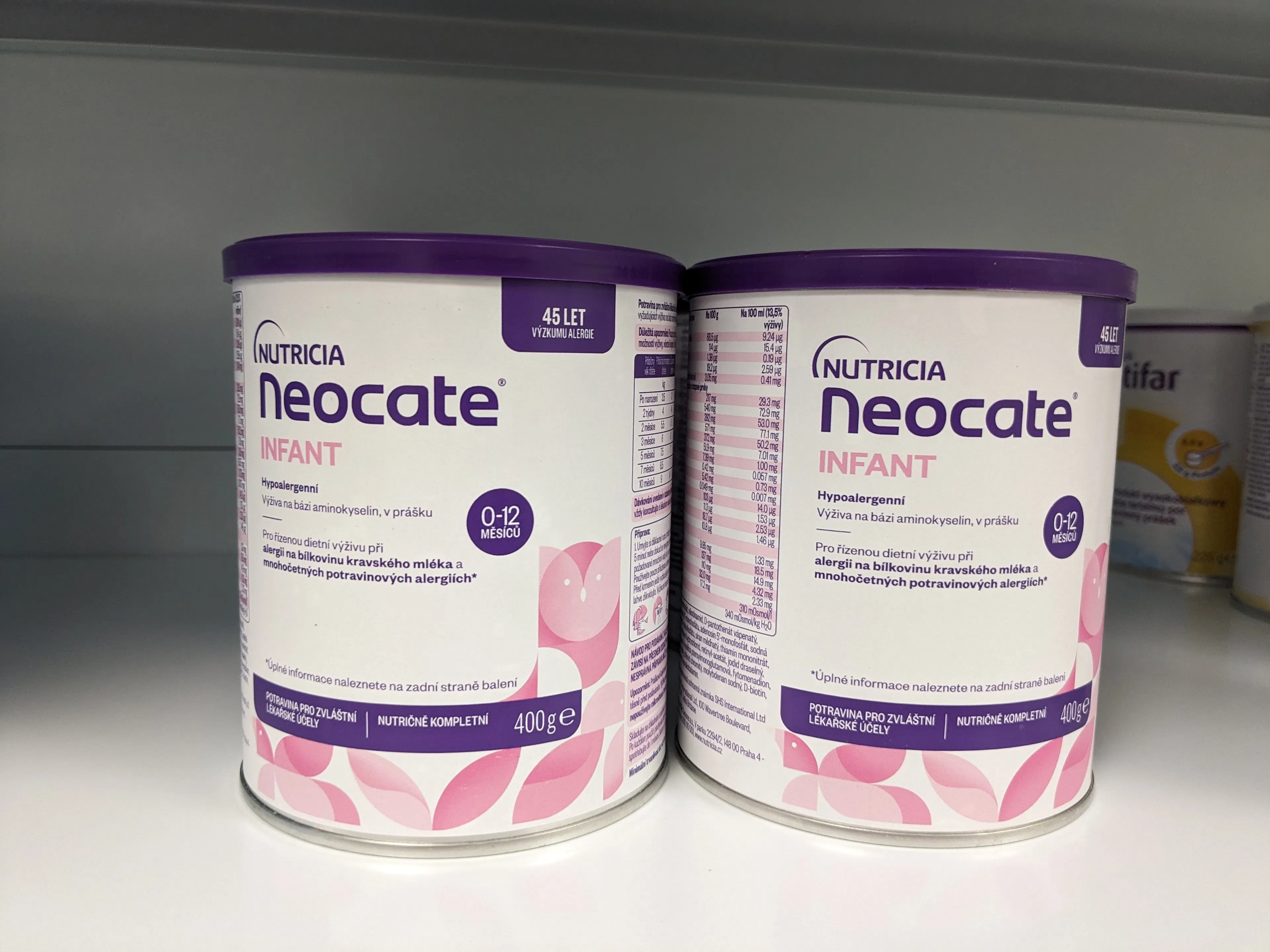
  • Amino acid-based formula (AAF): Proteins are replaced entirely with free amino acids, the simplest building blocks of protein. Amino acid-based formula is recommended when a baby does not respond to EHF, has severe CMPA, eosinophilic esophagitis, or multiple food allergies. It is the most hypoallergenic option available.
  • Partially hydrolysed formula: Proteins are only lightly broken down. These are sometimes marketed for "comfort" or colic, but they are not suitable for babies with confirmed CMPA.
  • Lactose-free formula: Still made from standard cow's milk proteins, just without lactose. Appropriate for lactose intolerance or temporary lactose sensitivity after diarrhoea, not for milk protein allergy.
  • Soy-based formula: Some families consider soy, but a meaningful proportion of babies with CMPA also react to soy protein. A paediatrician should guide this choice.
     

    Formula TypeBest ForNot Suitable For
    Extensively hydrolyzedMild to moderate CMPASevere CMPA or multiple allergies
    Amino acid-basedSevere CMPA, EHF failureFirst-line use without clinical need
    Partially hydrolyzedGeneral comfort (not allergy)Confirmed CMPA
    Lactose-freeLactose intoleranceMilk protein allergy
    Soy-basedLactose intolerance (with caution)Babies also sensitised to soy


    A baby formula for digestive issues such as reflux or colic does not automatically need to be hypoallergenic. Your paediatrician will determine which category fits your baby's actual diagnosis.

How Is Hypoallergenic Formula Prescribed and Started?

In India, extensively hydrolysed and amino acid-based formulas are typically recommended and initiated under paediatric supervision. You do not always need a formal prescription slip, but you should not switch your baby without a doctor's evaluation first.

A paediatrician or paediatric allergist will:

  1. Review your baby's full symptom history and feeding pattern.
  2. Examine the baby and may request stool tests or allergy testing.
  3. Recommend a supervised elimination trial, removing standard formula (or dairy from a breastfeeding mother's diet) for two to four weeks.
  4. Confirm the diagnosis if symptoms improve, then guide reintroduction

Starting a specialised formula without a proper diagnosis can delay finding the real cause of symptoms, add unnecessary cost, and in some cases create nutritional gaps if the wrong product is chosen.

Contraindications and Precautions

Hypoallergenic formulas are not appropriate for every situation:

  • Babies with galactosemia (a rare metabolic disorder) cannot use standard or hydrolysed cow's milk formulas and require a specific galactose-free product.
  • Preterm infants with very low birth weight have specialised nutritional needs that standard hypoallergenic formulas may not fully meet without additional supplementation.
  • Amino acid-based formulas have a distinct taste that some older babies reject. Transitioning may require gradual mixing under dietitian guidance.
  • Partially hydrolysed formulas should never be used as a substitute for EHF or AAF in a baby with confirmed allergy.

Always tell your doctor about any other health conditions, medications, or supplements your baby is receiving before starting a new formula. Do not make this decision based on online advice or product marketing alone.

Report adverse events to your healthcare provider or the relevant regulatory authority.

When to Consult a Paediatrician?

Certain symptoms need prompt medical review rather than a wait-and-see approach:

  • Blood or dark mucus in the stool
  • Rapid weight loss or failure to gain weight
  • Severe vomiting after every feed
  • Swelling of the face, lips, or throat, or any sign of breathing difficulty
  • A rash that spreads quickly or does not settle

For broader newborn wellbeing beyond feeding concerns, newborn care essentials beyond feeding can be a helpful starting point.

Even if symptoms are milder, any persistent concern about your baby's reaction to formula deserves a professional opinion. Self-diagnosis and formula-switching without guidance can mask serious conditions and delay appropriate treatment.

Conclusion

Hypoallergenic formula can provide an important alternative for babies with confirmed or strongly suspected cow's milk protein allergy when breast milk is unavailable or insufficient. Extensively hydrolysed formulas are commonly used first, while amino acid-based formulas may be needed for severe allergy or when extensively hydrolysed formula is not tolerated. Lactose-free and partially hydrolysed formulas are not substitutes for allergy-specific formulas. Because symptoms can have many causes, consult a paediatrician before switching formula to ensure your baby receives the right nutrition and appropriate care.

FAQS

Can I switch to hypoallergenic formula without a doctor's advice?

It is strongly advised against. Switching without a diagnosis can mask the real cause of symptoms and may mean your baby is on an unnecessarily costly or nutritionally mismatched formula.

Is hypoallergenic formula the same as lactose-free formula?

No. Lactose-free formula still contains cow's milk proteins and only removes lactose. Hypoallergenic formula addresses the protein itself, which is the source of allergic reactions in CMPA.

Do breastfed babies need hypoallergenic formula?

Yes, in some cases. If a breastfed baby shows signs of CMPA, the first step is usually a dairy-free diet for the mother. If symptoms persist or breastfeeding is not possible, a hypoallergenic formula may be recommended.

Does hypoallergenic formula taste different?

Extensively hydrolysed and amino acid-based formulas have a more bitter or unusual taste compared to standard formula. Most young infants adapt, but older babies may need a slow transition.

Apollo 247 Floating Action Button